“There’s 7,000 people, there under the coroner’s court,” the man sitting in the vestibule of St Pancras Old Church says, jutting his thumb in the direction of the back wall. He obviously has a story to tell: knuckles covered in faded tattoos; face lined like earth that’s settled after a disturbance; feet clad in a pair of chunky hi-top trainers, propped on top of a small portable radiator, even though the temperature has topped 17 degrees.
But today, I’m trying to find out more about a different story. Besides, we can’t really understand each other, and he’s been snapping at me to speak up, speak slower, stop asking him so many questions. But the coroner’s court remark suggests I should press on. “The train line, darlin’,” he says impatiently, his accent near impenetrable, so that I have to lean in to understand him. “They needed room for the train line”. Eventually he gives up and hands me a leaflet, shaking his head at my ignorance.
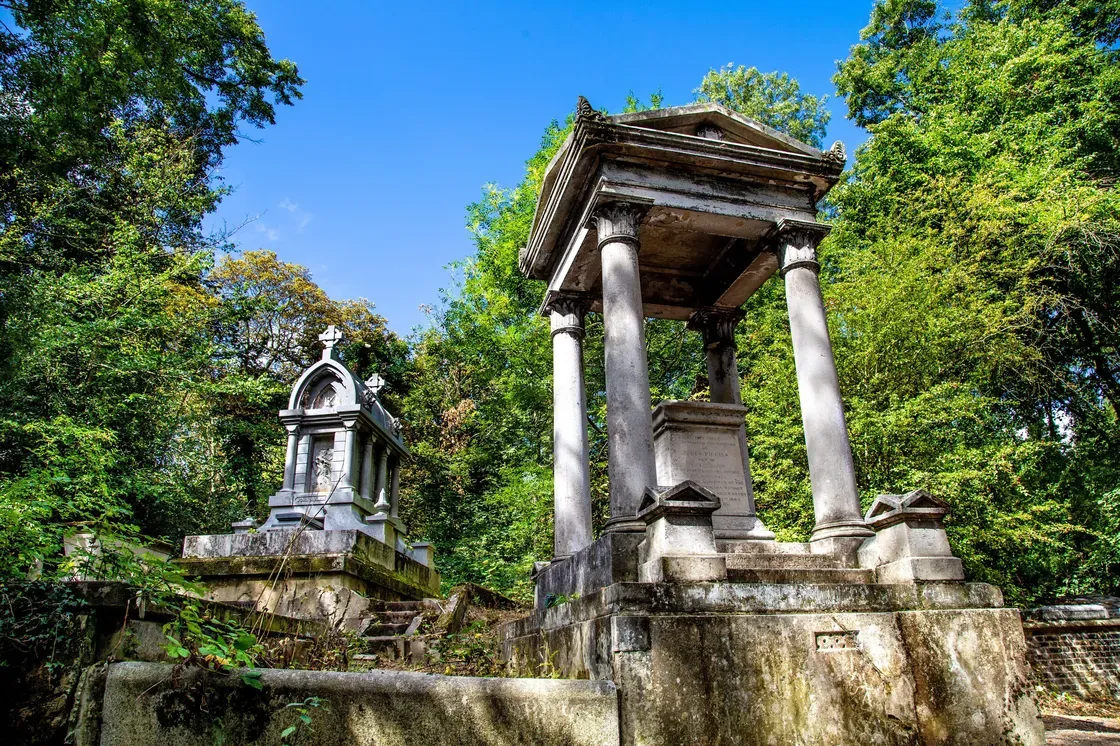
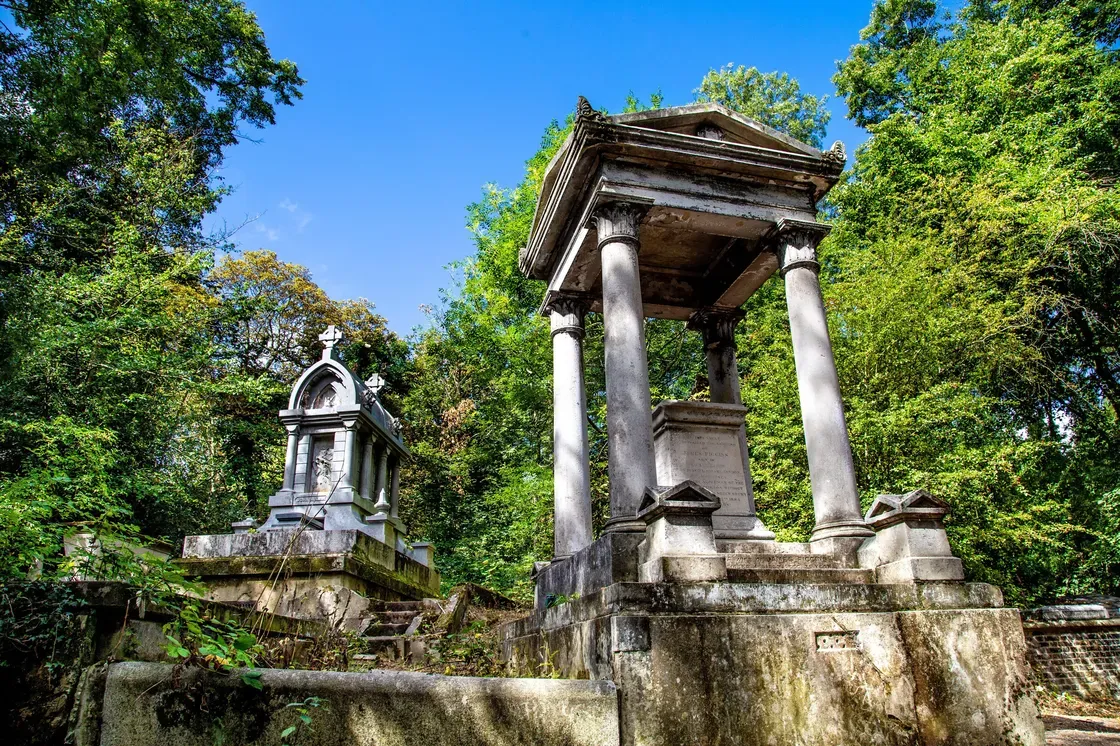
I’m here, at the ancient church tucked snug between the bulk of St Pancras station and the grey-and-black clad facades of Google-era King’s Cross, to hang out with some very-long-dead people. Earlier in the week, I’d been told that the churchyard is a good — and, for central London, vanishingly rare — example of how the city’s approached death for nigh on a millennium.
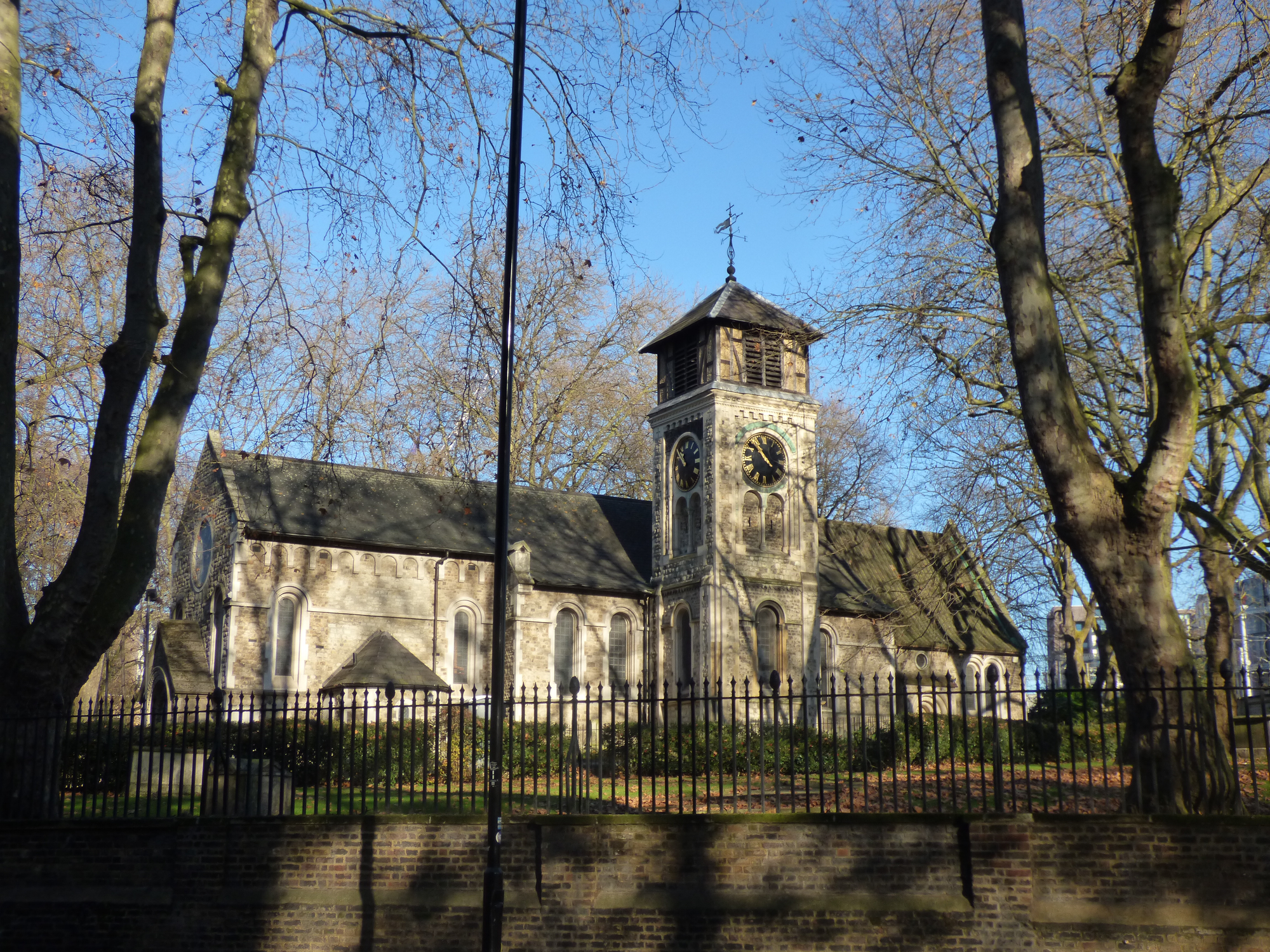
The reason its grounds are a good three feet above pavement level? Well, that’s the result of hundreds of years of burying people, throwing earth on top of them, and then burying some more. And those bodies in the pit underneath the coroner’s court? They’re there because the Victorians decided to put a railway line through the middle of the churchyard, and had to dig up and relocate its prior inhabitants (and again, because this is London, it was actually poet and author Thomas Hardy that helped do this).
But centuries of being one of Europe’s largest cities means that there are now more long-gone Londoners beneath the earth than above it. And that’s left modern London with a problem. Though it’s estimated that burial rates have fallen to about 18% across the rest of the country, in London the practice has remained surprisingly popular, hovering near 30%.
This is driven largely by an increase in non-Church of England faith groups in recent decades (the vast majority of Muslims, Jews and Buddhists opt for burial). And that means inner London boroughs no longer have any spare spaces for those in need of eternal rest.
In 2011, the Cemetery Research Group projected that London would need 314,620 burial plots by 2031, based on an estimate of just over 1 million deaths in that time period. Since then, vanishingly few new plots have been created, and the warnings are growing ever starker. And, as allotment holders in Teddington have found over the last week, it’s starting to cause issues for the living.
Our Saturday stories are free for all to read — but we can only survive with your help (and we're currently being sued for £250,000 by a wealthy Airbnb grifter). If you're a fan of today's piece, please do consider becoming a paying member. And with our spring discount, it costs less than a fiver a month (for your first three months) to support us.
‘Why are they prioritising the dead over the living?’
I head to the Shacklegate Lane Allotments on a humid Wednesday afternoon, the sky a sombre, respectful shade of slate-grey. After a long period of deliberation and a petition signed by 1,700 local residents, allotment holders at Shacklegate Lane were told this week that they would lose their plots to make room for an extension of Teddington Cemetery. Waiting for me are Jane Cowling, who started the petition and lives next door to the site, and Paul Cuff, a long-time allotment holder who I find tending to a patch of collard greens.
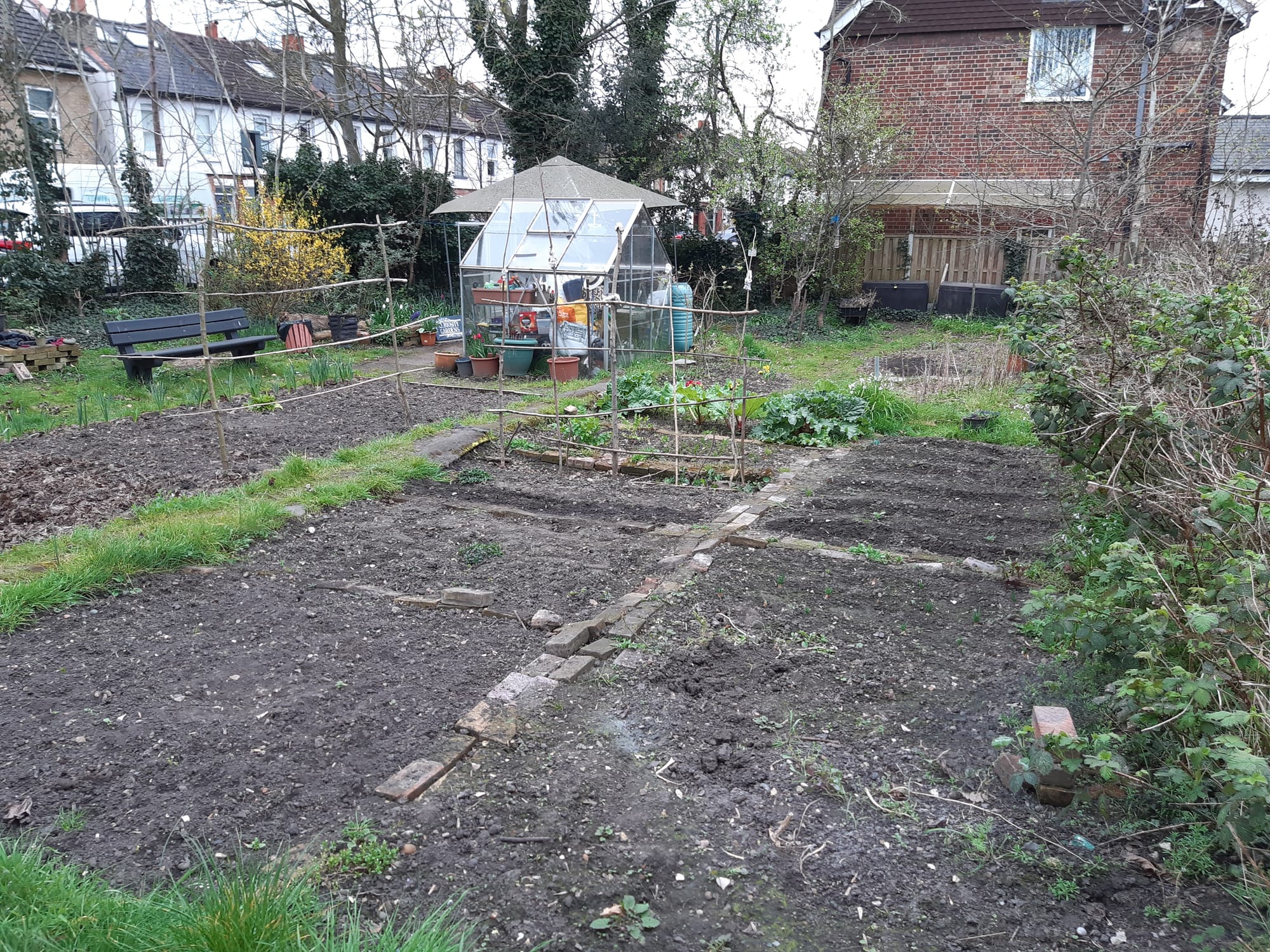
Shacklegate Lane is near-death. The council stopped accepting new allotment holders 15 years ago, and there are only eight gardeners left. The abandoned plots are overgrown, patches of dirt and weeds that haven’t yet blossomed into spring verdance, but those that are still maintained are lush: snowdrops, tulips, blackberry bushes, broccoli, snowy apple and damson trees.
And there, on the other side of the jagged metal fence, is the graveyard that will soon subsume it all. In fact, almost all of the graveyard used to be allotments: “If you follow the fence, my [plot] was right there,” Paul says, pointing at a large, polished headstone protruding from the cemetery’s manicured lawn. In his eighties, with a quiet voice and silver-rimmed glasses that flash in the late-afternoon light, Paul has been gardening here for 45 years.
He tells me that RD Blackmore, the famous Victorian novelist best known for his adventure romance Lorna Doone, used to have a plot around here where he grew prize winning swedes. Now, Blackmore is buried in the graveyard — whose expansion long ago claimed his vegetable patch. (I silently wonder whether Paul, too, eventually expects to be interred in the graveyard that has colonised his allotment, though this doesn’t seem an appropriate time to ask).
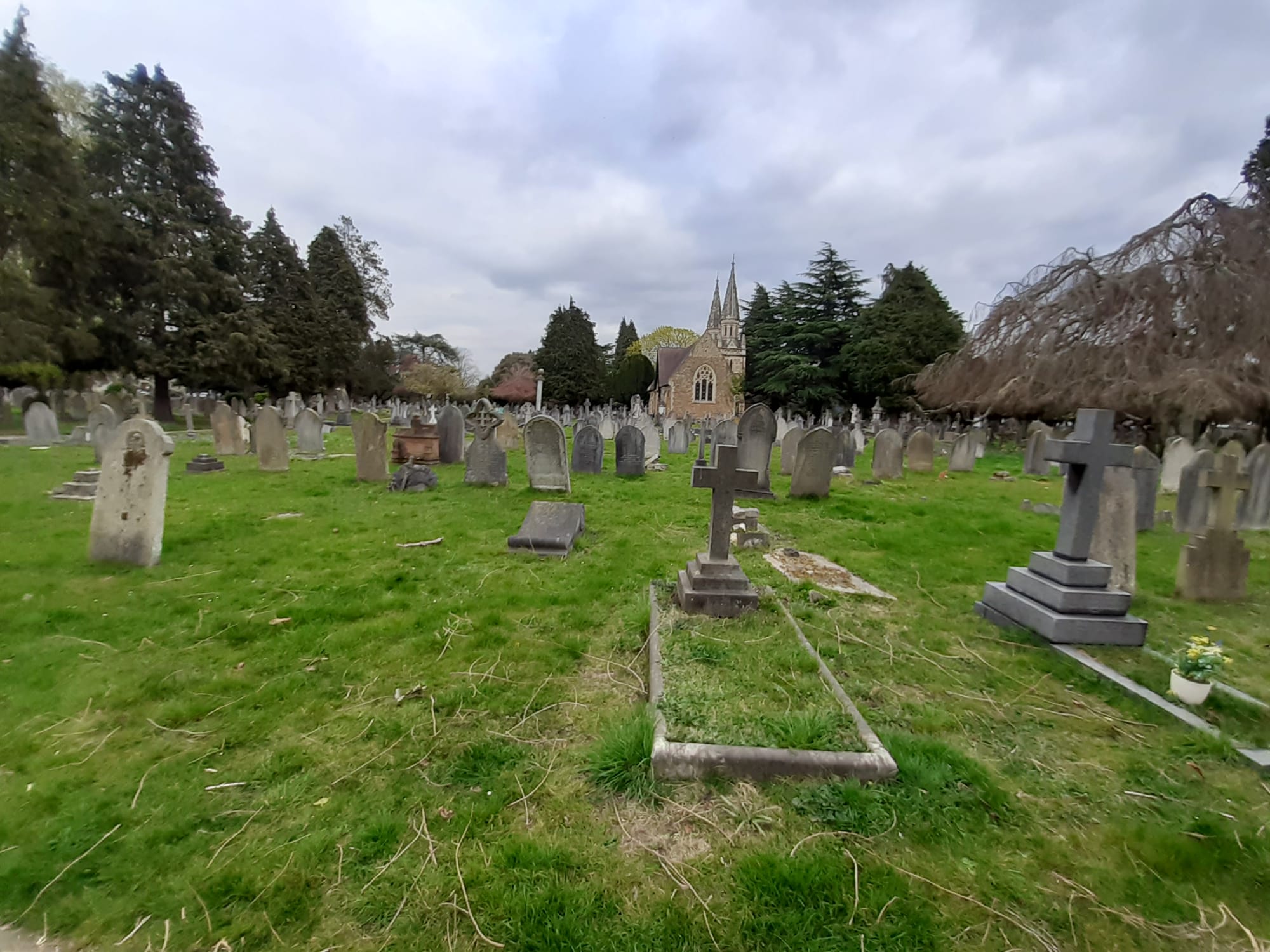
I'm told the last unoccupied grave in the graveyard was sold a few weeks ago, and it will reach full capacity within the next year. The situation is urgent. When I speak to Richmond council, they stress that the decision was "not taken lightly", but that they "must act now."
The plans, they argue, are expected to deliver more than 700 new burial spaces, and guarantee burial provision for around 30 years. "The land at Shacklegate Lane has been designated for cemetery use for many years," reads the statement sent to me, "and the temporary nature of the allotment use here has been clearly communicated and understood". But the issue is bigger than just Teddington: it’s one playing out in musty church vestries and anxious council meetings across London.

Hi, Hannah here. This is not a paywall! This story about the capital's grave crisis (pun intended) is completely free to read (and we hope you're enjoying it). All you have to do to continue reading is sign up for free below, no card details needed.
This story is free to read. You just need to sign up to join The Londoner's mailling list. And why wouldn't you? You'll get our journalism in your inbox the second we publish, keeping up to date on this and all our stories. No card details required.
Already have an account? Sign In