To read today's piece, you’ll need to be a full-fledged supporter of The Londoner. By the end of this year, we're trying to reach the lofty goal of 1,250 paid members. Currently, we have 1,094. Can you help us get there, and continue to produce the in-depth reporting on the capital that we're known for?
We've made it easy too: with our new member discount, a Londoner membership is just £1.25 a week. If you like what we're doing, please consider supporting us.
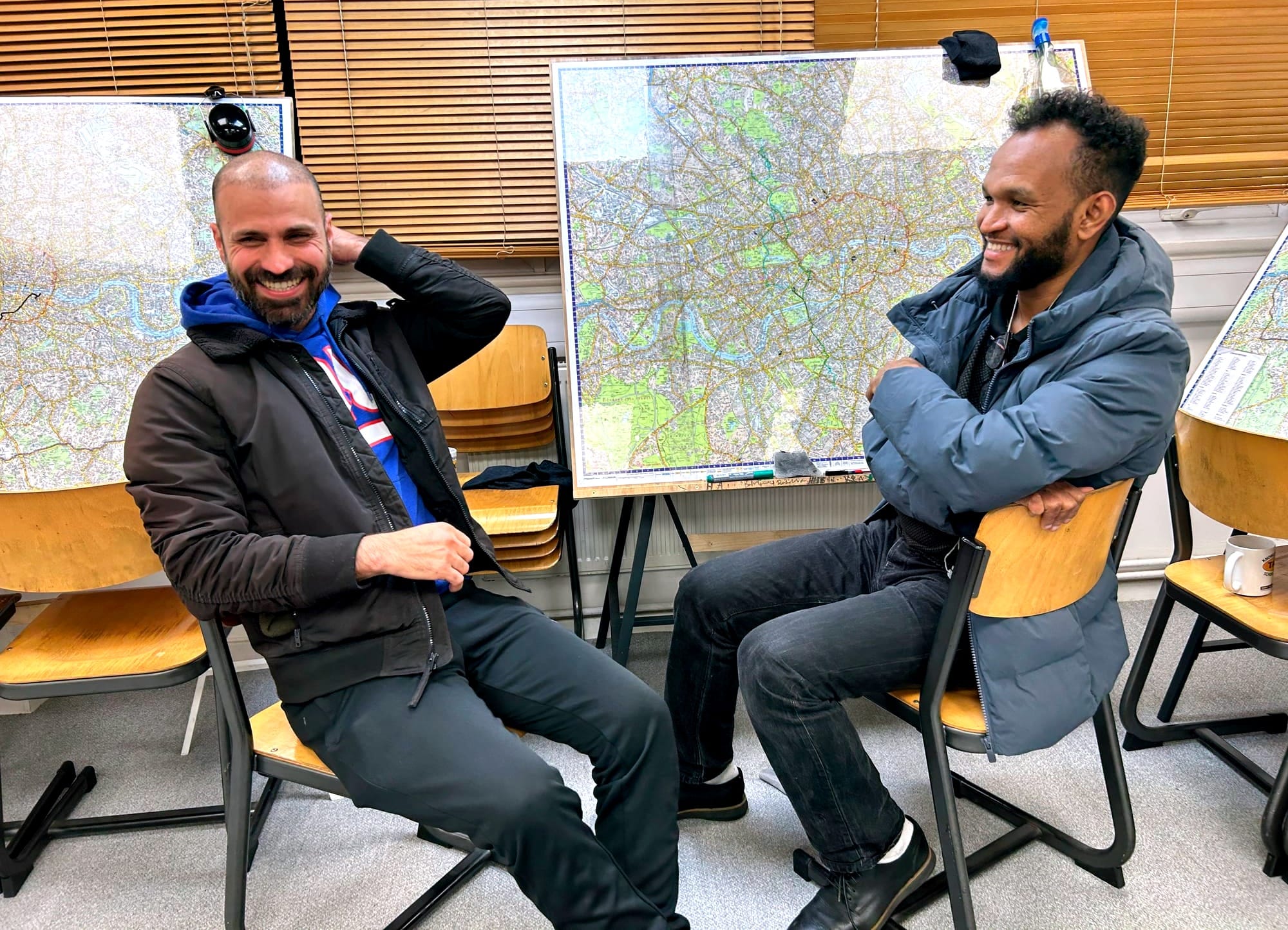
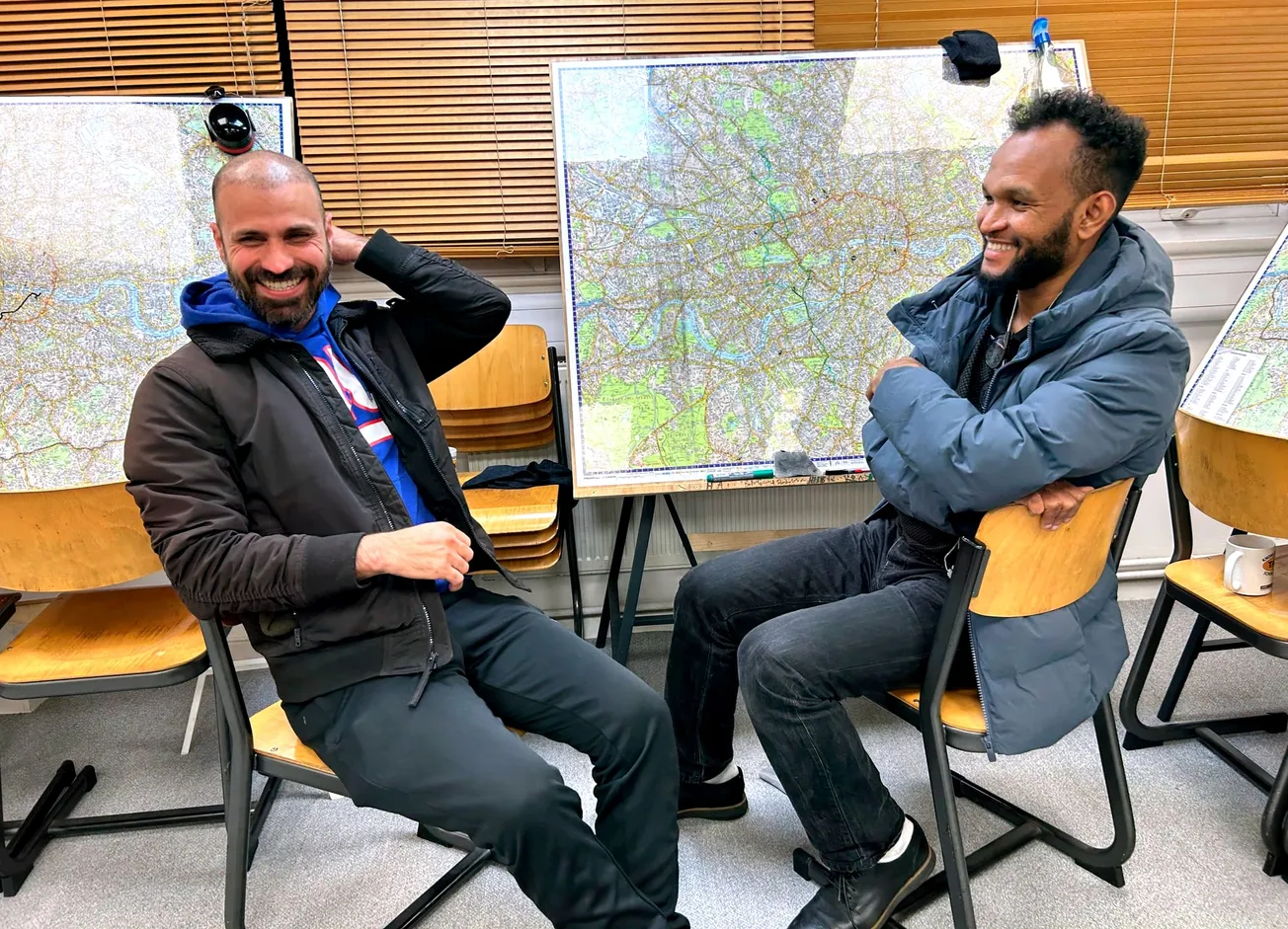
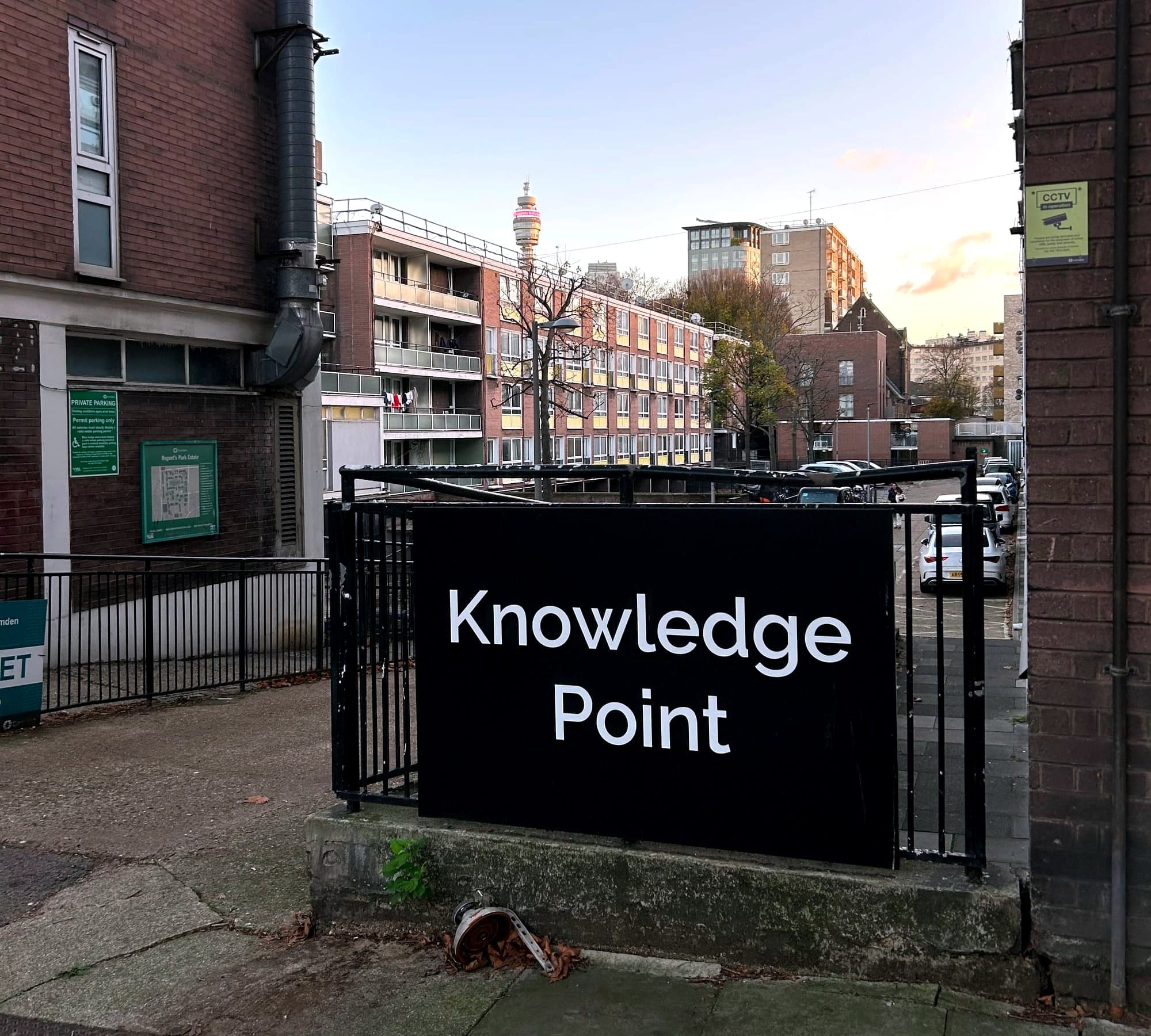
At a little before 4pm on one of the first truly chilly evenings of the year, Gert Kretow arrives at Troutbeck Estate to prepare for the evening’s lesson. Situated at one end of Camden’s Albany Road, the mid-century housing block is both evocative and unassuming. It is surrounded almost equidistantaly by London Zoo, the British Library and the British Museum, while army barracks, seemingly from which no one ever enters or exits, loom from over the road. Perhaps it is because of these encircling landmarks that the area has a strangely barren feel. And perhaps it is fitting that, in the basement of one of Troutbeck’s westerly blocks, in an over-lit room filled with laminated maps of London, men from all over the world come every Monday afternoon to learn the Knowledge, each of them responsible in some small way for keeping alive a trade which many warn may soon become part of history.
Today, two black cabs and the once telltale sign of a cabbie in training — a moped with a clipboard at the front — are parked outside. Inside is the Knowledge Point School, one of only two remaining in the city, where 49-year-old Gert has been helping drivers studying for the Knowledge for 12 years. Despite reports that the process was made easier this year to encourage new applicants, it is still described as the hardest taxi test in existence.
Understanding how it works proves difficult enough. Sat at a table covered with maps in the main room, I meet Mark, a spritely 60 year old from Acton who handles the trainees with avuncular grace. He has been teaching at the school for nearly 20 years, though he still works as a cabbie most of the week. For the next hour or so, he patiently explains the rules to me. After an initial multiple-choice test on what are called “runs” (routes), trainees progress through a series of 15-minute oral “appearances”, where they must recite the shortest and straightest route between two points without hesitation. As Gert says, these exams are as much about testing “nerves and presentation,” as they are about knowing the roads.
These exams are the stuff of lore: the examiner who put a finger up their nose to see how a trainee would cope with distraction, or the one who began each exam by throwing a dart at a map of London and asking the trainee to recite a route based on where it landed. “One driver would close his eyes to concentrate when he remembered a route, and when he opened them the examiner was right there,” says Mark, holding his palm millimetres from his face. “The driver jumped, but (the examiner) was trying to say, ‘you can’t close your eyes while you’re driving!’”
To continue to read this story, you need to become a Londoner member. Luckily, we've got a great introductory deal for you: £1.25 a week, for your first three months. Take the plunge today, and get access to our entire back catalogue (and support a local media revolution).
London deserves great journalism. You can help make it happen.
You're halfway there, the rest of the story is behind this paywall. Join the Londoner for full access to local news that matters, just £8.95/month.
SubscribeAlready have an account? Sign In