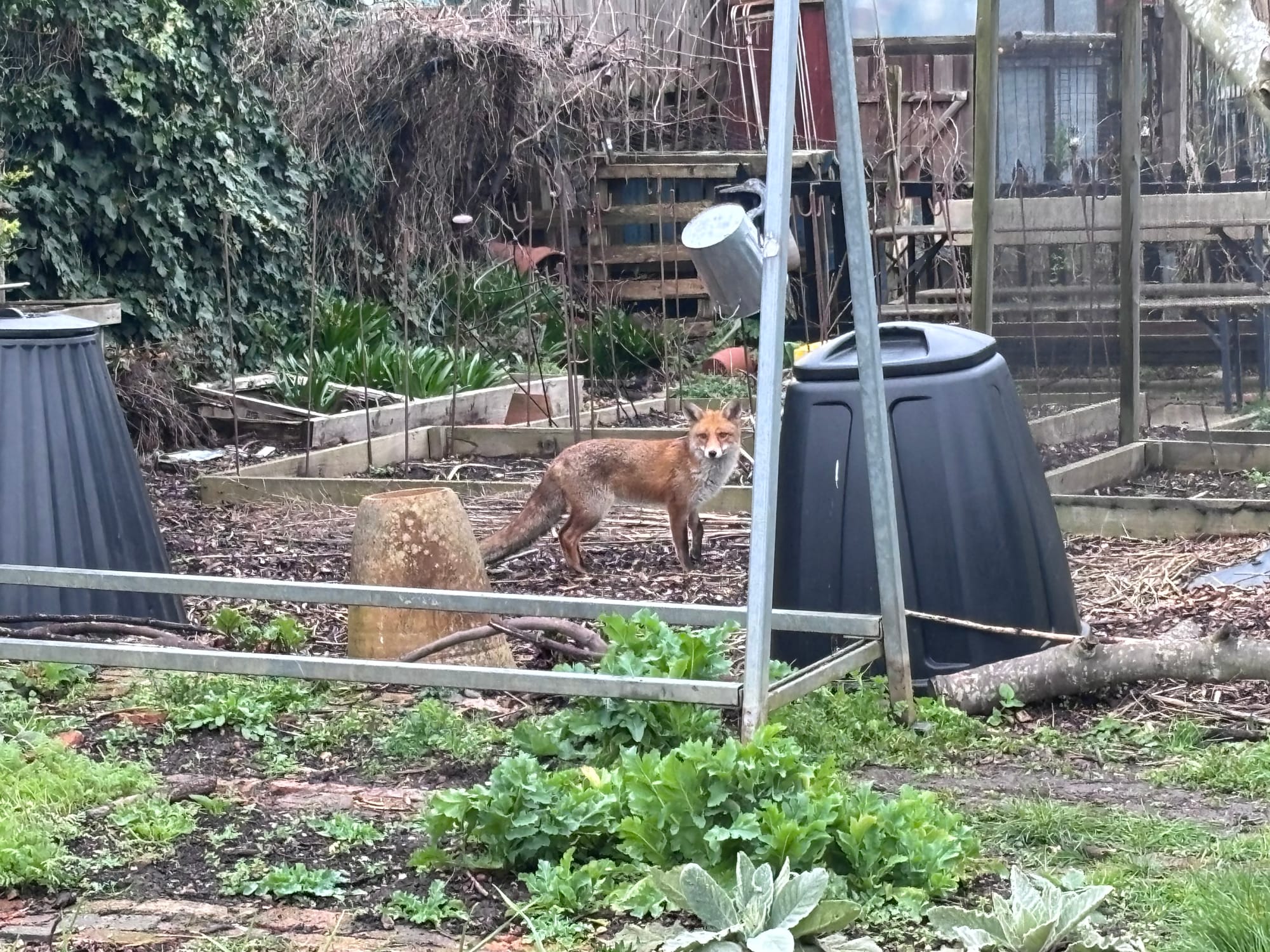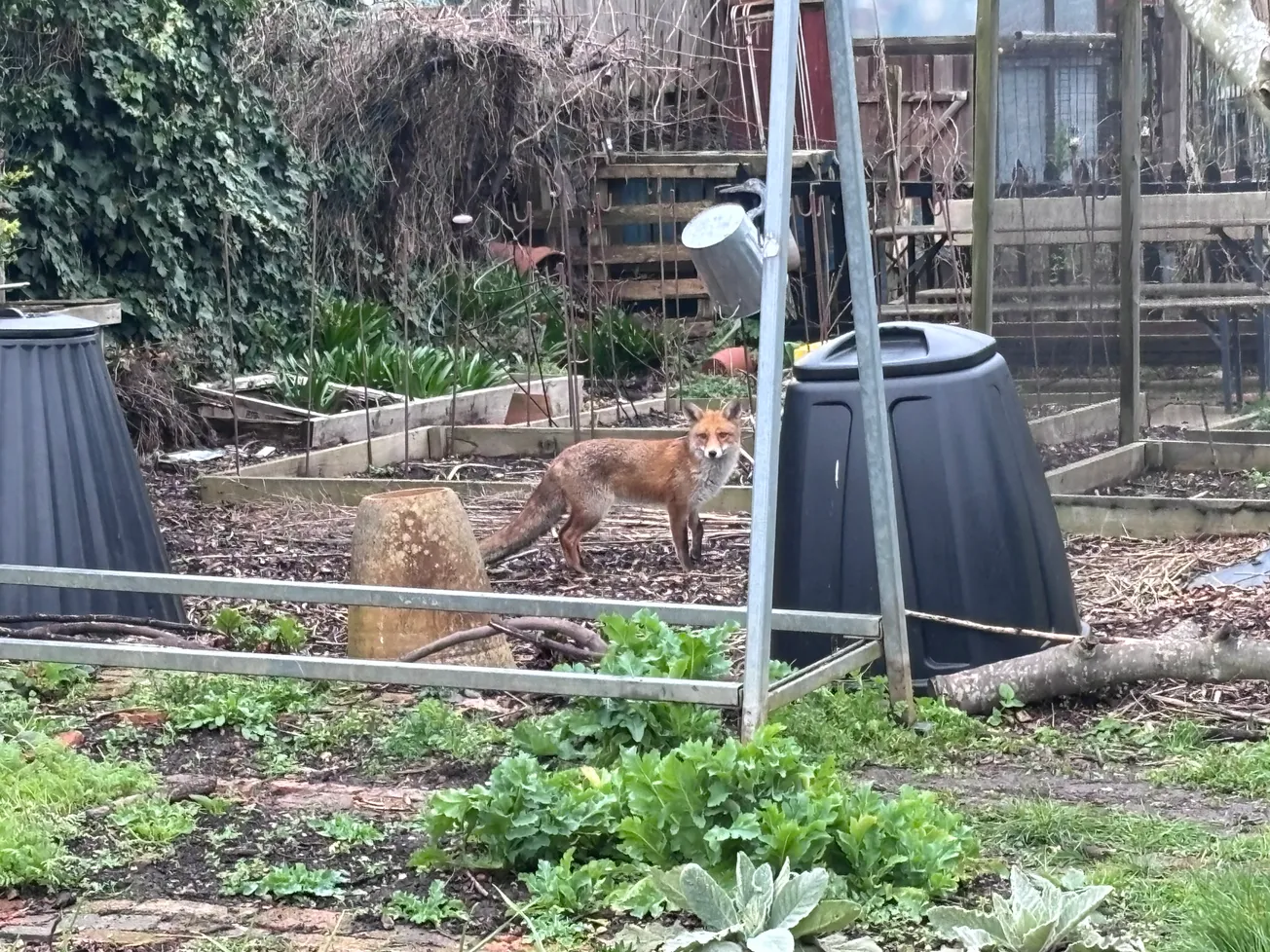
Jaia Lloyd suddenly stills her fork mid-turn in the dark soil of her allotment. “There’s one!” she says, hushed but excited. A few meters away, a black nose, two triangular ears and a curvaceous red tail emerge behind a roll of wire fencing. A fox. “They usually come out about time,” Lloyd adds, straightening her back slowly so as not to scare the creature as it treads lightly over a vegetable plot, its gaze fixed on us.
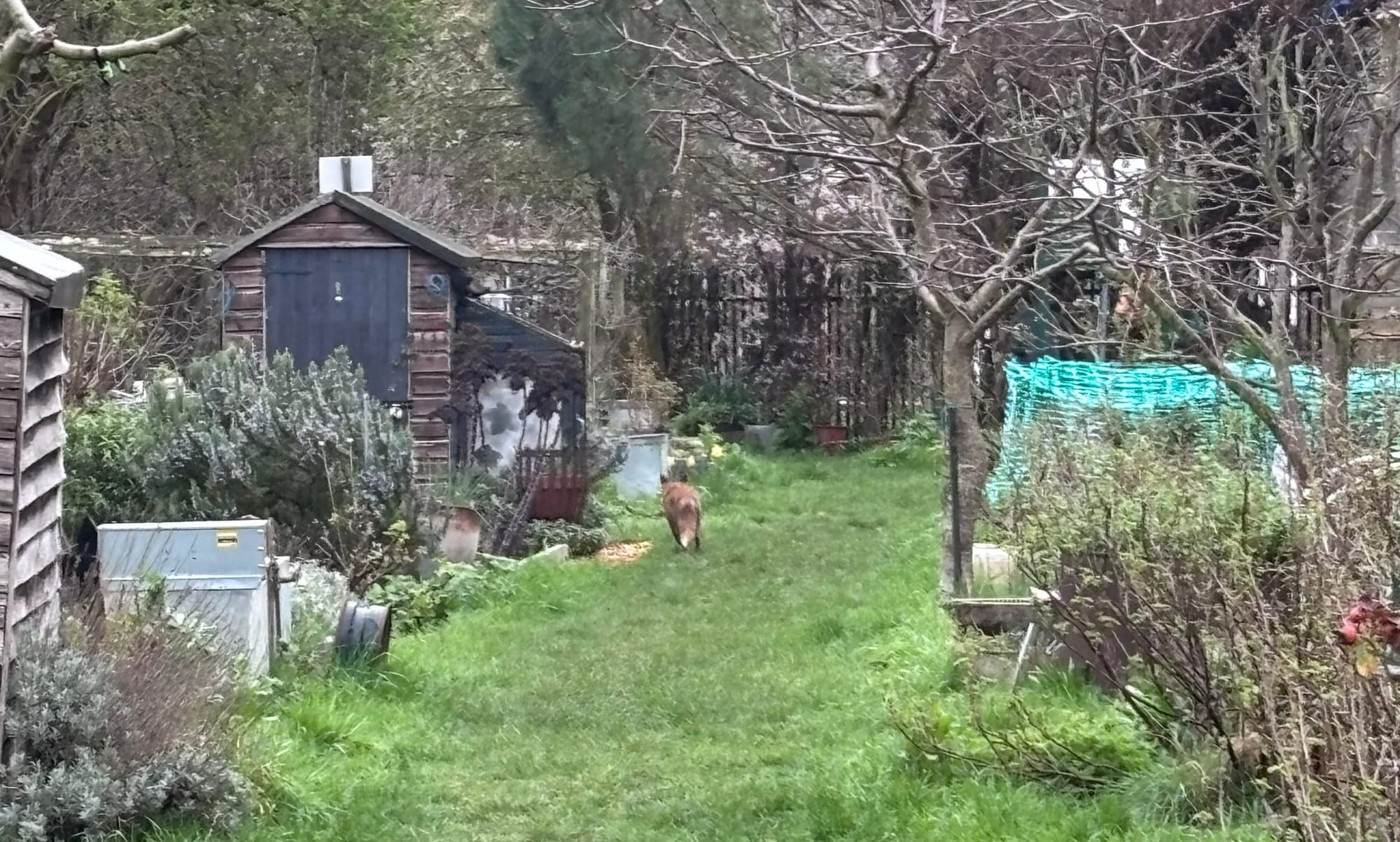
It is late afternoon on a grey Saturday in north London and, as Lloyd plants potatoes, the foxes begin to appear behind sheds, compost bins and water troughs: flashes of cinnamon against the spring green grass, rhubarb and broccoli.
This allotment has become synonymous with urban foxes since it was featured in the BBC’s Wild London documentary on New Year's Day. A former railway track running between two rows of houses, the animals have lived in this peaceful enclave for years, though it was the visit from natural history doyen David Attenborough that really made them into celebrities.
So when five foxes were found dead nearby on a single day earlier this month, along with a pet cat, residents were shocked. Soon, the rumours started, and reports of meat dumped on a street corner seemed to point to one explanation: poisoning.
But is there any substance to the conspiracy, or is it simply gossip gone mad in an animal-loving neighbourhood? And, if true, why? I prowled around the allotments of north London in a bid to find out.
To read all of today's piece, you’ll need to be a full-fledged paying member. Let us explain why: through our investment in our growing team, we believe we can bring back high-quality, independent local journalism. But it’s a huge and expensive undertaking — we're currently being sued by an Airbnb scammer — and we need your help.
So we’ve sweetened the deal: take out a year’s membership of The Londoner, and we’ll give you two months completely free — and you’ll be supporting a small team working tirelessly to cover the most important stories in the capital.
The scene of the crime
“The council said it was the fifth phone call they’d had that particular day,” explains resident Geoff Taylor, referring to the Monday in early March when residents found the dead animals. Taylor works at a school near to the allotments, and often walks his corgi-cross Rocky around the local parks. I speak to him at the end of his shift, Rocky at his side.
He tells me that he and a neighbour, IT worker Michael Chan, called Haringey council's dead animal removal service after finding a dead young fox. “It started dying in the school, then crawled under the fence into a neighbouring garden,” Taylor recalls. The school called the RSPCA and other rescue services, which were unable to attend. When the fox died, Taylor visited Chan for help bagging up its body for collection.
Many foxes live in the area, and Taylor has seen dead ones in the school grounds before, killed by car accidents or injuries sustained in fights — particularly during mating season in December to February. But this fox was different. “When I looked at it, it didn't have any external injuries,” Taylor says. “Before it died it was breathing very heavily. I could see its stomach rising and falling quite a lot. That's what made me think it had been poisoned.”
London deserves great journalism. You can help make it happen.
You're halfway there, the rest of the story is behind this paywall. Join the Londoner for full access to local news that matters, just £8.95/month.
SubscribeAlready have an account? Sign In