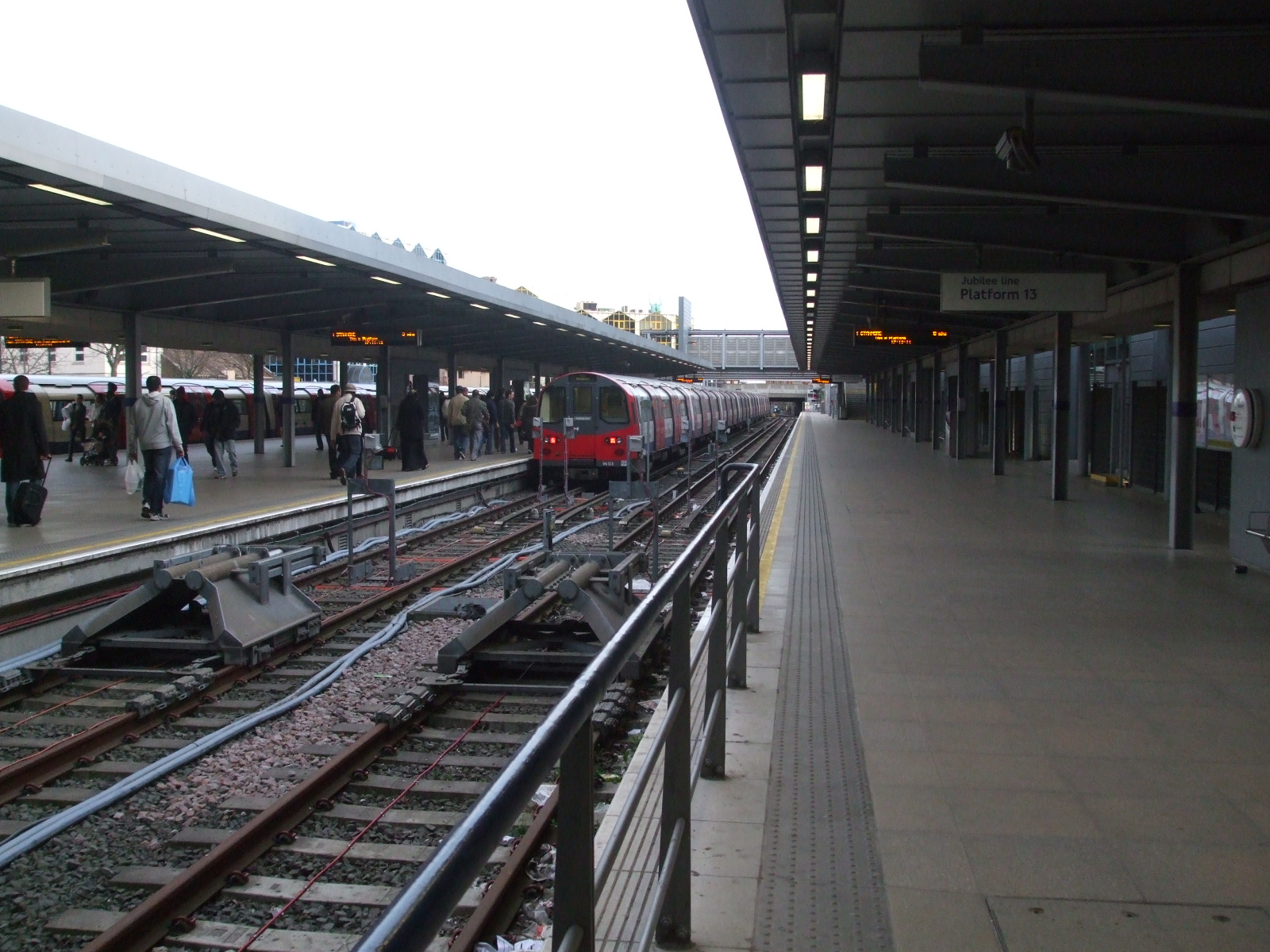
At just before 2pm on 26 December 2023, 72-year-old Brian Mitchell exited an eastbound Jubilee train shortly after it terminated at Stratford. As the train emptied and passengers disembarked, no doubt many on their way to Westfield for the Boxing Day sales, Brian took a seat on a bench at the furthest end of platform 13. In the choppy CCTV footage of what follows, all that can be seen for 48 minutes is Brian’s legs and bag as he sits in relative stillness on the open-air platform. For most of that time he is alone, and no one seems to notice anything unusual. Then, at 2.45pm, Brian suddenly stands up and, in one terrible movement, falls forward headfirst onto the tracks below.
For the next minute, he tries to get up. At one point, his hand can be seen grasping the edge of the platform, though he’s unable to pull himself up and falls back onto the track. Another four minutes pass. Faint movements can be seen; it appears that Brian is still conscious. At 2:50pm, the first train enters the station.
It will be nearly 30 minutes until Brian’s body is discovered by TfL staff. By then, he will have been run over seven times.
Passenger deaths on the underground are rare. On average, roughly three passengers die in accidents each year. These are tragic events, though it’s usually fairly straightforward to understand how they occurred. In Brian’s case, it wasn’t that simple, and the shocking nature of his death raises a number of pertinent questions.
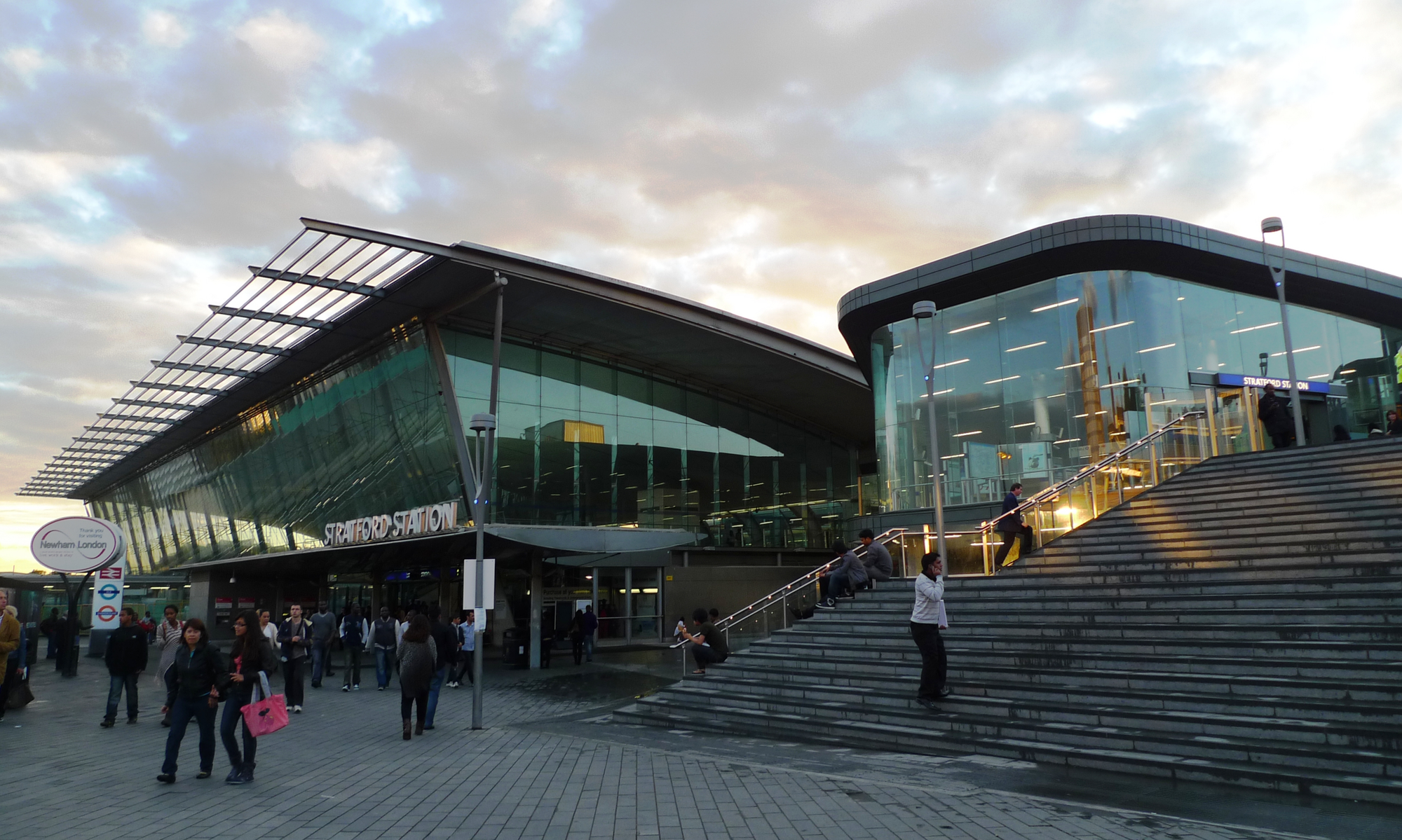
Why did no-one spot that he had fallen onto the tracks? Why, despite hundreds of CCTV cameras at Stratford station, did no one see him struggling before the first train entered the platform and there was time to save him? Why didn’t the driver of the first train — or indeed, subsequent trains — spot the man lying below?
It’s taken two years, three investigations and one inquest to answer those questions. The inquest, which took place in December, revealed an awful convergence of factors behind what the coroner described as the “particularly harrowing” circumstances of Brian’s death. These included missteps, inaction and crucial breakdowns in communication. But one factor was paid particular attention by the coroner: the automation of London’s tube network.
Our Saturday stories are free for all to read — but we can only produce this kind of work with your help (and we're currently being sued for £250,000 by a wealthy Airbnb grifter). If you're a fan of today's piece, please do consider becoming a paying member.
The last day
We don’t know much about Brian Mitchell’s life: there are no photos of him, no newspaper tributes. The details of his death, however, are now known in distressing, extensive detail.
These are the facts, as we have them. The story begins on Christmas Day, 2023. In the morning, Brian helps a friend erect decorations at her home in Bushey, just outside London. Later that day, the friend goes to visit her family and by the time she returns, Brian has gone — this doesn’t seem to cause much alarm, and the friend later told the police that this wasn’t an unusual occurrence. It’s possible he sleeps rough in the area; earlier that day, he had made a call to Shelter’s crisis line, but as it was Christmas, nobody was around to answer the call.
His whereabouts on Boxing Day morning are similarly hazy, but we know Brian makes contact with an acquaintance to find out where they’re congregating, and says he’s going to meet old friends. He is drinking: a toxicology report found him to be three times over the legal limit. At some point, he makes his way by bus to Watford junction and gets on the tube at Stanmore station. He rides the full length of the line: the next time Brian is picked up by CCTV cameras is when he arrives at Stratford and disembarks on platform 13. The inquest later established that the reason he fell was probably due to alcohol, and suicide was ruled out.
A train operator waiting to start their shift arrives on platform 13 just as the first train enters. They bend over to inspect Brian’s bag — turning away from where he is lying by the tracks — at the exact moment the train arrives. They call in the bag, but do not see him, and after the train strikes Brian, it exits the station without anyone realising what has happened.
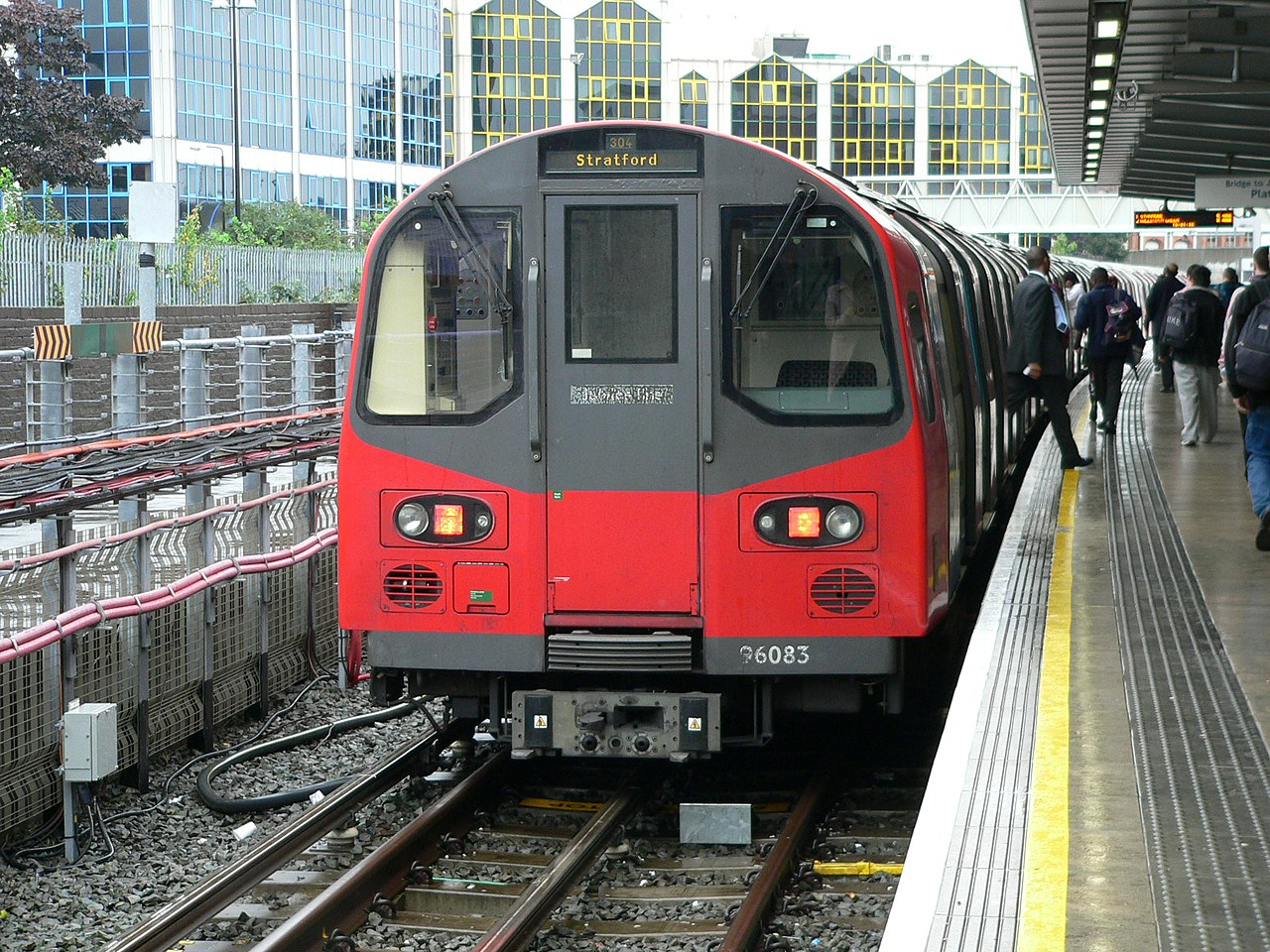
In the next 20 minutes or so, a further two trains will enter platform 13, where his body lies. They depart as normal: Stratford is a terminus station, and any train entering platform 13 must exit back out. The first two operators don’t report anything wrong. Only at 3.11pm, 21 minutes after Brian is first hit, does the operator of the third train call the Jubilee line controller to report seeing an “inflatable doll” on the tracks, though it takes them five minutes after seeing his body to do this. According to a later report, the operator dismissed the possibility that it could be a person as they believed trains would have been prevented from moving if there had been an emergency of any kind. At this point, the third train has already departed.
What happens next is only more baffling; an agonisingly frustrating series of miscommunications. The Jubilee line controller passes on the operator’s report of the inflatable doll to Stratford’s customer services supervisor, and a staff member is dispatched to check.
That staff member reports back that they can’t see anything, but when the supervisor checks the cameras on platform 13, they realise the staff member is looking in the wrong place and instructs them to walk the whole length of the platform. In doing so, the staff member finally sees Brian. They radio the supervisor and report seeing a body on the line. Perhaps due to their distress, the words they use to describe the accident confuses their supervisor, and “it took the [supervisor] longer to understand what was happening”, according to an investigation report.
Having finally comprehended what was happening, the supervisor reports that there is a person on the track to the manager on duty, as well as to the Jubilee line control emergency line, and the controller calls for trains to be halted and the emergency services to be called. Yet the fourth train, which enters platform 13 at 3.16pm, does not stop. That train operator stated afterwards that they “saw what they believed to be a body but ‘froze’”, failing to apply the emergency brakes and allowing the train's automated driving system to continue. For the seventh and final time, a train passes over Brian’s body.
This “freezing” in response to seeing Brian’s body and the missteps in communication were clearly implicated in the final incident. But it is the role of automation, and its effect on the driving process, that would reappear in the evidence throughout the inquest. To understand why, you need to understand a term that has now been cited five times in accident reports on the underground: cognitive underload.
Hello, The Londoner editor Hannah here. Do you want to hear more of the capital's hidden stories? We take pride in shining a light on the things happening in London you may have missed, giving the capital some real, dedicated journalism. From long-form investigations and agenda-defining scoops to buzzy dispatches and untold stories of the capital’s history, we’re a real broad church.
If that sounds up your street, sign up to our mailing list to get two completely free editions of The Londoner every week: a Monday briefing, full of everything you need to know about that’s going on in the city; and a high-quality, in-depth weekend long-read.
No fluff, no gimmicks: just click the button below and get our unique brand of local journalism straight to your inbox.
Numbing the brain
The idea of cognitive overload is now so widely understood that it’s entered everyday conversation. A brain in this state is receiving so much information that it becomes overwhelmed and unable to focus, potentially missing crucial things.
Cognitive underload is less well known, but no less important. Here, the brain doesn’t have enough to occupy it, and alertness drops, reducing the ability to respond quickly to critical, unexpected events. The brain isn’t engaged, and becomes sluggish. As tasks are increasingly automated in many jobs, it’s becoming a growing problem, which, in the case of train drivers, could have deadly implications.
Neville Stanton, an emeritus professor of Human Factors in Transport at Southampton University, has been studying this phenomenon for decades. The issue, he explains, is the unique stress that automated vehicles place on the human brain. “Instead of being actively in control of a vehicle, you are passively monitoring a computer system driving that vehicle, and the problem is people fall into a passenger mentality,” he says. “With large amounts of automation, there's a big performance decrement after 20 or 30 minutes.”
Trains on the Jubilee line have used an automatic train operating system for 15 years now. Essentially, it controls the train’s speed, accelerating and then braking at signals and stations. “The expectation of train operators is that they pay close attention to the train and the tracks before them and override the [automatic train operator] system and apply brakes if they observe an object on the tracks,” the coroner wrote.
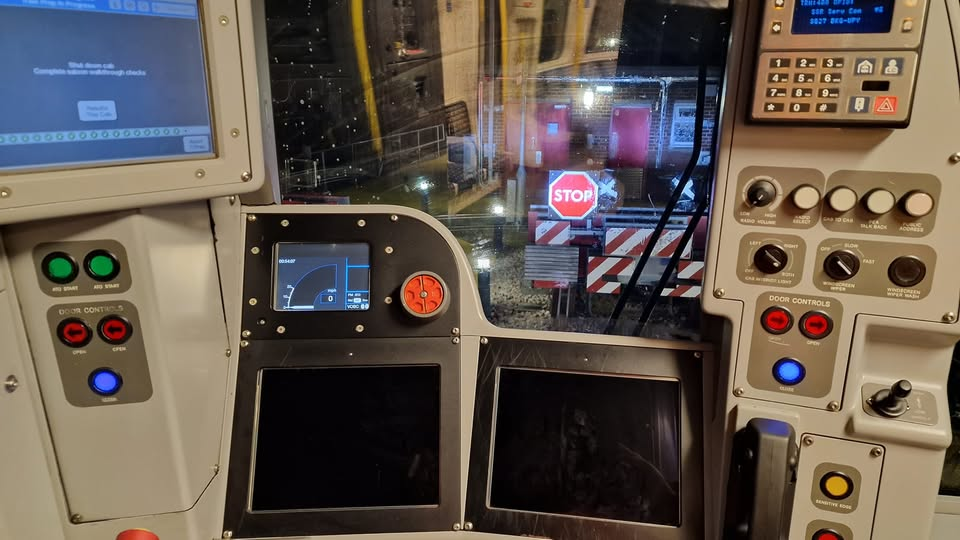
The move towards automation has been driven, as much as anything, by a desire to maximise the carrying capacity of the tube network — perfectly syncing up train speeds to make things flow smoothly. I spoke to one source who has spent years working in human factors research. They told me: “We are automating stuff because we cannot obtain a train every 90 seconds without it.” But there’s a catch. “We cannot automate all of those [operating] tasks, so we need people. But humans are not evolved to maintain vigilance without doing anything.”
This is the paradox of automation. In theory, by taking over some of the manual aspects of a worker’s job, they are freed up to focus on the things that only they can do. But by removing their active participation, it actually places more stress on their brain than if they were doing it themselves, and their performance drops. In the coroner’s report, he noted that “at least three separate TOs [train operators] failed to notice a man before them on the tracks or to override the automatic system… it was asserted [in court] that a TO would have had sufficient time to react and bring the train to a stop many metres before Brian’s location.”
A former Tube driver I speak to recognises the issue. “I know from personal experience that cognitive underload is a real thing,” they tell me. “It's very, very difficult to maintain concentration for any long period of time, people's concentration will slip. And, really, the skill of the job is you have to be able to react when something happens suddenly.” The Rail Accident Investigation Branch’s (RAIB) investigation into Brian’s death concluded that the repetitive nature of tasks under automation has led to “the attentional capacity of train operators being diminished” and so has increased the likelihood of “reduced alertness or distraction.”
When underload was scrutinised during the inquest, the coroner asked TfL whether there was any specific training to manage it. He was told that guidance was taken from academic studies which suggested train operators tweak rubber bands and hum to themselves to stay focused. The coroner would repeat these points, about the bands and the humming, later on, and then swiftly apologise in case his tone was taken as incredulous. Yet it is striking that the training to offset underload caused by the use of technology are suggestions that are so mundane, so analogue.
In the end, neither the inquest nor the RAIB reached a definitive conclusion on quite how big a factor cognitive underload was in Brian’s death. An alternative theory put forward in the report was that the first train operator was distracted by another train operator looking at Mr Mitchell’s lost property as the Tube train arrived. But his death was the first time it was referenced in an inquest into a train fatality.
A reversal of automation is highly unlikely. But, in a further paradox, one thing that might help is more automation — this time getting machines to do some of the “seeing” as well. Just two months before Brian fell, a trial of AI smart technology was being brought to an end at an underground station on the other side of London. The year-long Smart Station trial at Willesden Green station used “existing CCTV images cameras, Artificial Intelligence (AI) algorithms and numerous detection models” so that staff could receive notifications of incidents direct to their computer or iPad, including issuing real time alerts if a person ended up on the track or was on the platform for longer than ten minutes. Only 1% of the alerts made to staff were considered invalid and a further trial at Custom House on the DLR was rolled out last year.
Another trial began in December 2025 on the Central line, using a mix of CCTV and sensors to detect track access, falls between trains and platforms, and passengers caught in doors. TfL hopes to roll it out further if successful: “Once we have established confidence in the accuracy and reliability of the technology, we will progress to an operational trial which will allow us to respond to any incidents,” they said earlier this month.
In response to Brian’s death, Claire Mann, TfL’s chief operating officer, said: “Our thoughts are with the family and friends of Mr Mitchell, who sadly died at Stratford tube station. We are committed to learning from this tragic incident and assisted the coroner during the inquest. We have responded to the coroner’s Prevention of Future Deaths report and are taking action to prevent incidents like this from happening again.”
Closing the inquest in December, the coroner addressed Brian’s relatives, watching over video link from Scotland. “I want to offer my sincere condolences to the family,” he said. “All deaths are tragic in their own way. Brian’s death is particularly harrowing and the CCTV is something I’ll think about for a long time.”
Yet the coroner noted that recommended technology to detect and warn staff about people on the tracks had still not been installed at Stratford station. He also found there was no clear evidence that training for train operators had improved their vigilance when using automated systems, nor that station staff training had led to faster or clearer communication in emergencies. “There is no clear evidence to demonstrate that risks of fatal harm have been mitigated,” he wrote.
If you appreciated this piece and want to be sent more in-depth features and investigations, why not join up as a Londoner member today? This means you'll get weekend long reads like our piece on the last day of the beloved newsagent being forced out by TfL and Monday briefings like our exclusive scoop on who's been behind a spate of thefts from high-end restaurants delivered straight to your inbox.
No ads, no gimmicks: just click the button below and get two high-quality pieces of local journalism each week, all for free.