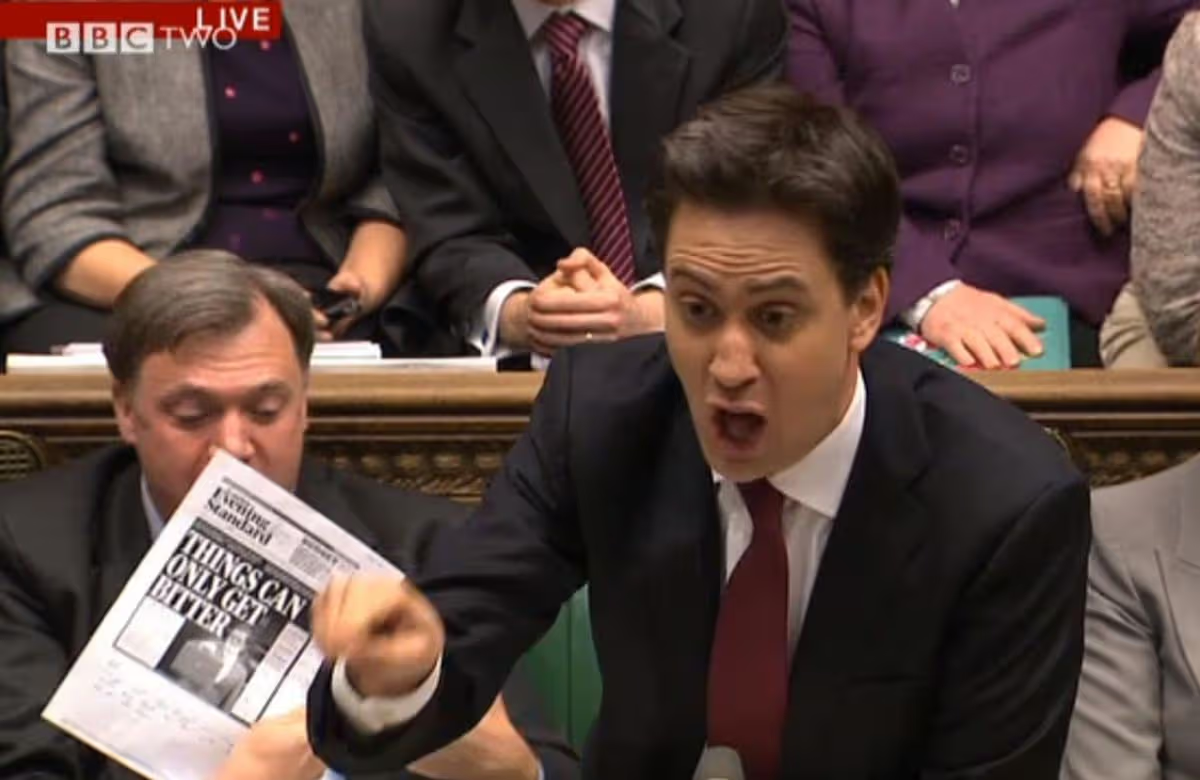
A few minutes after I tweeted out a photo of the day’s front page, I realised I had made a catastrophic mistake. As a graduate Evening Standard journalist, sharing the "splash" had been a daily task of mine, one of the paper’s tentative steps into the digital age. But almost as soon as I’d hit send that morning, users began retweeting it with comments like, “Hang on, how have they got the details of the Budget?”. Within seconds, news of the calamity was spreading across the newsroom. I glanced over to the backbench — the area where senior staff sat — and saw an editor punching his desk.
The reason for the chaos: the newspaper’s front page contained sensitive details about the March 2013 Budget that George Osborne was about to deliver in the House of Commons. The details had been briefed to the Standard’s political editor on the condition that they were absolutely not to be published until the chancellor sat down after delivering his speech.
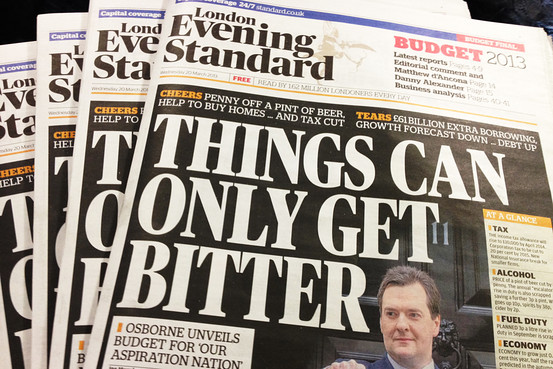
Instead, Osborne was greeted in the chamber by an ecstatic Labour front bench waving printouts of the image I had blithely shared with the world. The Standard’s editor Sarah Sands apologised to Osborne in a public statement, and offered her resignation to the paper’s Russian owner Evgeny Lebedev, who gave both Sands — and me — a reprieve.
"Budget-gate", as my colleagues called it, represented a violent rupture between the old world of print and the new and dangerous world of the internet. "It was a total clash of the times,” Sands recalls. “You were doing exactly what you should have done in the new world. And we were doing the old world: holding onto a print embargo." In the days following, senior executives were called into meetings and asked to come up with a digital strategy for the company.
But though we didn’t know it yet, it was already far too late. The Guardian had launched its app in 2009; The Times had introduced a paywall in 2010. In comparison, the Standard seemed like a dinosaur. Within a decade, it would be virtually extinct: the newsroom that counted more than 100 journalists when I left in 2015 now has fewer than a dozen. Two years ago, Lebedev closed the daily newspaper for financial reasons, and the weekly edition that remains has a circulation of just 150,000, despite being given out for free. While reporting this piece, several friends I spoke to weren’t aware that the Standard was still going.
What went wrong? For almost two centuries, the Standard has been a fixture of life in this city, breaking big stories, observing the cultural scene and shaping how the capital sees itself in ways that London now lacks. But if it struggles on long enough to celebrate its 200th birthday next year, that will be considered an achievement.
Some insiders blame Lebedev, widely portrayed as a vain and mercurial owner. In recent years, he has hired then fired numerous executives and increasingly indulged himself by using the paper to advance his petty grievances.
Others argue the Standard’s decline was inevitable. They see Lebedev as an eccentric but romantic figure, one who has plunged many millions of his own money to keep alive a newspaper his dad used to read when he was posted in London as a KGB spy.
Over the past few months, I’ve spoken to more than 20 former senior executives, editors, reporters and advisers to Lebedev, in an attempt to tell the inside story of what now feels like the paper’s final decade. Some of them asked to speak anonymously so they could be candid about their former employer — and in particular, about a complex man who many veterans of the Standard still find it difficult to explain.
In response to our story, a spokesperson said: "Lord Evgeny Lebedev is the proud owner of the London Standard. The Standard today is read by millions of digital readers with the company having transformed its operation to keep pace with the seismic changes in the media industry. The Standard’s 24/7 digital platforms combined with the distribution of 150,000 copies of the weekly print edition London Standard maintain it as the premier London publication."
‘I was absolutely gobsmacked’
In late 2008, staff at the Evening Standard believed that the newspaper was on the brink of collapse. It had already been struggling before the financial crisis, but suddenly everything was worse. Londoners weren’t buying the paper in the same numbers as before the crash but, more importantly, they weren’t buying homes, hurting one of the newspaper’s most lucrative income streams: property advertising.
“A group of us thought the newspaper was going to have to close,” says one senior executive who was working for the Standard’s then owner DMGT, the media conglomerate best known for owning the Daily Mail. “We knew the losses would get bigger and bigger. It was looking really terrible.”
One day during this period, the executive was told about interest from a potential buyer: Alexander Lebedev, a former spy listed that year as the 39th richest Russian, and his flamboyant, London-educated son Evgeny. The idea of anyone wanting to buy the Standard was scarcely believable, and the team behind the bid was equally surprising: the front man was Tatler magazine editor Geordie Greig, known as the best-connected man in Britain, joined by his best friend from their days at Oxford University, a digital entrepreneur called Justin Byam Shaw.
“When I was pulled in to be told that we’re selling the Evening Standard, I assumed it would be a room full of Morgan Stanley bankers and consultants,” recalls the former executive. “I was absolutely gobsmacked to see it was Justin and Geordie.” Both men had been successful in their careers, but neither had ever tried to turn around a heavily loss-making daily newspaper. “It was a bit like, Jesus Christ, I thought there was a plan here.”
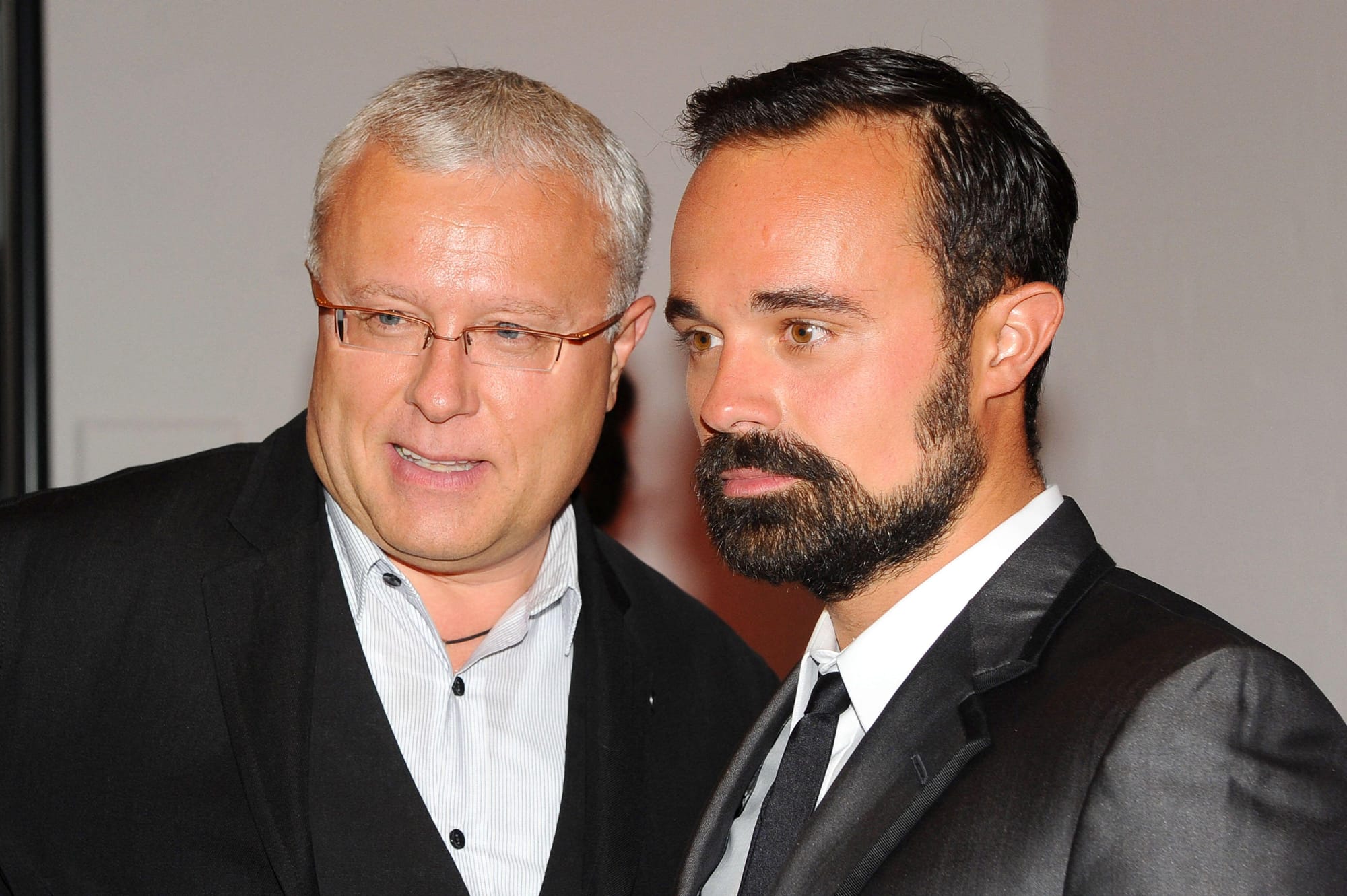
Alexander Lebedev’s experience as the proprietor of Novaya Gazeta, a respected newspaper in Moscow, may have prepared him for the eye-watering sums of money required. In one early meeting, the new owner was presented with a radical strategic move: to make the newspaper free, massively boosting its circulation and hopefully its advertising revenue. Alexander, an inscrutable man with short cropped white hair and glasses, watched the presentation and agreed to bankroll the transformation.
One obstacle to the revival of the Standard was that many Londoners didn’t seem to like it anymore. The average reader, one reporter told me, was a middle-aged male commuter who worked in the City of London and lived in the Home Counties. The paper’s coverage sent out the message that “London is a crime-ridden cesspit, apart from Kensington, which is wonderful,” says my source.
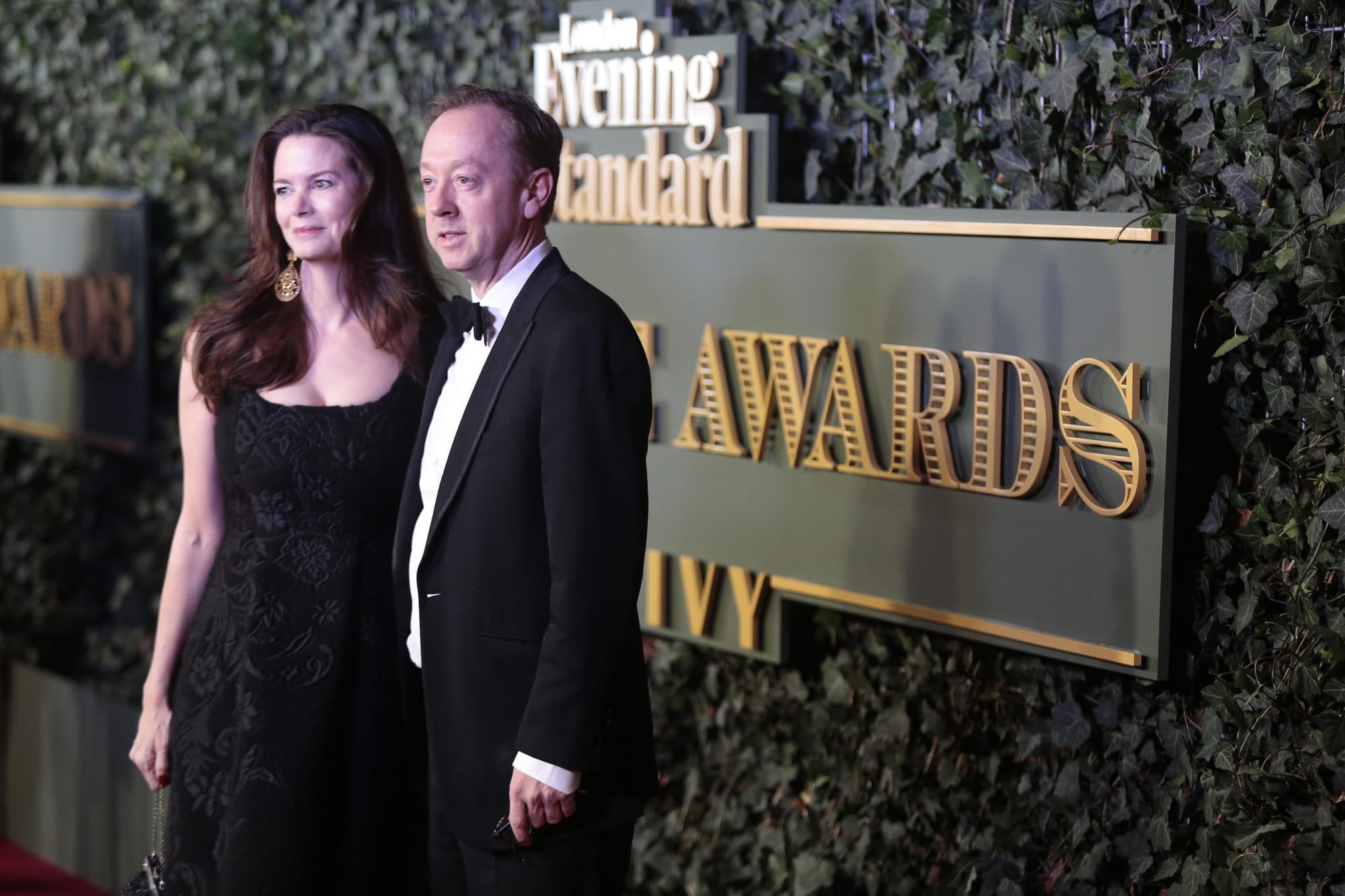
Greig, who soon took over as editor, wanted to change that. “Geordie came in and said, ‘We’ve got to be positive about London,’” the reporter recalls. Within months of the takeover, the company emblazoned the word “Sorry” over thousands of billboards across the city, an advertising campaign that some of the journalists found demeaning of their work but which was intended to signal a clear break from the past.
This new approach — allied with making the paper free — changed the reader profile. “It became a much younger, more gender balanced audience,” the reporter recalls. It also transformed the paper’s finances. 900,000 copies of the paper were soon being distributed each day and, within two years, the newspaper was back in profit. Advertisers loved the mass audience of tube-travelling Londoners the Standard could offer – Londoners who at this point still had nothing else to read on their commute.
The paper’s campaigns — most notably its award-winning “Dispossessed” campaign raising money to tackle poverty, inequality and exclusion across the city — showed a newspaper with a heart that cared about its city. Evgeny Lebedev threw himself into promoting the campaigns, deploying his contact book to get major celebrity endorsements.
Greig left in early 2012 to edit the Mail on Sunday, and his deputy, Sarah Sands, took the reins as London prepared to host the Olympics. It was a heady, optimistic time in the capital, and the Standard saw itself as a cheerleader for a city in its pomp. "It was sheer exuberance," Sands tells me, recalling the mood of that time. "You thought that there was nothing London couldn't do."
Some of the paper’s boosterism would look foolish in retrospect. It allied itself closely with two grand projets associated with then-mayor Boris Johnson: the "garden bridge" and a proposed new airport in the Thames estuary. Though both looked fantastic when rendered as CGIs in the Standard, neither came anywhere close to fruition. But the paper’s new mass audience gave it considerable clout. "If I wrote something in the morning, I would have it repeated back to me at night," recalls James Ashton, then the City editor. "The way the Standard echoed around the city was very clear".

For most of its life, the Standard’s status as an evening paper had given it a defensible niche compared to its morning competitors on Fleet Street. Before the internet, the Standard basically was 24-hour news: a rolling service that updated the city with a dozen or more updating editions through the afternoon. “I remember that minister's cars would glide past and the chauffeurs would get out and pick up a paper,” says Sands, recalling her first stint on the paper in the 1980s.
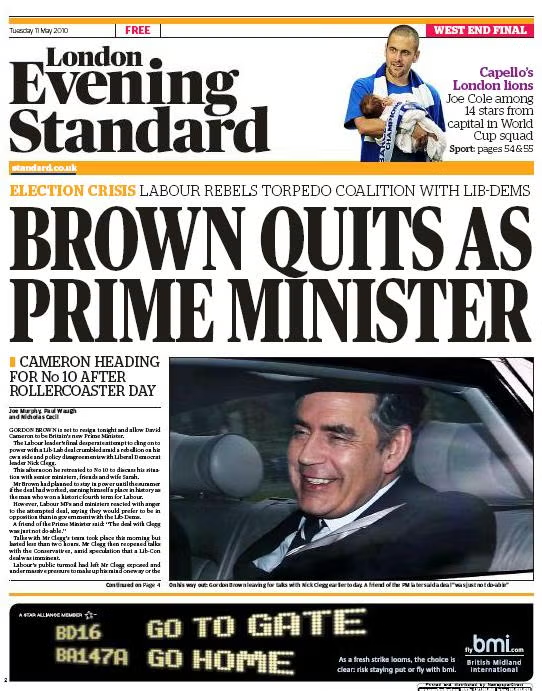
When she came back after the Lebedev takeover, the web had taken over as the place to find rolling news, and most of those editions had already been dropped to save money. But on many news days, commuters would still find stories in the Standard they hadn’t yet heard about. "When the news dropped, it was like snowfall," is how one editor put it to Ashton. “And the Standard was the first to go out and play in the snow.”
Though the newsroom occasionally discussed the notion that there might one day be internet access on the tube, the success of the free experiment drowned it out. Other newspapers were starting to invest seriously into their digital offerings — including the Independent, the other newspaper owned by the Lebedevs, which has found a measure of success as a digital brand — but the Standard’s revival was driven by print, and that remained the priority. “For far too long the website was treated as a sort of eccentricity,” one former writer recalls. “Print and digital sat in separate parts of the newsroom and no one on print got any digital training.”
As the print business revived itself, complacency set in. “We didn't see there being any problem at all about the future,” a senior executive admits. “People talked about WiFi [on the tube], but we thought a good quality paper, that's free, people would still pick it up."
‘Friends of Evgeny’
In September 2011, a few months after I joined the Standard as an unpaid intern on the letters desk and then a graduate features writer, an online video made everyone in the newsroom laugh — and then panic. It showed Alexander Lebedev on the set of a Russian TV show punching a property developer called Sergie Polonksy, twice, and knocking Polonksy off his chair. Initially, this seemed hilariously absurd, until we quickly realised it could have profound implications for our jobs.
“It was a time of high tension,” one senior journalist remembers. Alexander was later charged with hooliganism and assault by the Russian authorities, and some in the newsroom assumed he would have to sell the paper. In the end, the punch precipitated a different change: the arrival of his son Evgeny as the Standard’s recognisable proprietor. As the senior journalist puts it, "Evgeny came to the fore."
This story is free to read. You just need to sign up to join The Londoner's mailling list. And why wouldn't you? You'll get our journalism in your inbox the second we publish, keeping up to date on this and all our stories. No card details required.
Already have an account? Sign In