Hello! If you've been enjoying our work and you believe in the importance of high-quality journalism, then boy do we have a deal for you: supporting The Londoner for only £1.23 a week for the first three months (£4.95 a month).
In return, you'll get access to our entire back catalogue of members-only journalism, receive eight extra editions per month, and be able to come along to our fantastic members' events. Just click that red button below.
Hello and welcome to The Londoner, a brand-new magazine all about the capital. Sign up to our mailing list to get two completely free editions every week: a Monday briefing, full of everything you need to know about that’s going on in the city; and a high-quality, in-depth weekend long-read.
No ads, no gimmicks: just click the button below and get our unique brand of local journalism straight to your inbox.
Hello and a very happy new year from The Londoner! We hope it's off to a good start already. Usual service will resume on Monday (with our usual jam-packed briefing), but until then please see out of the last of the festive season in style with this piece from Peter Carlyon. In it, he meets the people behind some of London's oldest (and most idiosyncratic) shops to find out how they stay in business in a city as expensive and modernity-obsessed as the capital.
Shops in old London have always specialised in the specific. In Jane Austen’s Sense and Sensibility, Mr John Dashwood arrives in Oxford Street to “bespeak Fanny a seal” — to commission a wax stamp — while nearby shoppers browse feverishly for toothpick cases.
But though you can still find just about any item across the capital today, many of the more niche parlours have retreated online. Yet some of the city's oldest and most esoteric shops are still going strong, swimming Michael Phelps-like against the tides of business closures and modernity. I spoke to their owners and managers to find out how they’ve managed to endure in 21st century London.
An honourable mention must go to Taylors Buttons, whose website tells you all you need to know: “WE SELL BUTTONS. WE MAKE BUTTONS. BUTTONS FOR ALL OCCASIONS.” After over 100 years of buttoning up the West End, they narrowly swerved oblivion this year by crowdfunding £20,000 for rent arrears. When I paid their shop a visit shortly before Christmas, they were taking a well earned hiatus until the New Year.
I should also nod to Get Stuffed, the Islington taxidermist, who said they were simply too busy stuffing Londoners’ beloved pets in time for Christmas morning to be able to speak. Next time, perhaps. Until then, three of the capital’s most intriguing and iconic businesses were willing to tell their stories.
L Cornelissen & Son, art supply shop
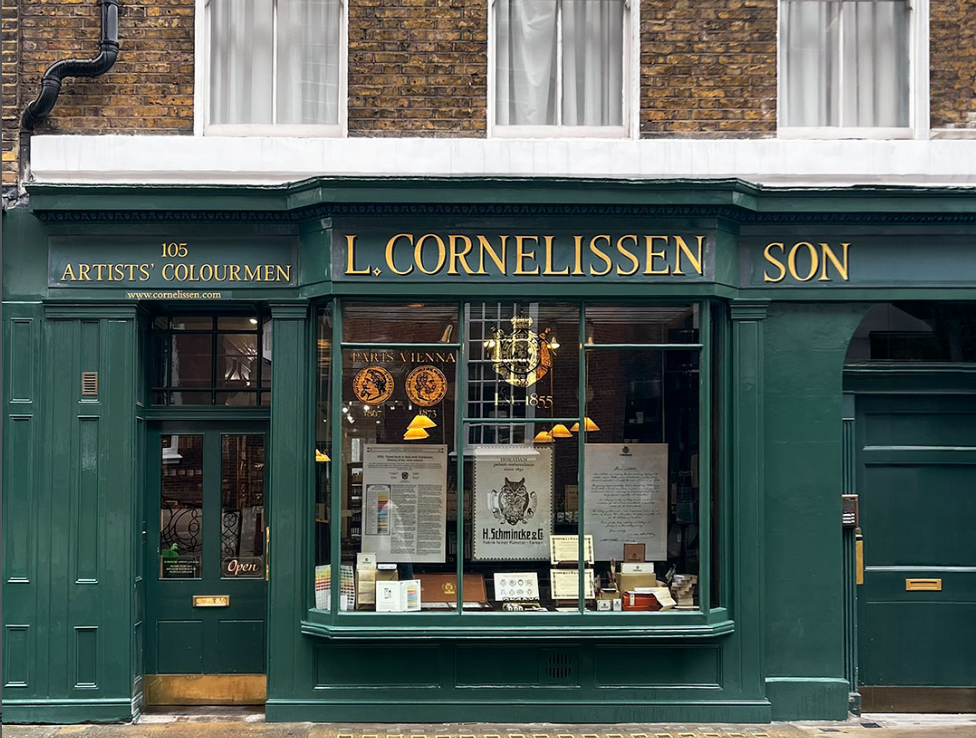
Traipsing across London one morning in the late 1970s — at 6am, “the best time of day” – Nicholas Walt found himself looking up at the British Museum. “The early morning sun was just catching the gold [of the facade], and I thought that was very beautiful. So I was quite excited by something that was not at all relevant,” he says, when he came to discover a nearby premises for lease at 105 Great Russell Street, formerly a publishing house. His opportune good mood meant that he decided to take it on, and he has run his legendary art supply shop there ever since.

L Cornelissen & Son is an enticing sight: teal fronted, with its name hand-painted in large gold letters. Inside, it offers a dazzling range of products, from rabbit skin glue for priming canvas to hand sculpted tools for etching granite plates. The original Cornelissen family were Flemish lithographers who first began supplying London printmakers in 1855.
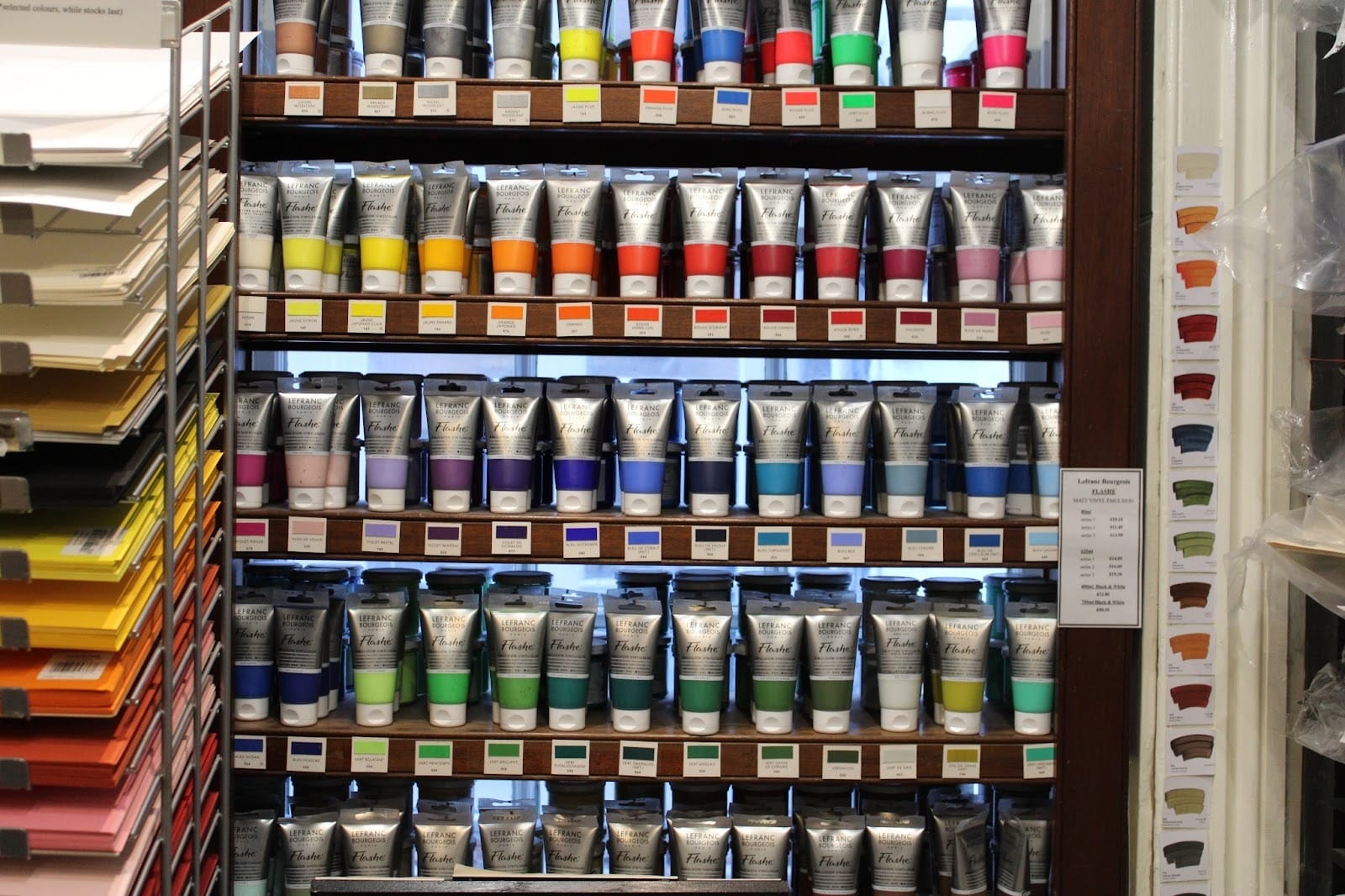
“You’ve got to be interesting,” Nicholas says. “So we’re interesting to look at and be in.” To the left as you enter are 440 varieties of oil paints. Above those are powdered pigments for which Cornelissens are famed — lapis lazuli, cadmium red, cerulean blue — still in the original jars from the 1800s. To the rear of the shop, a vast amount of paintbrushes are fastened to the black Victorian panelling with metal hoops. Those begin at 2mm synthetic hair for £4.75 through to the £400 sable brushes made from the tails of Siberian pine martins.
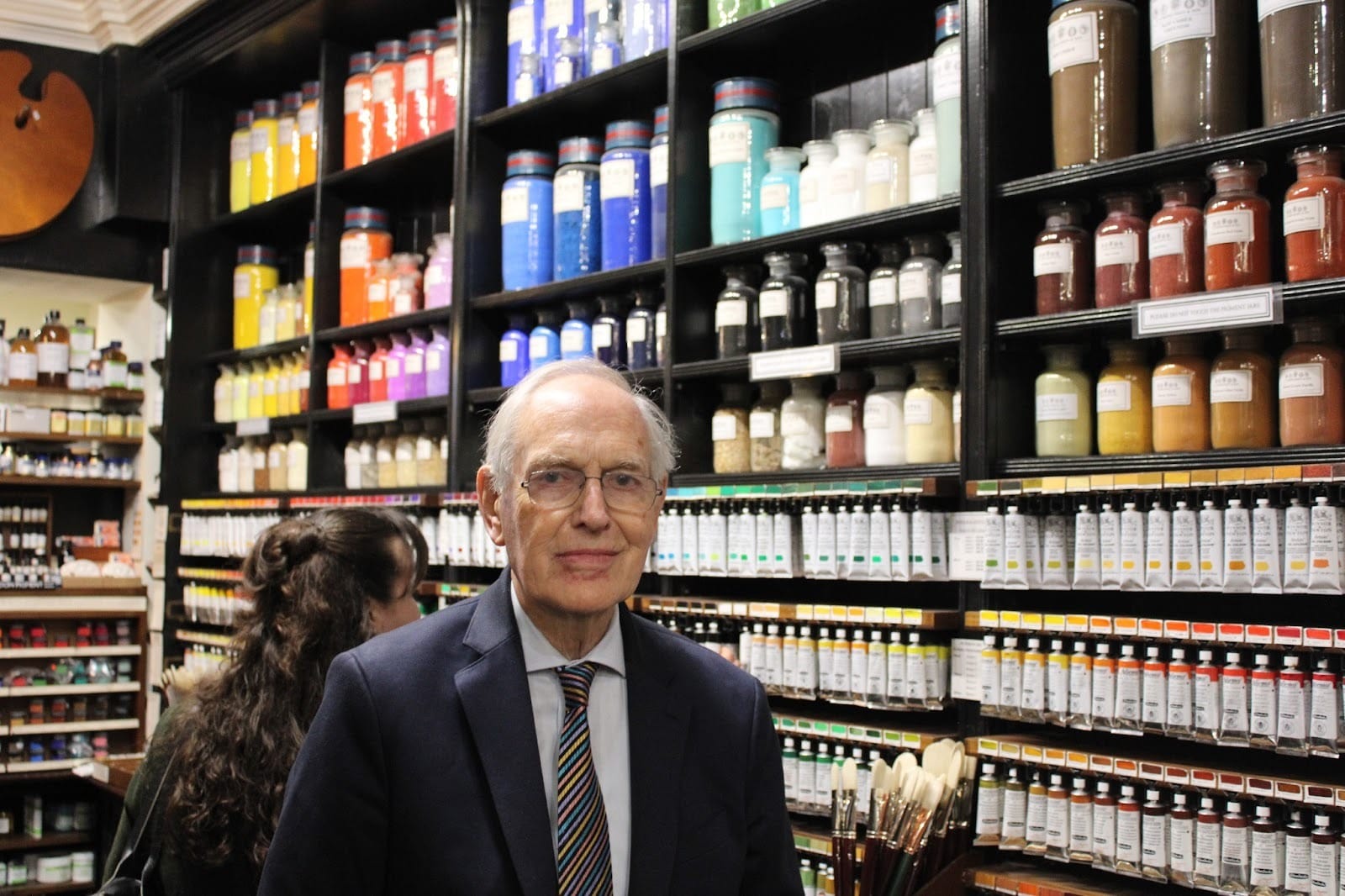
Their customer base are mostly the “committed amateurs” of the London art scene, Nicholas says, though they also count celebrated painter Bridget Riley among their clients, along with The Times cartoonist Peter Brooks. When I ask how they have endured so long, Walt credits his staff, most of whom are young artists, as well as a healthy slice of luck. A property crash in the early 1990s allowed him to purchase the prime real estate he’d been leasing for only £370,000. 70% of their business takes place in the shop rather than online, he says, whilst they do not take computerised records of much of their stock.
Keeping the shop pristine certainly helps too. As I'm leaving, Nicholas points towards an imperceptible scuff along one immaculate floorboard, and says it is about time to get those planks re-varnished.
105 Great Russell St, London WC1B 3RY
James Smith & Sons, umbrella shop
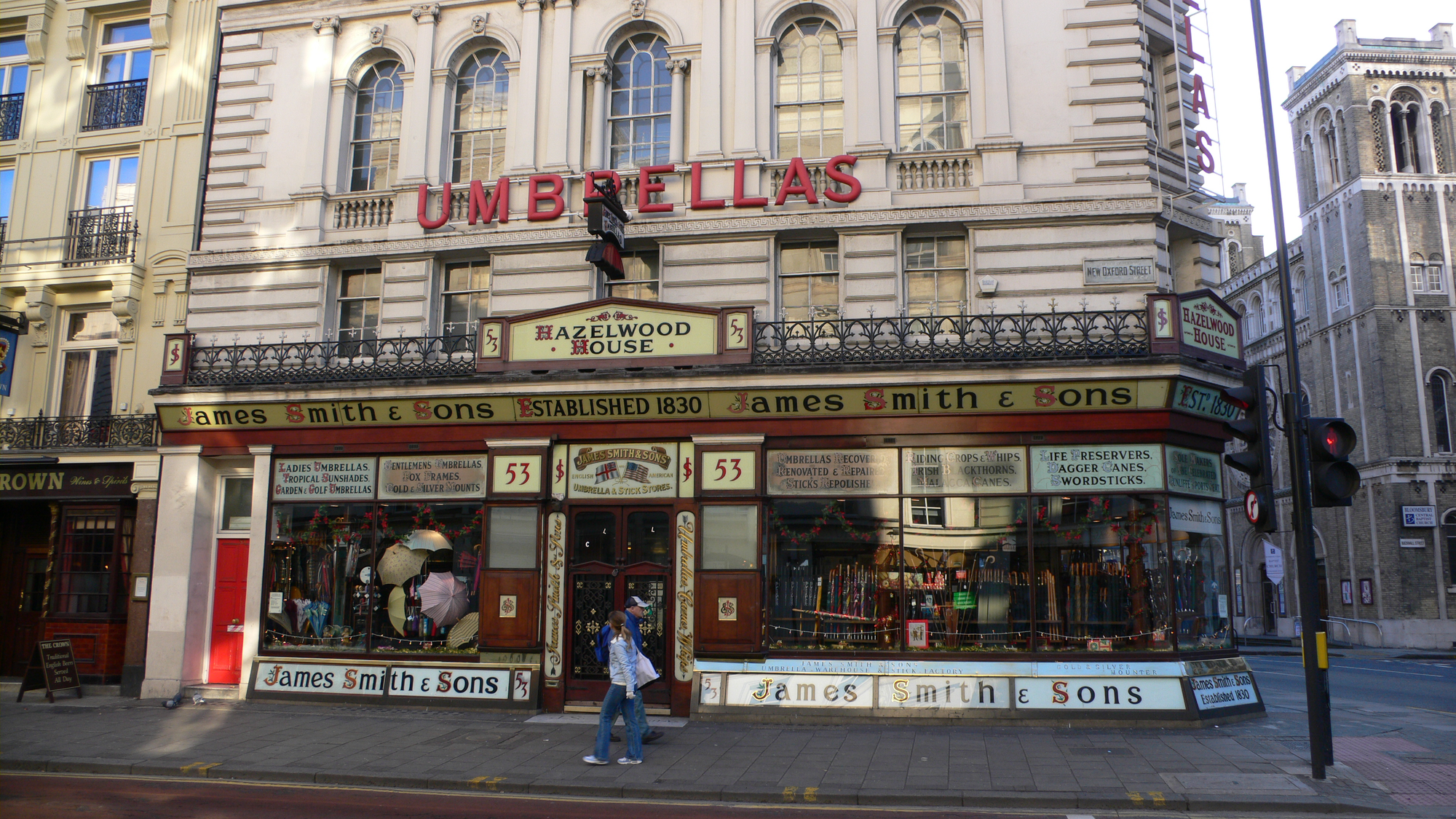
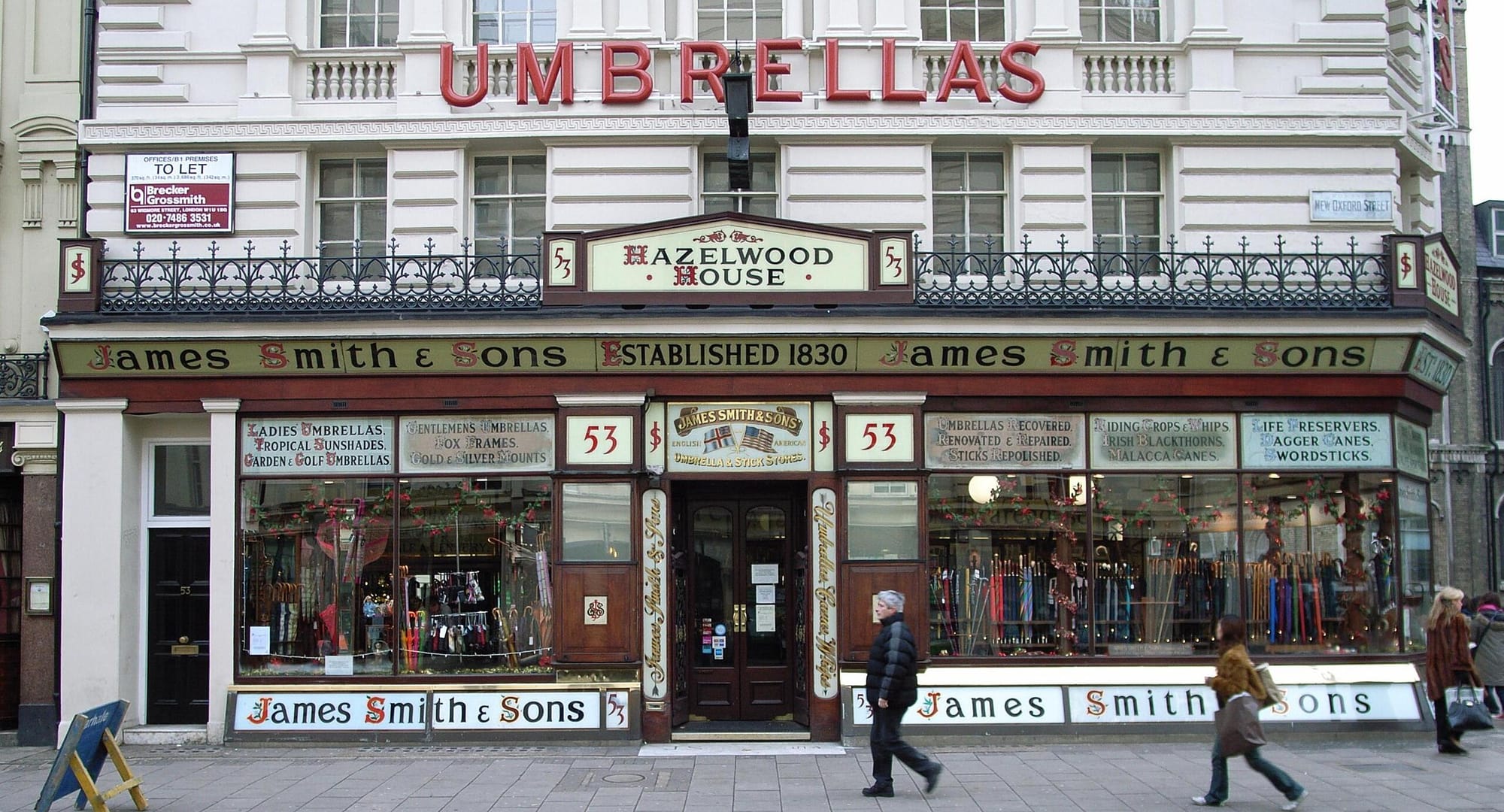
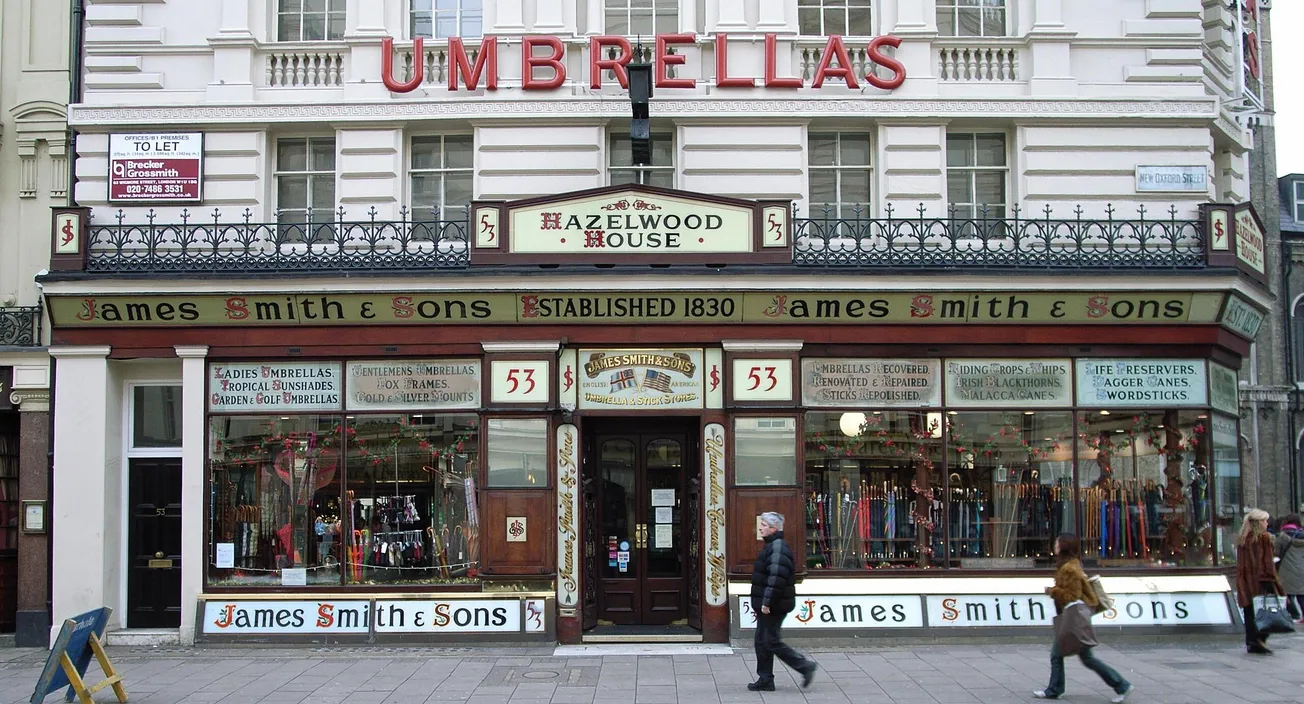
The iconic umbrella shop first opened in 1830 on Foubert Place, just off Regent Street, before moving to its present location on New Oxford Street. A welcome reprise from those high street shops which take after airport duty free sections for design, the interior of James Smith & Sons has all the handsome wood panelling you’d expect, though it's a little faded after all these years.
“It’s about customer service and experience, and we deal more with tourists than locals now,” says soft-spoken store manager, Phil Naisbitt, when I beat my way past a crowd of umbrella hungry Americans to ask about their business. Ushering me to a corner of the shop, he says that he used to work in IT before the shop’s old world charms lured him in around 12 years ago: “It was the smell of the wood and the wax of the polish when you’re walking through the door in the morning… And you think that people have been opening and closing those gates there for over 150 years.”
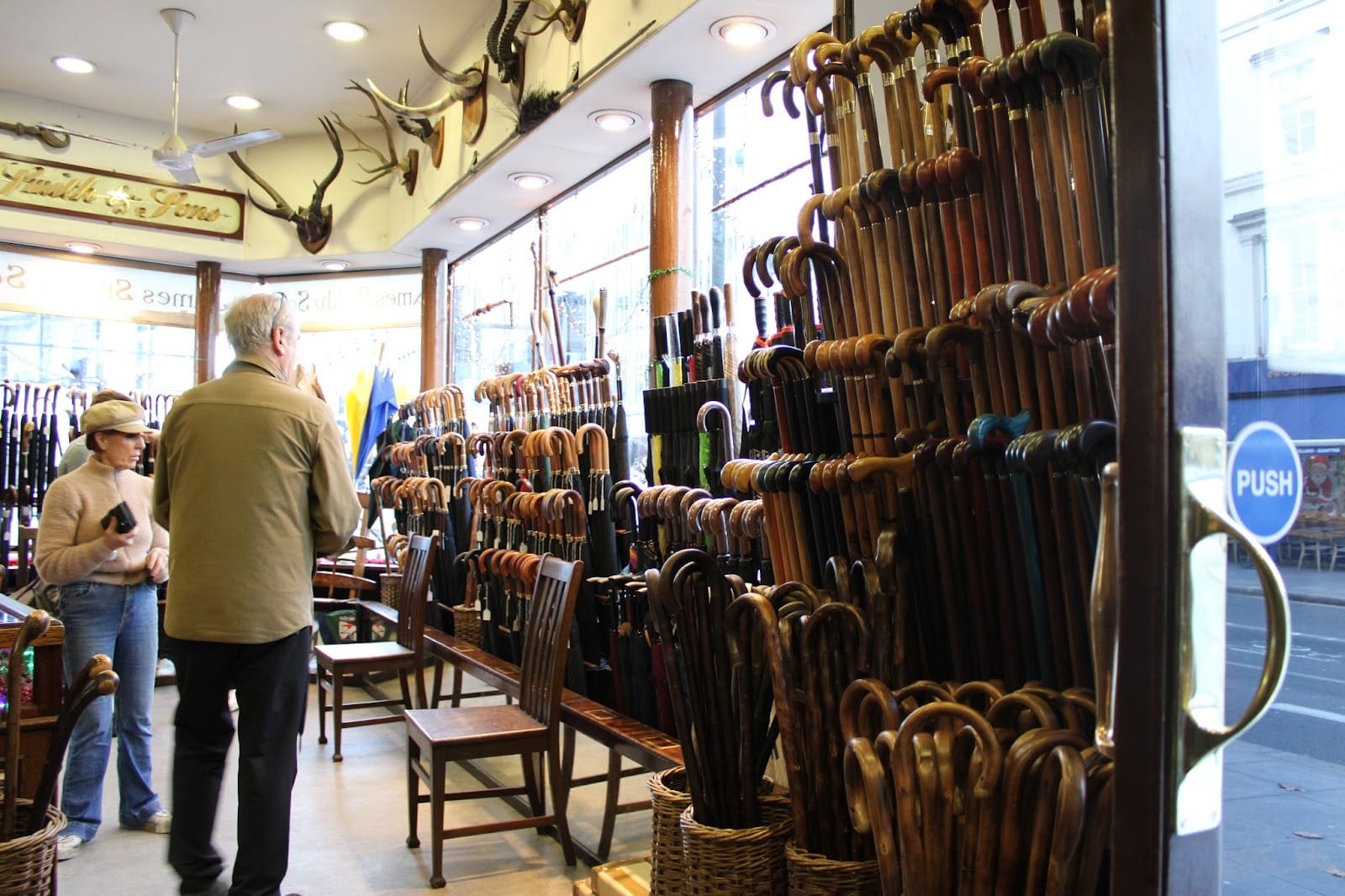
Over that time the store has remained largely unchanged. They have a workshop in the basement for assembling and constructing made-to-measure items. Many of the most striking pieces have animals carved into the handles: a trout fashioned from ram’s horn, a silver hippo’d cane commissioned by a Nigerian prince and many, many kinds of dog etched into wood. Phil’s favourite piece is his own, a city umbrella built from walnut, with the loyal face of his old Border terrier for a handle.
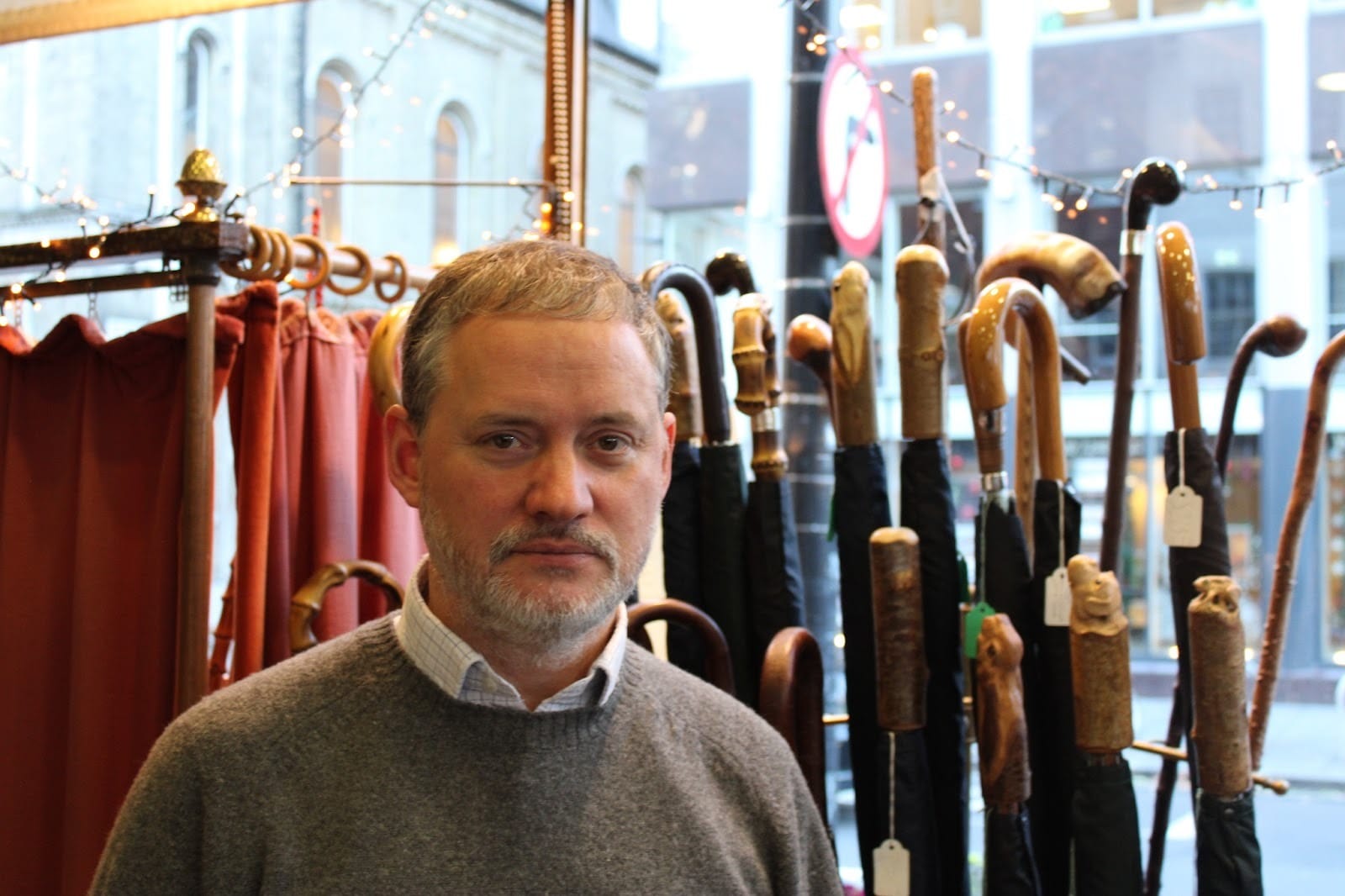
When I question Phil on how they’ve managed to stay in business so many years, he says it’s about making sure the store is well staffed, ensuring they’re able to offer a tailored service — “what was available in every shop until the 1970s” — and goes against the idea of diversifying his stock. “Stick to what you know,” he says bluntly, and hire people who like coming to work. When one staff member innocently asks what I’m doing there, a younger colleague helpfully interjects and gestures to us together, joking that I’m writing a story “about the umbrella shop’s dumbest employee.”
Hazelwood House, 53 New Oxford St, London WC1A 1BL
Happy new year to our lovely readers. Having a good one so far? Here's one way you could make ours even better: by becoming a paying supporter of The Londoner. We aren't backed by billionaires or private equity firms (as much as that might make things easier, we're fiercely devoted to our independence and integrity). That means it's only through reader subscriptions, from people exactly like you, that we can continue to exist.
At the moment, we have 1,138 incredible paying members. By the end of this year, we'd like to be at 1,250. Can you help us get over the line? Becoming a supporter gives you access to all of the members-only content in our archive, as well as putting you at the vanguard of a media revolution. So, if you think the city deserves proper journalism, consider backing us for just £4.95 a month for the first three months.
G Baldwin & Co, herbalist
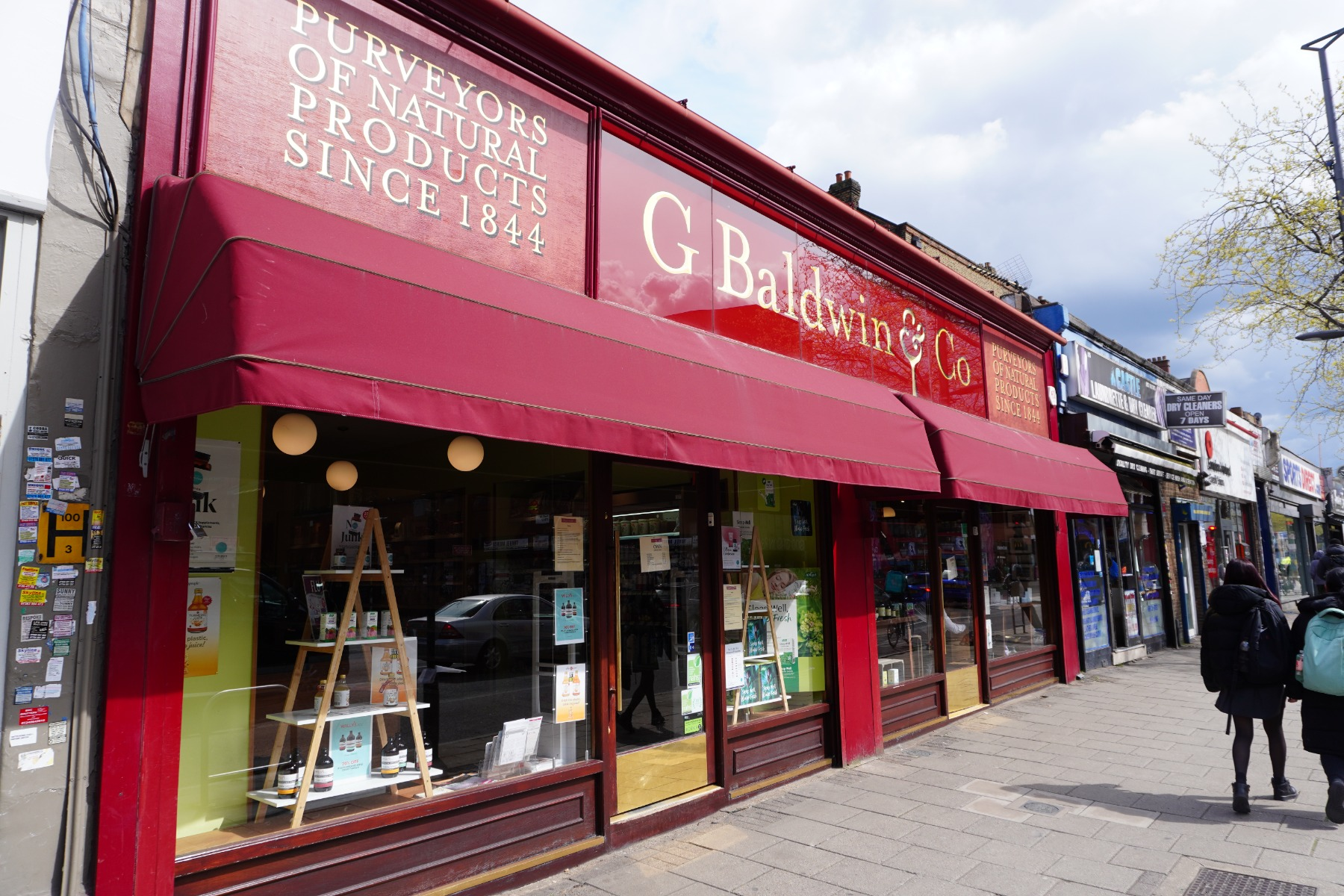
G Baldwin & Co is London’s oldest herbalist, first opened as an apothecary by George Baldwin in 1844. They sold medicinal concoctions fit for both humans and animals, including George’s Great Dane, Prince Brindle.
These days Steve Dagnell — chipper, tall — is in charge, after his grandfather purchased the business shortly after world war one. The shop in Elephant & Castle is divided in two, the left-hand side selling health foods and supplements, painted in the modern pastel shades of a Holland & Barrett. The side to the right is pleasingly old-school. Stacked atop wooden cabinets are 19 Chinese herbs, 124 tinctures — extracts made by soaking herbs in alcohol — and over 60 essential oils, many of which are held in the ceramic pink pots and mahogany drawers inherited by Steve’s grandfather.
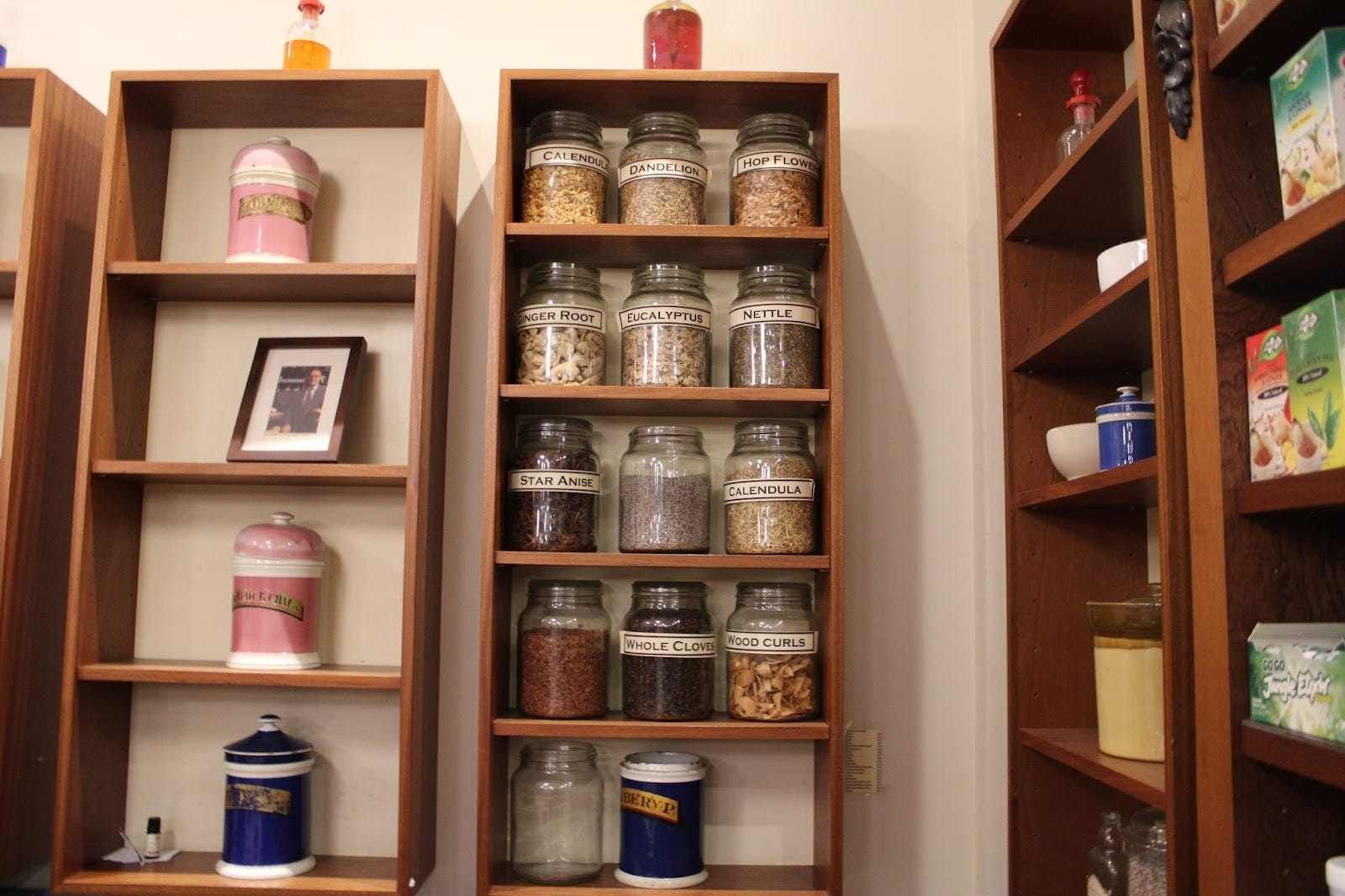
The world of homeopathics and herbs is notoriously fad-prone, so Steve grudgingly — “I mean it’s obvious, isn’t it?” — attributes their success to an ability to adapt. A post-pandemic penchant for turmeric has cooled, though sales of sarsaparilla, a drink made from smilax vine, are still going strong. Online and orders make up 65% of their business, with Steve having established a mail-order business in the 1980s and a website in 1998.
One key customer base is the local African-Caribbean community, who Steve says his father welcomed when the Windrush generations first arrived in the 1960s and 70s. “I don’t want it to sound like I’m telling you my father was Mother Theresa of Calcutta or something, I’m not saying that, but he was just a nice guy,” he tells me over cups of tea. “[He] treated everybody decently and people respect that. And I think that’s fair enough, isn’t it?”
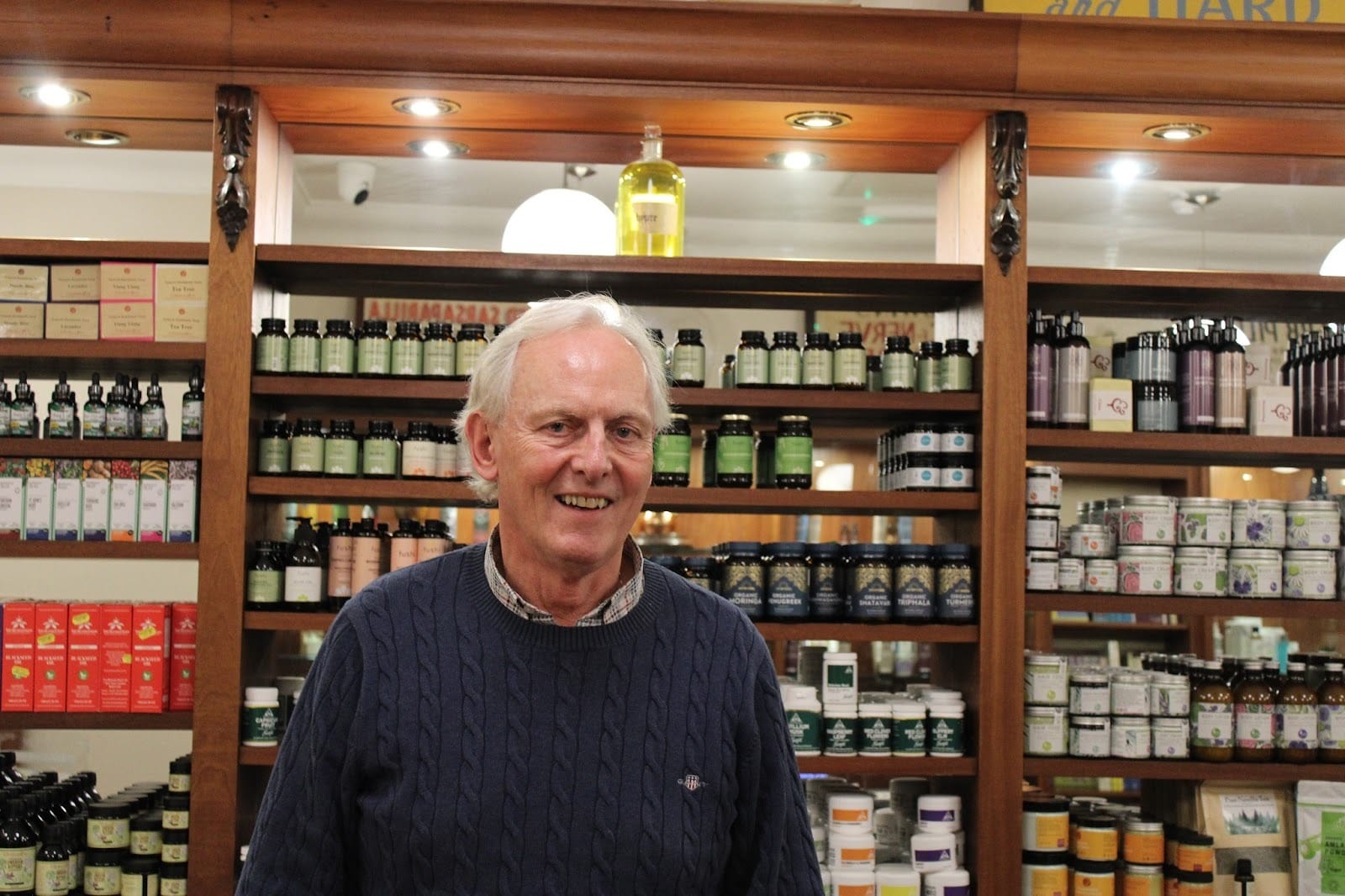
Taking me through the back of the store, Steve brandishes £12.50 bags of dried sea moss destined for export — “I know the guy, Neil, he pulls the stuff off the beaches in Ireland” — and boxes of own-brand massage oils ready for a Singaporean hotel chain. As for the future? Steve frowns. “Mushrooms are very, very hot at the moment”, he says knowingly, though that could easily change.
171—173 Walworth Rd, London SE17 1RW
If you enjoyed this piece and want to be sent more in-depth investigations and features, why not join up as a Londoner member today? This means you'll get weekend long reads like our piece profiling the capital's early birds commuters and Monday briefings like our update on our story about the penguins trapped beneath Southbank delivered straight to your inbox.
No ads, no gimmicks: just click the button below and get two high-quality pieces of local journalism each week, all for free.