Hi, I’m Andrew, the staff writer at The Londoner who wrote today’s deep dive. To read all of it, you’ll need to be a full-fledged paying member. Let me explain why: through our investment in our growing team, we believe we can bring back high-quality, independent local journalism. But it’s a huge and expensive undertaking — we're currently being sued by an Airbnb scammer — and we need your help.
So we’ve sweetened the deal: take out a year’s membership of The Londoner, and we’ll give you two months completely free — and you’ll be supporting a small team working tirelessly to cover the most important stories in the capital. What's more, you'll get access to our entire back catalogue of members-only journalism, receive eight extra editions per month, and be able to come along to our fantastic members' events. Thanks so much for your support.
David Hunter was standing in a gargantuan warehouse in Leighton Buzzard staring at the future of London’s transport. The mock-up train platform had colossal concrete cladding leading to a vast ceiling and soft lighting over sleek glass doors. It looked like it ran on for hundreds of metres to the ends of the warehouse, though that was just a trick involving mirrors and good lighting. He was lost for words.
The year was 2009, and Hunter, client director for stations and development at engineering giant AtkinsRealis, was looking at the first physical iteration of an Elizabeth line platform. It was a project that had already dominated over four years of his life, and would go on to occupy almost 18 years in total — the same as most people put into raising a child.
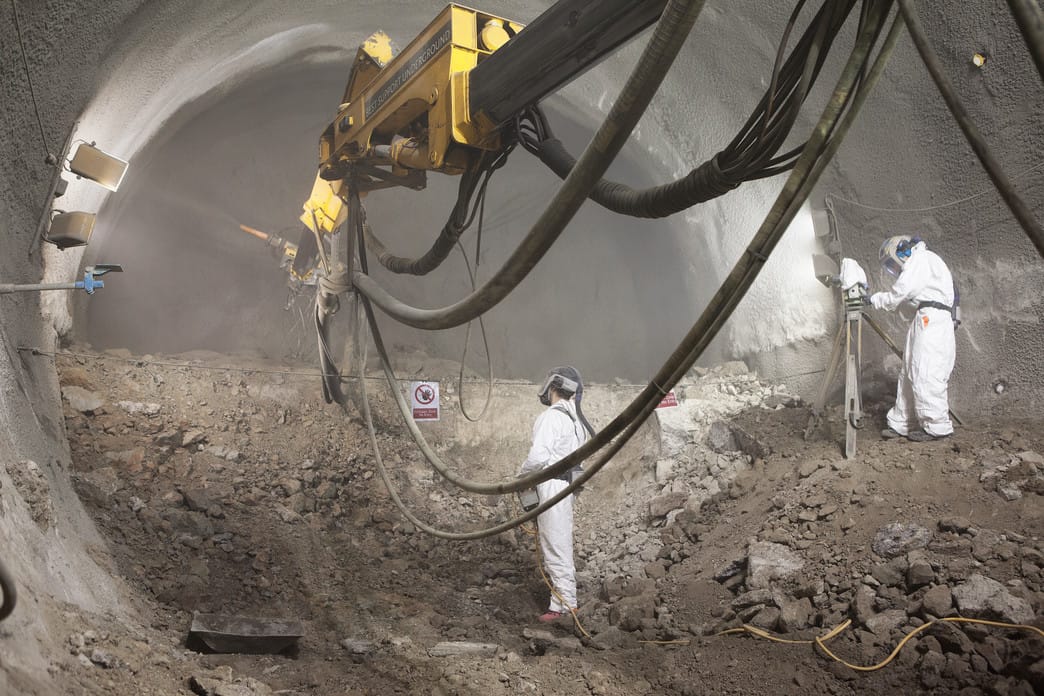
Why am I hearing about the minutiae of Hunter’s 73-mile long, lilac-coloured baby? Well, in the last few months, there’s been a lot of talk about the next generation of tube extensions in the capital: the DLR to Thamesmead, an overground running from Hendon to Hounslow and the long-awaited Bakerloo line extension to Lewisham.
But how do you go from wanting a new tube to designing, building and cutting the ribbon on the thing? I dug deep to find the inside story — and found an army of contractors, animal-bone skates and a secret team at TfL.
Impressing the tube gatekeeper
Let’s say, hypothetically, you’re a lowly magazine journalist that lives in Kilburn and you’re desperate to get a new branch of the Jubilee line to weave its way into Peckham to save you from the agony of the hour-plus, multi-train overground trips to meet your friends in the pub.
Well, your first port of call would be Matthew Yates. Formally, he’s the head of network extensions and runs the “investment planning” team at TfL. What that means in practice, is that he and his three dozen underlings are the gatekeepers of every new transport project in the capital.
They decide whether the Bakerloo line extension to Lewisham gets the seal of approval, or the proposals for the west London tramway get crumpled up and lobbed into the nearest bin. “My role, really, is to take an idea and see if it's worth doing,” Yates, in his 50s with slicked dark hair and an atmosphere of self-assured calm, tells me over a video call.
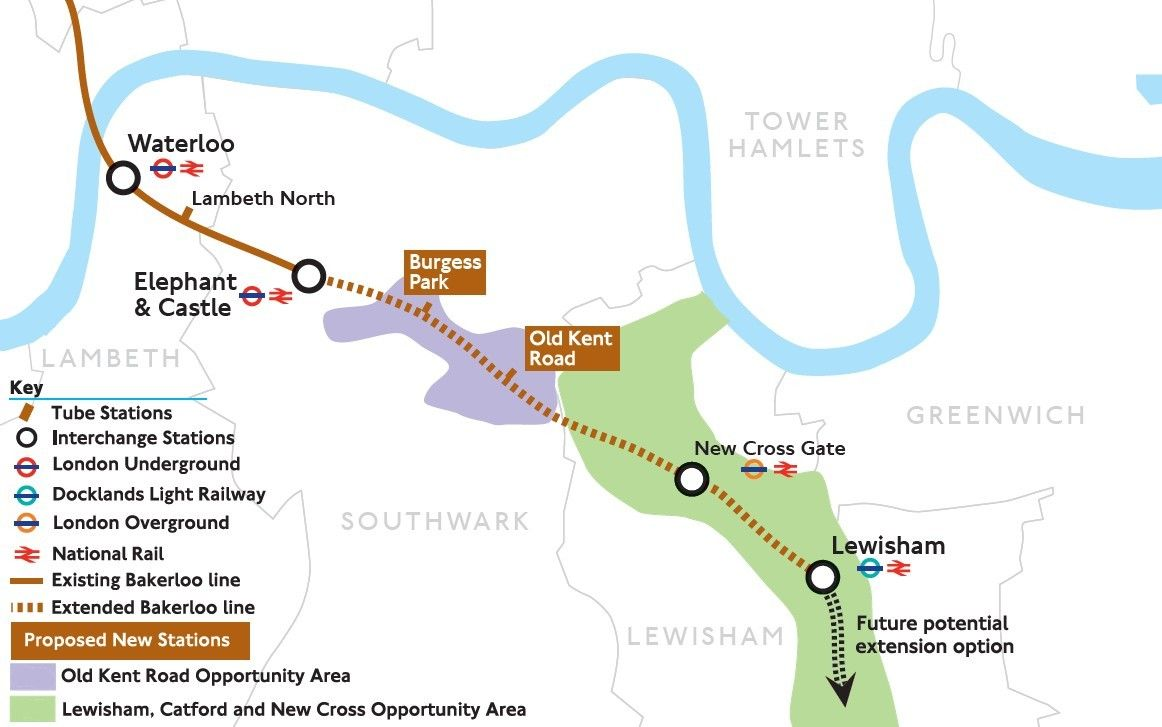
Sometimes the ideas brought to them by government, councils, local activists or really motivated members of the public who’ve “done drawings on maps of potential lines” are pretty out there. Like the time a campaign group tried to get TfL to rip through a big section of central London to install a new tram. But most of the time, the ideas themselves aren’t that new — the concept of Crossrail (which ended up becoming the Elizabeth line) has been around since the 19th century — but suddenly suit the needs of the city more than they did in the past.
Whatever the source, Yates and his team basically have to determine two things about the ideas brought to them. One, are they actually possible? And two, are they in the interests of the city? For the latter, there’s one “framework” that TfL venerates like a bible: the London Plan.
For those who aren’t au fait with City Hall machinery, the plan outlines which parts of the city will go through major transformations, usually involving tens of thousands of new homes and businesses. And at the top of the list for what radically alters a community? Its transport links. Put simply, the Plan designates which areas Yates and his team are allowed to transform, and only a small number of projects pass the litmus test.
But if something does manage to get through, what comes next is decidedly less exciting. In fact, it’s a bureaucratic slog that can last for decades: cost benefit analyses; assessments of the land needed to be purchased, the viability of its size; budgeting negotiations with developers, councils and central government and projections about potential impacts on growth and housebuilding.
Some of the downsides they have to assess seem near nonsensical from the outside. “One of the issues is, if you extend a line, sometimes you're too successful,” Yates explains, patiently. “By the time you get to the areas you really want to serve, you could be full up, there could be too many passengers.”
London deserves great journalism. You can help make it happen.
You're halfway there, the rest of the story is behind this paywall. Join the Londoner for full access to local news that matters, just £8.95/month.
SubscribeAlready have an account? Sign In