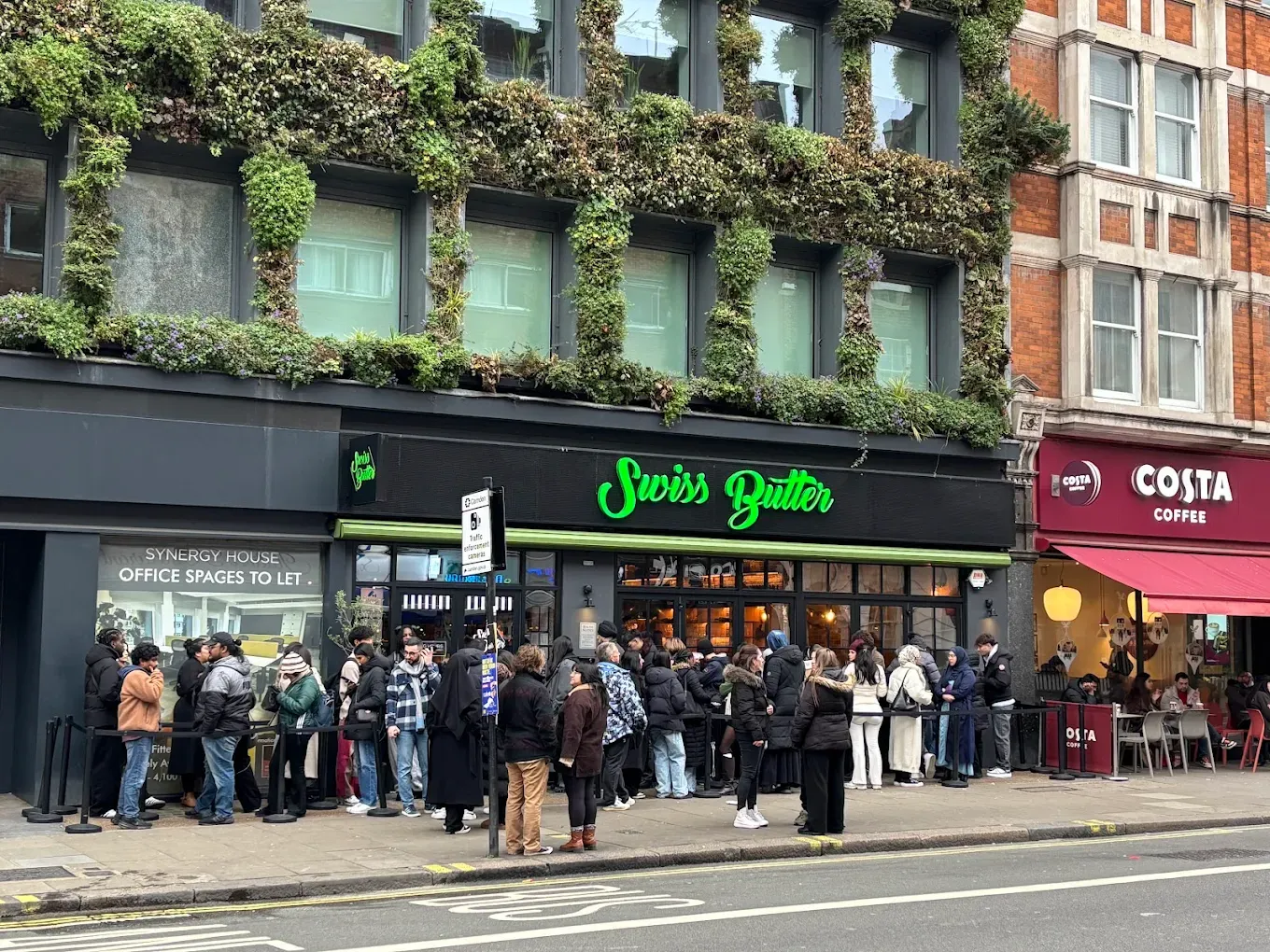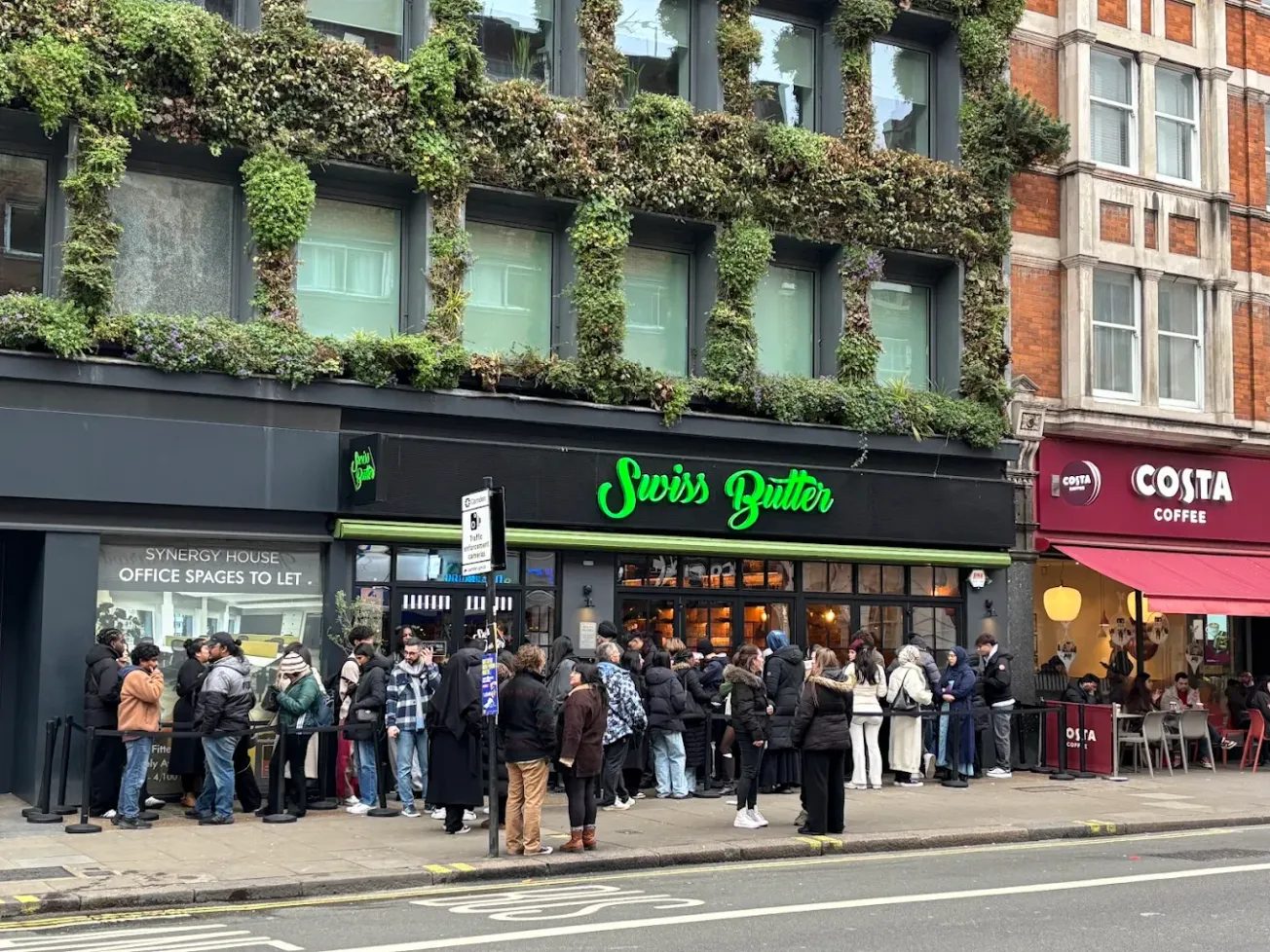
Walking through Holborn recently, I noticed dozens of people patiently shuffling millimetres forwards in an airport-style staggered queue for Swiss Butter, a steak restaurant founded in Lebanon. At the head stood a security guard, his earpiece curling, viper-like, out of his collar. Stern-browed and grim-jawed, he alone seemed to know the carnage that may break out if he were not present.
The restaurant is not, to my knowledge, particularly unique in its concept or appearance; there was nothing that seemed to immediately signal why wannabe patrons would wait in the pouring rain to enter one of the hundreds of butter-slathered steak restaurants in the city.
Yet the queue outside Swiss Butter isn’t particularly remarkable; walk through Soho on a weekday and you’ll see at least half a dozen. Queues can be for anything: pasta restaurants, pop-up shops, trainer drops, album listening parties, even the red telephone boxes near Big Ben.
But more often than not, they’re for food. This transcends cuisine, location and price bracket: Bun House, Humble Crumble, Noodle Inn, Beigel Bake, Apple Butter Cafe, Monmouth Coffee, Chatsworth Bakehouse, The Black Pig, Italian Bear Chocolate, Padella, Lebanese Grill, Chinatown Bakery; the list of restaurants with hour-long queues could itself stretch all the way down Long Acre.
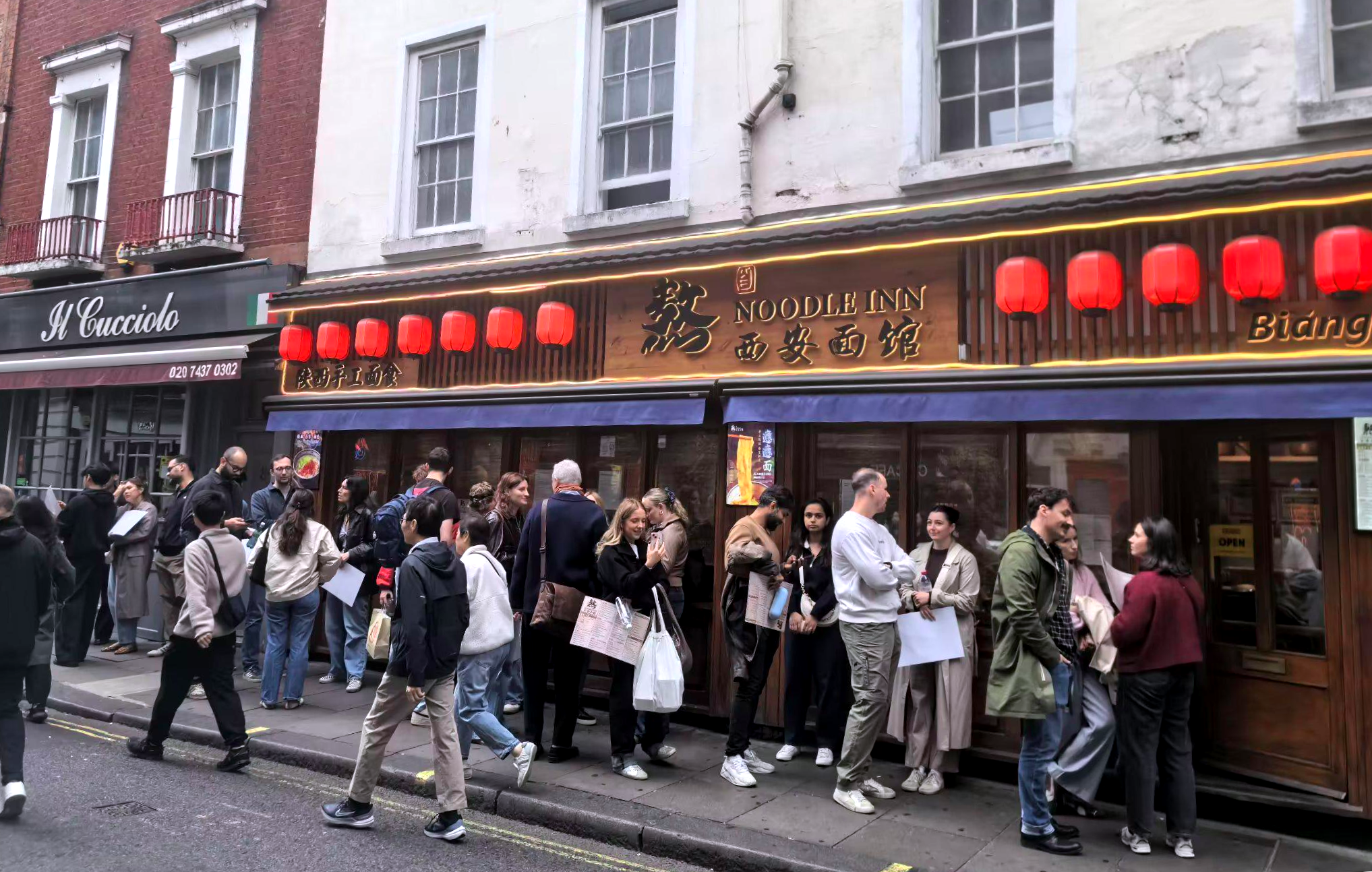
It feels like queueing is no longer an inconvenience suffered in order to access London’s restaurants: instead, it’s baked into the business model itself. But how do you make a successful queue? And why is everyone joining them?
Enjoy our explanation of all those long lines you've seen snaking around the capital? Good news: there's plenty more where that came from. The Londoner produces great reporting and peerless writing about everything from education to politics, crime to conservation in the capital, as well as features like this one. And what’s more, half of everything we publish is totally free to read. This means you'll get weekend long reads like our piece on the enduring appeal of the Regency Cafe and Monday briefings like our update on the penguins trapped beneath the South Bank delivered straight to your inbox.
No ads, no gimmicks: just click the button below and get two high-quality pieces of local journalism each week, all for free.
A mecca of queuing
A clue lies, perhaps, in the highlighted “collabs” section of Swiss Butter’s website, which boasts “1 million online impressions and counting”, and encourages “content creators” to reach out and engage with their community management team. On TikTok, hundreds of videos about the restaurant focus on the queue, with influencers timing how long it takes to get in.
There is something of an ouroboros here: social media influencers cause an influx of people to go, only for said influx to become more grist for the content mill. The queue becomes proof of involvement, a place to be seen. The queue is no longer a means to an end: it’s the main event.
Britain, so we are told, is a nation of queuers: “the British are renowned for their imperturbable, orderly queueing,” asserts Debretts, despite the fact that this perception was engineered during world war two by a government fearing rationing-related chaos. As the country’s densest and most populous city, London has perhaps always been the practice’s Mecca: we queue to get on the tube, queue for theatre rush tickets, queue to the lido on a hot day.
The Wimbledon queue — where hopefuls wait hours in line, starting from 4am, to watch the tennis — has grown in size and renown each year. For the last championships, a Reddit “megathread” on the queue was posted to offer advice and tips, with 2.2k comments. The Wimbledon queue has food stalls and toilets, and it’s known as a social experience where people chat with each other and families picnic on the worn grass.
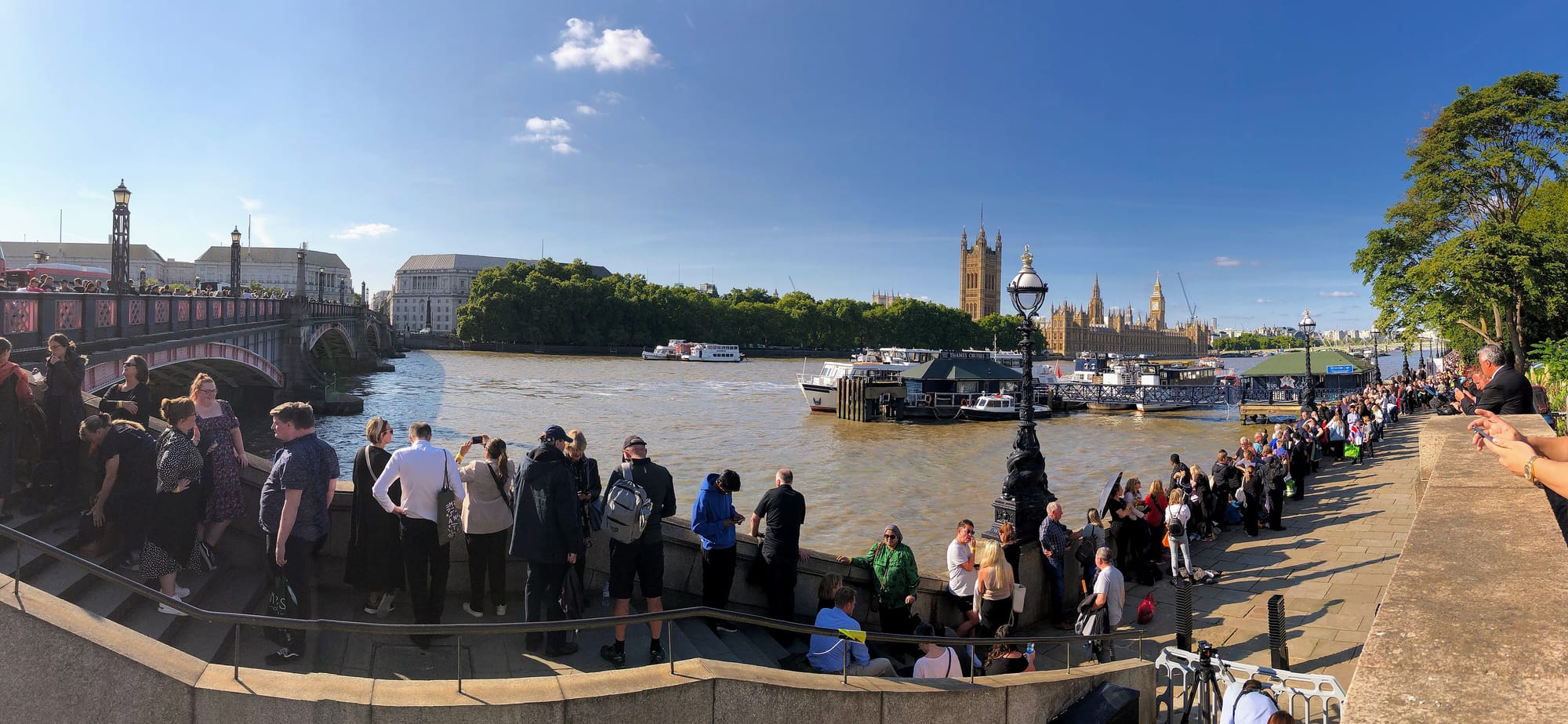
The capital’s other most significant queue is surely the wait for the lying-in-state of the late Queen Elizabeth II, back in 2022 (that it became known as simply “The Queue” is testament to its grip on the cultural imagination). Stretching 10 miles from Westminster Hall to Southwark Park at its farthest, watching The Queue itself became somewhat of a fascination for Londoners. David Beckham, by patiently waiting with the plebs, affirmed his national treasure status; Phillip Schofield, on the other hand, was accused of queue-jumping (along with his This Morning co-host, Holly Willoughby), and a petition was launched calling for ITV to sack him (the network would find more compelling reasons to part ways with him a year later).
Viral mayhem
But if you want to understand the genesis of London’s modern day queueing boom, you have to look to Dishoom, a chain of mid-price Indian restaurants that first opened in Covent Garden in 2010. The queue is an integral part of the Dishoom’s lore; it’s near-impossible to read an article about the restaurants without the journalist dedicating several inches to it, and it still inspires endless posts on forums and social media. It’s so crucial, in fact, that some Reddit users have suggested that Dishoom artificially creates queues by closing certain sections to engineer scarcity (our lawyers insist I point out that we have no evidence for this allegation).
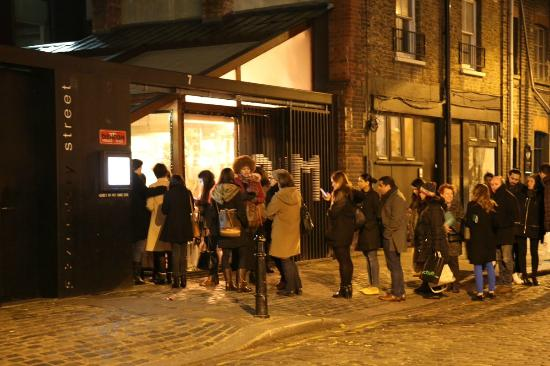
But if having a queue is the ticket to creating a buzz about your restaurant, I had to wonder: is anybody outright fabricating them? While nobody I spoke to for this piece would tell me that they’d used artificial means, a food PR at a prominent east London agency did tell me — leaning over the table, her voice low, her eyes wide, as if wary of being heard in the empty cafe we were in — that it was often top of the list of demands for businesses, and that they often used vouchers and deals for the opening week to create a swell of people waiting outside.
Who could blame them? Whipped up by food influencers such as the perennially enthused TopJaw (947k Instagram followers) and the grease-dribbling Eating with Tod (2.2 million Instagram followers, the queue acts as an advertising system in itself, a certification of quality, authenticity and exclusivity — don’t you want to be in the know? — that draws in passers-by. If, as the influx of immersive shows and “brand activations” (real-life marketing events) in the city suggests, the experience economy is king, the queue itself becomes part of the attraction, as does claiming the victory of acceptance within.
But with hype comes problems. I speak to Cafe Mondo founder Jack Macrae who, tattooed, moustachioed and baseball-capped, looks exactly like the young men who flock to his south east London takeaway sandwich joint. “We’ve got to be able to turn stuff out pretty quickly; you’d expect to get your order within, I guess, 10 minutes,” he says of his business model.
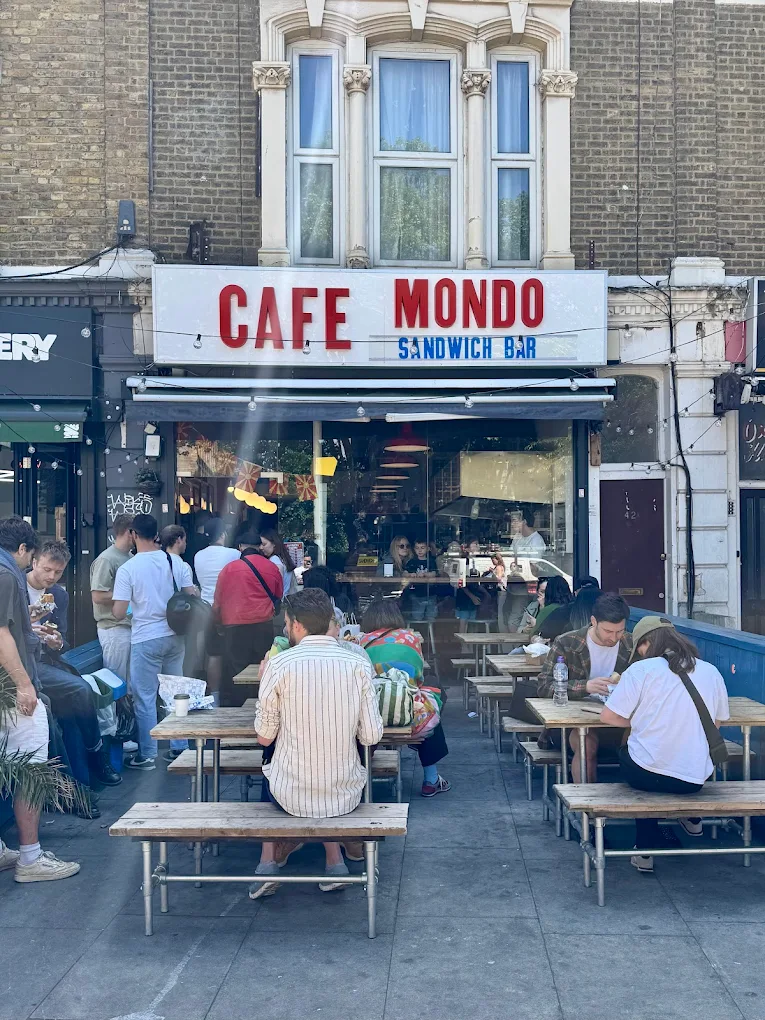
Easy going and sunny, he’s upbeat even when he tells me of what happened when the business, at that point only a couple of months old, was featured on TopJaw’s Instagram in January 2025. They’d expected to be busier than before, he says, but the reaction was beyond anything they could've imagined. “The next day, pretty much immediately, was mayhem.”
For a shop only just finding its feet, it was overwhelming. “We were getting people queuing up outside the shop, waiting 30 to 40 minutes to come and order a sandwich, and then, in really bad cases, waiting another half an hour for their food to come… We had to get someone [to do] queue management, a bit of a bouncer.” While there’s still a queue outside Mondo on weekends, he says that it now moves fairly quickly.
It’s a sentiment that’s echoed by next-door neighbour TOAD bakery, where I meet co-owners Rebecca and Oliver at a small metal table near the busy road — the bakery has no inside seating. The longest queue they’ve made, they reckon, is “about an hour and 10 minutes”. If there is one obvious thread to the queue phenomenon, it’s that the most extreme examples of it have been at bakeries, due, perhaps, to the combination of how easy it is to make a pastry look good on screen and the fact that the barrier of entry, price-wise, is much lower than at a restaurant.
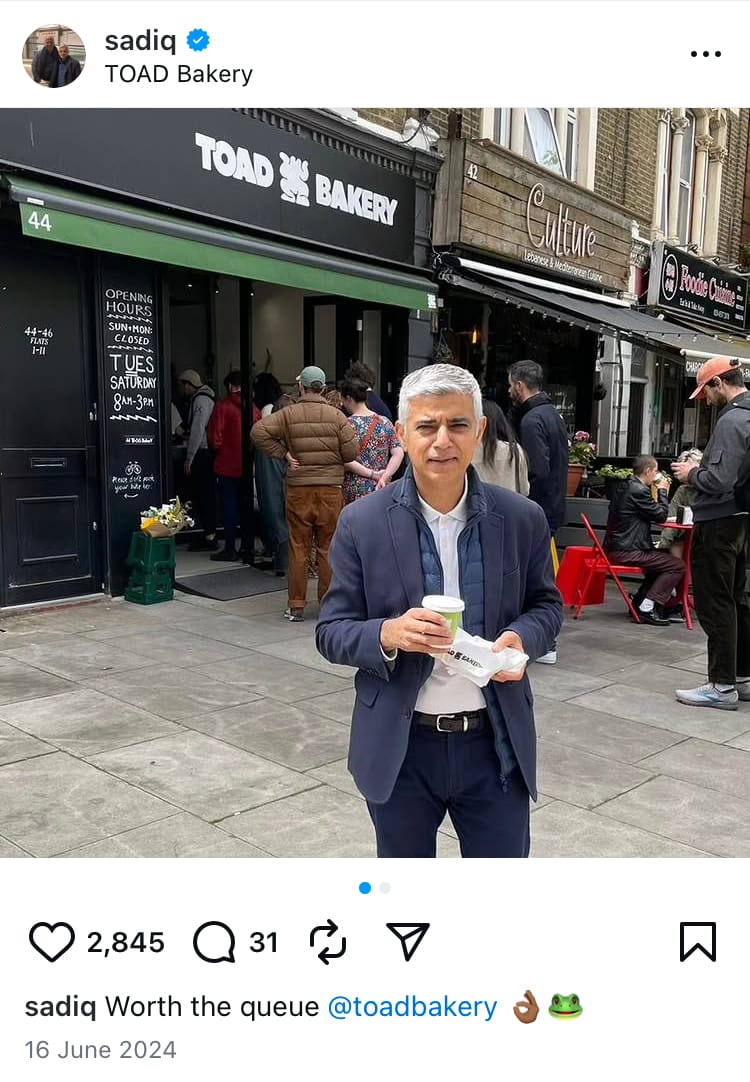
As writer Lauren O’Neill put it in her newsletter: “Bakery queues are a full on London phenomenon. They have popped up all over the city post-pandemic [and] often represent about a 40 minute wait at the weekend”, calling TOAD “a bonafide hotspot where you will see, be seen, and eat well”.
TOAD’s signature bake, an everything-bagel croissant feathered with dill, a dollop of cream cheese snuggled into its centre, is both a genuinely incredible piece of viennoisserie (the bakery’s lamination is unmatched) and the kind of aesthetically pleasing, New York-inflected product that’s irresistible to a certain kind of influencer. Cue: hour-long lines on a Saturday. Along with the accompanying queues for Mondo, the entire street becomes a scene of wait and want.
It’s something that Rebecca and Oliver have complex feelings about: “I personally try and ignore it,” he says. “Some business owners go out and film it, but it’s not something we’re really proud of.” He points out that not everyone can stand in a queue, for example people with children or customers who are disabled. “It's inherently quite inaccessible and only tailored to certain people,” he says.
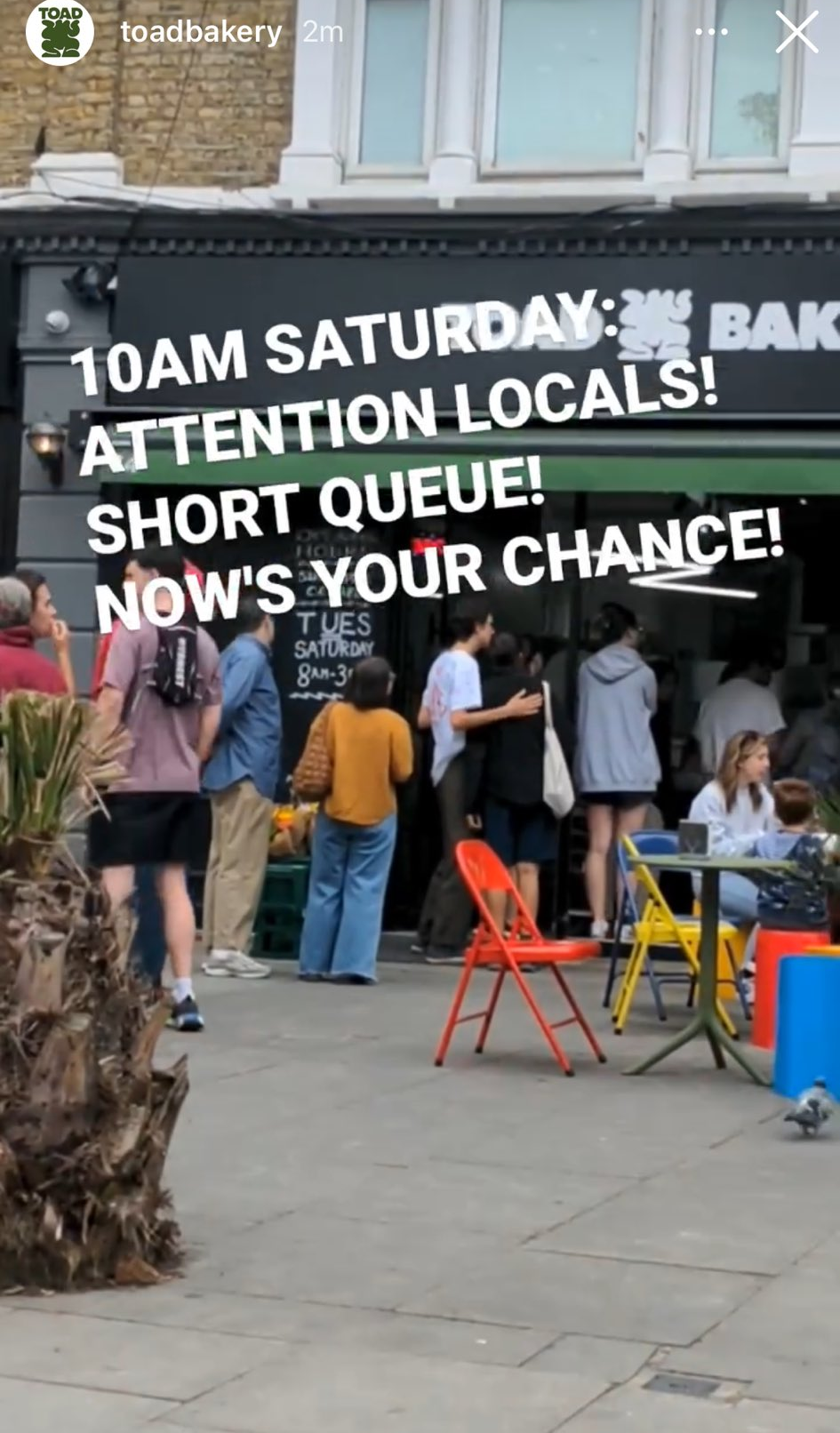
But there’s also a more positive aspect to the queue. “It's a rare communal thing that brings people together with a shared interest that isn't to do with drinking,” Oliver tells me. “I know that there's been some nice interactions, people meeting people and talking to their neighbours.”
In an increasingly online city, where people seldom know their closest neighbours, maybe it’s just nice to feel part of something, even if that’s simply the wait for a well-crafted croissant. As Rebecca puts it, “I get a kick out of seeing people meeting their friends in the queue.”
If you enjoyed this story on the capital's influx of queues, why not join up to our mailing list and get two completely free editions of The Londoner every week: a Monday briefing, full of everything you need to know about that’s going on in the city; and a high-quality, in-depth weekend long-read.
No fluff, no gimmicks: just click the button below and get our unique brand of local journalism straight to your inbox.