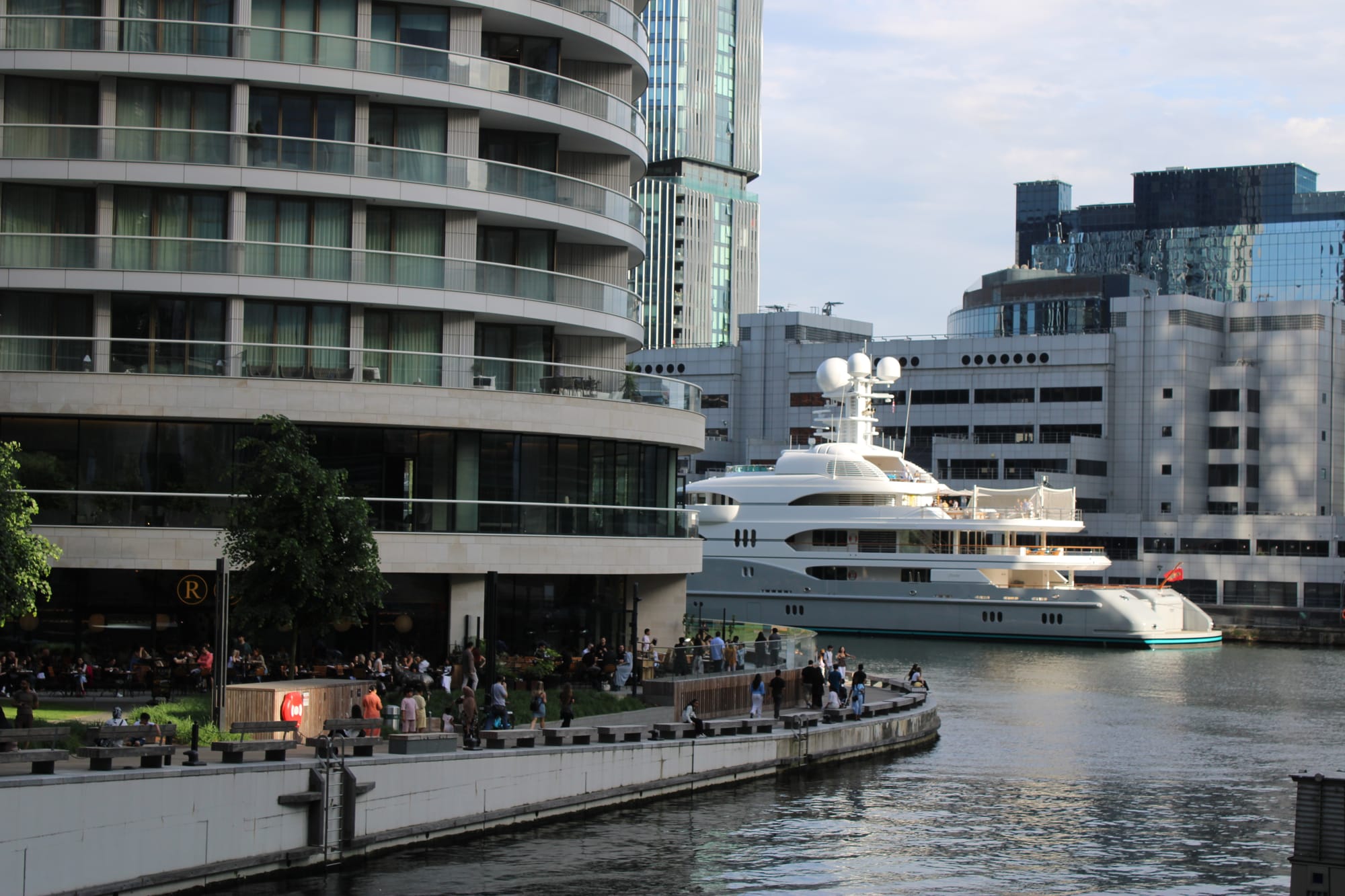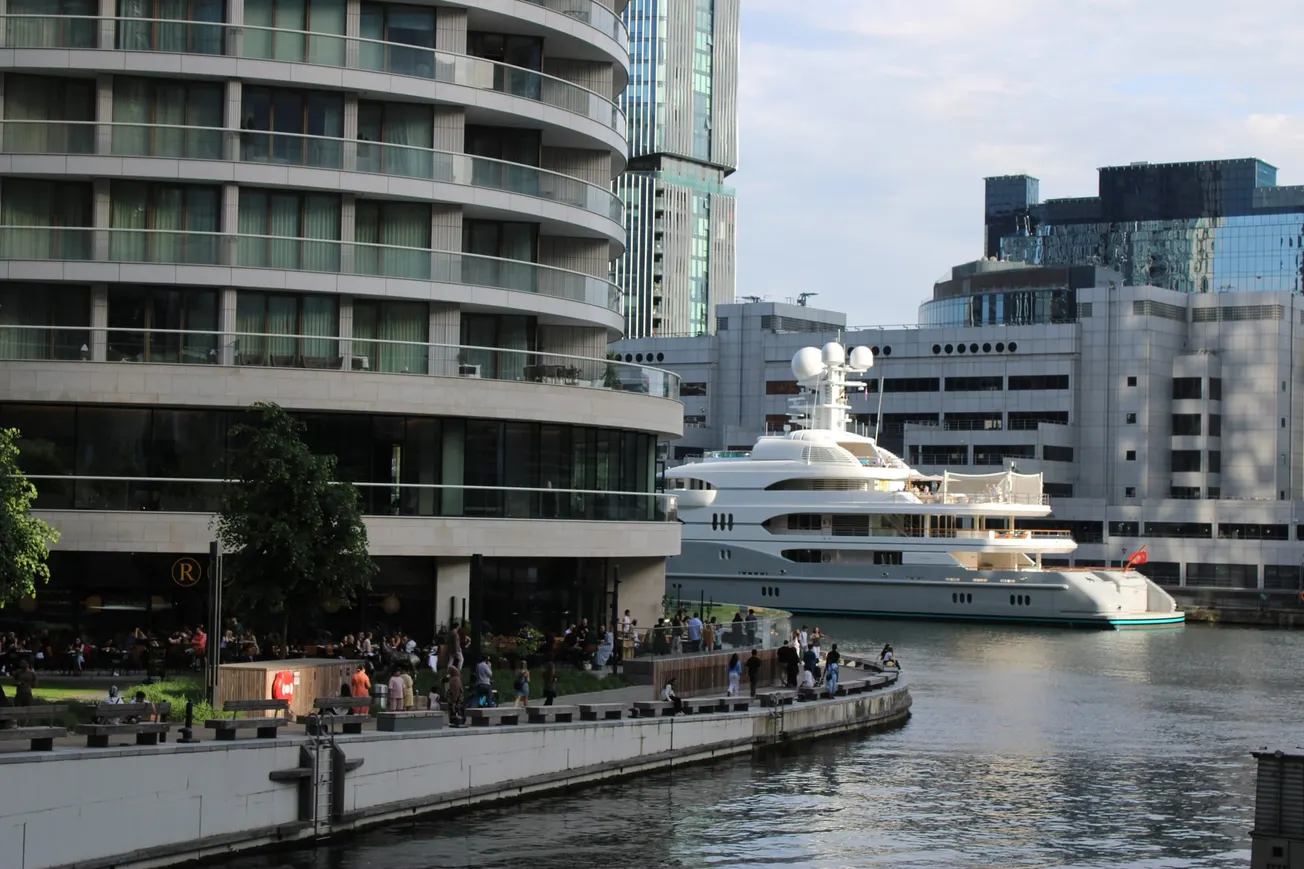
Canary Wharf, on an oppressively muggy Friday afternoon. Bubble-domed boats glide across the marina, glammed-up inhabitants popping open bottles of champers as they drift beneath a forest of glittering black-glass skyscrapers. The towers that fringe the water are still filled with the kind of toiling bankers the area has long been known for. But down on the ground, bizarre changes are taking place.
“It feels a bit hip, a bit trendy around here”, says Martin, a tanned, bald man in his 50s, who has travelled to Canary Wharf from Essex for a night out. We’re sitting outside the Ledger Building, a spacious Wetherspoons once used to store the financial records of merchants and shipping companies. It’s bouncing. Martin happily sinks a couple of pints of Moretti, telling me that he’s started to come here more regularly — Liverpool Street and Camden have started to feel a little tired, he thinks — before saying that he really must go. He’s running late for his booking at Fairgame, a garish funfair–themed events venue for adults that lies just across the water.
All over Canary Wharf, it seems people are coming to similar conclusions. As Martin skips off, he passes a hen do, couples filing into luxury alcohol-free restaurant Coco, and a group of guys filing into a floating sauna beside a flotilla of hot tub boats. Canary Wharf has always been a deeply embarrassing place to spend time. But people, improbably, now appear to be coming here of their own free will. To have fun. Gen Z influencers on TikTok have started to label the area as underrated and over-hated. Newspapers have even suggested that the area is now “cool”.
Just what exactly is happening on the wharf? Is what was once London’s most joyless area undergoing a glow-up?
Green and blue spaces
The changing face of Canary Wharf is no accident. It’s a strategic decision, a multi-million pound scheme from the Canary Wharf Group (CWG), the Qatari and Canadian-backed property company which owns the entire 97-acre estate.
I meet John Mulqueen, chief investment officer for CWG, on the ground floor of One Canada Square, the 235m skyscraper that dominates the docklands. It was built in 1991, but Mulqueen — in his 50s and wearing an expensive-looking navy suit — tells me he first went in it while it was under construction in the late 80s. “Very early in my career, I worked for the police force,” Mulqueen explains, in the Met’s property services team. He went up to the top floor to check out whether it could work as a police outpost. It was long before the metal cladding panels were added, he recalls, and the wind whistled viciously through the floor plates.
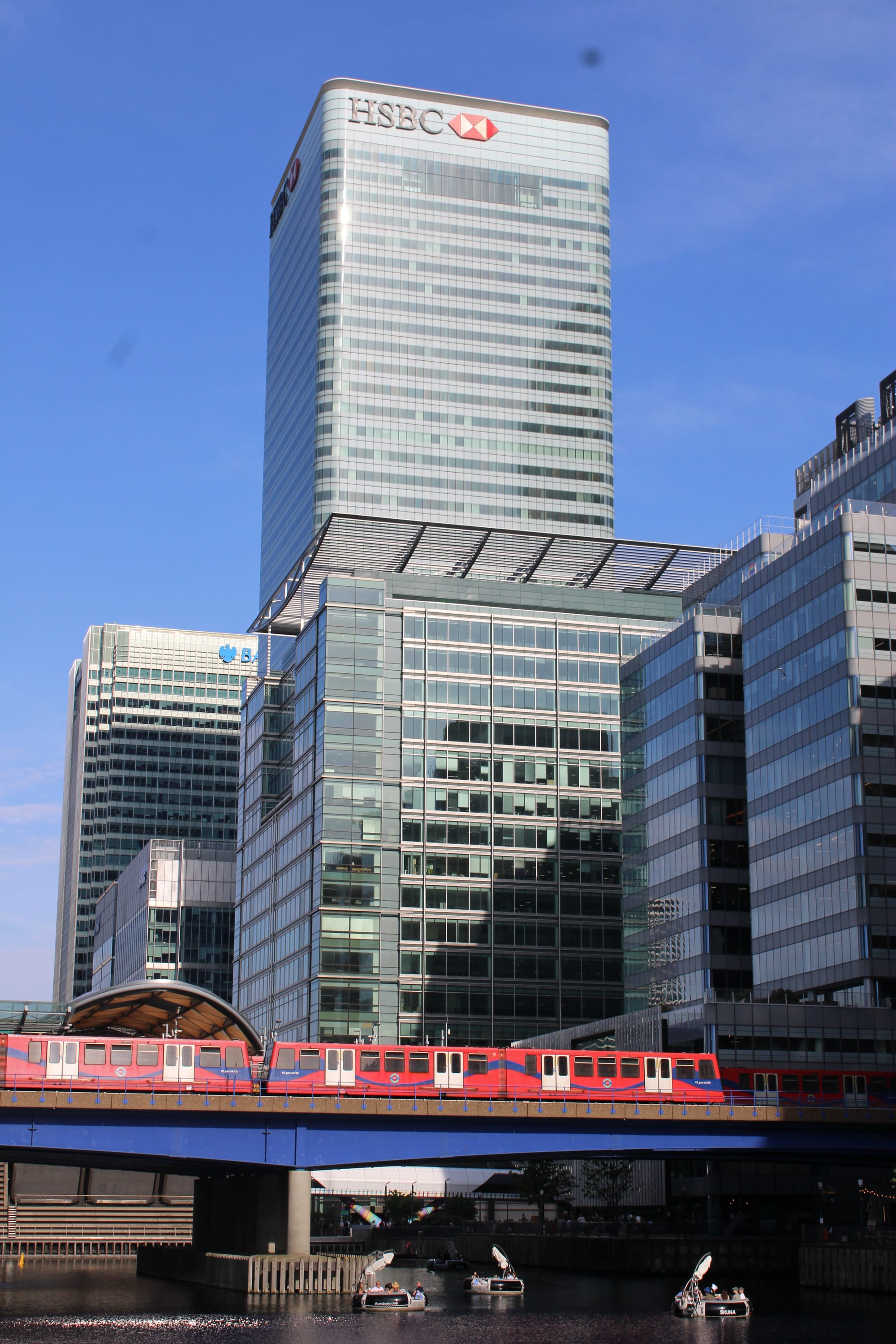
At the time, the wharf was still transitioning into the financial juggernaut it is today. As he looked down, he would have seen countless cranes and building sites at work: a sprawling complex of grey. Residents and former dockers were still protesting against the London Docklands Development Corporation back then, a government body set up in 1981 by Margaret Thatcher and Michael Heseltine to sell off the docklands to developers.
At one point, protestors sent through a flock of 60 sheep, herded by sheep dogs, and over 150 bees to confront the developers. Another time, they sailed an armada of small wooden boats past the grinding construction works. But bees and boats were no match for the billions flooding into the area, and by early 1990s almost all of the big banks had decamped from the City to Canary Wharf. By the turn of the Millennium, London’s former industrial heartland had become the ultimate symbol of the power of its deregulated financial sector.
A torrential downpour is abating as Mulqueen and I start to walk around the area. He shows me the Eden dock, a formerly drab marina which has recently been filled with plants and lined with wooden decking. “On a better day, this place is packed,” he says keenly, eager to emphasise the area’s successful transformation into a leisure mecca.
Water features are plainly a big part of the new corporate vision that CEO Shobi Khan insists on calling “Canary Wharf 4.0”. Mulqueen walks me over to the Sea Lanes, a floating 50m lido they’re labelling as “London’s premier open water swimming destination”. Another coup for CWG was securing exclusive rights for the theatre production of The Hunger Games at the Troubadour Theatre, a custom built venue which opened late last year.
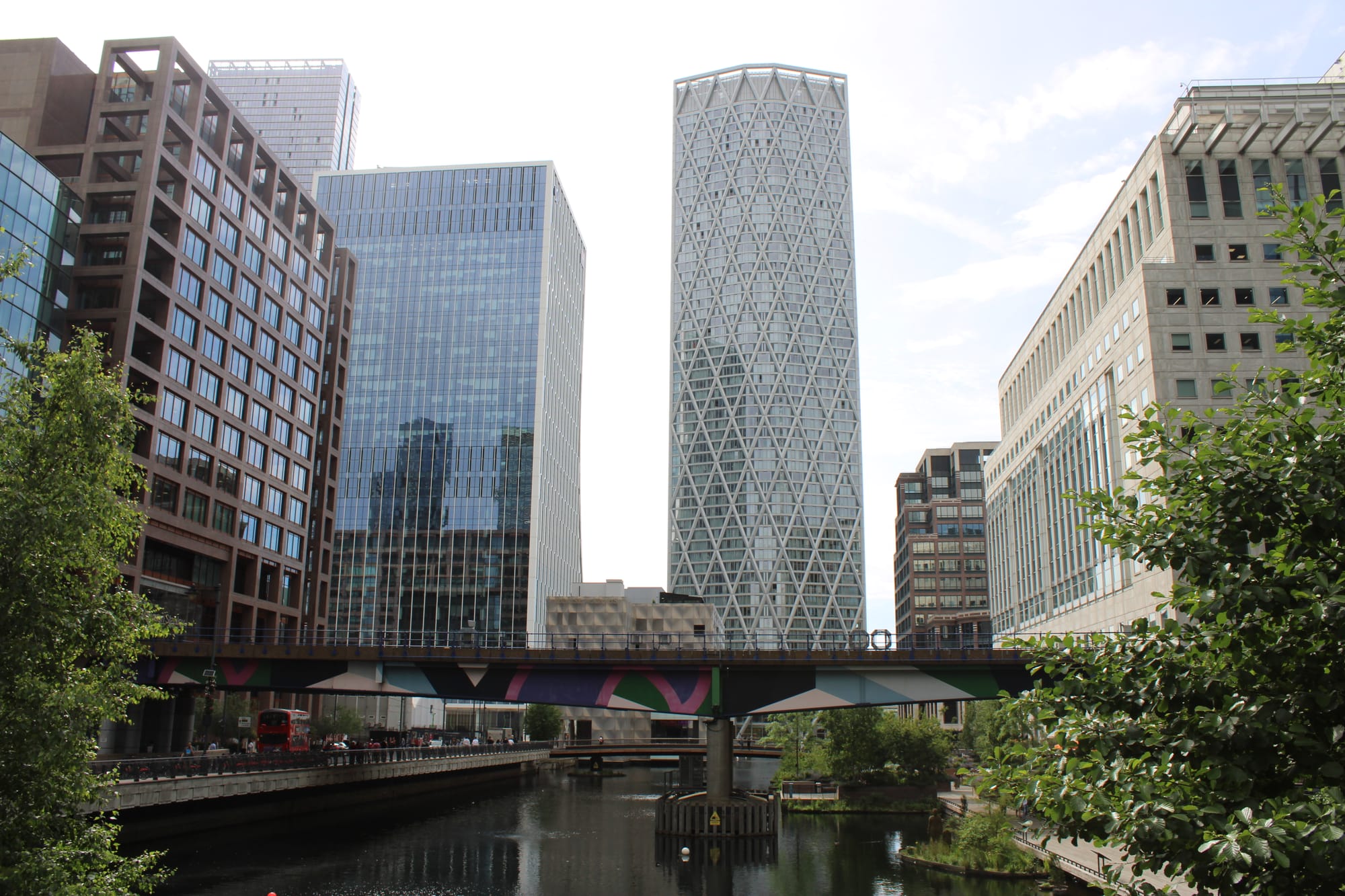
It’s not all open-water swimming and pond plants, though. One inescapable feature of Canary Wharf today is the security: cars are scanned on their way in, the parks bristle with CCTV cameras, and a small army of uniformed and plainclothed security guards patrol the area 24/7. With the idea of lawless London pushed ceaselessly by bad faith actors both at home and abroad, Mulqueen says that safety and security is one of Canary Wharf’s main selling points.
London deserves great journalism. You can help make it happen.
You're halfway there, the rest of the story is behind this paywall. Join the Londoner for full access to local news that matters, just £8.95/month.
SubscribeAlready have an account? Sign In