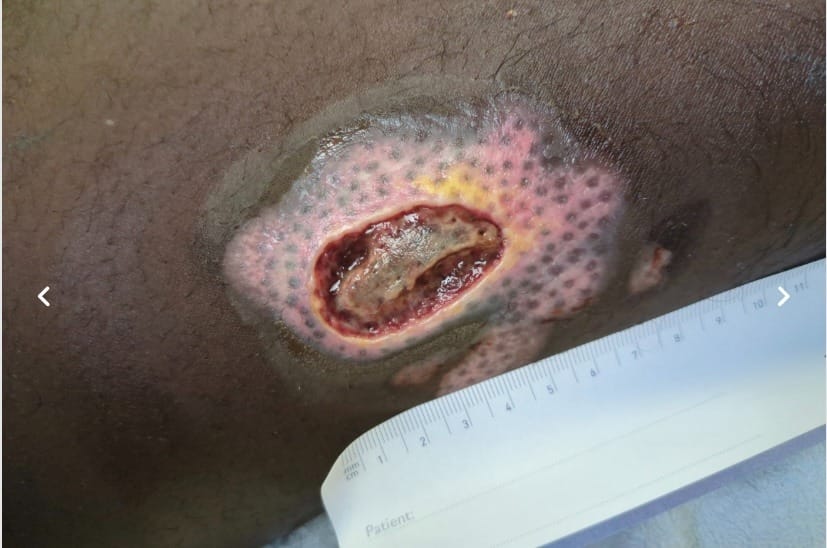
The cases first appeared in late 2024, each following the same mystifying pattern. A patient would present in A&E with a large wound: a circular shaped cold burn cutting deep into the fatty tissue on their inner thigh. But what was even stranger was that none of the victims would explain what caused it. In fact, many had waited days before coming to A&E, even as the sore festered and infection set in.
The injuries looked like frostbite, something doctors would only very rarely see among the city’s homeless during the most extreme winters. But these cold burns would appear year round, even in the middle of summer heat waves. And every case would end the same way: surgery to cut away the dead flesh, skin grafts and permanent scars for the victims.
Warning: graphic imagery
After the first trickle, the last two years have seen these strange injuries become commonplace in London’s hospitals. Nicole Lee, an intensive care nurse at Chelsea and Westminster Hospital and the chair of the British Burns Network, says every burns unit in the south-east of England she oversees, even the ones in tiny cottage hospitals, are seeing at least one of these patients a week. For the bigger hospitals in London, that can sometimes rise as high as four or five.
The Londoner has spent the last few days looking into this new scourge, which has never been publicly reported on before. The cause of these mysterious wounds, it turns out, is nitrous oxide, a drug the government outlawed in 2023. And this spate of cold burns is exposing how its use, now driven underground by the crackdown, has spiralled into a “monster” of society’s own making.
'All our hospitals have reported they’re getting at least one a week'
Nitrous oxide — or NOS — has been used as a recreational drug for a lot longer than people think. First discovered in 1780, its psychoactive properties were first documented by Humphry Davy, then president of the Royal Society, who decided on a whim to inhale a boxful of the stuff in 1799. He reported that “he lost touch with all external things” and entered a mental state of bliss, a “world of newly connected and newly modified ideas”. Soon, it became a common sight at Victorian parties and, after its ability to numb pain was noticed, was adapted into being used as anaesthetic in hospitals.

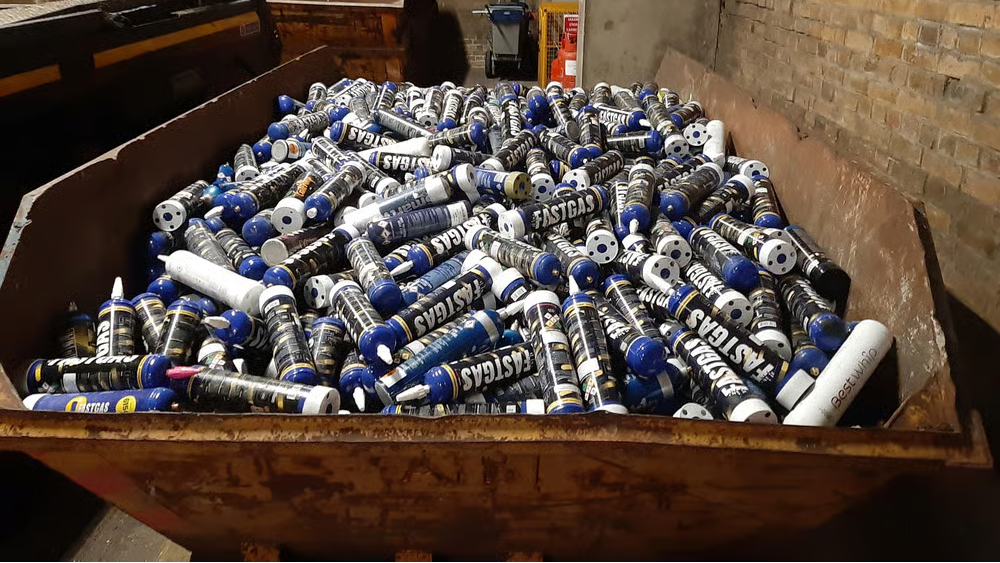
But for most Londoners, the idea of nitrous oxide floated into the public consciousness in the late 2010s and early 2020s, and became particularly noticeable during the pandemic. The drug, generally inhaled from a nitrous-filled balloon, had become massively popular particularly with young people for its 30-second intense high and lack of smell or after-effects. Soon, abandoned whippets — the tiny metallic cartridges that hold the gas before its release into a balloon — became a common sight on the streets and parks of the capital.
Nitrous oxide is relatively safe when used in small amounts — between 2001 and 2016, misuse of the gas caused just two deaths of an estimated 800,000 users. But its rapid popularity, open use and the widespread littering it caused had turned it into a public menace. The flood of headlines calling for a crackdown became non-stop.
In 2023, the Conservative government — prompted by complaints from then Labour MP Rosie Duffield that nitrous oxide was driving antisocial behaviour — decided to act. While it was already illegal to sell nitrous oxide, in November 2023 it was reclassified as a Class C drug, criminalising the possession of the whippets that had spread across the country’s streets.
Many scientists, including Imperial College London’s Professor David Nutt, a leading expert on neuropsychopharmacology and a former government advisor on drugs policy, called the decision “absurd” given the relative lack of harm the drug posed.
The crackdown did seem to lead to a drop in the number of users of nitrous oxide: just 1.3% of 16–24 year olds used the drug in 2024–2025 compared to 8.7% in 2019–2020. But it also drove the use of the drug underground.
London deserves great journalism. You can help make it happen.
You're halfway there, the rest of the story is behind this paywall. Join the Londoner for full access to local news that matters, just £8.95/month.
SubscribeAlready have an account? Sign In