In the late 1960s, my family had a chichi little apartment in Chelsea. Though actually, we didn't; the apartment belonged to a family friend called Barrie Stonehill. But we stayed there over the years so often that I felt like it was ours.
Barrie had the demeanour of a secondary character in a Noël Coward play, and a laugh that started out as a soft rumble before building to a booming roar. Maybe 6’ 4” with a permanent tan and beautifully manicured fingernails, he smelt of Brylcreem and spicy cologne. He never attempted to hog the limelight, but effortlessly commanded attention.
Barrie only used the Chelsea bolthole when living it up in south west London. He spent most of his time in his permanent residence: a sprawling five-bedroom apartment near Marble Arch, home to his ancient Austrian mother, her English nurse, their American housekeeper and — as dad would tell me — the ghost of a child wearing a Victorian nightie, who used to flit around the long, dark corridors after sundown. I only visited that apartment with my dad a couple of times, in my early 20s. I didn’t meet Mrs Stonehill or her nurse, but the housekeeper bought us sherry and stale biscuits while we waited for Barrie in the drawing room. I never stayed overnight, so I never met the ghost.
I gradually lost contact with Barrie over the years. I moved away from London, as did my dad, and I had a big social life of my own. I guess I didn’t realise the importance of keeping in contact with special people from your past — you think it'll all last forever. Now, I don’t even have a photograph of him.
But after my dad passed away in 2021, I found myself becoming a curator of memories that I won’t allow to fade, many of which inevitably involve our London days… and Barrie. I regret not spending more of my last few years with dad gently nudging his increasingly fractured memory bank, but his death made me determined to find the missing pieces of the Barrie jigsaw.
In a way, this is a search for a ghost. If Barrie is still alive today, he’ll be heading into his 90s. But Barrie was always ageless, with a kind of supernatural vibe about him that makes me think perhaps he wasn’t quite of this world. And in a way, he wasn’t: he belonged to a London long vanished, full of glamour and promise. Did Barry disappear along with it?
Our Saturday stories are free for all to read — but we can only produce this kind of work with your help (and we're currently being sued for £250,000 by a wealthy Airbnb grifted). If you're a fan of today's piece, please do consider becoming a paying member.
Returning to the King’s Road
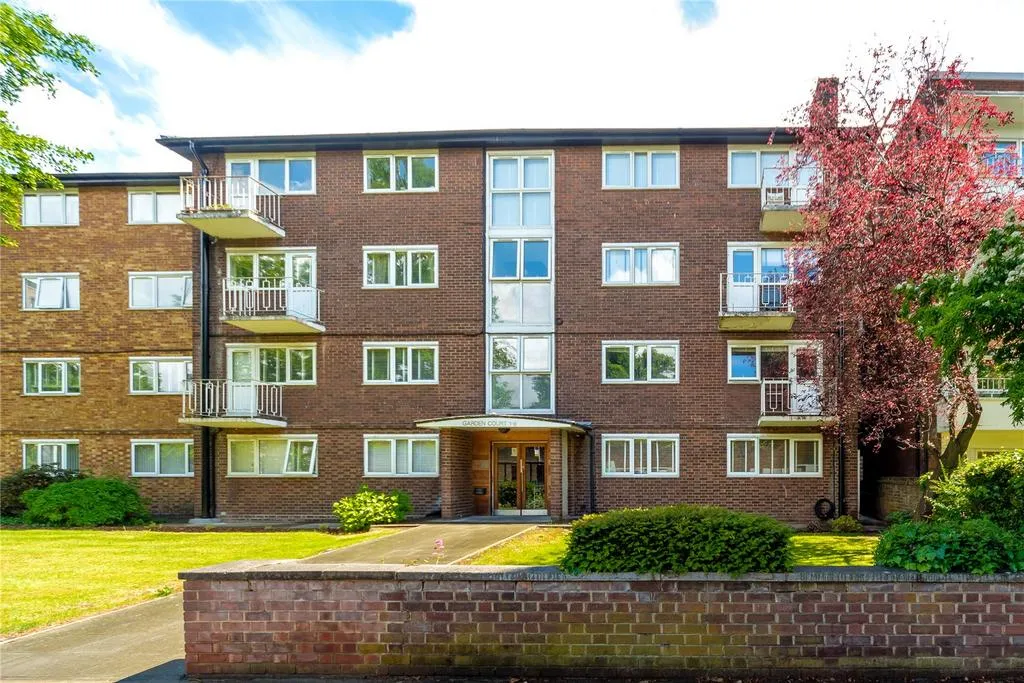
My first thought is to scope out Barrie’s Chelsea pad, on the second floor of a handsome, art deco block called Meriden Court, just off the King’s Road. Back in the day, the resident porter seemed to spend 24 hours a day behind an imposing desk in the marble-tiled entrance hall. Beyond that, the antique, wood-panelled lift and thickly-carpeted corridors gave the place the feel of an upmarket hotel.
The flat itself felt more compact than you'd expect from such a build-up, especially in comparison to our rambling, ramshackle family home in Liverpool.
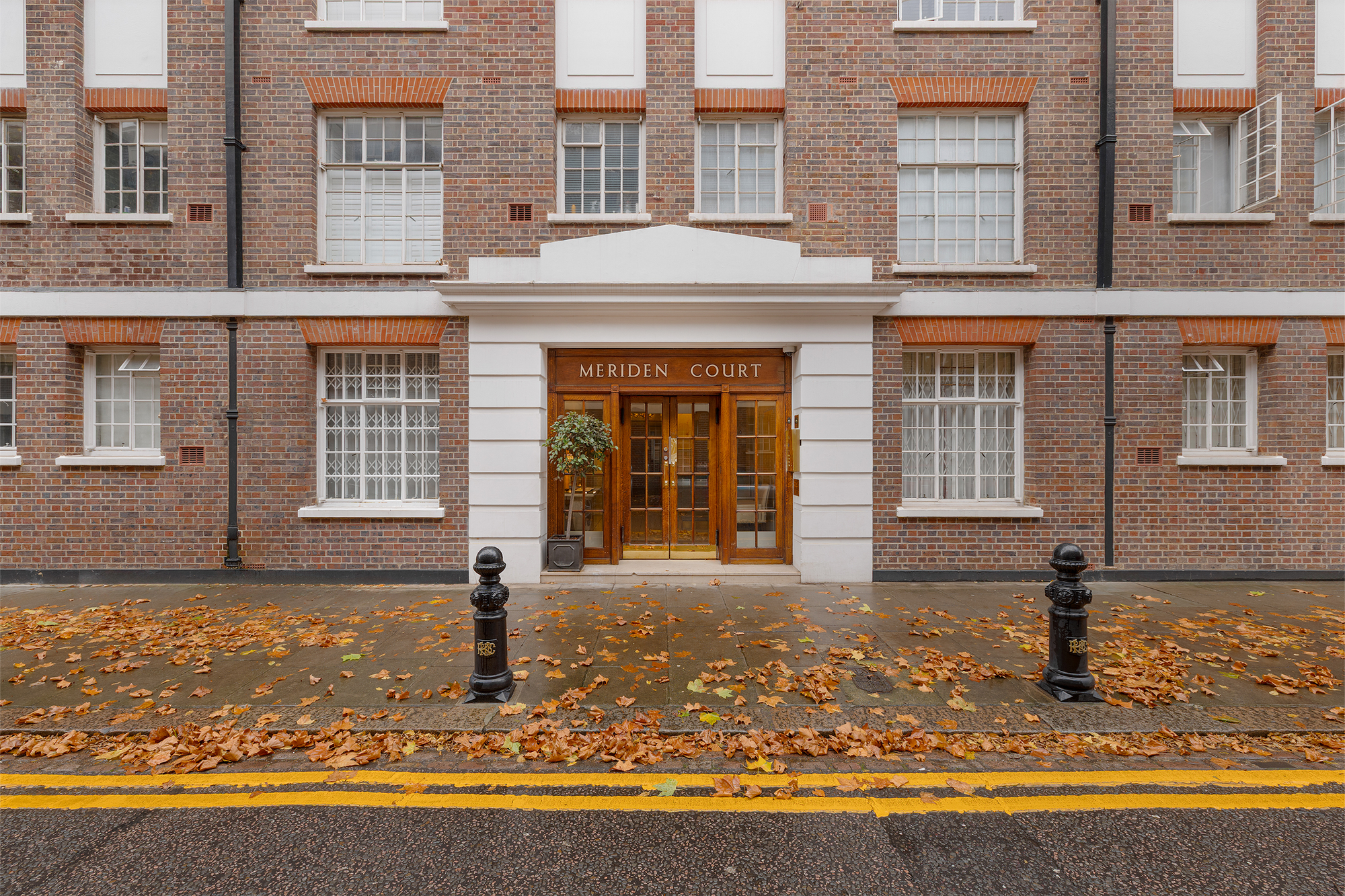
There was a tiny kitchen, a tiny bathroom, and a tiny main living space with a pull-down bed hidden away behind dusty louvre doors. It was decorated with sweeping sage velvet drapes and soft furnishings. The kitchen, however, was the kind you’d expect to find attached to an MOT garage: dark and poky, with utilitarian cupboards and no sign of anybody ever using the dangerous-looking Baby Belling cooker.
But who needed to cook when we had the King’s Road on our doorstep? Just a short stroll away there was the Picasso, the Great American Disaster and the legendary Chelsea Kitchen, with its smoky, low-ceilinged basement full of women wearing Liberty-print silk frocks and men in crushed velvet jackets and corduroy bellbottoms. Barrie was never one of those men, though. Barrie was always impeccably dressed, as if he was on his way to dinner at the Connaught, even when he was drinking coffee in the Picasso at 11 in the morning.
I take the trip to Meriden Court not long before lockdown. Though much has changed, Chelsea Manor Street still holds so many memories: the scuttle and clank of the Post Office sorting depot that used to be on the corner of the street, which would wake the whole family up at 6am sharp. The bustling street cleaners on permanent duty. Layer upon layer of apartments, whose occupants’ lives had been both a complete mystery and a constant fascination to me.
Nobody answers when I ring the bell to Barrie’s flat. Later, I find that the property was sold in 2021, and has changed hands several times since then. There is no porter in the reception area, just potted plants and a polished, empty desk — remnants of times gone by.
I go around the corner to the cafe in the Farmers’ Market on Sydney Street, where I worked as a waitress for a year or so in the early 1990s. Like everything around it, the cafe has been revamped. When I worked there, you could get a cappuccino for a quid, but it wasn’t unusual for regulars to pay with a crisp five-pound note and tell me to keep the change. Barrie was one of those regulars.
I ask my young waiter if he might be familiar with an elderly gentleman called Barrie Stonehill, who used to visit the cafe two or three times a week. “No, sorry,” he mumbles. I know that I am clutching at straws. My cappuccino costs a fiver, before the tip.
Cocktails at Dolphin Square
I next turn to Barry’s old haunts. He loved the Hurlingham Club, an elegant private members’ club set in acre upon acre of manicured greenery on the banks of the Thames in Fulham. When our family rocked up in our floaty paisley shirts, sleeveless afghan coats and Jesus sandals, Barrie's fellow club members must have thought he'd hooked up with an alternative, 1970s version of the Beverley Hillbillies. We were treated like royalty, though (“Welcome back, Mr Barrie!) — and oh, those scones!
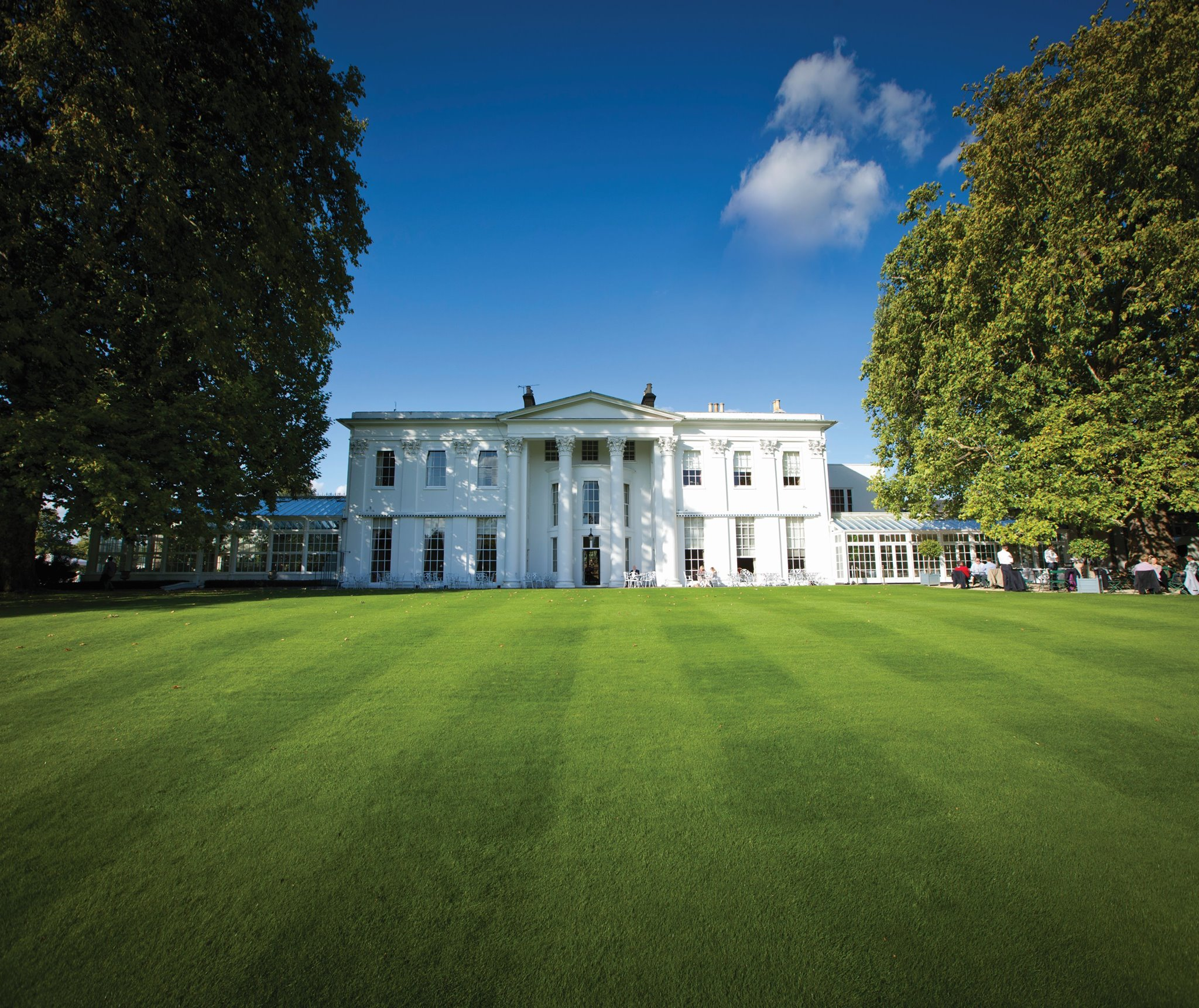
When I contact the Hurlingham Club to find out what they know about Barrie, the response, from a lady called Monica, is prompt and courteous: “I think I found his old file on our system, but he is no longer a member.” Well, at least I know he existed, to the Hurlingham at least. And off I go again…
Perhaps I’ll have more luck at Dolphin Square, a famous 1930s apartment complex in Westminster whose bar Barry frequented. But instead, I spend 20 minutes staring blankly at their website, particularly the pages for the Terrace Bar and Cafe. It’s nothing like the place I recall visiting with my dad and Barrie, all those years ago.
My most distinct memory of Dolphin Square takes place back in 1983, when Barrie suggested that we meet for cocktails at the bar (which, according to dad, looked a bit like Glasgow’s Gorbals district looked back in the 1970s) before dinner at the Phene Arms on Cheyne Walk — a fairly typical night out with dad and Barrie.
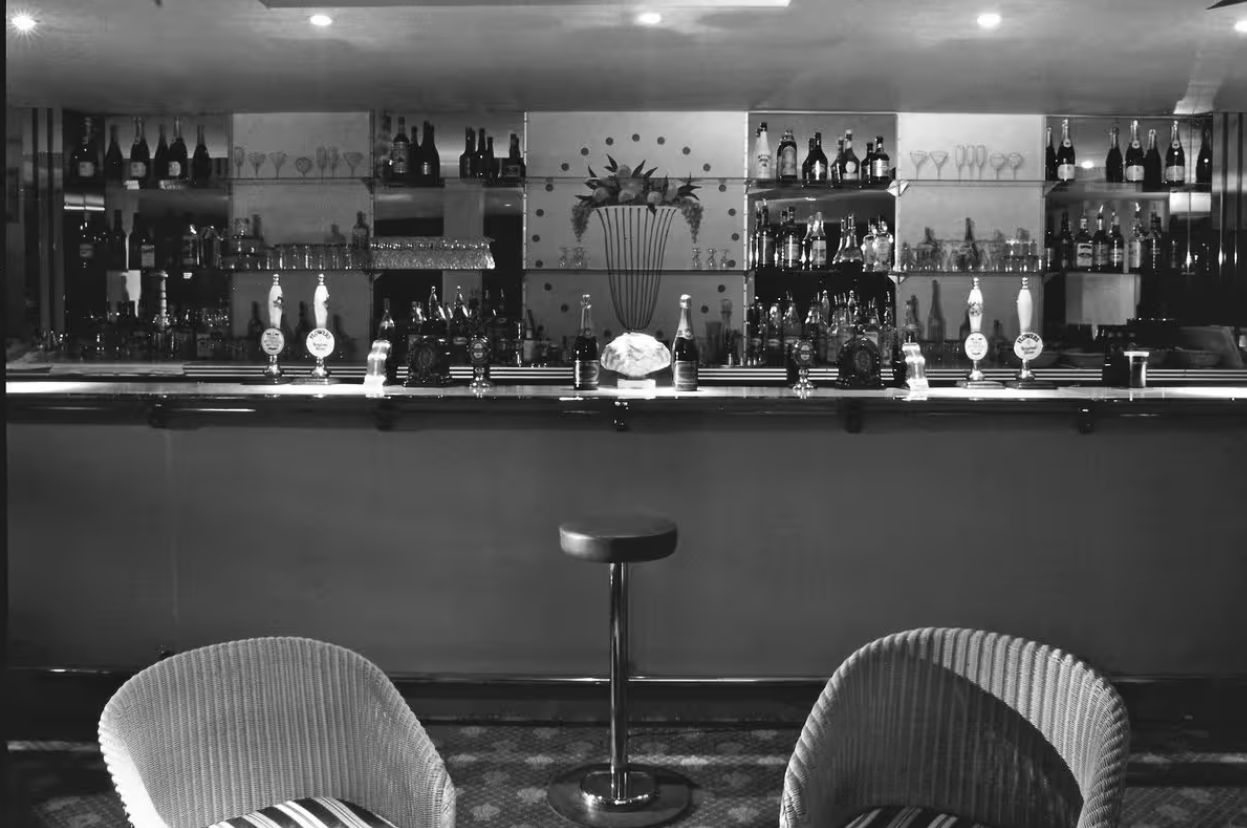
Harold Wilson, Princess Anne, Christine Keeler and Charles de Gaulle: Dolphin Square’s former residents all paled into insignificance for me, an avid Boy George fan who knew that the flashback scenes in the video for Culture Club’s breakthrough single “Do You Really Want To Hurt Me” had been filmed in the bar overlooking the complex’s health club pool.
One year after that video was filmed, there I was, sitting in an elegant, distinctly grown-up, but somehow rather claustrophobic little bar overlooking that same pool. The waiter met us with the simple greeting of “cocktails?”, to which Barrie responded “of course!” — no menu proffered, no choices discussed.
“What the fuck am I drinking?” I asked, halfway through a concoction that tasted, to me, like nectar. “It’s a sidecar,” I remember Barrie responding. “But I am not Professor Henry Higgins, and you are most definitely not Eliza Doolittle, so let’s not ever behave like that again.” For a moment, I was mortified; I had never, ever been chastised by Barrie. But then out it came: “Mwah-ha!”. And another round of sidecars arrived at our table, apparently by magic.
Now, the bar on the website looks spacious and airy and, as far as I can make out, it no longer overlooks the pool. Just like the Farmers’ Market cafe, it has been revamped, remodelled and remarketed into a cross between an Ikea showroom and a Premier Inn. I can’t imagine a waiter offering simply “cocktails”. I can’t imagine anybody Barrie knew is still working or drinking there. And I can’t see his ghost — or my own, or my dad’s, or even Boy George’s — anywhere.

Angela Lansbury and cucumber sandwiches
Running out of leads for Barrie’s whereabouts — or whatabouts — I rack my brain to try and remember Barrie’s friends. Surely, someone must still be living and know what happened to him?
I know he counted the great and the good among his circle. One autumn evening in 1973, Barrie took my mum, my sister and I to the Piccadilly Theatre to see Gypsy. Vicki and I wore our red velvet Christmas dresses, and we took the number 11 bus all the way from the King’s Road to the West End at twilight — an adventure in itself. Barrie met us in the foyer wearing a morning suit à la Fred Astaire and presented us with the most massive, velvet-lidded box of chocolates I'd ever seen, which we ate during the show.
Afterwards, he took us backstage, and we were ushered straight through to a dressing room to meet his friends. “This is Angela, who played Rose,” he said. “And this is Elaine, who wanted to play Rose, but the company couldn't afford her — mwah-ha!” Again, that distinctive laugh.
Angela Lansbury, having taken her final bow not 10 minutes previously, still had most of her stage make-up on. Elaine Stritch — who hadn't been on stage at all — wore more lipstick, powder and paint than Angela did. I wonder now if that moment was the start of my lifelong fascination with drag acts.
Barrie took mum, Vicki and I back to the Chelsea flat in a black cab, an experience even more exciting than the bus ride. Before heading back to his Mayfair residence, he came in for a nightcap (a whisky from his own supply, which lived next to a dusty bottle of gin on a tiny ornate drinks table in the corner of the main living space) and danced with me.
I never knew how Barrie became such good friends with Angela and Elaine. Both are now dead, so I probably never will. Was it Elaine who he brought along to tea with dad and me at the Dorchester when I was around 16? All I remember of that afternoon now are the multiple glasses of champagne that came with the cucumber sandwiches, and that Barrie’s Norma Desmond-esque friend demanded the immediate dismissal of the concierge who had asked her who she “used to be”. I also remember my dad hating the pomp and snobbery of the Dorchester — but not me. I loved it; I was awestruck, and very comfortably overwhelmed.
Sorry, dad, and sorry, Ms Stritch (if indeed it was you), that I can’t get in touch with either of you now, and ask about how Barrie came into your lives.
Hello, The Londoner editor Hannah here. Enjoy uncovering the capital's hidden stories? We have plenty more where that came from — for me, there's nothing better than digging deep into fascinating tales about the city that are never usually told. Of course, that's alongside our incredible scoops, long-form investigations and buzzy dispatches.
If that sounds up your street, sign up to our mailing list to get two completely free editions of The Londoner every week: a Monday briefing, full of everything you need to know about that’s going on in the city; and a high-quality, in-depth weekend long-read.
No fluff, no gimmicks: just click the button below and get our unique brand of local journalism straight to your inbox.
My other port of call is the photographer Justin de Villeneuve, who I have a memory of Barrie introducing as a good friend at the Farmers’ Market cafe. He’s alive, and his dynamic Instagram account includes regularly-updated images of Chelsea, his home turf, including many of the Farmers’ Market cafe and Chelsea Manor Street.
I send him a friendly direct message introducing myself and explaining that I’m looking for Barrie. He doesn’t reply. And then, through Instagram, Justin’s daughter messages to say that her father can’t recall ever meeting anybody by the name of Barrie Stonehill. I am sad and more than a little confused: Justin was, I think, my best chance.
‘A true gentleman’
Hours of searching online for anything related to the Barrie Stonehill I’m trying to find out about prove to be mostly fruitless. He never spoke much about his life before London, and his origins were always something of a mystery, so it’s impossible to look up potential school or university classmates. Though I find links to a clutch of people all called Barrie Stonehill and all around the right age — a retired accountant, a retired doctor, and even an elderly dog groomer who still lives and works in Chelsea today — none of them are my Barrie.

Then a Shutterstock image rocks up, “Maharishi Mahesh Yogi Indian guru with wine merchant Barrie Stonehill, 1959”. It’s him! It’s unmistakably my Barrie: that suit, that hair, that smile. It’s the only photograph I have of him, and it moves me to tears. But… wine merchant? That’s news to me, and a further search for “Barrie Stonehill wine merchant” produces nothing more. But Barrie with the Maharishi Mahesh, creator of Transcendental Meditation, makes a kind of sense. I clearly remember Barrie having lengthy discussions with my mum — a member of San Francisco’s Self-Realisation Fellowship — about the benefits of Pyramid and Universal White Time Healing.
I also find a tentative mention of a Barrie Stonehill in the late clairvoyant Betty Shine’s 1989 book Mind to Mind. “In 1982, I was invited to participate in a medical seminar on healing in Segovia in Spain,” she writes. “I travelled there with Barrie Stonehill, a London friend who travelled the world testing all kinds of alternative healing methods. On the way we stopped in Madrid, where Barrie invited me to meet a friend, an elderly man whom he described as an 'old boulevardier'. Since he was always on the move, Barrie used to drop in on friends abroad at rather short notice!” Oh, how I’d love to know the backstory there! How did Barrie — if it was indeed him — know Betty? And who was the “old boulevardier”?
There’s also an ancient online CV from a private chef called Franck Danel, who says he cooked for Mr Barrie Stonehill, “a private homeopathic practitioner and a true gentleman”, at several private parties in Chelsea towards the end of the 1980s. Franck is on Instagram too, and I send another direct message out into the social media ether, to no avail.
My last, desperate hope is a Facebook page called “I Grew Up in South West London”, full of images and memories of the Kings Road in the early 1970s and even photos taken in the Picasso at the time. I join the group and post a public message explaining that I’m looking for Barrie Stonehill, and followed by details of his regular Chelsea haunts and a brief description. Only one response comes back: “Never heard of him, but I wish I had”.

Perhaps I’ll never know what happened to the man who was a key figure in my life for so many years. I wish I’d never let him go. But like the London he occupied, Barry has disappeared. He’s the phantom of a glitzy, elegant version of the capital; one I can’t put to rest. Like the times I spent with Barrie, my search for him has been exhausting but enjoyable. I’m not ready to give up on it just yet.
If you enjoyed this piece and want to be sent more in-depth features and investigations, why not join up as a Londoner member today? This means you'll get weekend long reads like our piece on the last day of the beloved newsagent being forced out by TfL and Monday briefings like our exclusive story of the latest jewel heist to hit the capital delivered straight to your inbox.
No ads, no gimmicks: just click the button below and get two high-quality pieces of local journalism each week, all for free.