It was when I landed at Belgrade airport that I realised my 15 year run of good fortune was over. As I reconnected my phone to the internet outside the arrivals hall, a message popped up from a barrister friend.
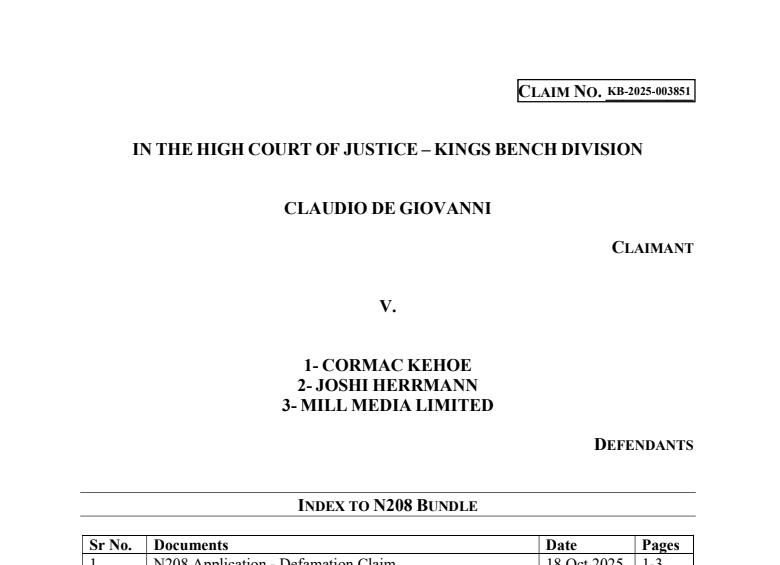
“Just wanted to flag that Claudio Di Giovanni issued a libel claim against you,” he texted offhandedly, attaching a screenshot of a defamation case that had appeared on the online court portal. The lawsuit — filed that day, 20 October last year — was demanding that we retract an article on The Londoner and pay £250,000 in damages, plus costs.
My heart sank. Even in the pantheon of miseries that airports can inflict on you, this was a very poor start to my holiday.
I have been writing about wealthy, litigious people in London on and off since starting my first job in journalism at the Evening Standard in 2011. The threat of a defamation case has always been a nightmarish possibility: being sued for libel in the UK can be ruinous, even if the story you have published is true. It’s easy to rack up hundreds of thousands — even millions — of pounds of your own costs just to defend a claim, and there’s no guarantee you’ll get that money back. But while I’m very familiar with legal threats, no one had ever filed a suit.
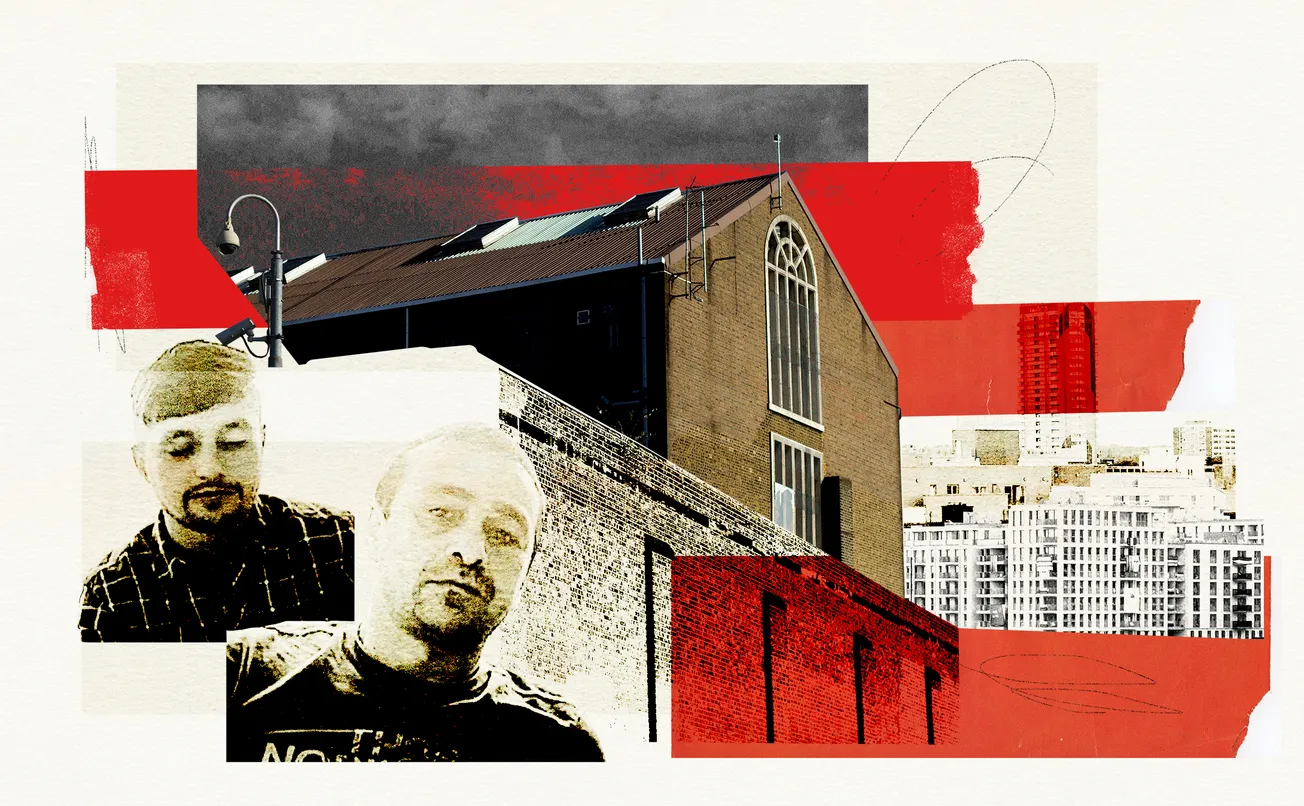
Now, someone has. Claudio Di Giovanni: a suave Italian businessman in his early 40s whom The Londoner exposed as a serial property scammer. We found that he had prompted at least four lawsuits and was accused of failing to pay more than £100,000 after renting out London homes and then subletting them on Airbnb and Booking.com for as much as six times the original price.
The holidaymakers staying in the homes he was subletting complained of “filthy” conditions, and one woman told us she had been electrocuted by the dishwasher. “We’ve been trying to raise this with Booking.com,” she told us, “to no avail.” After our story was published, she finally received a refund.
We had heard that “rental arbitrageurs” like Di Giovanni had become an increasing problem for London property owners in recent years, and he appeared to be a particularly extreme example. After being presented with our findings, Airbnb told us it had decided to suspend two accounts connected to his operation, and the MP for Kensington and Bayswater, Joe Powell, raised Di Giovanni’s conduct with the local police commander.
Presumably, this has hurt Di Giovanni’s operation: shortly afterwards, he filed his libel suit at the high court. Until now, we have chosen not to write about it. But as his attempts to threaten us have become increasingly sinister, we've decided to go public and describe what this looks like, so readers can understand more about the lengths powerful individuals in London will go to when it comes to silencing the press.
Please join us as a member to support our work
Targeting a reporter
The threats started three days before we published our story. Di Giovanni emailed us demanding that we disclose the sources and the documents we were relying upon, and threatened us with “immediate legal proceedings” if we didn’t acquiesce.
He offered no substantive responses to the claims in the story or the questions we had asked him. The story was written by Cormac Kehoe, who had gone to great lengths to get Di Giovanni’s response to what we were reporting. He had emailed him, called him, tried to contact him via his brother and visited an address listed as his home address in a court document, where he was greeted by a perplexed South American woman. “I worked for him a long time ago,” she said. “He used my address.”
Cormac is a very talented freelance journalist who has written several stories for The Londoner and has served as a Fellow at the Centre for Investigative Journalism. He worked closely with our investigations editor Cameron Barr, who served until a few years ago as the senior managing editor at the Washington Post, where he oversaw teams that won 13 Pulitzer Prizes. The Londoner’s editor Hannah Williams was also involved, as were our brilliant lawyers. All of which is to say: this was a solid piece of work produced by a very capable team.
A few days after we published our story, Di Giovanni emailed copies of papers that appeared to show that he had brought a personal claim for £5,000 against Cormac in the county court. There was more: if The Londoner did not remove the article by 11 August, Di Giovanni wrote, he would escalate his claim to the high court and sue Cormac personally for defamation to the tune of £250,000. He simultaneously offered to “drop all legal claims entirely if the article is taken down within the next 24 hours” (we declined this offer).
This was a highly unusual move. In targeting Cormac rather than The Londoner, Di Giovanni seemed to be attempting to intimidate a freelance journalist, rather than taking on the company that had produced the story. Di Giovanni had still not identified any specific errors in the piece.
When we failed to unpublish the article, Di Giovanni did as promised, and escalated his lawsuit a week later. “I am formally claiming £250,000 in damages for defamation, aggravated harm, and loss of business,” he wrote in his county court filing.

Cormac says that he feared being “financially ruined” by the case, and that it caused him a huge amount of stress. Soon he had received a county court judgment against him requiring him to pay £10,000, despite the fact Di Giovanni had never properly served him with the papers (they had been sent to Cormac’s old address, a point we are raising in our ongoing case).
Please join us as a member to support our work
‘Criminal implications’
After we continued to refuse to take the story down, Di Giovanni stepped up his campaign. “I would like to tell you that the situation you now find yourself in is far more serious than you may realise,” he wrote in an email to Cormac on 11 August. “The defamation claim being filed against you is not just civil, it has criminal implications through and through,” he wrote, emphasising the possibility of “jail time”.
As any lawyer reading this knows, this threat was utter nonsense. Defamation is a civil matter, not a criminal one, though Di Giovanni must have been hoping that Cormac didn’t know that.
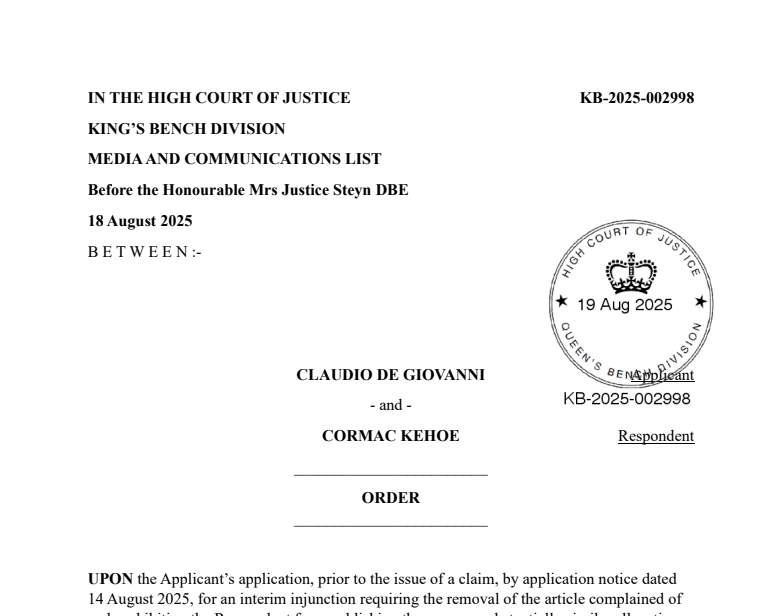
But Di Giovanni’s next move ran into someone who certainly did know the law: high court judge Mrs Justice Steyn. It ended disastrously. Di Giovanni had applied to the high court for an interim injunction to have the story taken down and prohibit us from publishing the same or “substantially similar” allegations in future. This is different from a libel claim — it’s an application to the court rather than a claim that a defendant has to answer (as such, we didn’t even know about it until it was concluded).
Justice Steyn dismissed his application without even giving it a hearing. Her written reasons on 18 August noted “defects in the procedure pursued and the defects in the Application” and a “lack of clarity as to precisely what words the Applicant complains of or what meaning he contends the words bear.”
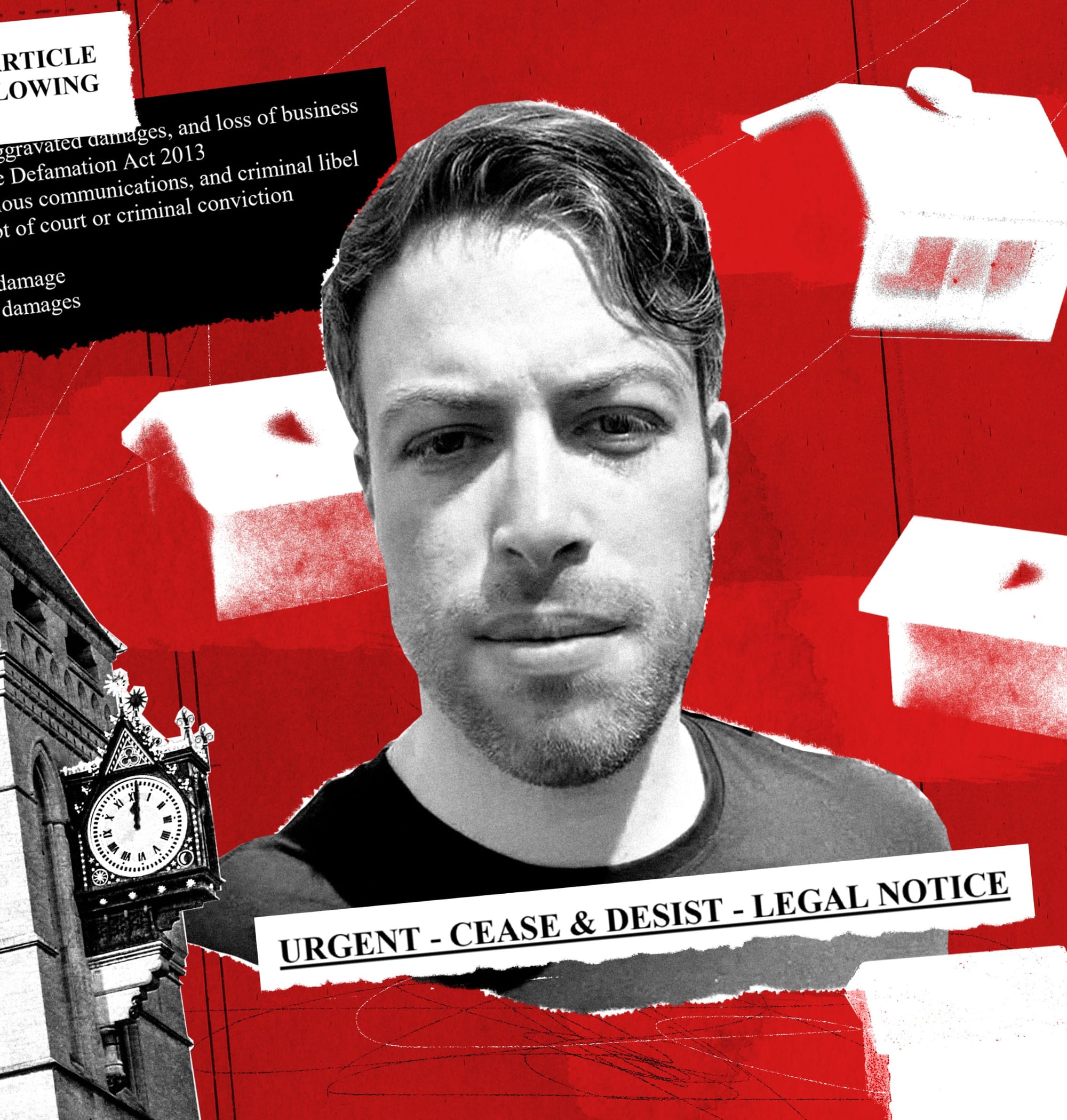
A rebuke like that from a High Court judge might have put some people off, but not Di Giovanni. Now he switched his focus to The Londoner, writing to us on 8 September that, if we did not remove the article and “issue a prominent correction and apology”, he would unleash hell upon us.
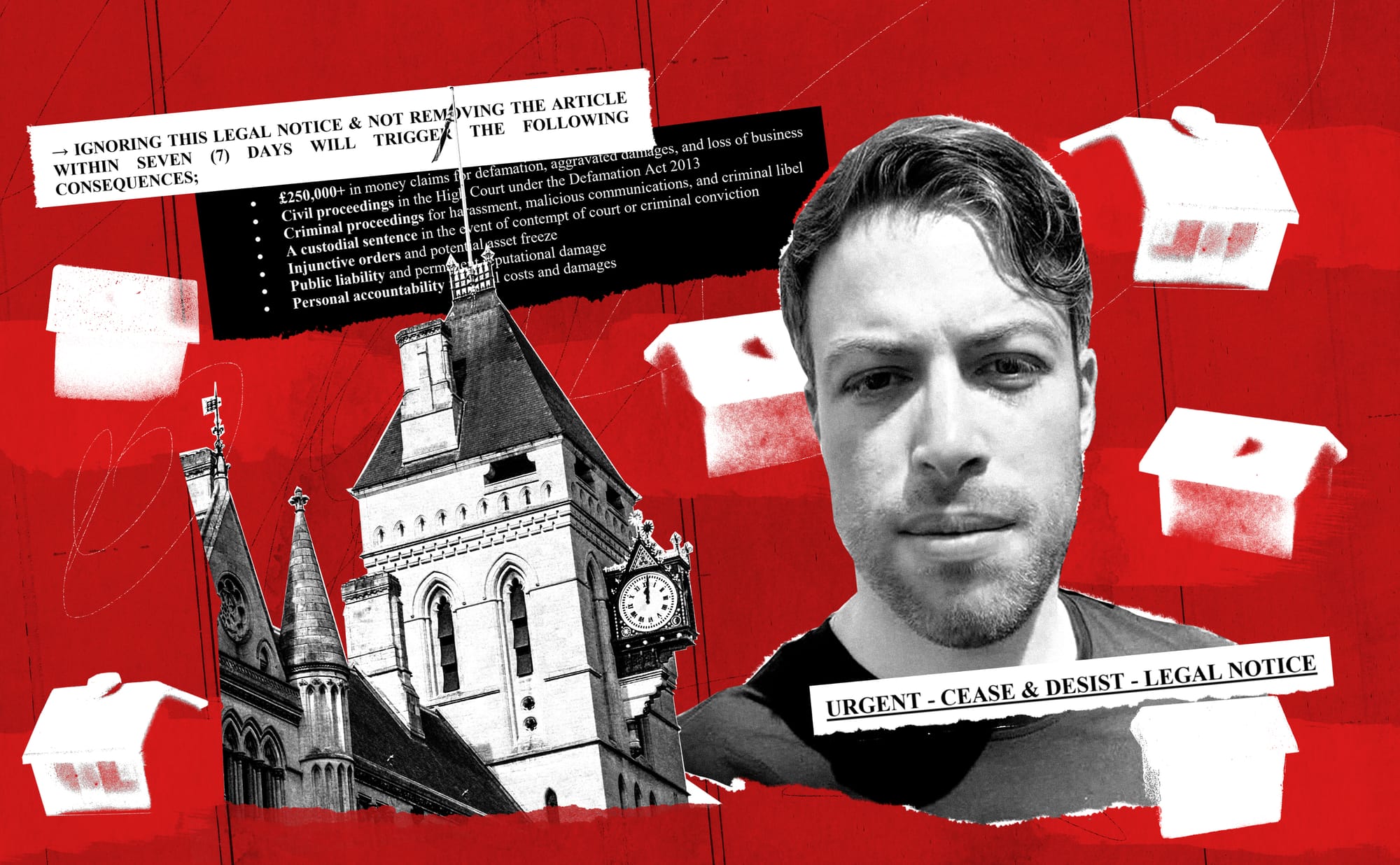
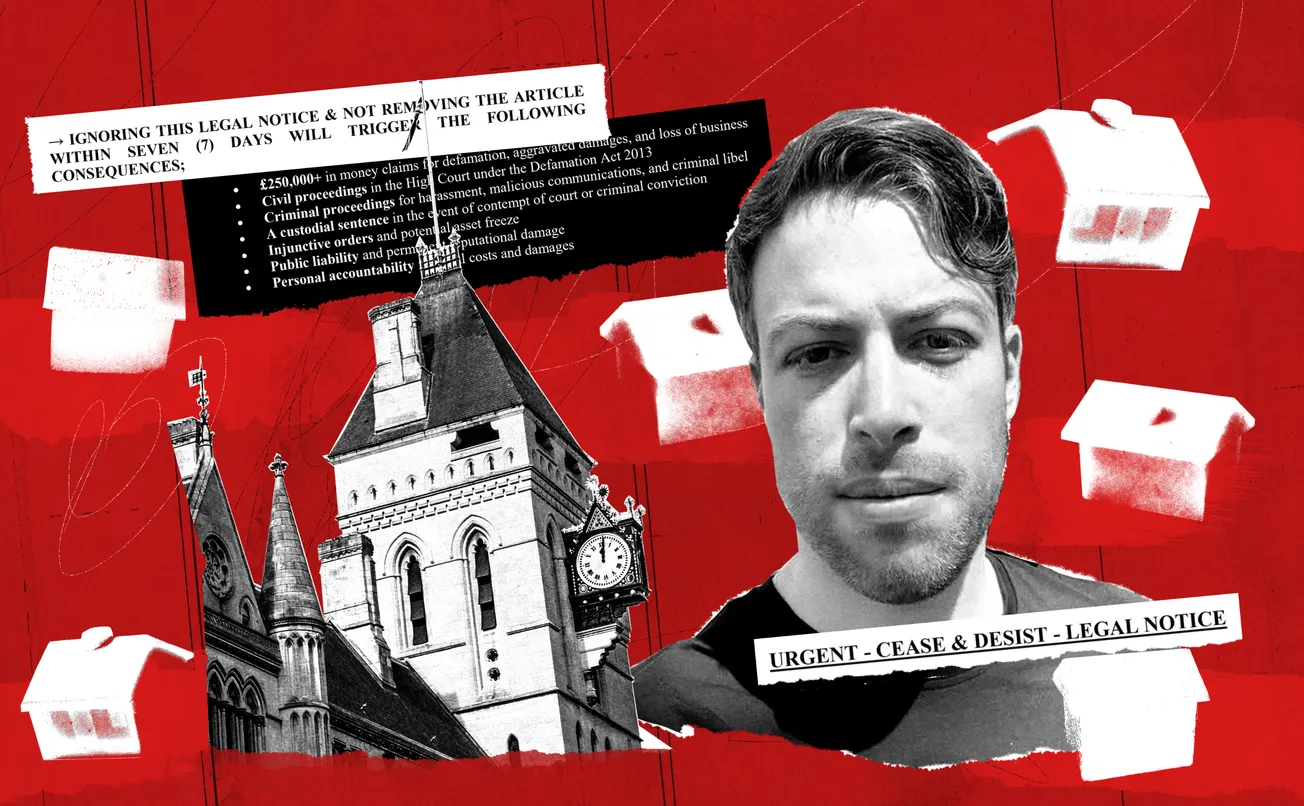
“IGNORING THIS LEGAL NOTICE & NOT REMOVING THE ARTICLE WITHIN SEVEN (7) DAYS WILL TRIGGER THE FOLLOWING CONSEQUENCES,” he wrote.
The consequences were helpfully listed in bullet points, including a £250,000 claim for defamation, “criminal proceedings” for harassment and malicious communications, “a custodial sentence in the event of contempt of court or criminal conviction”, potential asset freezes and personal accountability for legal costs.
I responded to Di Giovanni, telling him that I didn’t appreciate such threats. I also asked him which specific parts of the article he thought were defamatory. But again, he didn’t provide any evidence that anything we had reported was wrong.
Please join us as a member to support our work
The mysterious lawyer
Then came the biggie, the nightmare moment: the libel suit at the high court. The claim was directed against Cormac and me personally, as well as Mill Media, the independent company I started in 2020 to revive local journalism and which founded The Londoner. Implausibly, Di Giovanni claimed: “I have no involvement in property subletting or rental activities of any kind.” He was claiming £250,000 in damages, plus his legal costs.
I spent the first few days of my holiday speaking to Cameron, Hannah and our lawyers, and trying to work out how to fight the claim without bankrupting the company.
More threatening behaviour was to come. In early November, my colleagues were bombarded with strange emails complaining about the article and demanding it was taken down. One came at 1am from someone claiming to be called Habib Buzdar. Others came from Habib Ullah (who, for some reason, listed the same email as Buzdar at the bottom of the message). One of the email senders listed their country of origin as Pakistan.
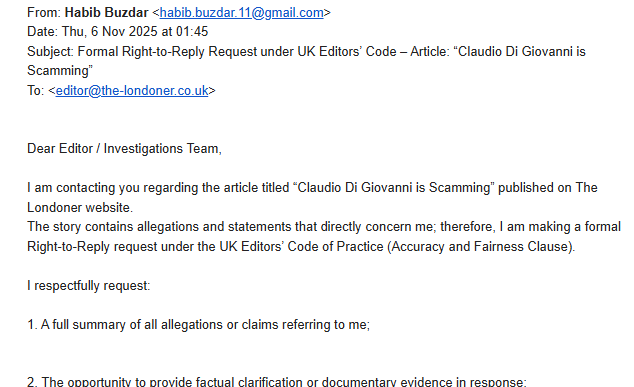
In total, my colleagues received more than 20 of these emails, some of which were identical and sent minutes apart. Yesterday, I asked Di Giovanni if he was responsible for sending these emails, but he has not responded to that question or any of the details we are publishing today.
Then, on 6 January, we received an email from a Gmail address that contained the name Bradley Johnston. The email itself was signed by “Tony Simmons” from the legal department of “BlackStone Solicitors LLC”. The email’s author claimed to have been instructed by Di Giovanni and the email purported to be a “formal cease and desist notice” and “pre-action letter” concerning the article.
But when our lawyers checked Companies House and the register of regulated individuals and firms maintained by the Solicitors Regulation Authority (SRA), they were unable to find any record of Tony Simmons or BlackStone Solicitors LLC. They replied to the mysterious email, requesting that the author provide his or the firm’s SRA registration details, or alternatively Companies House registration details, so that they could verify his and the firm’s identity. As yet, they have received no response.
In the UK, pretending to be a solicitor is a criminal offence. We’ve asked Di Giovanni if Simmons is a real lawyer instructed by him, and he has not responded.
Please join us as a member to support our work
Abusing the system
We are choosing to fight Di Giovanni’s libel suit at the high court because we are confident about the truth of our story, and truth is an absolute defence in UK defamation law. But fighting these things isn't cheap. The case has already cost us around £20,000, and we haven’t even reached the first court hearing.
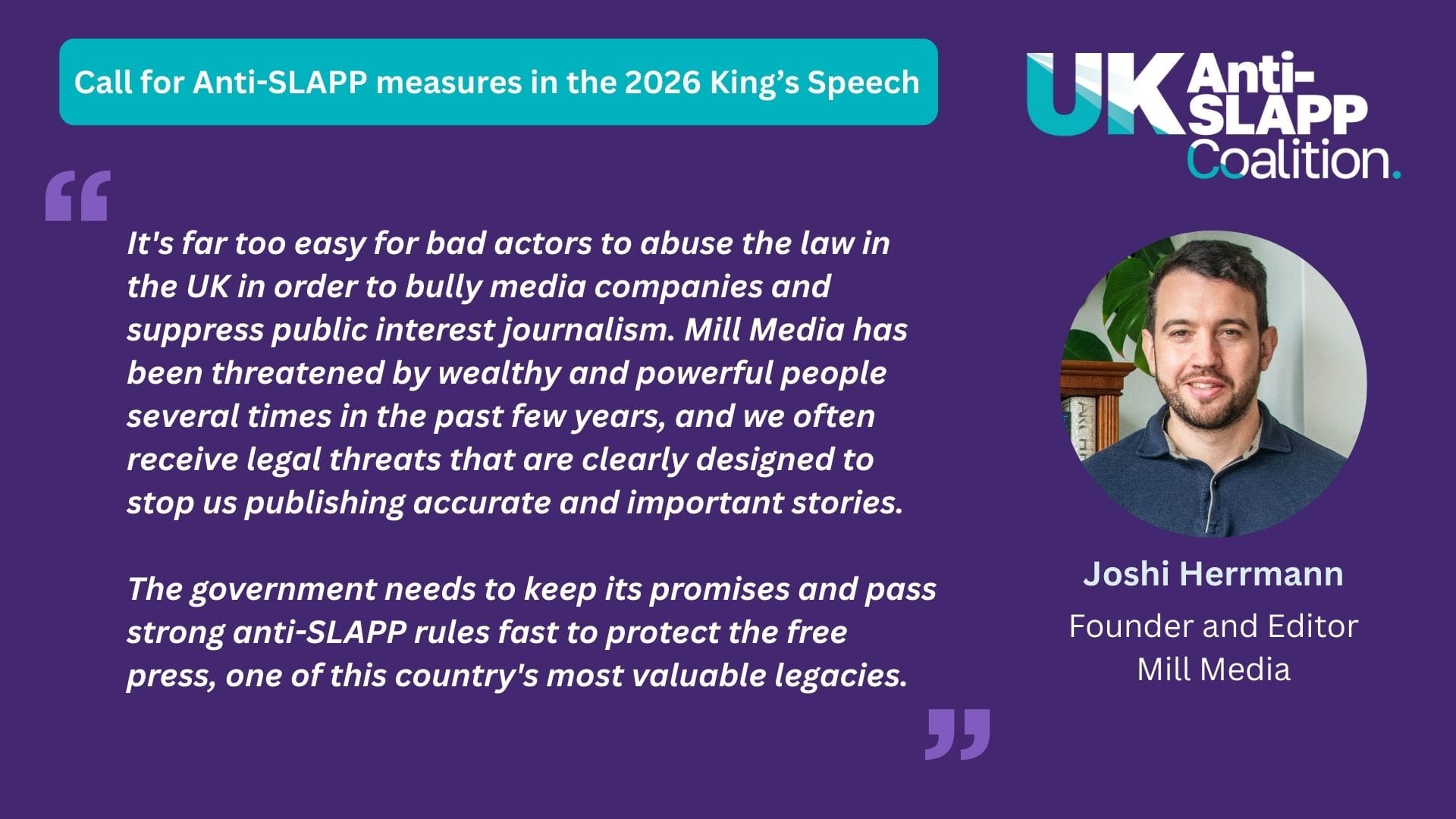
This week I was a co-signatory (along with the editors of The Times, Guardian, Telegraph, Financial Times, Economist and other publications) to a letter to the prime minister, asking the government to include provisions in the next King’s Speech that would prevent this kind of legal harassment. As the letter states: “wealthy and powerful claimants have misused the British justice system and the costs associated with participating in pre-trial and court proceedings to stifle protected speech and public participation.”
After reviewing the story, the Labour MP Phil Brickell, who is pushing for a change in the law to stamp out “routine abuse of our legal system to stifle accountability and scrutiny”, told The Londoner that “urgent action is required now to tackle vexatious legal claims”.
Index on Censorship, the country’s leading press freedom body, is aware of our predicament and told us: “An unfortunate reality is that all across the UK it's too easy for local journalists and their sources to be targeted by legal threats aimed at stifling public interest reporting.”
It will be up to the courts to decide the merits of our case, but I think it’s important to tell you, our readers, what we are facing. London is home to some of the wealthiest people in the world, many of whom are attracted by an outdated legal system that allows them to bully journalists, activists or others who seek transparency and truth but don’t have deep enough pockets for years-long legal battles.
It makes this city a difficult place to do investigative journalism. But in our short life we’ve done plenty of it, and we won’t back down from legitimate reporting just because someone doesn’t find that reporting flattering.
This is what we’re up against. We will meet Di Giovanni in court at the first hearing in March, at which we will attempt to get the case dismissed, and by then we will have racked up thousands more in legal costs. We have a fantastic team on our side — including the solicitors Anne Mannion and Ali Vaziri at Lewis Silkin. But these cases can be long and drawn out affairs.
If you’re reading this and you’re not yet a Londoner member, please join today — or even become a Super Supporter — to help us fight this case. If you already are a member: thank you for deciding to support quality journalism in London, and please share this editor’s note to spread the word.
We’ll update you on the progress of our case as soon as we can.