Our Saturday stories are free for all to read — but we can only produce this kind of work with your help (and we're currently being sued for £250,000 by a wealthy Airbnb grifter). If you appreciate high-quality local journalism, please do consider becoming a paying member.
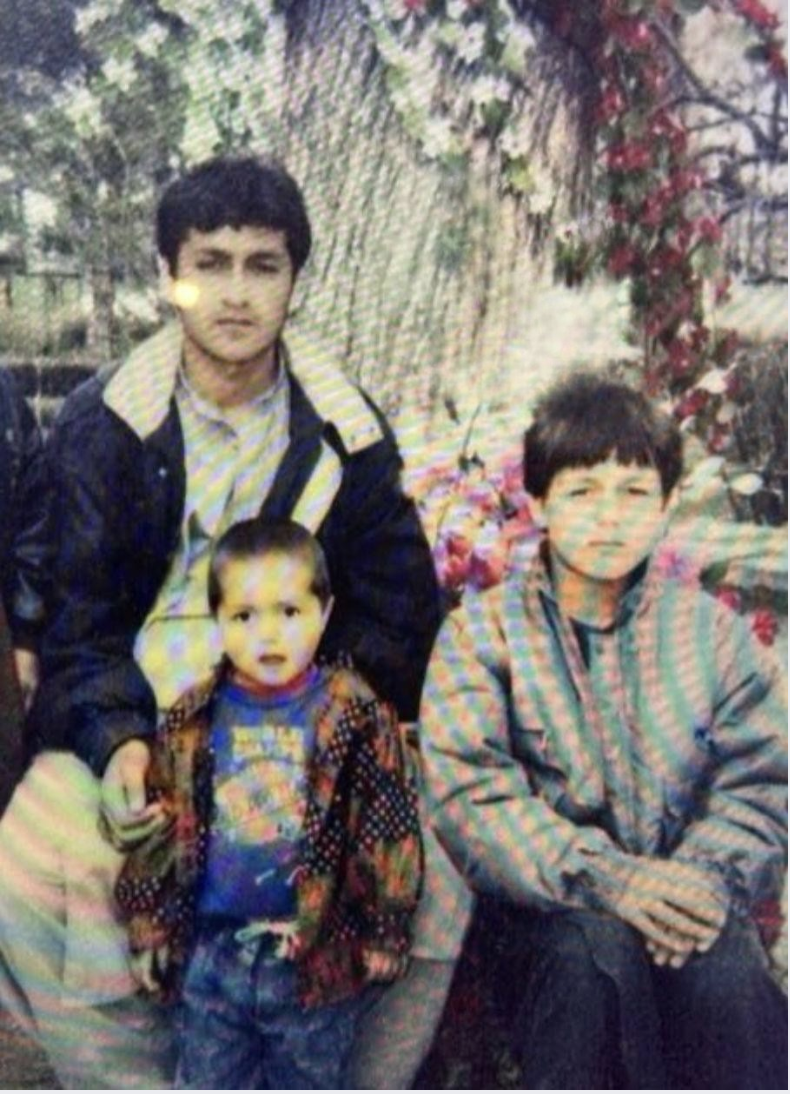
Abdul Halimi rematerialised in a phone call. At least, that’s how his brother Doulat remembers it. Abdul had been little more than a toddler the last time he saw him. He thought he might have died, or at the very least he’d disappeared from view, one of a million pieces of his life Doulat was forced to leave behind when he fled Afghanistan for London in 2000.
But in 2014, his phone buzzed with a call from an Iranian number. The voice on the other end of the line was a distant family friend — someone from the same village as his parents — and with him was a 14-year-old Abdul. Abdul, like his brother, had fled Afghanistan and was now in Iran, trying to find his way to London. It would be months of cross-continental treks and asylum applications before Doulat could go to Cambridge to pick up the little brother he’d never had the chance to get to know and bring him back home to east London. His arrival, along with that of Doulat’s older brother Mardan years earlier, was a second chance at a relationship. For the first time, something resembling a family — a future — was taking shape on the streets of Stratford.
Over a few short weeks last year, both of Doulat’s brothers would be dead. The story of the 39 days that destroyed his family is one of broken systems, wrongful imprisonments and inescapable trauma. It’s a saga that exposes the indignities faced by refugees trying to build a life in the capital, and the all-too human tragedies that play out every day for the most ostracised in this city.
If you want to read more in-depth features, investigations and scoops about the capital, then sign up to our mailing list to get two completely free editions of The Londoner every week: a Monday briefing, full of everything you need to know about that’s going on in the city; and a high-quality, in-depth weekend long-read.
No fluff, no gimmicks: just click the button below and get our unique brand of local journalism straight to your inbox.
The flight from Kabul
I’m sitting with Doulat in the pleather booth of a cheap cafe in Stratford, the rain rhythmically pounding the corrugated plastic roof. He has short black hair and an unkempt beard, with age lines carving premature canyons through his skin. He’s worked a lot of jobs in his life: cleaner, agency worker, construction, night shifts at the late opening Tesco superstore in Rainham. He had no plans to speak to the press about his story, but he called me after a letter I sent to the coroner handling Mardan’s case was forwarded to him, because he “needs to get justice”. As he recalls the end of his family, he oscillates between shouts and whispers, but at every volume his words are tinged with a sense of defeat.
The Halimi family originally hail from Panjshir, Doulat tells me, a region of razor sharp mountains and narrow, grassy valleys, famed for its resilience. Until his 2001 assasination and the US–UK invasion, it was the base of operations for Ahmad Shah Massoud, the “Lion of Panjshir” and the leader of anti-Taliban resistance. During those years of upheaval, the Halimi family were forced to move to Kabul. But it was far from a safe haven.
Doulat is reticent about the specifics of what happened to them, but psychologists' reports about his brother Mardan reveal the scale of the trauma. Mardan had been homeless from the age of 13, living in graveyards, and was tortured and raped repeatedly by a local man he knew. He eventually got married and tried to build a normal life, but the rise of the Taliban left the country in chaos. A gang of men broke into his house with guns, and his pregnant wife was shot and killed. He survived with a bullet in his leg. Mardan and Doulat fled the country for the UK, when Doulat was still a teenager. Doulat arrived first in 2000, followed by his older brother two years later.
It took nine years, but eventually Mardan was granted indefinite leave to remain as a refugee, and moved to London from his home in Newcastle. But his past trauma left him struggling to adapt. At one point, he was on 12 different medications, and had a list of diagnoses to match: PTSD, schizophrenia, unstable personality disorder. Sometimes he would get so worked up he would start hitting himself in the head. Mardan struggled to read or write. Doulat even had to accompany him to open a bank account. He was, to put it simply, extremely vulnerable.
Mardan tried to treat his PTSD by smoking weed. He would go to the local park to buy it, where he was repeatedly attacked by a local gang. “He was beaten up a lot; one time his jaw was broken,” Doulat recalls. “He kept screaming for help, but nobody listened.” After strings of beatings, he was eventually coerced into becoming a mule for the gang, carrying cocaine to local buyers.
On four occasions in early 2020, Mardan was caught bringing cocaine to an undercover police officer. He was arrested and charged with drug dealing offences, and was placed under ankle-monitored home curfew while he awaited a court date. It would be 1507 days — a number Doulat recites exactly, as if it’s etched into his brain tissue — before Mardan would be seen by a judge, on 25 September 2024. He pleaded guilty, and was sentenced to two years in prison, but the judge ordered his release: his pre-trial curfew had been twice as long as his planned sentence.
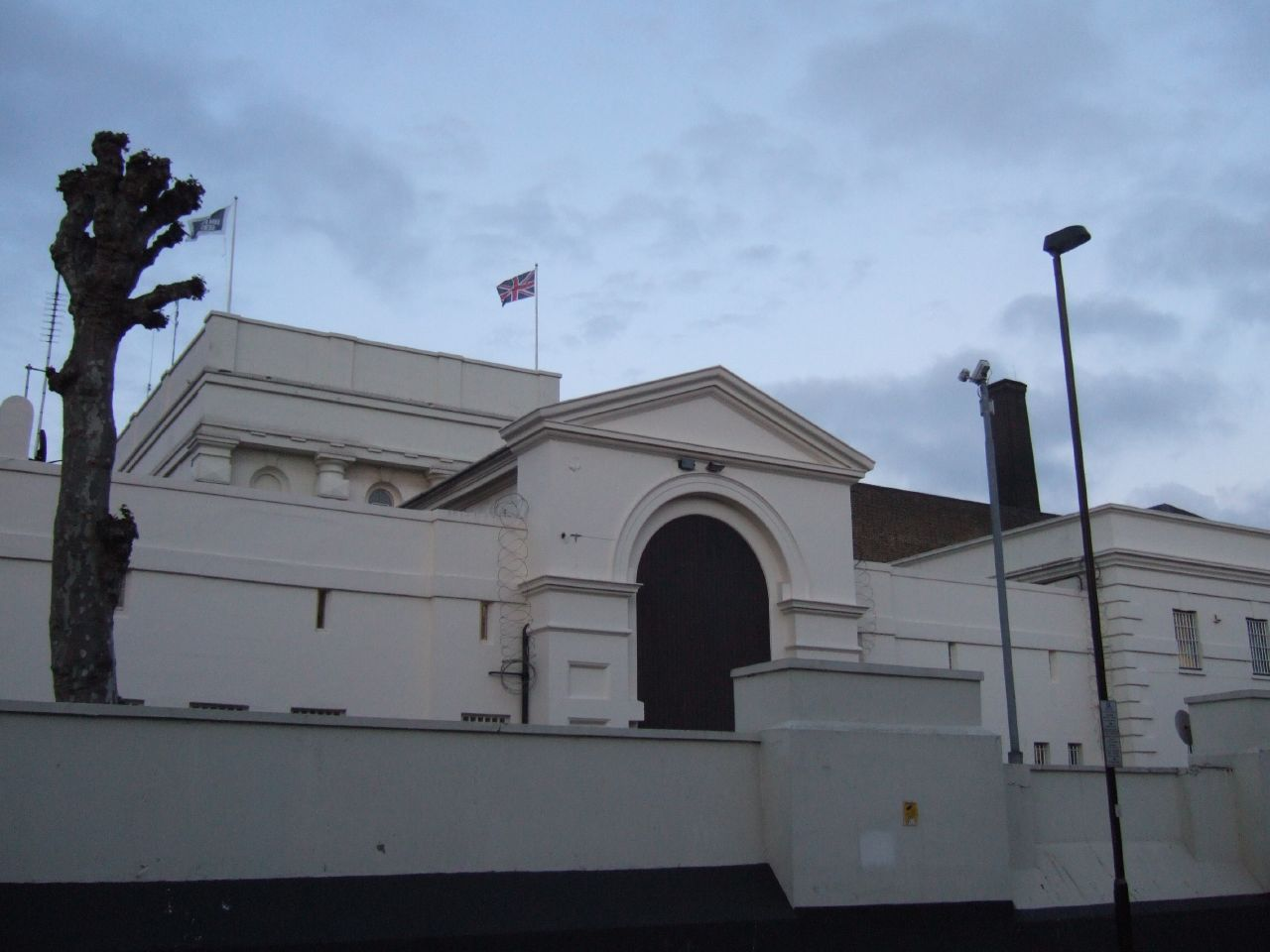
That final point seemed to have been lost on the prison officers who took Mardan off to Pentonville prison anyway. Doulat shows me the frantic messages and emails their lawyers sent in the weeks afterwards before Mardan was finally released in late November 2024. Just four days later, he was rearrested for allegedly sexually and physically assaulting his girlfriend (charges Doulat stresses his brother denied). He was taken back to Pentonville, on remand, until the case was heard.
“He told me there were rats crawling everywhere, cockroaches crawling everywhere,” Doulat recalls. “It was a dirty, dirty place… They treated them like animals”. The calls from Mardan begging for help became almost constant. He said he felt like he had been put through a “washing machine” that had rolled and twisted him out of shape. But the experience, his brother hoped, would only be temporary.
Less than 15 weeks later, Mardan would be dead.
The peace he so desperately sought
Doulat remembers Abdul as the “nice and normal” one of the family. He cared about his appearance, always cycling through a stream of different haircuts. He believed a lot in the British authorities and had an obsessive love of the late monarch. “If you said something [negative] about Queen Elizabeth,” Doulat remembers, smiling, “he would literally fight you.”
But like most child refugees, he had suffered at a young age more than most do in their entire lives. An explosion had left him partially deaf in both ears, which made it a struggle for him to speak and forced him to rely on lipreading. Back in Afghanistan he had been cared for by an aunt — though Doulat didn’t want to go into detail, he tells me the rest of the family had been separated by the war — who had lost one of her legs to a mine. When she died, her husband kicked a teenage Abdul out of the house.
“He was living on the streets,” Doulat says “So he tried to get some money together to get his way to Iran.” That was where he first called his older brother, and set his heart on making it to England. By the time he reached Italy, he had to be taken in by a local church. His feet were so swollen from the constant walking they had become infected, and he needed antibiotics. He was 14 years old.
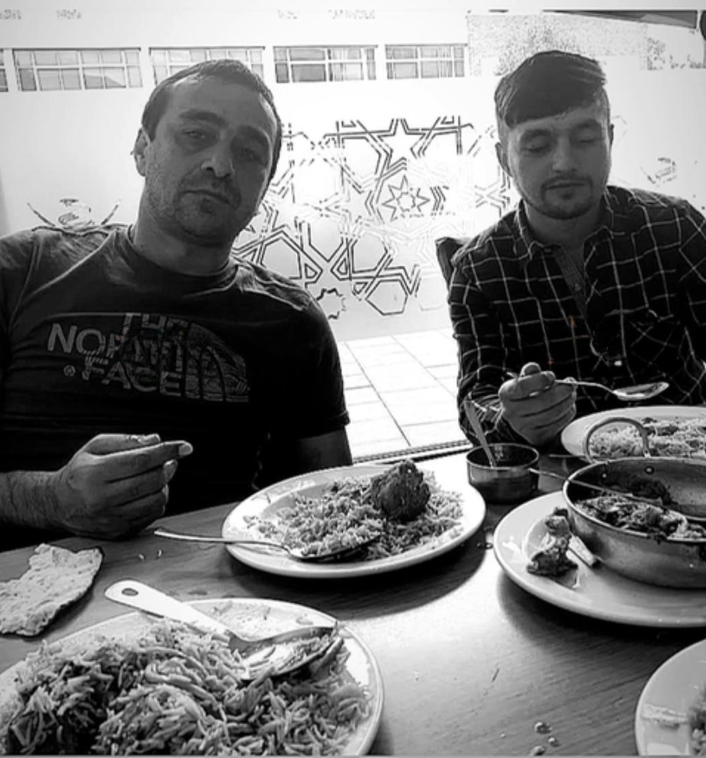
When he eventually arrived in the UK, Newham council chose to place him in the care of a foster family rather than let him live with either of his two brothers. But the home he was placed in was a few minutes walk away from Doulat’s flat, and Abdul would spend lots of time with his brother, his wife and their family, becoming acquainted with a sibling he’d barely had the chance to know back in Afghanistan. He did well in school, and had a girlfriend he would speak to most nights over FaceTime.
In 2018, when he turned 18, Newham council moved him into a flat on his own, the standard procedure for children leaving care. Over the next half a decade, Abdul lived in a string of properties, eventually being moved in March 2023 to one near Stratford town centre. Like his brother, he was diagnosed with PTSD, as well as depression and anxiety. As the years went by, he stopped caring about his appearance or clothes, and his personality began to shift. “He was one person, and the next time you’d see him he was a whole other person,” Doulat recalls. His deafness left him frustrated when talking to officials, who he felt didn’t understand him.
Within a few months, the walls and ceiling in his flat started to seep water. This only worsened, and soon the flat was riddled with damp. The delayed repair works by the council left Abdul living in a local hotel for six weeks. But, when he returned to the flat, the damp was still there and continued to spread. Newham’s head of housing later acknowledged in a statement to the coroner overseeing Abdul’s case that his housing conditions had a negative impact on his anxiety and mental state. In recompense for the problems with his housing, after he returned to the house they offered him £200 in compensation.
Things continued to deteriorate. On multiple occasions in February 2024, Abdul reported being assaulted by a group, armed with knives and guns, who hung out by the entrance of his building. On one occasion, he was hospitalised.
The assaults were enough of a threat that Newham council gave Abdul an emergency housing transfer to a new flat in Canning Town. The local authority said in their submission to the coroner that this was the last they heard of any problems with his housing. Yet Doulat tells me his brother continued to have issues with disrepair and antisocial behaviour at his new property.
Whatever the case, Abdul’s mental health took a turn for the worse after moving to the new house. The NHS team handling his care reported that Abdul talked more and more about suicide — his girlfriend, he said, was the main reason he didn’t act on it. On one visit to his flat he told a visiting NHS pharmacist that he sometimes had thoughts of setting himself on fire, but he was too afraid to attempt it lest he survive with life-altering disabilities.
In early January 2025, he received a court summons. The Met were calling him as a witness in his brother’s upcoming criminal case, but Abdul couldn’t face the idea of appearing on the stand in his current state. Doulat told him he would have no choice but to appear. Abdul was spiralling. On 26 January, he stopped responding to his girlfriend’s messages. When family and friends visited his flat, there was no answer. They filed a missing person's report.
Three police officers went to check on Abdul in his flat on the morning of 31 January 2025. When they got no answer, they kicked down the front door. Abdul was found hanging in a cupboard in his flat, blood oozing from his mouth. He was 25 years old.
“In his passing, there is grief,” Doulat would later write to a coroner, “but also an overwhelming sense of regret that he could not find the peace he so desperately sought.”
Mardan's collapse
Mardan was given special dispensation to leave Pentonville for his brother’s memorial, before Abdul’s coffin was flown for a full burial in Afghanistan. Doulat had gone ahead to Kabul to prepare the family plot. In footage from the memorial, Mardan looks emaciated and gaunt, hunched near the coffin in his grey prison tracksuit.
Mardan had been having severe abdominal pain and suffering from constipation (sometimes lasting up to five days at a time) since his first trial in September 2024, Doulat tells me, but either wasn’t able to explain the problems given his mental state, or was ignored by prison staff when he did.
Mardan begged his younger brother to advocate on his behalf, and for weeks Doulat sent multiple desperate pleas to the prison's contact inbox asking for his brother to be taken to a doctor. Only one would receive a response: on 3 February, a curt reply came from the prison: “An officer went to see Mr Halimi and he is fine. Mr Halimi will go out to hospital to get checked for his kidney pain”. That visit never happened.
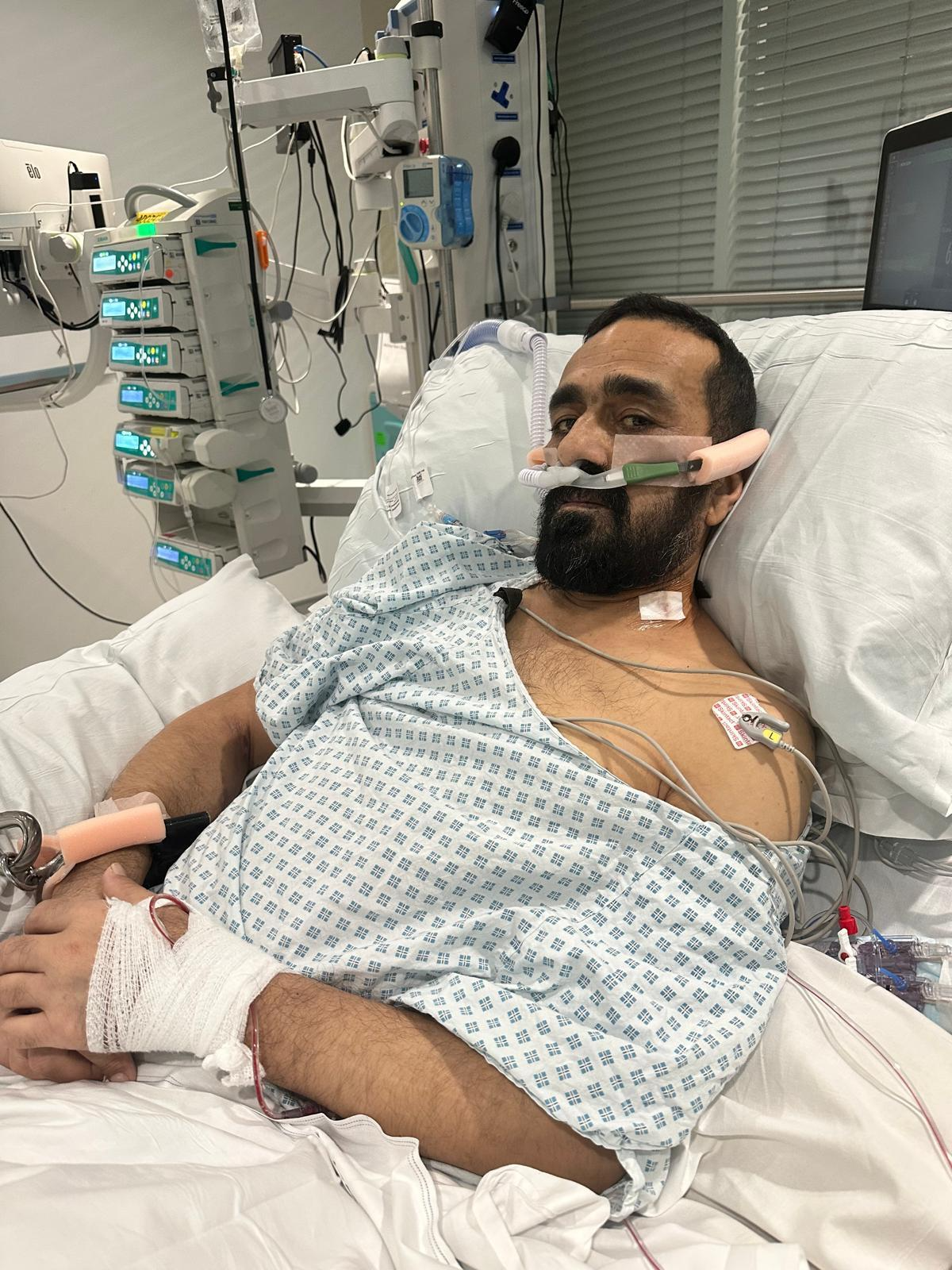
On 20 February, the same day a hospital nurse deemed him as having “low clinical acute risk”, Mardan collapsed in agonising pain and was taken to University College Hospital by ambulance. He was diagnosed with extremely late stage pancreatic cancer, according to prison records, that had metastasized throughout his entire body.
Doulat, who was still in Afghanistan, wasn’t told of Mardan’s collapse or his terminal diagnosis. His plane landed at Stansted on 4 March, and from the pavement outside the airport he emailed the prison to let them know he was back in the UK. Two days later, he got a call from the prison imam informing of his brother’s condition.
He rushed to the hospital to find out what was going on. Mardan was almost entirely immobile, barely able to speak, using a catheter to urinate and receiving oxygen to help him breathe. “I walk in and see two prison officers in his room,” Doulat recalls. “And while he's unconscious, with cancer, and they know that he hasn’t got long to live, they still have him in handcuffs. He couldn't even move at this point.” A doctor apologetically informed him that his brother had between a week and a month to live.
Doulat recalls begging one of the officers to remove the handcuffs. “I said to her: ‘I just buried one brother, have some compassion. God forbid, if it was your family’,” he tells me. “And she just said: ‘Well, I don't have criminals in my family.’” After he refused to back down and involved the hospital staff, the handcuffs were removed, two weeks after Mardan first arrived in hospital.
“When I came to the hospital, the only time I spoke to him I couldn’t hear what he was saying. He just couldn’t speak,” Doulat tells me. The last time the two of them had spoken on the phone, around the time Doulat had gone to Kabul, it had ended in an argument. Mardan had been complaining about his pain and his need for Doulat to get him some medical attention in the prison, but the latter was preoccupied with burying their younger brother. “I screamed at him. I was so pissed off, I just lost it. I told him: ‘You're at least well and alive. It doesn't matter if you're in prison,’” he tells me, his words little more than a whisper.
Mardan died four days after Doulat’s first visit, the gang’s bullet still lodged in his thigh. “10 March, on a Monday,” Doulat says, resolutely. “It was 9.05am.”
The fight for justice
The deeper we dive into the lives and deaths of his brothers during our three hour interview, the more disoriented Doulat becomes. He starts to go quiet as he shows me photos on his phone: Abdul in his school uniform, the trio going for lunch, childhood pictures from Afghanistan. The final one is of a bright white stone, covered in pebbles. It’s the grave his two brothers share back in Kabul, the city they had fought so hard to escape from. He struggles to find the words to explain the impact of their deaths. “My brain is basically half dead most of the time… I feel like getting up, walking to the station and jumping in front of the next train,” he admits. “But I have two little kids. How are they going to grow up without me?”
In the year since their deaths, Doulat has felt stuck. When we speak, he still hasn’t received the possessions that Mardan had on him when he was arrested. He’s spent the last few days trying to get Mardan’s bank account closed, one of a litany of administrative tasks involved in tying up the loose ends of his brother’s life. But the bank refused to do it without the presence of Mardan’s estranged second wife, who is living in Iran after being refused permission to come to the UK by the Home Office in the years before his death.
Both Mardan and Abdul’s deaths were subject to a coroner’s court hearing — one in September last year and the other in January this year — which are supposed to determine the cause of someone’s death and whether it could have been prevented. The process was disappointing for Doulat. At the hearing concerning Abdul’s death, he asked about his younger brother’s treatment by multiple authorities only to be told that it wasn’t the forum for those sorts of questions. In both cases, the coroners ruled that his brothers’ deaths, while tragic, were unavoidable, something Doulat contests.
A separate ombudsman investigation into Mardan’s death criticised Pentonville officers for using handcuffs on a bedbound Mardan “without due consideration for his increasingly poor mobility and difficulty breathing”, but concluded the healthcare he received at Pentonville was “equivalent” to what he could expect on the outside.
One detail Doulat remembers from the coroners’ hearings was an exchange Abdul had with a mental health nurse a few weeks before his death, where he claimed he had been let down by his brother. It wasn’t clear which brother he had been referring to. “Apparently I failed him as well,” he sighs, pausing for an uncomfortably long time. “Maybe I did, and I’ll have to live the rest of my life with that guilt. But I think everybody failed him.”
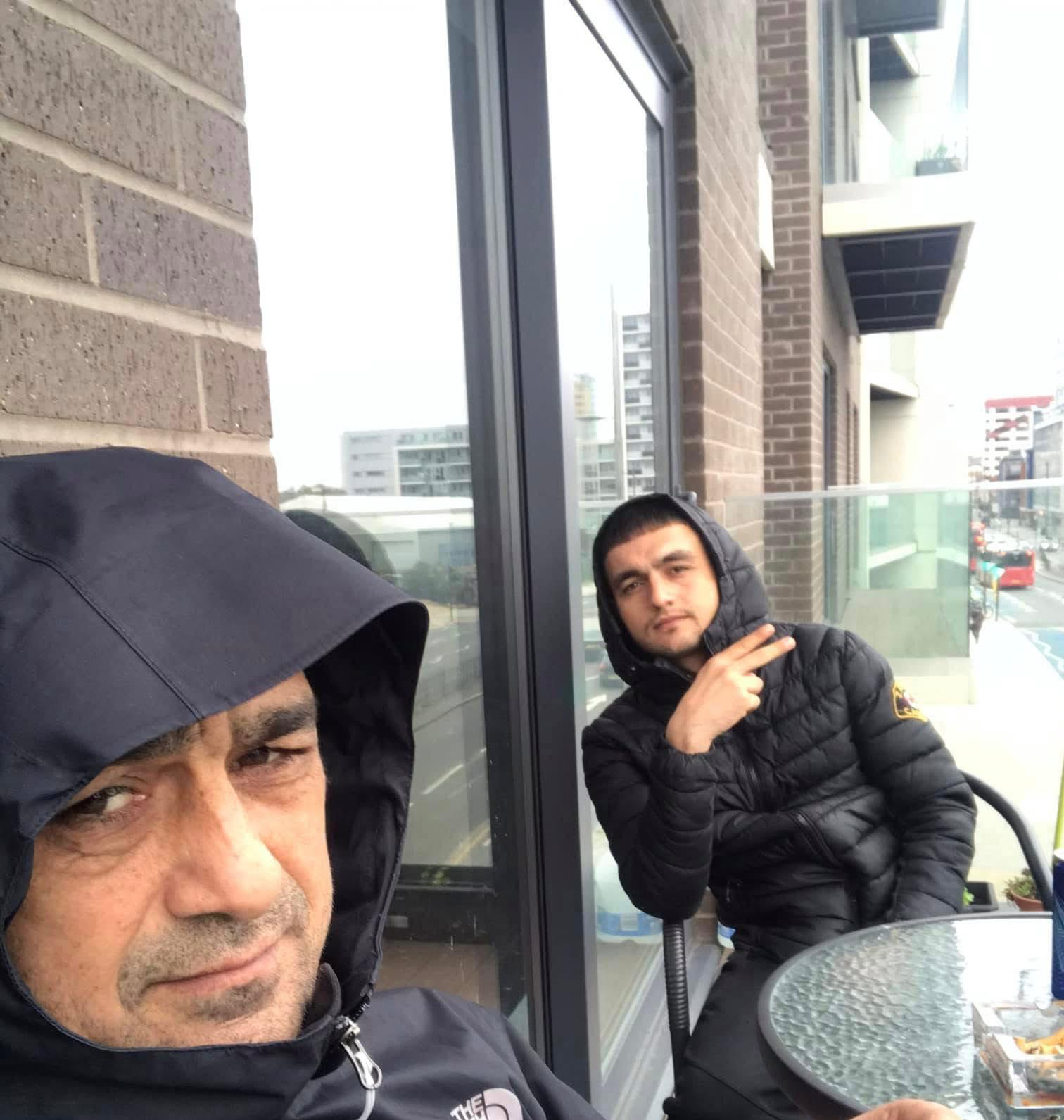
He’s submitted a formal complaint to the police — about their contact with his brother given his vulnerability and their management of Mardan's case — which is still being processed, a year on. He even texted every officer and official he can think of asking how to get accountability. Now, he wants to find a solicitor to hold somebody to account for it all, for their deaths to effect some form of change.
A spokesperson for the Met stressed that “neither Mr [Abdul] Halimi nor any third party had made police aware of any vulnerabilities or mental health issues during the investigation” and that the “coroner made no criticism of the Met at the conclusion of the inquest”. Days after we sent our right of reply email, officers arrived at Doulat’s home to finally return his brother’s possessions.
“HMP Pentonville has accepted the Ombudsman’s recommendations and is ensuring better collaboration between healthcare professionals and prison staff to ensure the use of restraints fully considers the offender’s condition,” a spokesperson for the prison service added. They did not respond to the specific points about Mardan’s treatment and death.
“During the years that Mr Halimi was in our care — both as a child and later as a care leaver — we worked hard to support him in every way we could,” said councillor Sarah Ruiz, Newham council cabinet member for children’s services. “This included help with housing and providing him with a personal advisor who offered ongoing practical and emotional support, at times above and beyond our statutory duties.” They added that the coroner concluded that the issues with Abdul’s housing were not considered “significant contributory factors” in his death by the coroner.
The more I speak to Doulat, the more I get the sense that losing his brothers was a loss of faith in the adopted homeland he’d tried so hard to make a life in. His wife, a migrant from Lithuania, recently decided not to apply to get full British citizenship. “If you are educated and speak to the authorities on one level then they understand and will talk to you, but when you’re not educated or you don’t know what to do in the system, they just brush you aside,” he says, letting out a defeated sigh. The rain continues to pummel the roof of the cafe. “They're not bothered about what happened to us. Nobody's bothered.”
In the UK, Samaritans can be contacted on freephone 116 123. Visit Samaritans.org for more information. Other international helplines can be found at befrienders.org. A list of LGBTQ+ mental health helplines can be found at Mind.
If you want more high-quality local journalism, sign up as a Londoner member today. This means you'll get weekend long reads like our heart-wrenching piece on the death of Brian Mitchell and Monday briefings like our exclusive scoop on who's been behind a spate of thefts from high-end restaurants delivered straight to your inbox.
No ads, no gimmicks: just click the button below and get two high-quality pieces each week, all for free.