Welcome to The Londoner, a brand-new magazine all about the capital. Sign up to our mailing list to get two completely free editions of The Londoner every week: a Monday briefing, full of everything you need to know about that’s going on in the city; and a high-quality, in-depth weekend long-read.
No fluff, no gimmicks: just click the button below and get our unique brand of local journalism straight to your inbox.
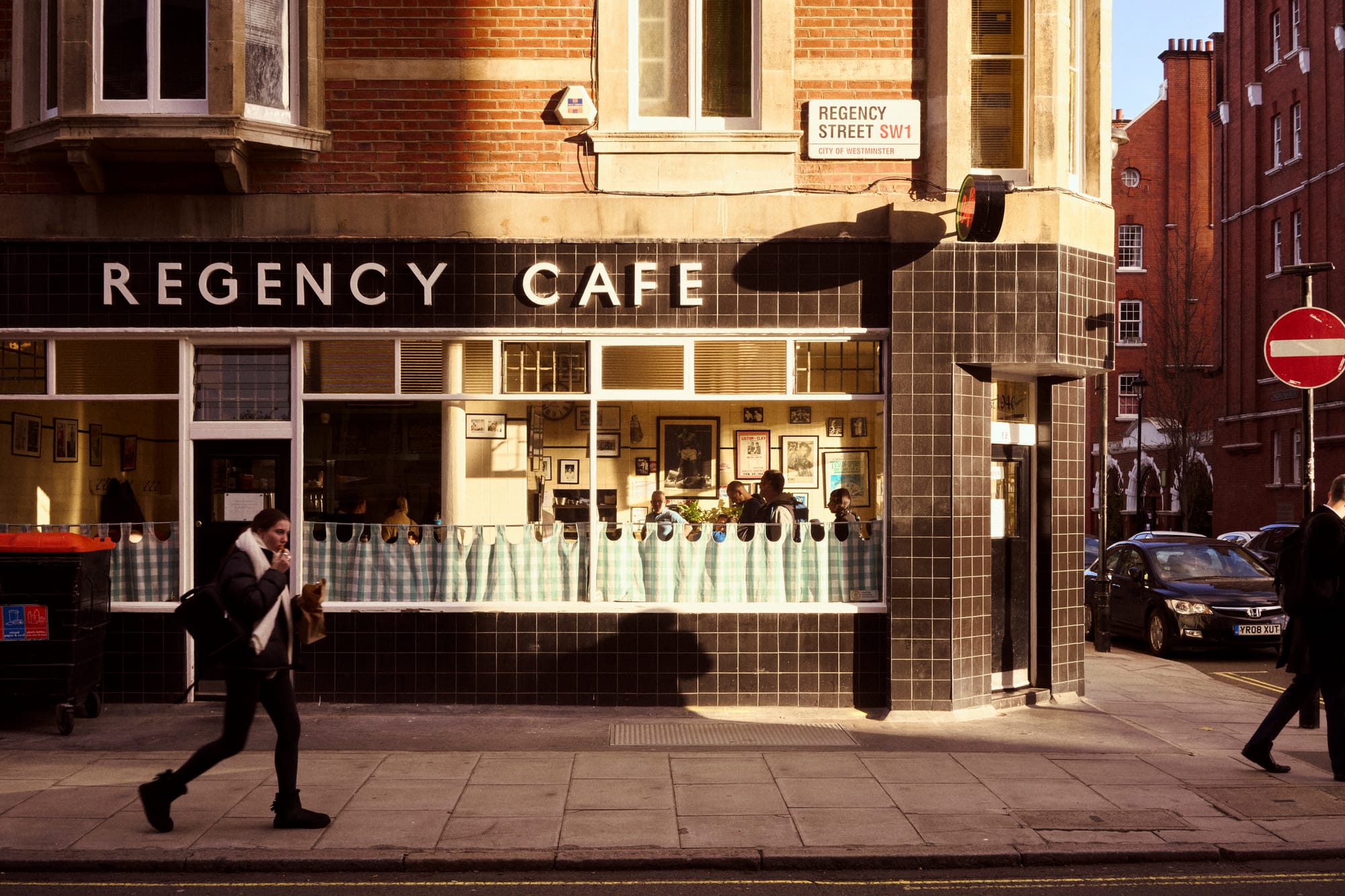
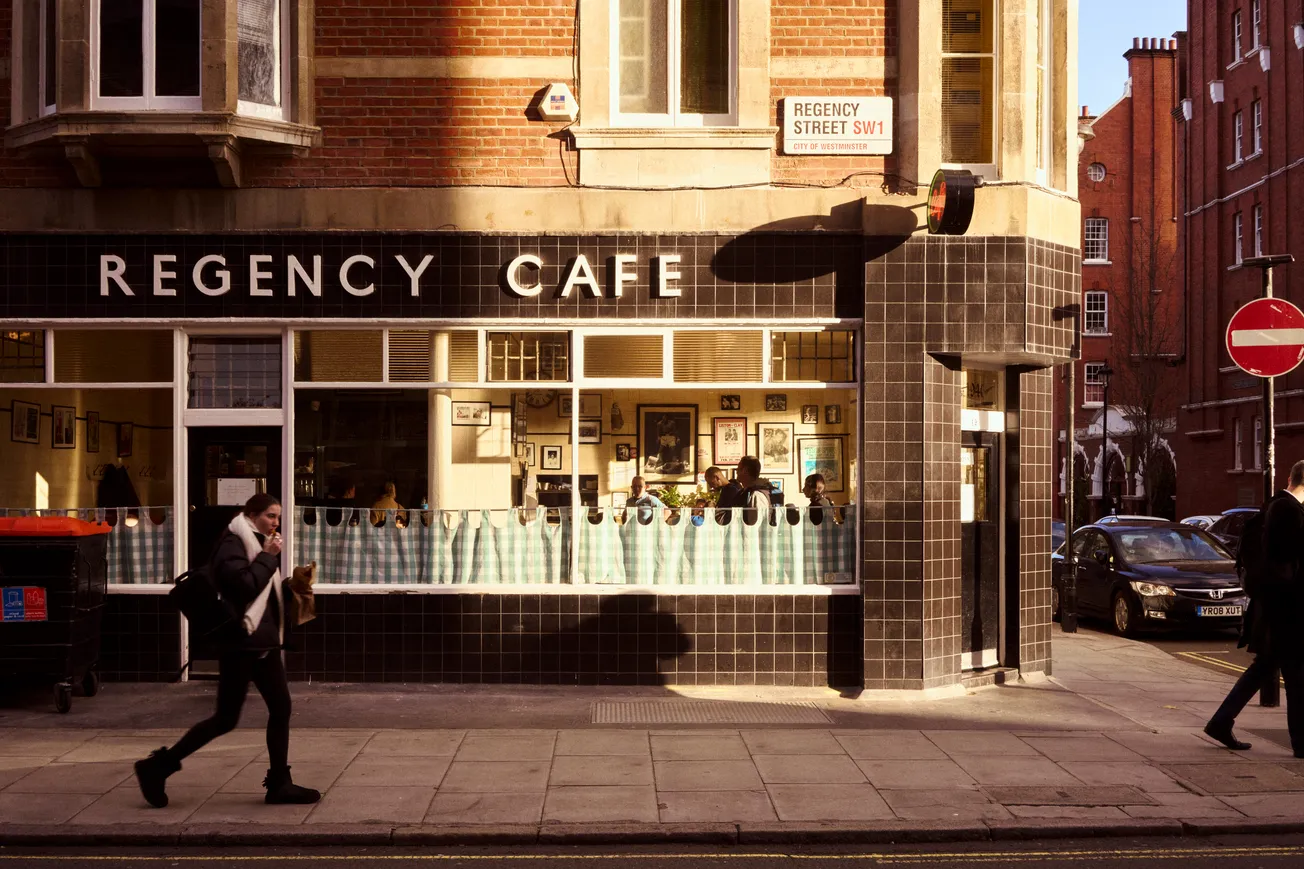
There they are: the first-timers and the all-lifers and the long-gone-returners, the tourists and the tradespeople and the politicians, the older ladies in skirt suits and the civil servants in starched shirts and the students in baggy jeans, each waiting patiently for their number to be called. The rush usually begins around half 12, when the queue can get so long that it snakes out of the interior and doubles-back up Regency Street, where the Regency Cafe’s black tiled exterior has sat for 80 years.
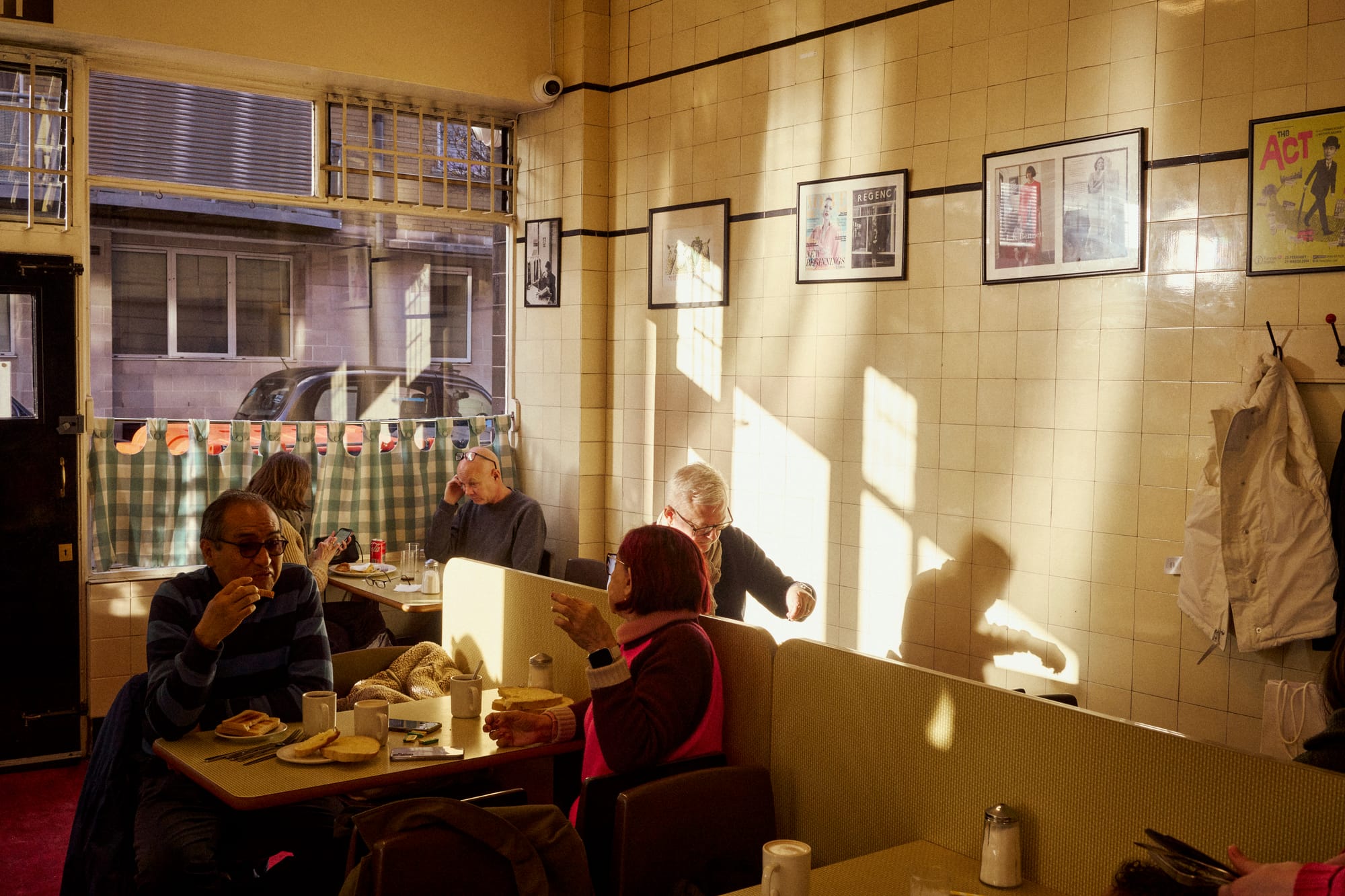
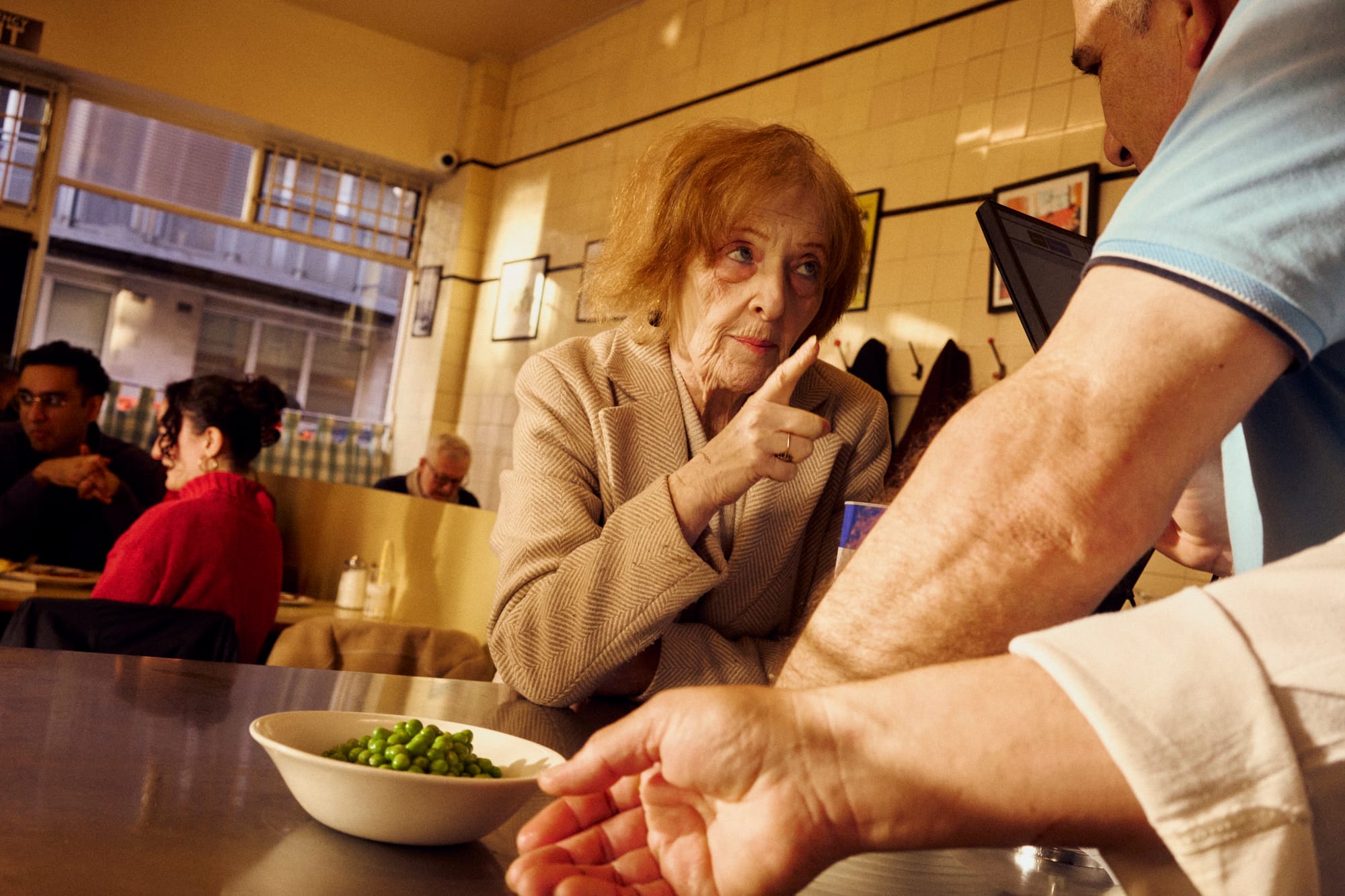
Even from the outside, the cafe exudes a kind of familiar, unfussy comfort, from the minimalist art deco lettering of its sign to the way its frontage wraps around the street corner, a friendly arm squeezed around a shoulder. Inside, a pristine 1940s interior: tiles the yellow-cream of a just-opened pat of butter, red lino, Formica tables, half curtains. It is snug and, on the day I visit, sun-splashed, the golden light illuminating the steam from teacups, the large windows steamed over.
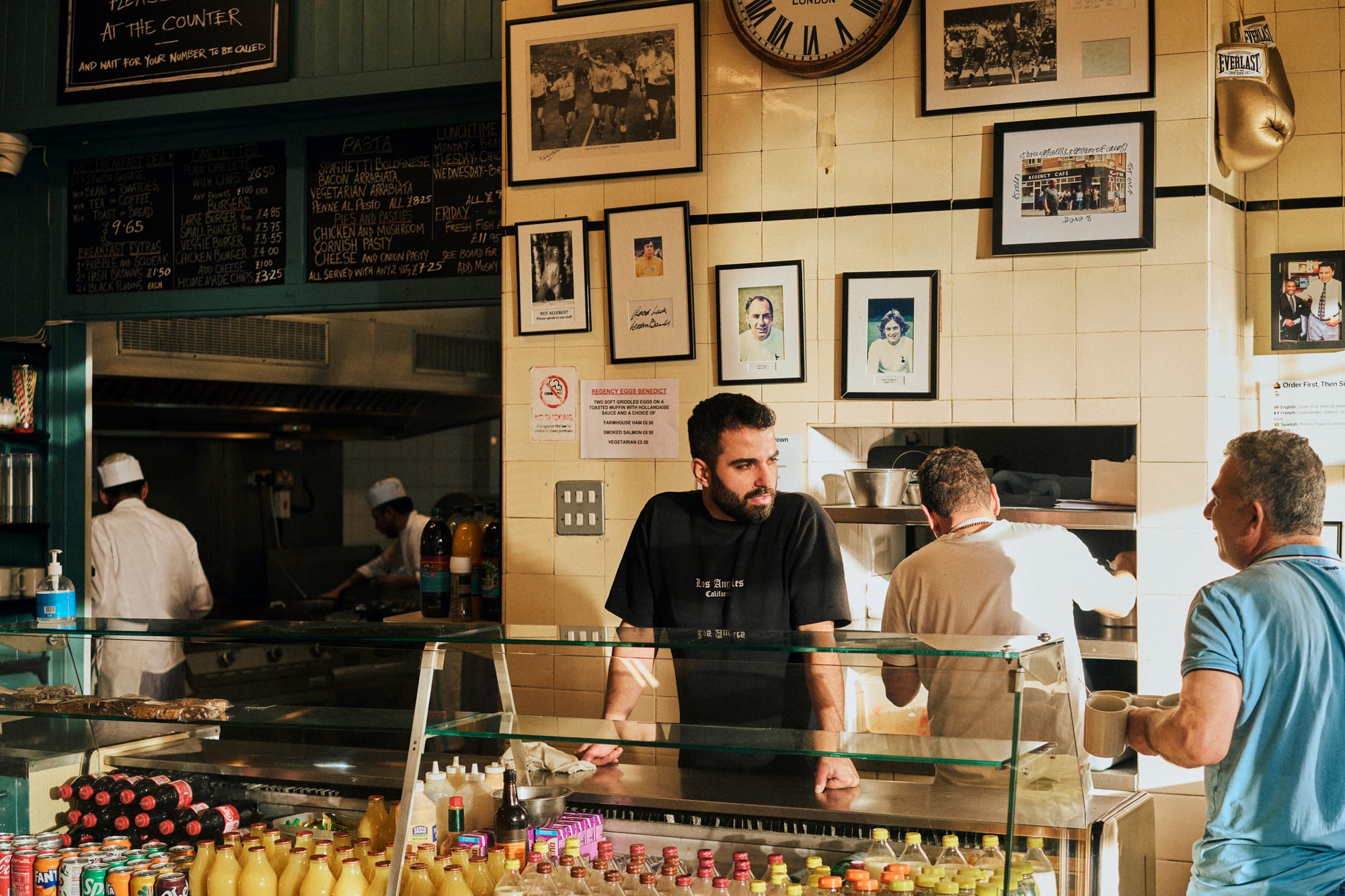
In recent years, the cafe has become a London landmark, luring tourists to the otherwise sleepy Pimlico backstreet. It’s now a stalwart of the London food listicle scene, the star of numerous TikToks and Reels, and pops-up with increasing regularity in pretty much every film or TV show set in a 20th century version of the capital. Perhaps that’s why, when it was announced that the business was being sold in late 2024 — after being run for 39 years by the Perotti and Schiavetta families — Londoners were nervous. Despite promises from landlord Westminster that all would continue as before, what would happen when you no longer had Claudia Perotti yelling out the orders from the sidelines? What if the new owners decided to change the decor or even, God forbid, modernise?
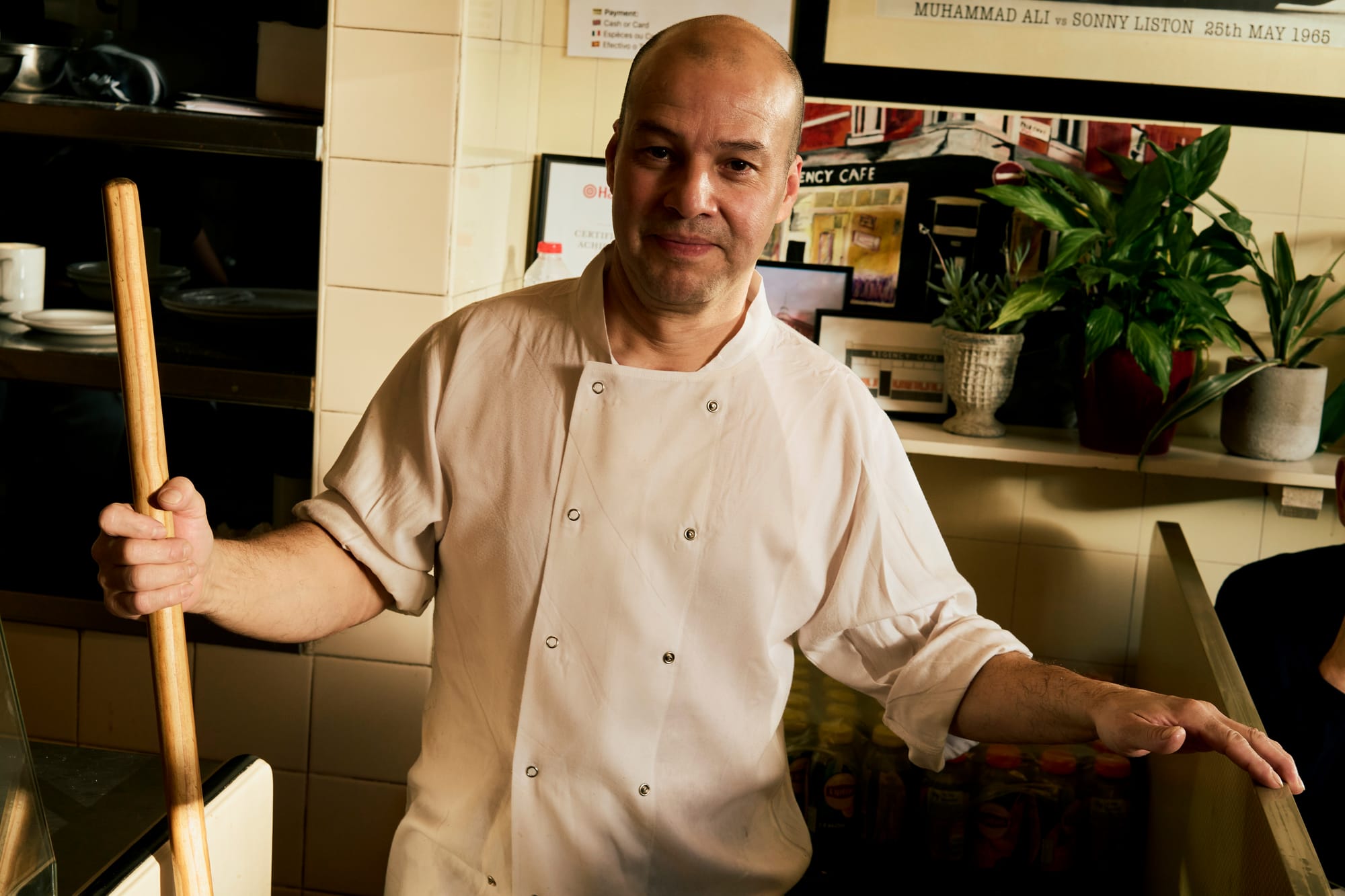
The eventual buyers, Fevzi and Zafer Gungor, reopened the cafe in July of last year, after a quick spruce-up. “I literally went in there 15, 20 years ago to buy it, and they told me to get lost,” recalled Fevzi matter-of-factly when I spoke to him on the phone before heading to the cafe (as head of the Gungor takeaway empire, he’s rarely in the cafe itself). When he eventually heard it was up for sale, he rushed to the viewing for the auction; he said there were around 50 people interested, including a former Tottenham Hotspur player.

Having grown up running kebab and fish and chip shops in west London, Fevzi wanted something iconic, something in central. Though he assured me he’s keen to keep the original branch exactly as it is, he told me that he’s planning to open five other branches in London, and four to five in mainland Europe, starting with Amsterdam and Berlin. Elsewhere, he has told reporters that he is thinking about expanding to Dubai.
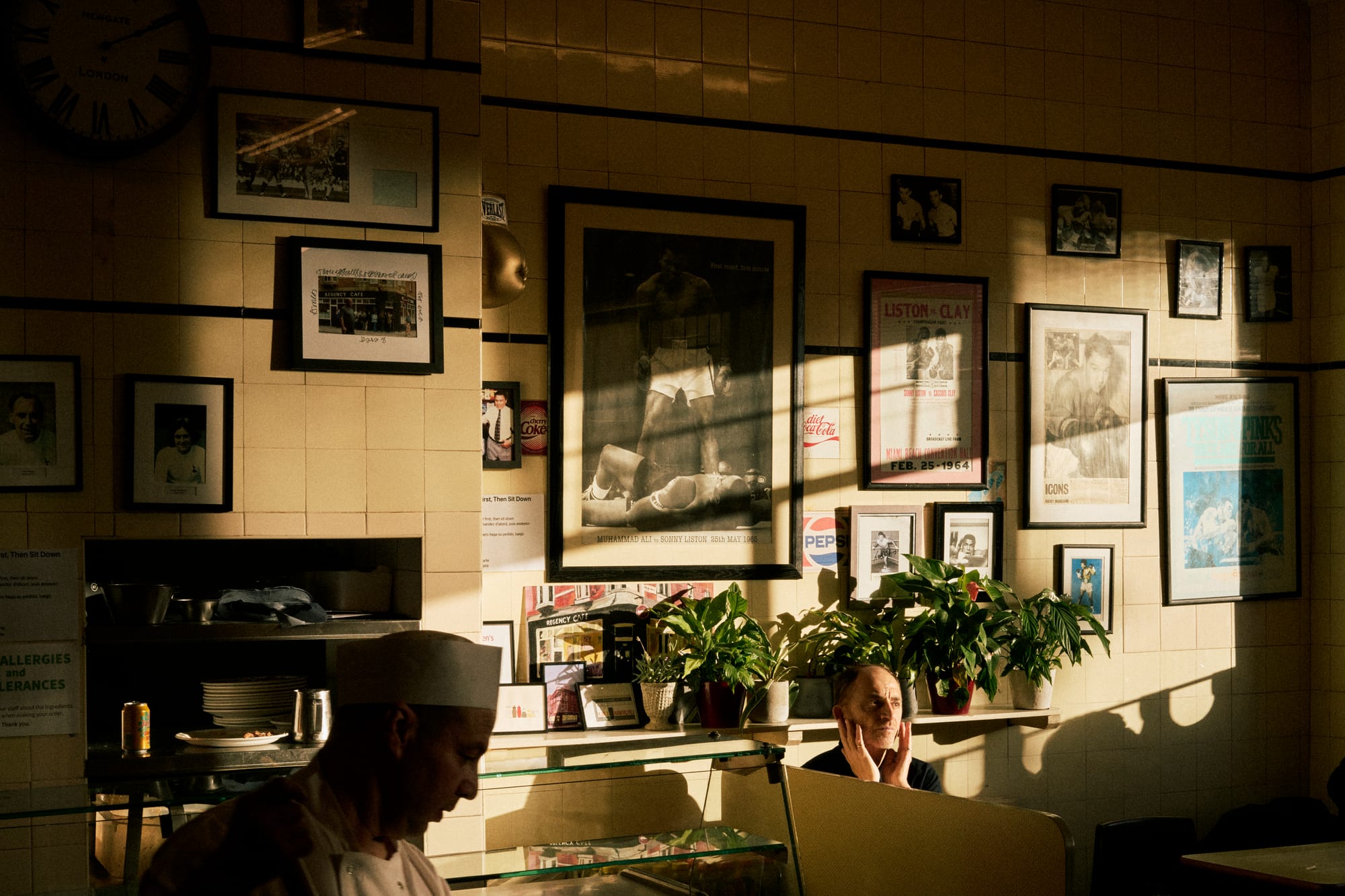
Drinking a cup of tea at the original Regency location, I wonder how it’s possible to replicate somewhere that feels so singular, let alone transport it to Dubai. Still, it’s hard not to imagine it being popular; the cafe is already full. Perhaps it’s the good weather, but everyone I speak to seems in a sunny mood, excited to share their love for the Regency, and all praise the food (one person even told me it’d improved since the Gungors took over).
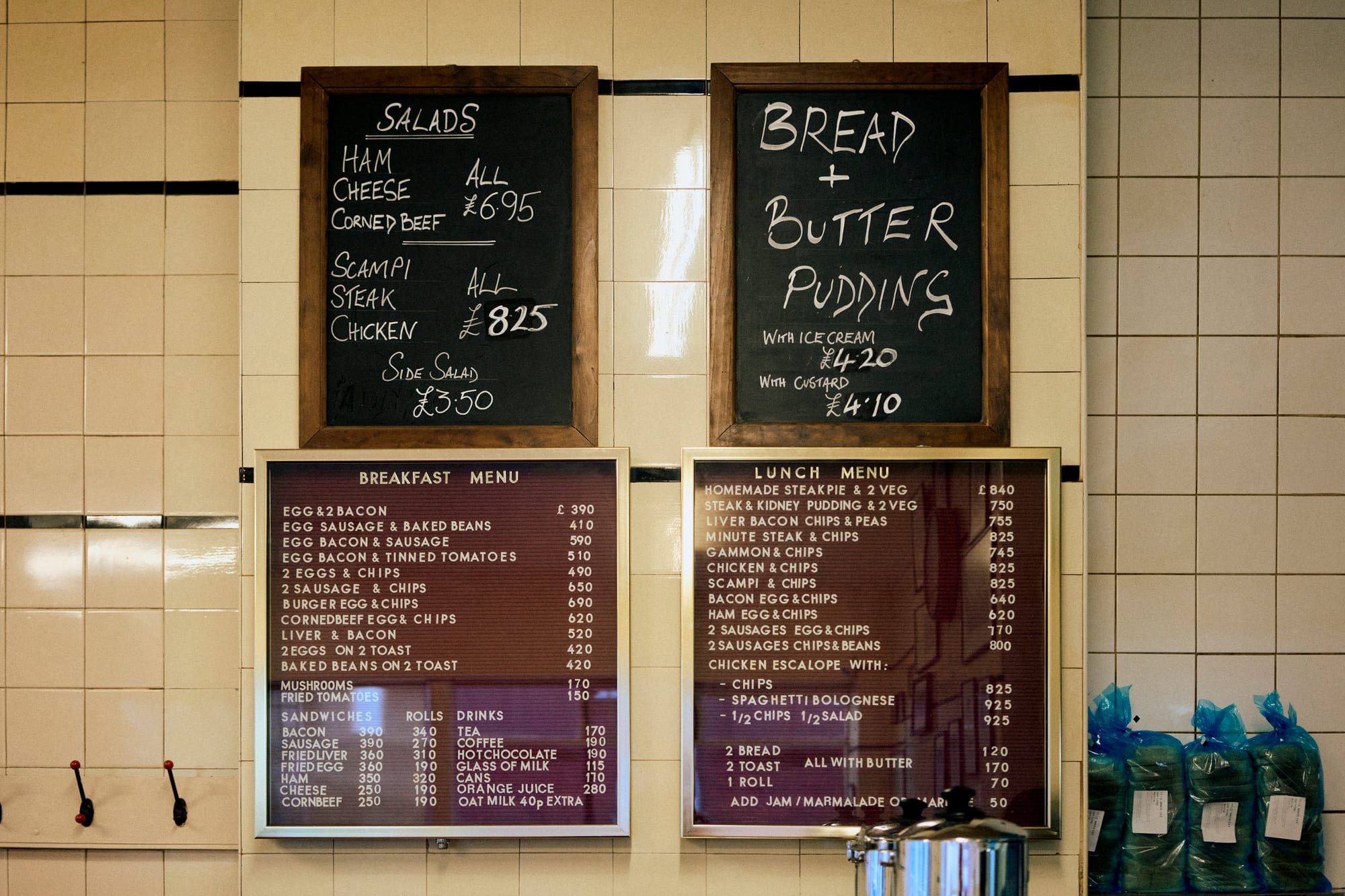
The menu has remained largely the same, with 11 options, give or take, for breakfast, and a few more for lunch — eggs and bacon, corned beef and chips, homemade steak and kidney pudding — though if you ask nicely, and if your demands are within reason, the staff of the Regency will try their best. (The chips are made from scratch, by the way, and perhaps the best in London.) It’s all freshly cooked, all homemade. Even the tea is leaf, rather than teabag. The price remains startlingly cheap: most breakfasts hover around a fiver.
“Tourists love it, but I feel like regulars really like the fact that you come here and the menu is the same,” says Fevzi’s brother David, soft-spoken and boyband-pretty, who now runs the cafe. “Especially these ladies,” he says, gesturing at local residents Barbara and Marianne, who sit by the window. “They tend to reminisce about what they used to have when they were a kid. When people come in, they're like, ‘Oh, you don't have those nonsense menus.’ In most cafes you go in, the menu is ridiculous; there's so much stuff. Here, it’s basically just English breakfast,” he tells me, handing over a plate of chips and beans to a man hovering near the counter.
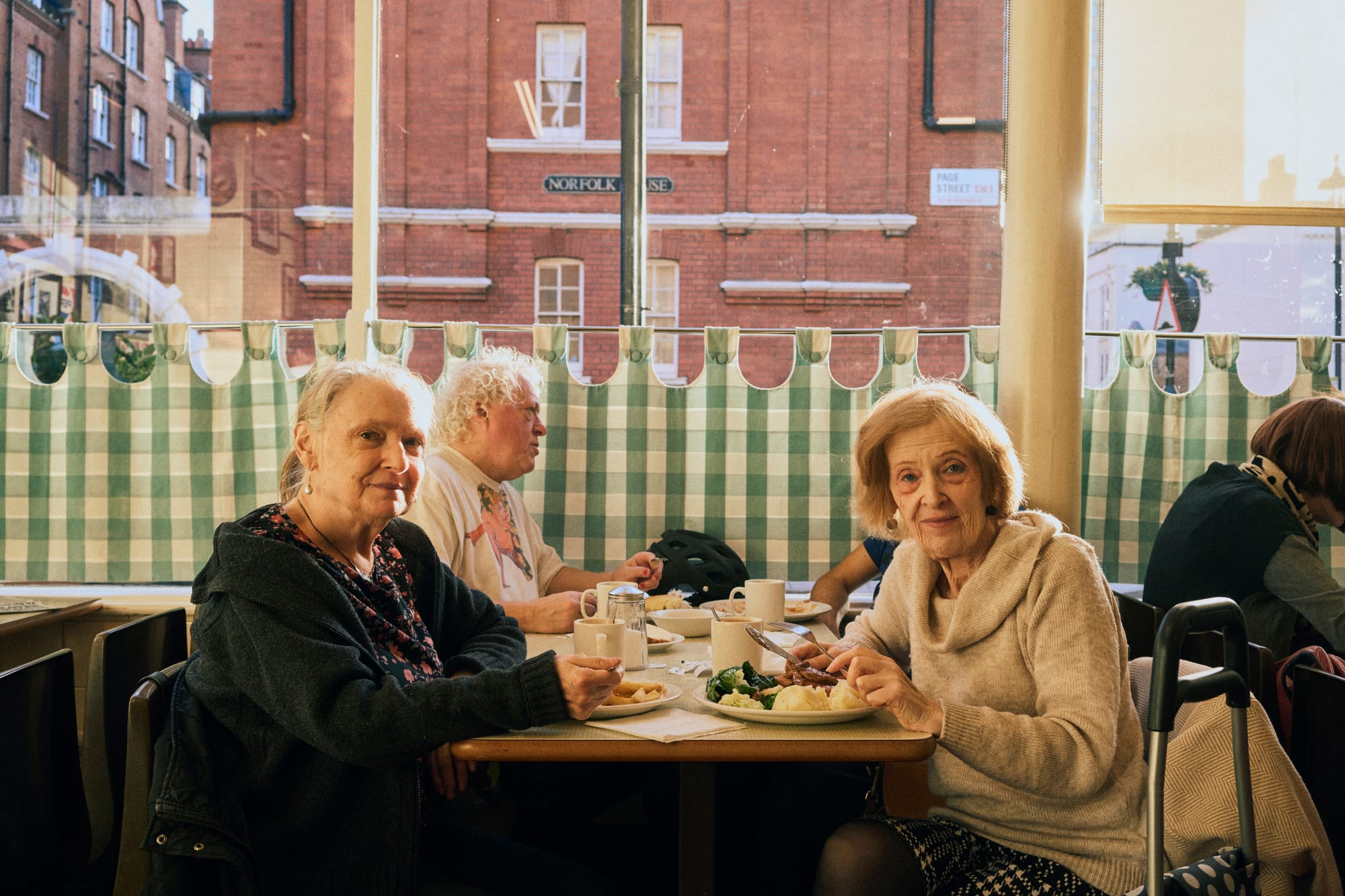
Wearing coral lipstick almost the same shade as her swept back, Elnett-fixed hair, local resident Barbara tells me that there have only been a couple of changes since the Gugnors took over. One has been the introduction of a ticket system; the other, a sneaking suspicion that there are now fewer desserts available. She should know; she has been coming here, she says, for, “oh, I don’t know how long”, putting her hand on my arm and laughing. Today she is here with her friend, Marianne, who has a fine-boned face and piercing dark eyes thrown into relief by her white-silver hair. Both live a street away, and Marianne can see from her balcony if the queue is too long to bother with.
Loving this story? Click the button below and more pieces like it straight to your inbox, entirely for free.
Over pie, mash and cabbage, Barbara tells me in her warm, Cockney-vowelled accent about how her family emigrated to the East End from Nazi-occupied Eastern Europe, how her mother anglicised her name to hide her Jewishness, how both her parents took part in the Battle of Cable Street. It’s both an extraordinary account and a typical example of the conversations you can expect to find at the Regency.
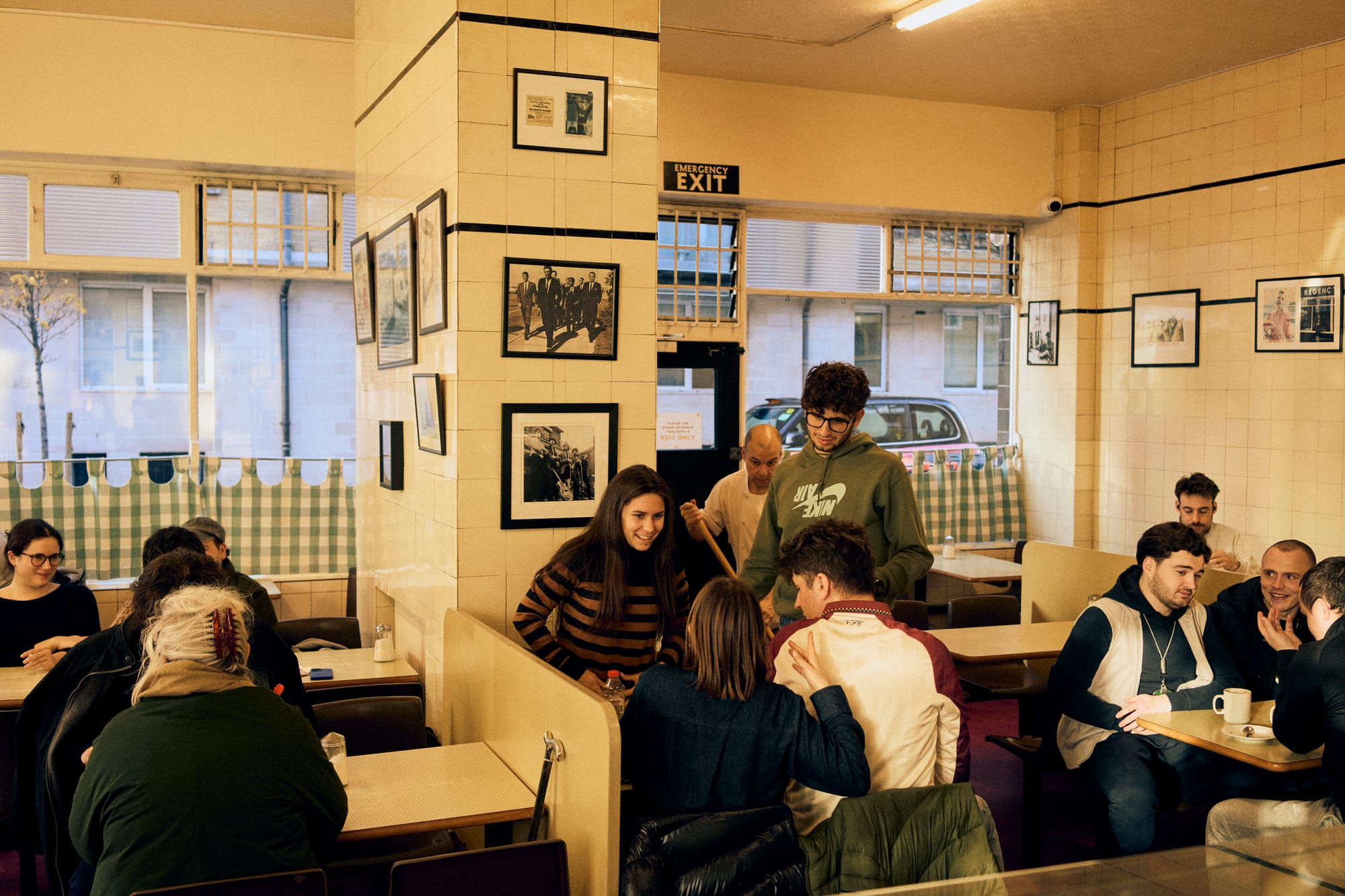
On recent visits, I’ve spoken to an actor couple who left London’s theatre scene for Antwerp and still take the time to get breakfast here whenever they come back to visit; a Norwegian couple in the city for the wedding (“there’s nothing like this in Norway,” the man tells me, smiling); an injured Northern Irish construction worker who walked here along the river from east London; a Korean man on holiday who was recommended the place by a friend studying here; a group of Italian teens who found it on Google Maps. Their reasons for coming are varied — nostalgia, curiosity, routine, hunger — but they all speak glowingly of the Regency as emblematic of a certain London sensibility, a relic of a different era.
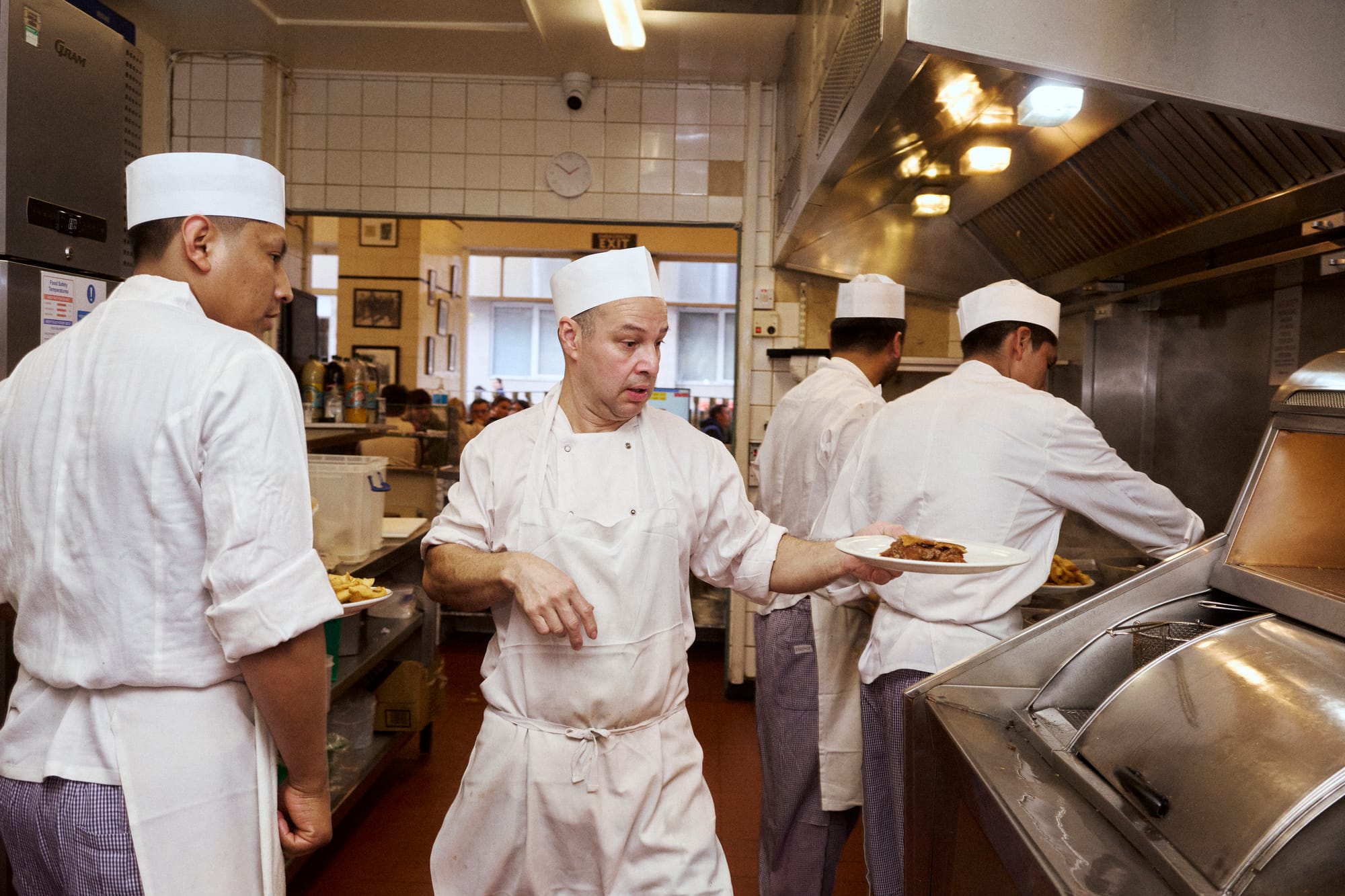
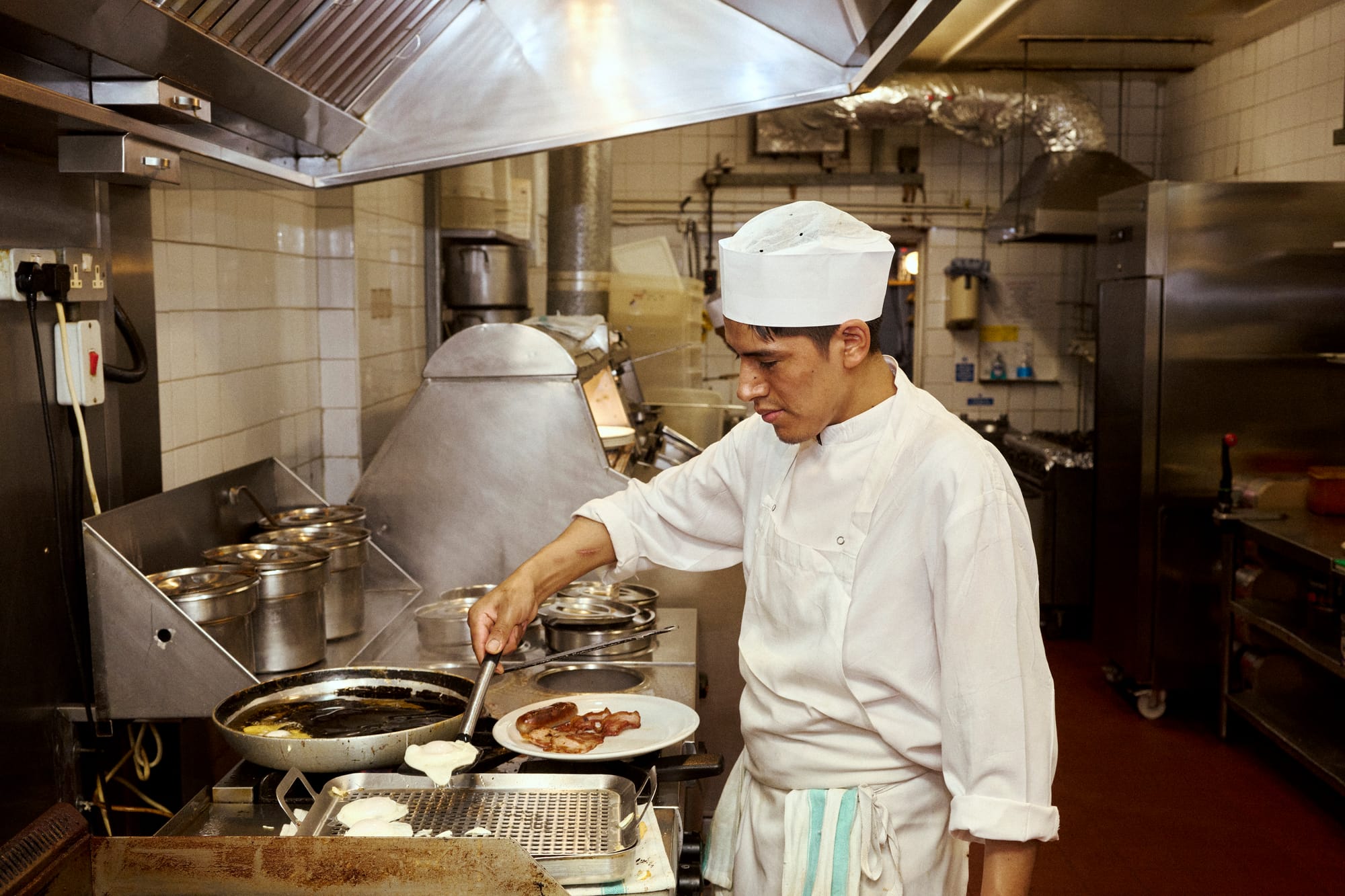
The staff, too, have mostly remained the same. In the kitchen, I find Oscar frying eggs on the grill, his chef whites pristine. He’s worked there for eight years, he says, and in the kitchen only Julio, currently hidden behind the door of an immense freezer, has been there longer: 16 years. Both men are from Bolivia, and most of the cooks — which also include two cousins — are from South America. Hector, with broad shoulders and an even broader smile, works front of house collecting plates and sweeping the floor. Sweetly encouraging of my stuttering attempts to recall my GCSE Spanish, he tells me he has been at the Regency for six years, and comes from Colombia.
Perhaps most importantly, the clientele is the same, a perhaps unique confluence of the haves and the have-nots, the powerful and the dispossessed. You are as likely to see an ambassador here as someone out of work, and the seating system, allocated by the staff, means that everybody shares tables. In its value for money and its communality, its closest comparison might be a Parisian bouillon, though its beauty lies in unassuming intimacy rather than grandeur. “It’s more like a cafeteria,” as David puts it.
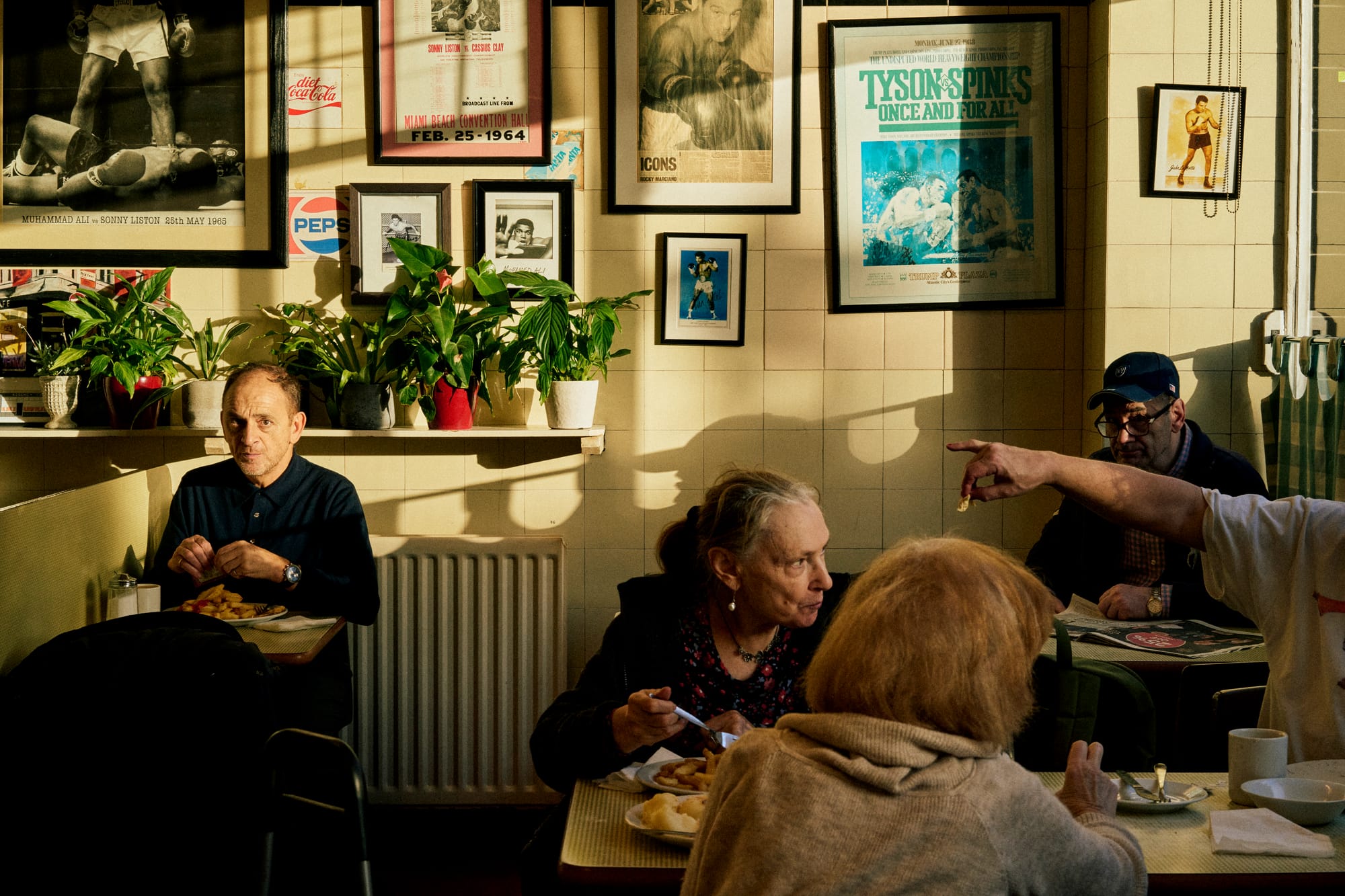
Not everyone seems to appreciate this ethos, however. David tells me that, while most MPs are respectful, they recently encountered one who wanted a specific table, which was full. “In front of them, there were like 30 people,” he says, raising his eyebrows, “And they said, ‘Oh, can you manage it?’ I said, ‘If we can't manage it by the time you’re at the front, we’ll fit you somewhere else that's available.’ And they got annoyed about it. That's mental; we don't care.”
At the end of service, Barbara and Marianne are finishing their bread and butter pudding, while David wipes the counter and checks the tills. He tells me about how often people want to film here: production companies working with Netflix and Apple TV send letters nearly every day. It’s difficult, though; people will complain if the cafe is shut for too long, and so 90% of them, we say no.”
Still, the cafe’s retro look is in high demand, a window into a vanished world. That, too, has its own challenges. Those tiles on the wall, with their eel-black stripe running along the upper two-thirds? Nobody makes them anymore. “That one fell off the other day,” he says gravely, pointing to a spot by the pillar, “We had to stick it back on.” There’s only one company that makes the tables and chairs, and they’ve closed. “We want to keep stuff the same, but it’s really hard, because some of this stuff is from the 1960s, 70s, 80s, and they don’t do them anymore”. Likewise, the enormous tea and coffee dispenser which dominates the front of the cafe, straight-backed and silver, needs new parts which are near-impossible to source, and the only person who knows how to fix it has just retired (they’re hoping to coax him to work, David tells me, laughing). Eventually, they might just have to replace it with a more modern version.
As we speak, a deliveryman arrives with crates of wine, and a private chef begins methodically laying out his knives. A film company who used the space is having a celebration for its crew tonight, David says, and it’s going to be a big party. This isn’t unusual: the other night, it was hired out for the launch of a billionaire’s book, with caviar served until the early hours. It’s indicative, perhaps, of how much the Regency seems to capture London in microcosm: both chips and Champagne.
If you enjoyed this piece and want to be sent more in-depth investigations and features, why not join up as a Londoner member today? This means you'll get weekend long reads like our piece profiling the capital's early birds commuters and Monday briefings like our update on our story about the penguins trapped beneath Southbank delivered straight to your inbox.
No ads, no gimmicks: just click the button below and get two high-quality pieces of local journalism each week, all for free.