Hello and welcome to The Londoner, a brand-new magazine all about the capital. Sign up to our mailing list to get two completely free editions every week: a Monday briefing, full of everything you need to know about that’s going on in the city; and a high-quality, in-depth weekend long-read.
No ads, no gimmicks: just click the button below and get our unique brand of local journalism straight to your inbox.
Happy Saturday — we hope you're enjoying your weekend. If you want to keep the lights on at Londoner HQ, consider becoming a paying supporter of The Londoner. We're on a mission to hold the powerful to account, and for that we need our independence. As a result, we aren't backed by billionaires or private equity firms. But it's means it's only through reader subscriptions, from people exactly like you, that we can continue to do this work.
At the moment, we have 1,100 incredible paying members. By the end of this year, we'd like to be at 1,250. Can you help us get over the line? Becoming a supporter gives you access to all of the members-only content in our archive, as well as putting you at the vanguard of a media revolution. So, if you think the city deserves proper journalism, consider backing us for just £4.95 a month for the first three months.
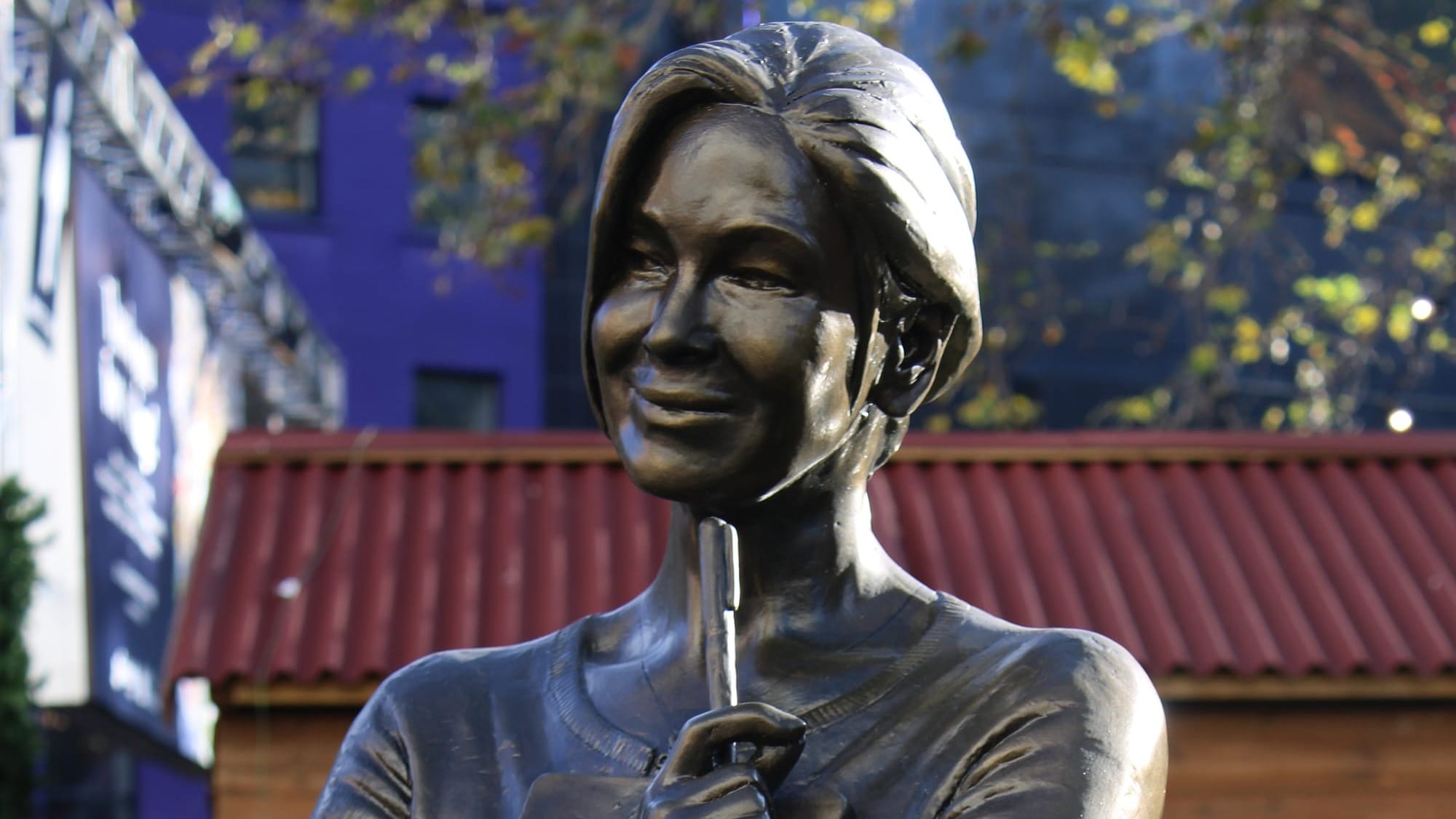
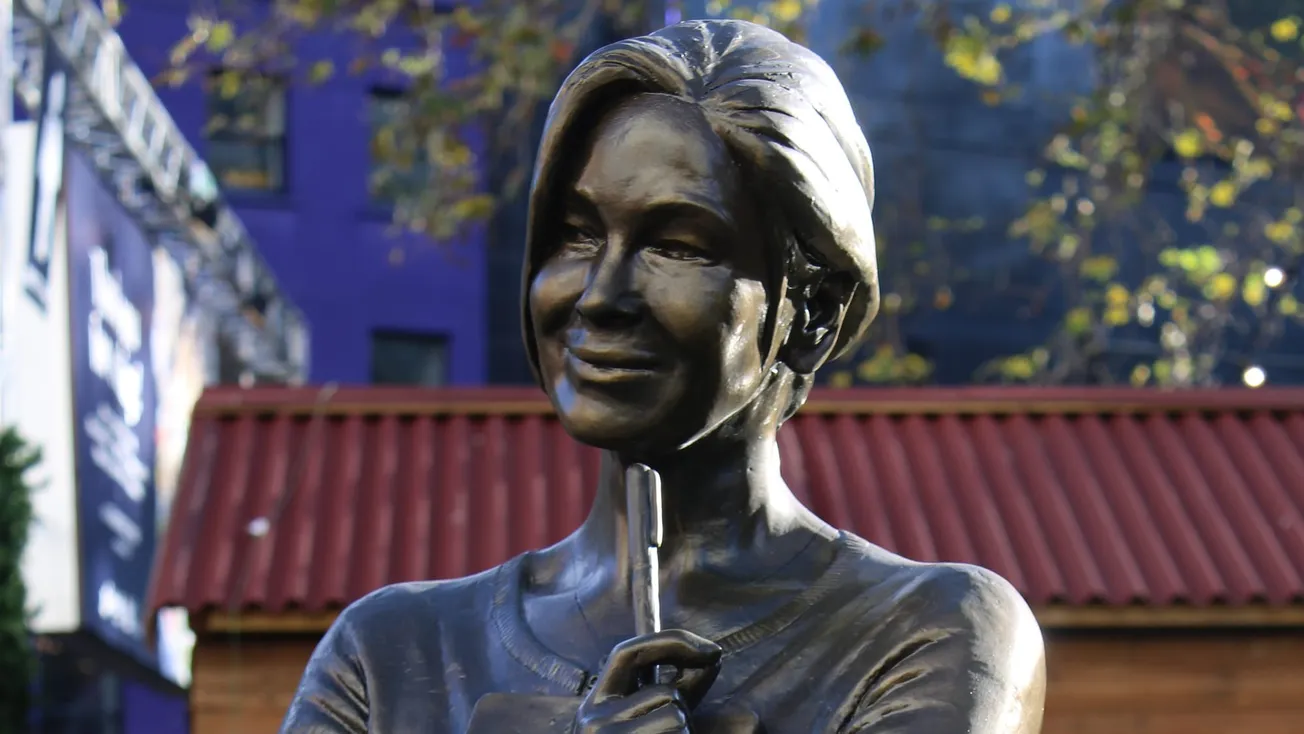
Diary clutched to her chest, pen — though not, it must be said, cigarette — cocked to her mouth, skirt short but demonstrably neither sick nor absent, and the merest hint of bronze belly poking out from underneath her cardigan. It’s Bridget Jones, memorialised in statue form (or rather, Renee Zellweger as Bridget Jones). I have to push my way through the typical dawdling Leicester Square crowds in order to stand face-to-face with Helen Fielding’s beloved character. As a London sophisticate, you’d imagine Bridget would not enjoy being gawped at by recreational gamblers and tourists en route to M&M World or Angus Steakhouse. Yet here she stands, taking her place amongst such luminaries as Mr Bean, Bugs Bunny and Paddington.

Bridget is the third female character to appear in this location, as part of the Scenes in the Square series, commissioned by Westminster council in partnership with Heart of London Business Alliance to celebrate a century of cinema. Her addition means there are now the same amount of women represented in the series as there are animals (both account for 23%). But while the series may be a corporate marketing ploy, in terms of gender parity it’s got the upper hand on the rest of the city’s public artworks.
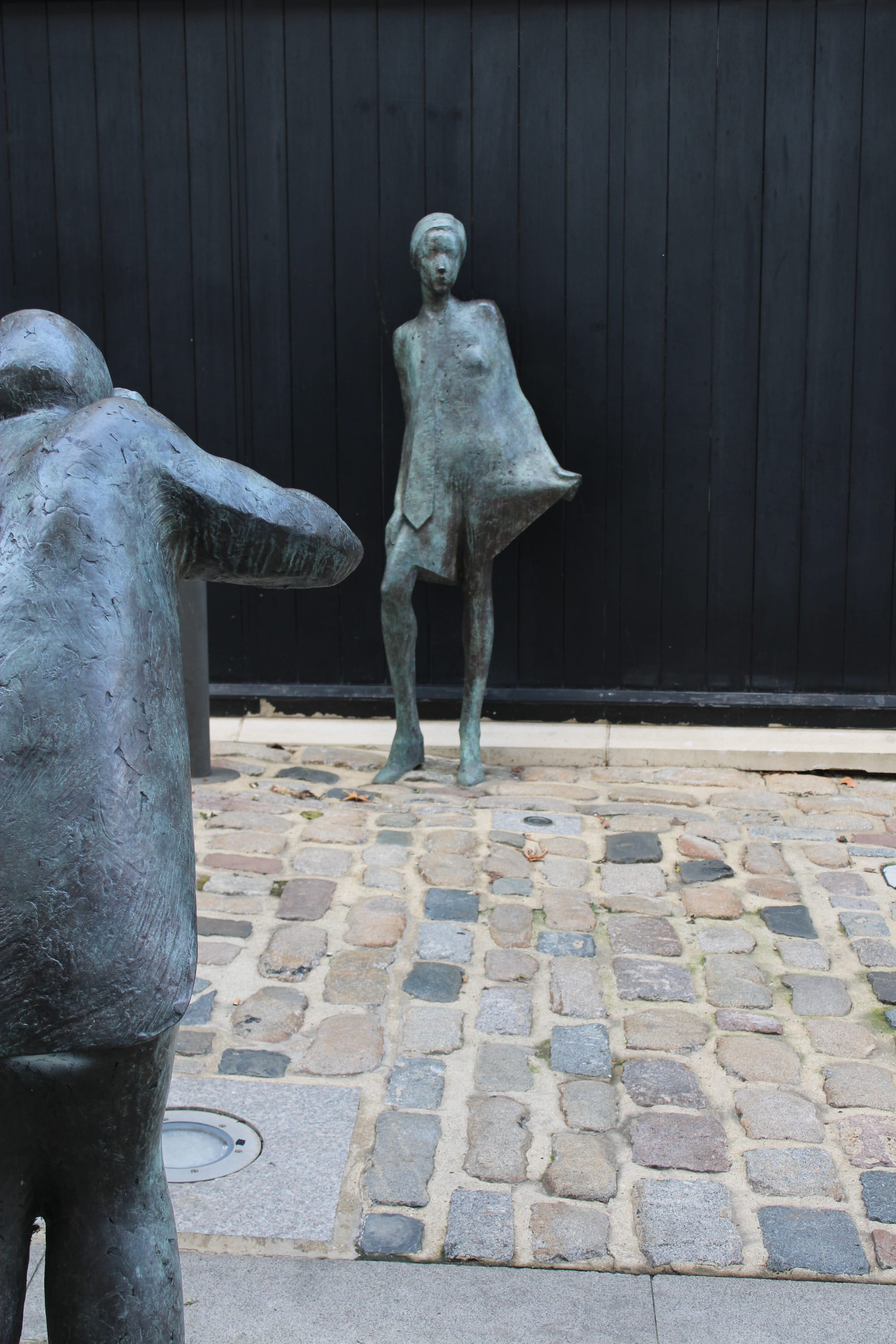
Beyond Leicester Square, there are just 29 figurative statues of named, non-royal (and non-fictional) women in London — according to a 2021 Art UK report, these account for just 4% of the total number of statues in the capital. Only one of these (Twiggy, who is depicted being photographed by Terence Donovan in a Mayfair mews) was erected during its subject’s lifetime. Some women have more than one statue: Salvation Army co-founder Catherine Booth appears in both Stepney and Denmark Hill, while modernist pioneer Virginia Woolf has a bust in Bloomsbury and lounges on a bench in Richmond.
Who we put on pedestals says much about the values of our times. The first woman to be memorialised in the capital in this way was, like Bridget Jones, a pop culture icon: Sarah Siddons, the 18th century actress who lit up the stage as Lady Macbeth, Desdemona and Ophelia. The statue, its figure draped in neo-classical marble with a dagger clutched in her fist, was sculpted by Léon-Joseph Chavalliaud after Joshua Reynolds’ 1783–4 portrait of Siddons as the “tragic muse”. It was unveiled in 1897, 66 years after her death, by actor Henry Irving in Paddington Green — visit today, and the theatrical district of her lifetime has been replaced with tower blocks and the Edgeware Road. But why Siddons? And why then?
In the late-Victorian period, the fin de siècle “New Woman” was beginning to live the kind of public, independent and cultivated existence that Siddons had achieved in the century prior. To be educated and autonomous was becoming the feminine ideal, and so someone like Siddons would have been a natural role-model. Fast forward to the Great War, and Florence Nightingale takes her place in St James’s: severe, stiff and matronly. Her statue was erected in 1915 as part of a wider memorial to Crimea, but her inclusion was also reflective of what a woman ought to be during this new war: efficient, resourceful, practical, and always acting in service of the land and its people.
In the 1920s, when women were more liberated than they’d been since the Gay Nineties, statues began to appear of a more subdued, Godly and wholesome type of woman, possibly in an attempt to inspire the racy Bright Young Things out of pre-marital sex and cocaine, and back on the straight and narrow. We see this in Edith Cavell, the British nurse who was court-marshalled and executed by the German army for aiding Allied servicemen in Belgium, and Louisa Brandreth Aldrich-Blake, Britain’s first female surgeon, whose likenesses went up in 1920 (just off Trafalgar Square) and 1926 (in Bloomsbury), respectively.
This strain of moralism — liberated, but in the right sort of way — followed into the next decade. Two suffragettes, Emmeline and Christabel Pankhurst, were memorialised as early as 1930, the joint commemoration in Victoria Tower Gardens organised by their sisters-in-arms and backed by the Conservative government. Surprising, perhaps, as they were of the militant persuasion, but they were also fiercely jingoistic, imperialistic and God-fearing. After the suffrage bill was won, Emmeline, who died two years before the memorial went up, ran as a Conservative MP, and Christabel became an evangelical Christian. It’s worth considering why Emmeline’s other famous daughter, Sylvia, wasn’t included. Perhaps the latter was deemed too unpalatable, as a pen-pal of Vladimir Lenin, a committed anti-colonialist and a card-carrying communist who petitioned for inclusion of working class women in the suffrage bill (while her mother and sister cared only for their middle and upper class peers). To this day, and despite numerous campaigns to rectify the snub, Sylvia is yet to have a statue of her own (there is, however, an enormous mural of her painted on the side of a pub in Bow).
Then, nothing: there was an astonishing 61-year period in the middle of the 20th century where not one single statue of a woman was raised in London. Astonishing, because the years between 1937 (Nell Gwynn, Sloane Avenue) and 1998 (Manche Masemola, Westminster Abbey) saw a phenomenal increase in the number of women in public life: leading government, leading cultural movements, leading space missions. With the new millennium came the era of the girlboss, at least in sculptural terms, and the 21st century has seen a race to redress the terrible imbalance in gendered memorials. Sixteen of the 29 statues were raised in the last 25 years alone, including Agatha Christie (Covent Garden), Joan Littlewood (Stratford), and Mary Seacole (St Thomas’s Hospital). Around 19% of these represent women of colour.

What do women have to be in order to be worthy of permanent memorialisation? In many ways, they seem to need to defy all the odds in order to achieve whatever it was they achieved — in no small part because of the restrictions placed on their gender. There is a narrative through-line of “overcoming”, within the network of female statues in the city, that keeps the British fiction of meritocracy well and truly alive. Even Bridget Jones managed to overcome the fate-worse-than-death of being a size 12 in order to shag both Hugh Grant and Colin Firth.
A quick survey of London’s memorials to men throws up some deserving honorees — John Everett Millais (Pimlico), Raoul Wallenberg (Marble Arch), Sigmund Freud (Hampstead) — but also a huge quantity of earls, dukes, lords and viscounts, whose place in the history books was as good as guaranteed by dint of their inherited power and status, as much as anything they chose to do with it. Although their lives took different directions, the women cast in bronze tend to have something in common: they represent something bigger than themselves.
In contrast to many of their male counterparts, their legacy has an impact beyond just individual heroics, whether they are social reformers like Booth, Ada Salter (Bermondsey) or Margaret Macdonald (Lincoln’s Inn Fields); activists like Claudia Jones (Brixton) or Millicent Garrett Fawcett (Parliament Square); or martyrs like Manche Masemola and Esther John (both Westminster Abbey). It’s easy to scoff at the ludicracy of there being a monument to a fictional character in a city where so few real women are accounted for in public art, but Bridget does at least represent a kind of every-woman archetype, with real world concerns like complicated romantic entanglements, sticky career moments and that ever-present spectre of body insecurity.

With a few exceptions, the city’s existing statues are solemn and lifelike, conforming to the way great men and women have been depicted since classical times. But if statues of women tend to be representative of a broader concept or phenomenon anyway, is it time to reconsider their form? I speak on the phone to Claire Mander, director of the Artist's Garden, a public open space on Temple tube station rooftop for sculpture by women. This is a subject which occupies her thoughts on the daily; her speech is punctuated by pregnant pauses, a testament to the import she feels public art can have. “Although statues of named people can draw an extraordinary amount of attention to their achievements, there are other very interesting and creative ways of commissioning works that aren’t quite so literal,” she says. In Mander’s view, the most thought-provoking and inspiring public statues aren’t about the individual, but about the collective endeavours or mass movements that have moved society forward in a meaningful way.
Sorry to interrupt — we promise we'll be quick. We just wanted to take you on a quick behind-the-scenes of what we do. Features, like the one you're now reading, take a hours of reporting, research, writing and editing. But this doesn't come cheap. That's why a lot of media companies have given up on it, instead churning out clickbait articles that have little connection to London or those who live here. But we believe people are still willing to pay for meticulously researched, properly reported work.
Already, just over 1,100 of you have signed up as paying members to prove us right. But now we have a big target: 1,250 members. We've made it easy too: with our new member discount, a Londoner membership is just £1.25 a week. That's less than a daily coffee.
We aren't funded by billionaire oligarchs or huge companies. And that means we need the people of London and beyond. If you like what we're doing, please consider supporting us.
“For example, the contentious Maggi Hambling sculpture of Mary Wollstonecraft is always cited as a sculpture ‘for’ Mary, not ‘of’ Mary, which is a very clever approach to commissioning”. It also moots some of the criticism that the statue’s resplendent silver-cast D-cups are not appropriate to commemorate the author of A Vindication of the Rights of Women. But, Mander argues, this can be taken a step further, by commissioning non-figurative works that don’t just highlight an individual woman, but take a broader look at women’s issues.
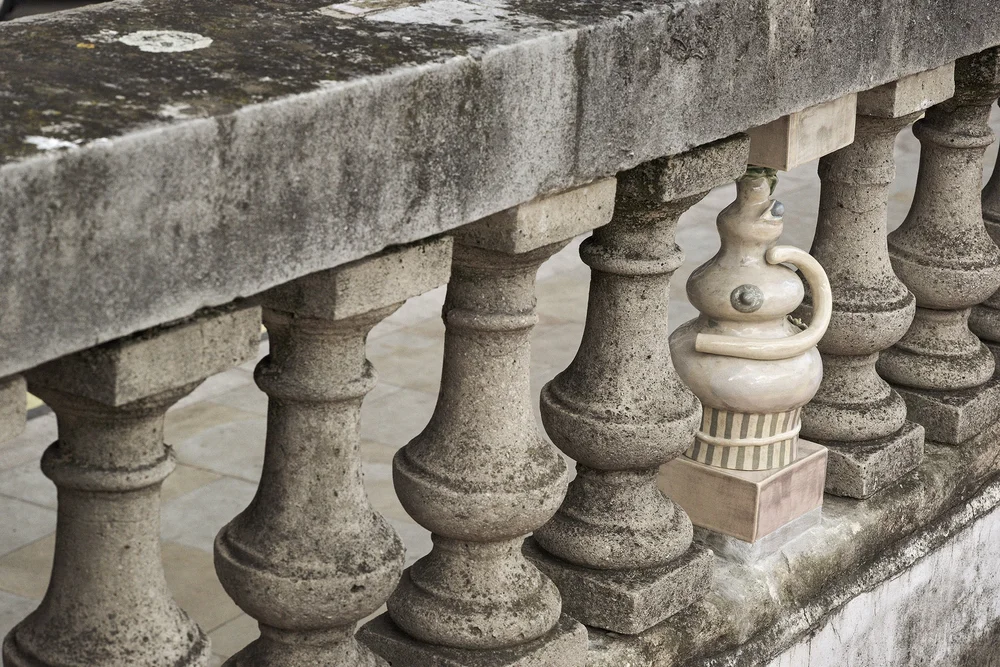
At the Artist’s Garden there is one such example, a discreet but suitably complex ceramic by Holly Stevenson, called Another Mother, which is inserted into a Victorian balustrade. Stevenson’s starting point was an individual woman: Maria Kough Bazalgette, wife of esteemed 19th-century engineer Sir Joseph Bazalgette. But more than that, it functions as an ode to all the women who have facilitated greatness through unpaid, unnoticed, and unappreciated industry. “Another Mother tells quite a typical story for a woman. She is a footnote in history, a cog in a machine, but, like the sculpture itself, she is supporting something in a hugely integral way,” Mander observes. Many real women may recognise themselves in that sculpture, more so than in the statues of Ada Lovelace, Anna Pavlova and even Amy Winehouse. By abstracting form, there is an opportunity for public art to become inclusive and analogous in a way which is truly radical.
If every epoch gets the statue it deserves, then in an era where relatability is considered amongst the most important metrics of good art, Bridget Jones may be just the thing. But if the future of public art devoted to women may be conceptual and collective, as Mander recommends, I hope Nigella Lawson gets her statue before that happens.
If you enjoyed this piece and want to be sent more features and in-depth investigations, why not join up as a Londoner member today? This means you'll get weekend long reads like our piece profiling the capital's early birds commuters and Monday briefings like our deep-dive into whether London has a slum landlord problem delivered straight to your inbox.
No ads, no gimmicks: just click the button below and get two high-quality pieces of local journalism each week, all for free.
If you’d like to sponsor editions of The Londoner and reach over 20,000 readers, you can get in touch or visit our advertising page below