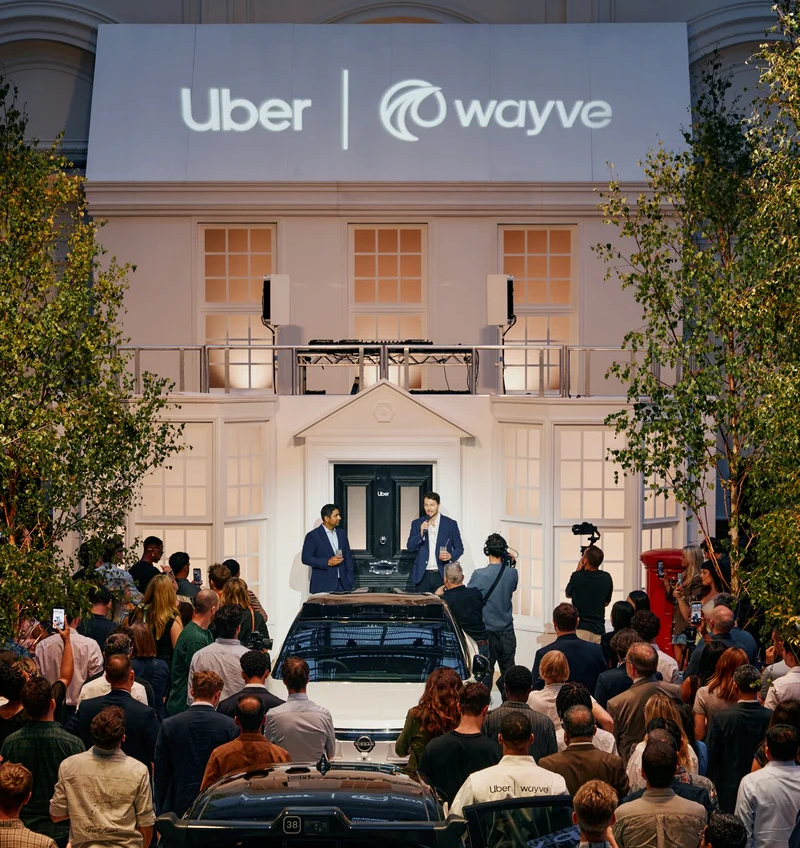
It was hard to miss. Maybe it was the faint thrum of house music playing, or the line of eerily unmoving, silent supermodels in pristine white F1 jumpsuits standing by the front door. On the night of 3 September, a glitzy event was playing out in Lindley Hall, an ornate listed building on a side street near Westminster. Hosted by Uber and British autonomous vehicle start-up Wayve, featuring free drinks, display cars and a live performance from DJ Fat Tony so loud conversation was almost impossible.
You’d think, from all the largesse and glamour — and the fact that it was described on initial invitations as celebrating the launch of “autonomous rides in the city for the first time” — that this would mark London's leap into a new, futuristic era in which the streets would be full of self-driving taxis.
It was, instead, a celebration of the arrival on the Uber app of autonomous Wayve vehicles… with a driver sitting in the front seat. Specifically, 12 vehicles, covering a city of over nine million and on an app with 45,000 other licensed drivers.
Previously, the government had pledged that the capital would see the arrival of robo-taxi services like Wayve and Waymo by the spring of this year. Soon, delays had hit the press, with anonymous sources briefing the Financial Times that the reason for the missed targets was TfL, and the body’s refusal to produce the guidelines needed for these companies to launch in London.
I spent the last two weeks speaking to TfL insiders, both current and former, as well as the companies operating these services and the researchers studying them, to understand what had caused these delays. It turns out the real story is a lot more complex than the one previously published in the national press. It’s a saga of internal fighting at TfL, the limits of cutting-edge technology and the Green Party’s power struggle at City Hall, all of which could completely reshape the looming battle for dominance of the city’s taxi and robo-taxi industries.

Hey, it's Andrew, one of the Londoner's reporters here.
There's lots of fascinating inside details from TfL, tech start-ups and the corridors of City Hall yet to come in today's story.
To read all of that, please join thousands of other in-the-know Londoners by clicking the button below and becoming a paid subscriber.
London deserves great journalism. You can help make it happen.
You're halfway there, the rest of the story is behind this paywall. Join the Londoner for full access to local news that matters, just £8.95/month.
SubscribeAlready have an account? Sign In