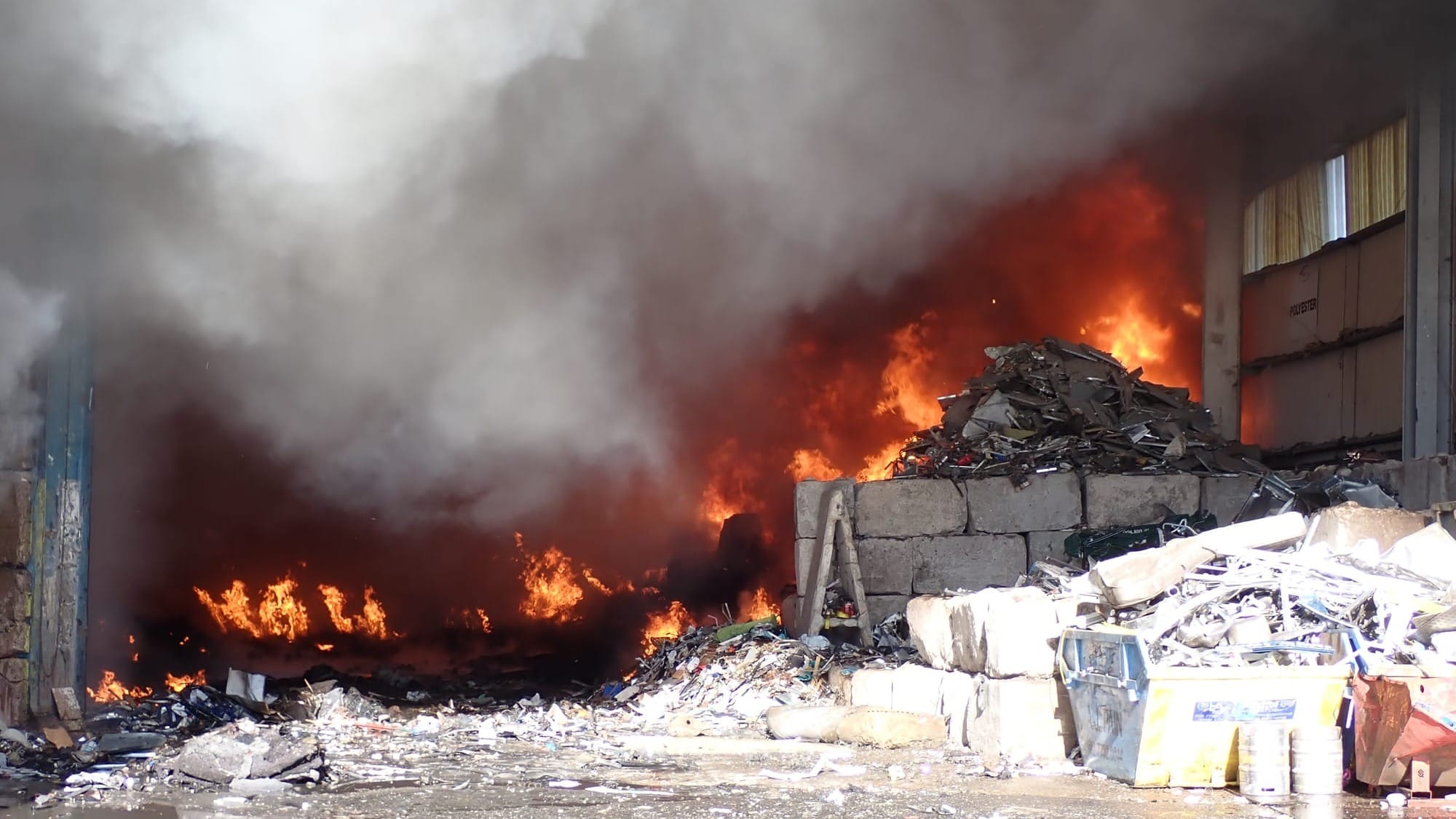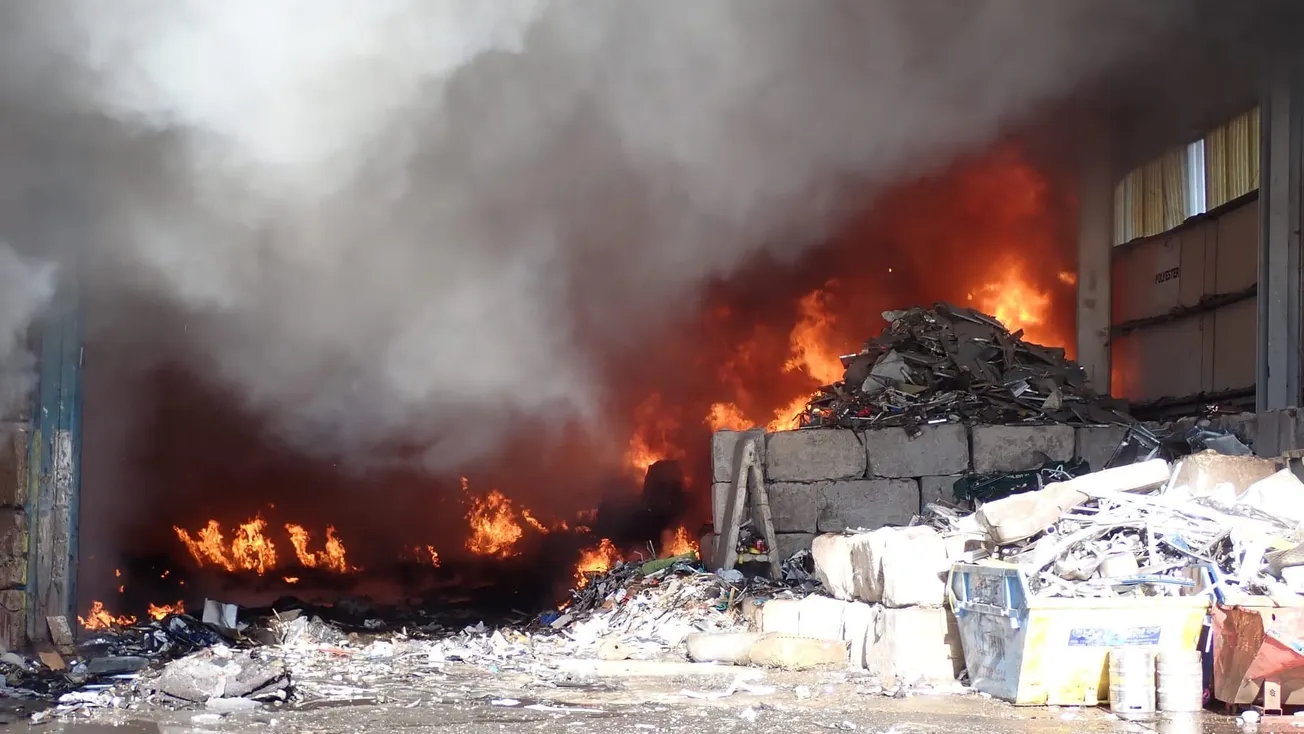
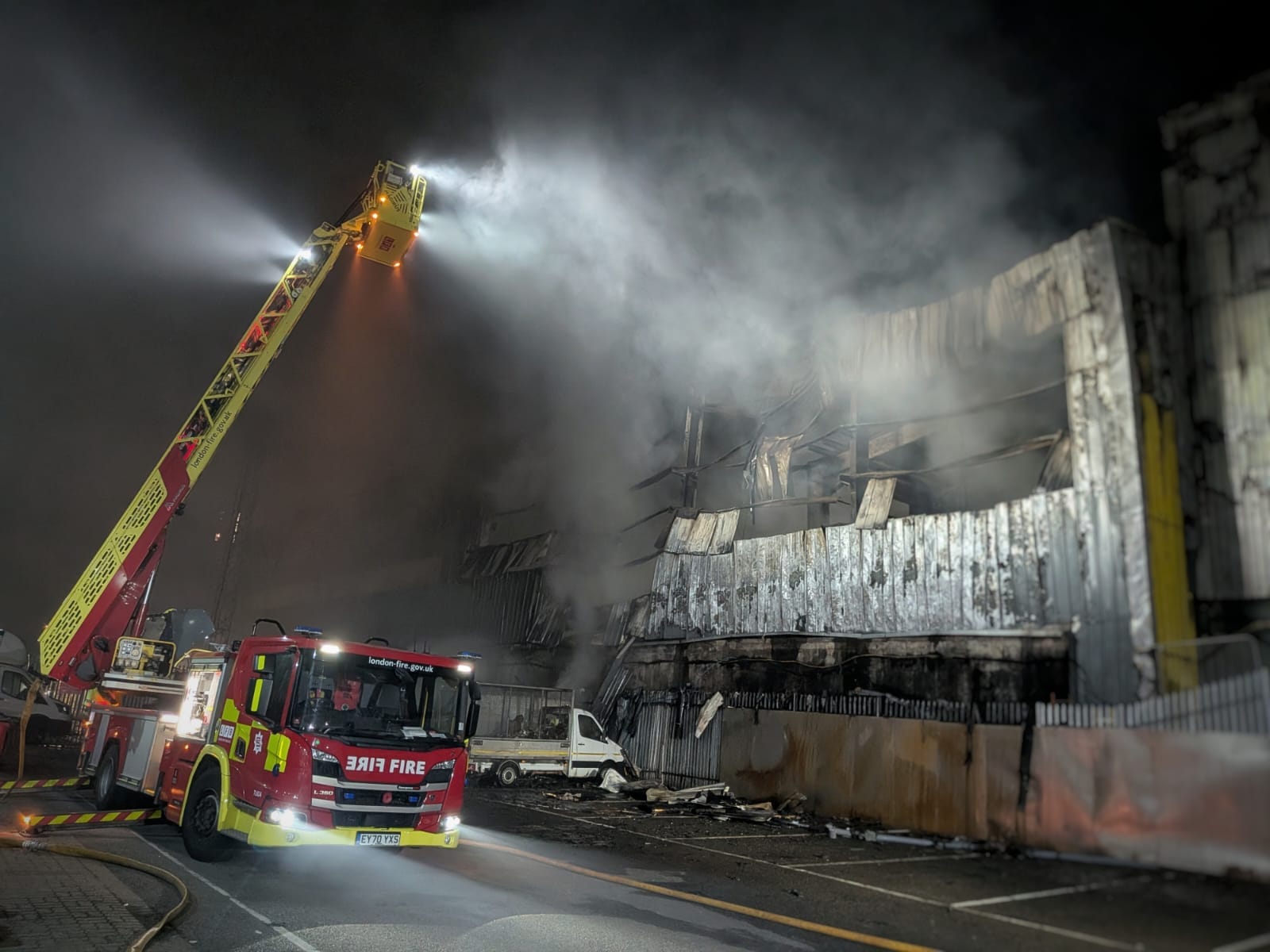
As he speeds towards the fire at Bermondsey Recycling Centre, a fat plume of grey smoke billowing across the sky, Matt Hayward has a lot on his mind. Having spent years in Southwark fire service, he knows the site well. Therefore, he knows that a mainline railway lies only 35m behind the building, knows that accessing enough water is going to be a challenge and knows that the 15 fire engines also speeding towards the scene will likely clog up the winding backroads to access the site.
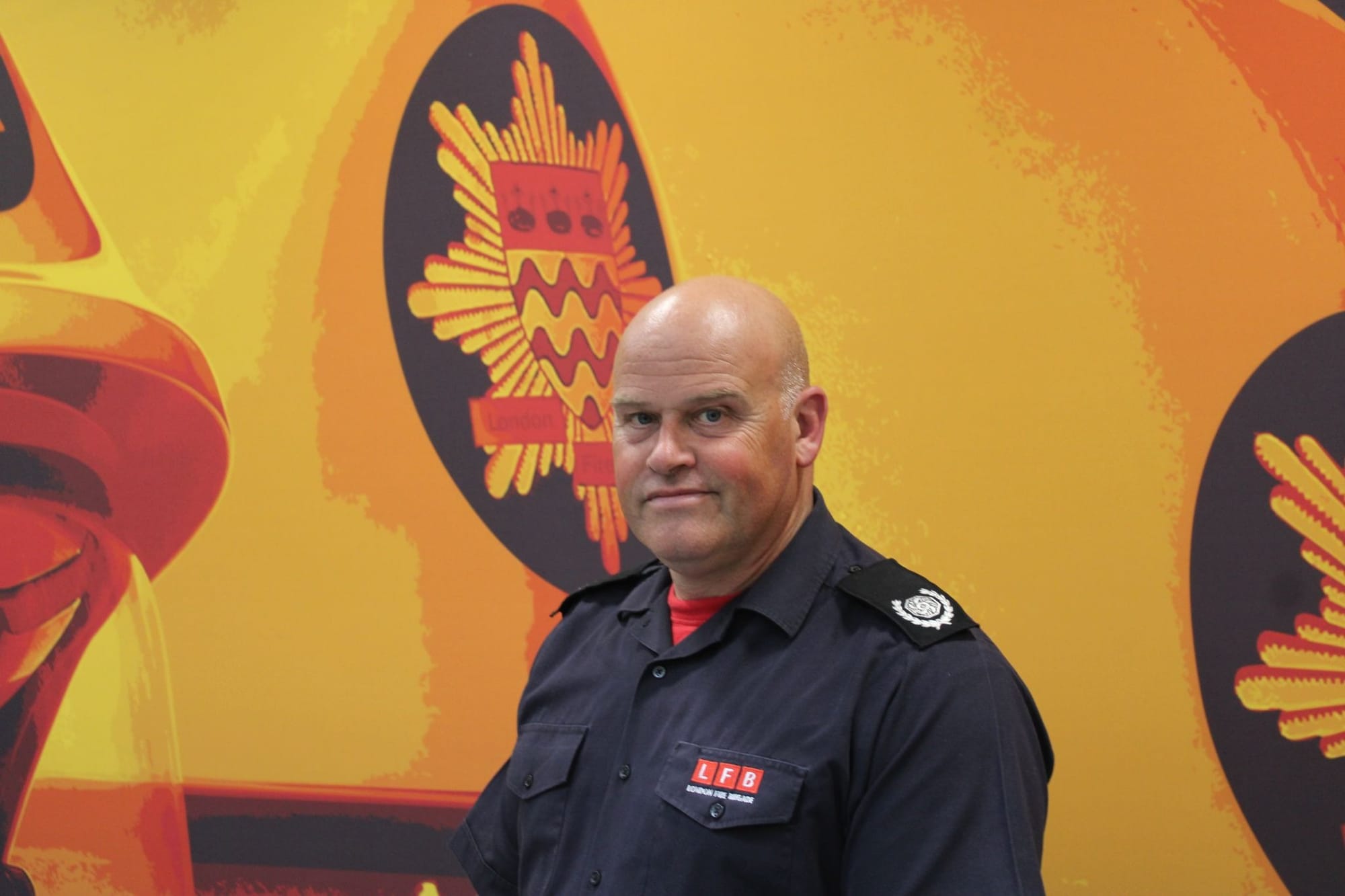
“All of these things are going through my head while I’m arriving,” says Matt, a bald, tanned and suitably burly commander at the London Fire Brigade (LFB), when the pair of us sit down at LFB’s sparse, open-plan headquarters near London Bridge.
He tells me that the fire was actually far larger than has so far been reported — up to four times larger than any other recent recycling centre fire in the capital — so big that the vast column of smoke was filmed from passing planes. And the only reason it didn’t blaze for days more came down to the actions of the recycling centre workers themselves, and their willingness to cross into the flames.
Speaking with Matt, I gain an exclusive insight into how the LFB tackled one of the largest and potentially most disruptive fires in central London in years. But I also discover one crucial detail: that similar incidents are set to become increasingly common.
Into the flames
Matt pulls up in his red Land Rover Defender, blue lights blazing, shortly after 6pm on Monday 8 June. He strides towards the chaos. Fire engines are still screaming into the drab complex of grey metal warehouses, and the men who work in the centre are rushing around the blaze, watching it race through loading bays full of mattresses, timber, batteries and paper. At this point, Matt says, the fire is “going everywhere”.
It’s here, on an unremarkable patch of industrial land that also holds Millwall FC’s stadium and celebrated nightclub Venue MOT, that much of south London’s waste is divided into lots to be sold on or incinerated.
The role of a group commander is a little like being the general of a small army, and when Matt arrives, his first job is to map out the battlefield. There are three sides to the building he can’t see, and so he appoints three deputies to look over them and update him every 20 minutes.
Next, he turns to the drone team. The recycling centre consists of two buildings, and via the thermal imaging view on a tablet he sees that the first of these, which holds thousands of tonnes of mixed recycling waste, is not presently on fire.
The other — the sorting bay where the waste has been neatly organised into rows of metal, timber, mattresses, paper and lithium ion batteries — is totally engulfed in flames, with a black column of smoke rising into the sky. Matt looks up from the tablet. “I’m not stopping that,” he says, looking at the inferno. “But this, I can do something about,” turning his attention to the main mixed waste building next door.
Matt is dutifully circumspect about how the Bermondsey fire started. He shrugs, remarking only that “with the level of damage within the bays, there will never be any way of working out the cause”. But we both know the likely culprit: lithium batteries.
London deserves great journalism. You can help make it happen.
You're halfway there, the rest of the story is behind this paywall. Join the Londoner for full access to local news that matters, just £8.95/month.
SubscribeAlready have an account? Sign In