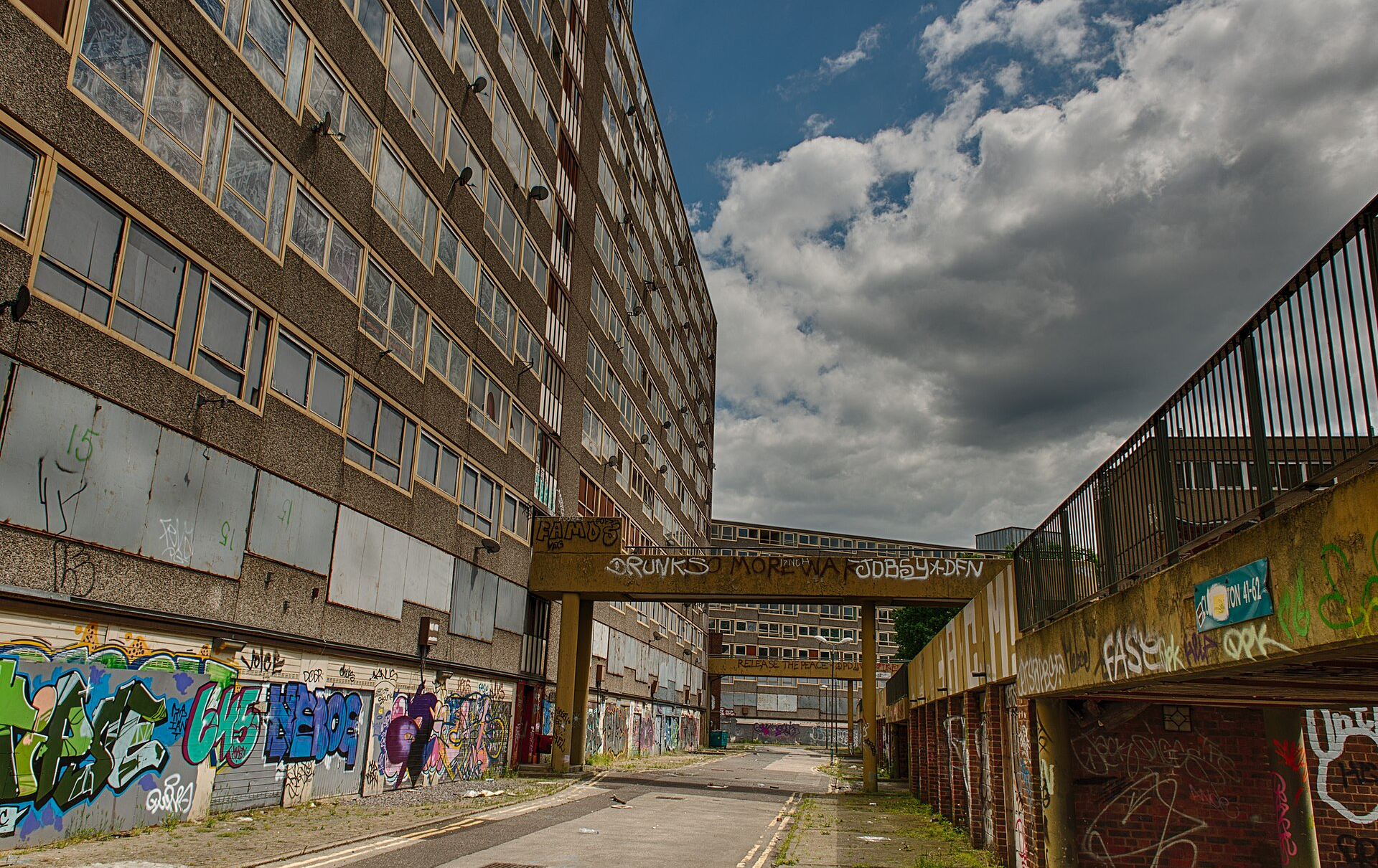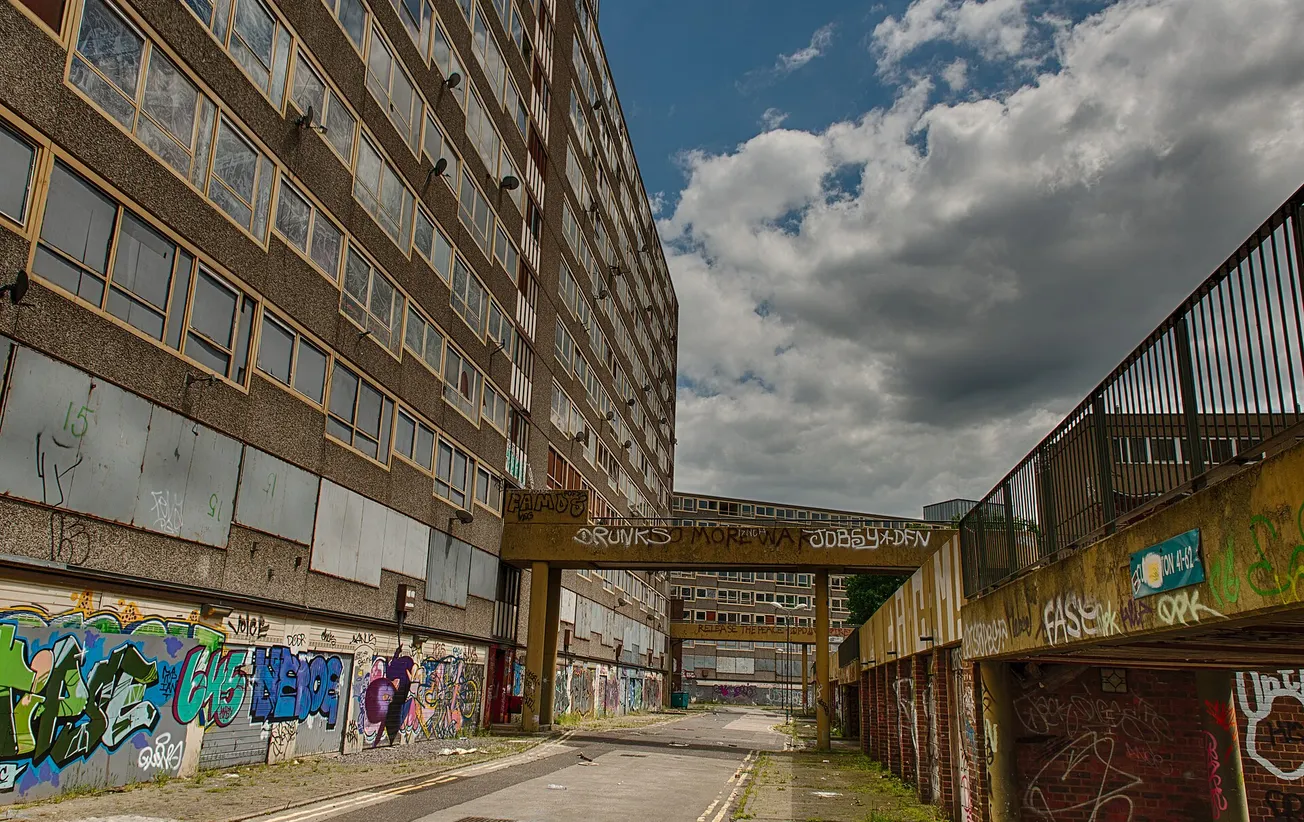
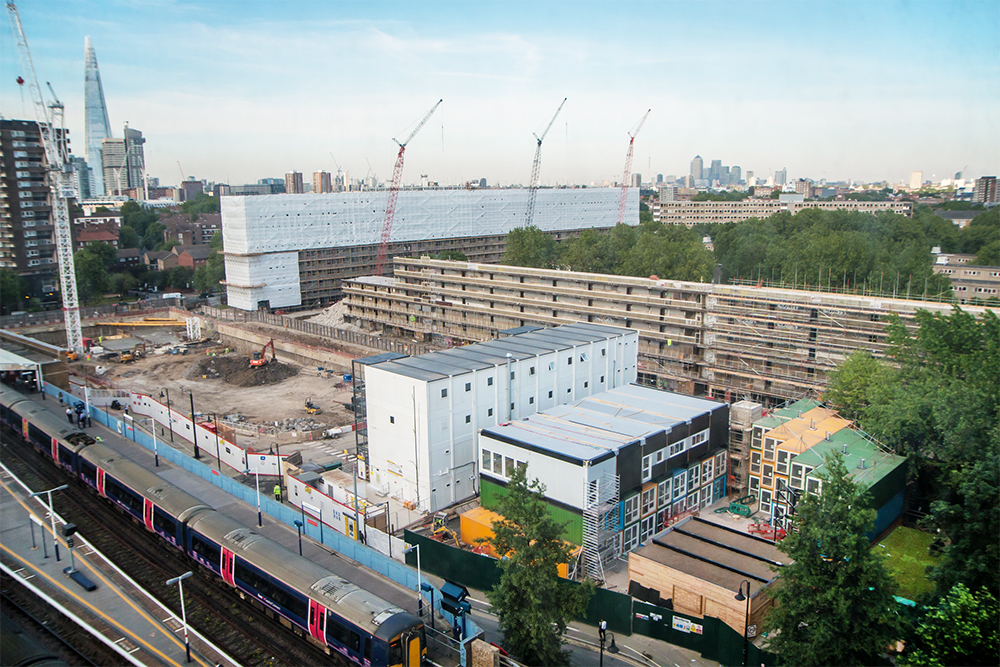
For the whole of my first year at university, I looked out onto an empty site. A little earlier, my first-year student accommodation would have faced what was once one of the capital's most forbidding rows of concrete: the Heygate estate in Elephant and Castle. Six huge grey slab blocks, up to twelve-storeys tall, ringed the Elephant's northern edge, with lower-rise maisonettes clustered between them. I arrived just after the last blocks came down in 2014, ending a one-sided battle between tenants and the council that had been fought for over a decade. In their place: hoardings, cranes, cleared earth and sand whipped into the sky.
Catherine Croft had the better vantage. "I get the train from Elephant and Castle up to Farringdon," she tells me. "So I watched all the demolition of Heygate — you could see it as you stood on the platform every morning. It was very depressing." The director of modern architecture charity the Twentieth Century Society, she has lived between here and Kennington for over 20 years. "I felt a huge pity: they were basically very sound buildings, spacious flats with nice balconies. And environmentally, it felt incredibly wasteful to see all of it smashed to pieces."
For over a decade before it came down, the Heygate had carried the reputation of a sink estate beyond saving. Yet in recent years, the postwar concrete it was made from has become newly desirable — the Barbican, Trellick, Balfron and Alexandra Road are now among the most coveted addresses in the city, their flats routinely trading well into seven figures. Why the wrecking ball for the Heygate, and not for those? And what did the city lose along with one of its most iconic estates?
From the slums to the skies
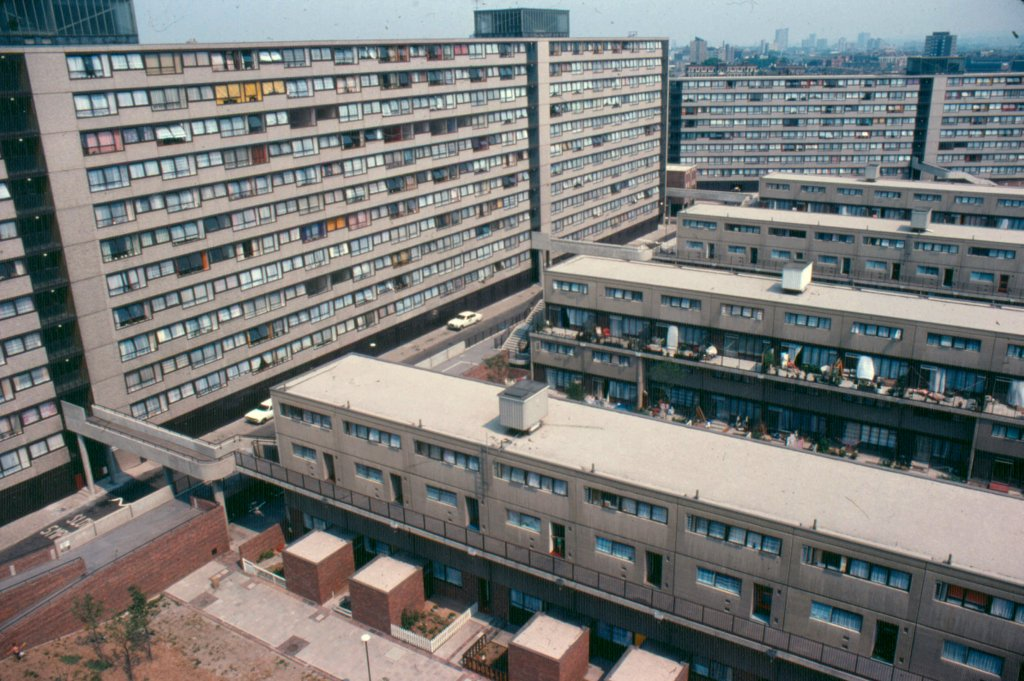
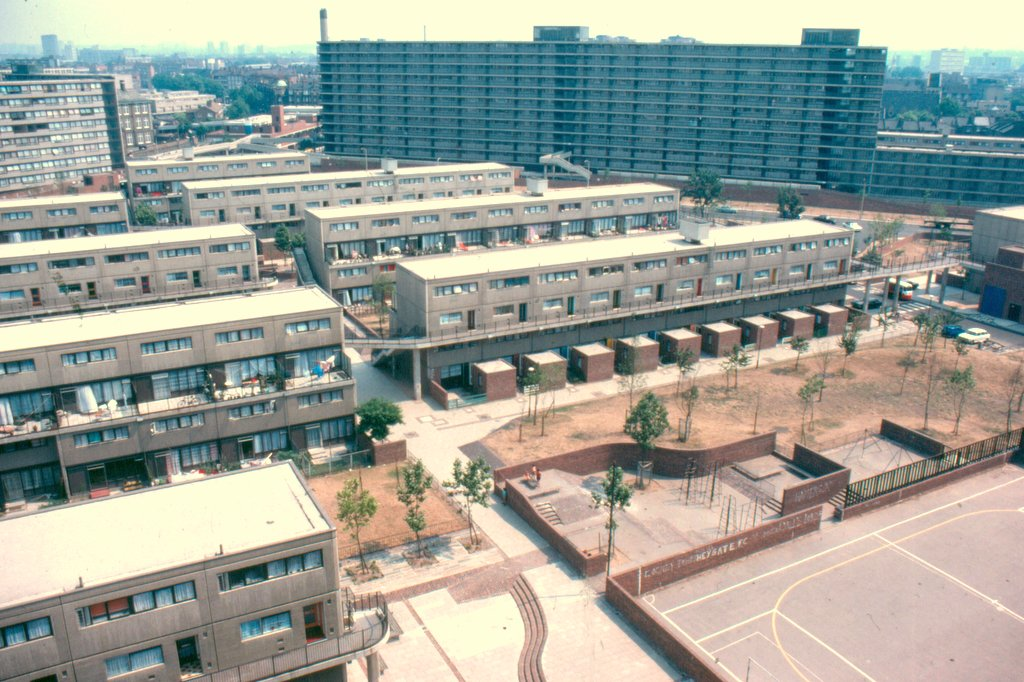
The Heygate was completed in 1974: 1,214 homes for more than 3,000 people. The brainchild of Tim Tinker, who worked for Southwark council's architects' department, its concrete was arranged around communal gardens, with raised walkways linking the whole scheme. These kept residents away from Elephant and Castle’s two roundabouts; by the time the estate was being planned, these were already among the busiest and least loved junctions in the city.
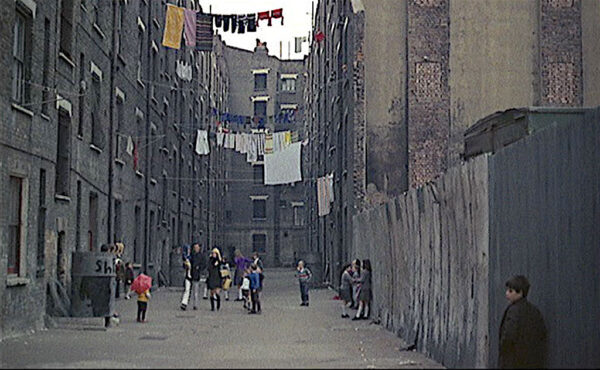
The land had been Victorian tenement housing until the war, when it was damaged by bombing and subsequently cleared by the London County Council for its rebuilding programme. Tinker told the Guardian in 2011 that the ambition behind the design had been about light. "At that time, these inner-city areas were extremely nasty, smoky, dirty places," he said. "Utopian is a dangerous word, but if you're working in local-authority housing you're bound to have a utopian view. What's the point of doing it otherwise?"
From the outside the Heygate could look grim: slabs of grey concrete facing down the traffic. But the design was built inward. The raised walkways were meant to keep the noise out and the greenery in, and Tinker and his colleagues planted hundreds of trees within the site: planes, hydrangeas, a silver maple that would grow to three storeys. In a 2011 essay defending the estate, leftwing architecture critic Owen Hatherley wrote of the quiet of the blocks against the roar of the roundabouts, the birdsong that carried through the concrete, the altitude that lifted the upper-floor flats above the fumes. Harsh as it looked, he argued, the estate "treated its residents as adults", and kept low-income families in the centre of London.
Jerry Flynn arrived on the Heygate as a teenager in 1973. He and his family had moved in from a two-bedroom flat off the Walworth Road that had neither hot water, a bathroom nor a kitchen of its own. "So yeah, definitely a step up. There was certainly no hesitation. We knew we'd be moving to somewhere much better," he tells me over the phone, 53 years later. His father was in the building trade, and his neighbours were a cross-section of the borough: taxi drivers, schoolteachers. His mother and one of his brothers stayed on the Heygate through its decant in 2007.
Flynn has maintained that, up until the late 1990s, the estate "did not have a reputation for being a bad place to live". Then, in 1997, Tony Blair opened his premiership on the Aylesbury Estate, a few minutes' walk away, in which he promised to rid the country of “no hope areas” like the flats behind him. “There are estates,” he said, “where all that is left of the high hopes of the post-war planners is derelict concrete. Behind the statistics are people who have lost hope, trapped in fatalism." The narrative was set: estates as archaic decay, a Labour framing that met an existing Tory one halfway.
In a 1999 interview, Fred Manson, Southwark's director of regeneration, put his thoughts about the area’s estates plainly. Social housing, he said, "generates people on low incomes coming in and that generates poor school performances, so middle-class people stay away". Manson's argument was not that Heygate residents were badly housed, but that they were the wrong sort of resident to have in the middle of the city.
‘It does put your back up a bit. Because obviously the whole place wasn’t being run by these dreadful yobs — there was nothing like that’
The decision to demolish came earlier than the wider narrative suggests. At a meeting in June 1998, before any process had officially started, Southwark council resolved that the Heygate would come down. When the appraisal it had commissioned was delivered that September, it reported that the blocks were structurally sound but in need of full refurbishment. The council ignored the findings.
Residents, meanwhile, were beginning to sense something afoot. As Flynn told the Guardian in 2011, "Almost overnight we woke up to be told we were living on one of the worst estates in Britain”, despite the September 1998 appraisal having put the Heygate's crime rate at half the borough average. A 1999 survey put three options to them: demolish the Heygate, keep it as it was, or partially refurbish it. Among those living there — overwhelmingly long-standing council tenants, with just over a hundred Right to Buy leaseholders — support was roughly split across the three.
Then came a decade of shifting promises. Until 2003, he says, residents were told they'd be rehoused on the Heygate's own footprint, which would be known as Elephant Park. Then that changed to new housing sites off the estate. Those weren't built either, though residents were decanted anyway. "That tells you all you need to know, really, about the consultation."
As it emptied, the estate became a set. Its silent walkways and boarded-up flats — a Zone 1 postcode with the population removed — proved ideal for filmmakers reaching for dystopia. In World War Z, it stood in for a post-apocalypse Newark; while in Harry Brown, Michael Caine played a pensioner turned vigilante, hunting the youths who had killed his friend. "If I hadn't lived on the Heygate and I didn't know anything about it, I'd just go and see the film and go, ‘that was alright’," Flynn says. "But it does put your back up a bit. Because obviously the whole place wasn’t being run by these dreadful yobs — there was nothing at all like that."
This story is free to read. You just need to sign up to join The Londoner's mailling list. And why wouldn't you? You'll get our journalism in your inbox the second we publish, keeping up to date on this and all our stories. No card details required.
Already have an account? Sign In