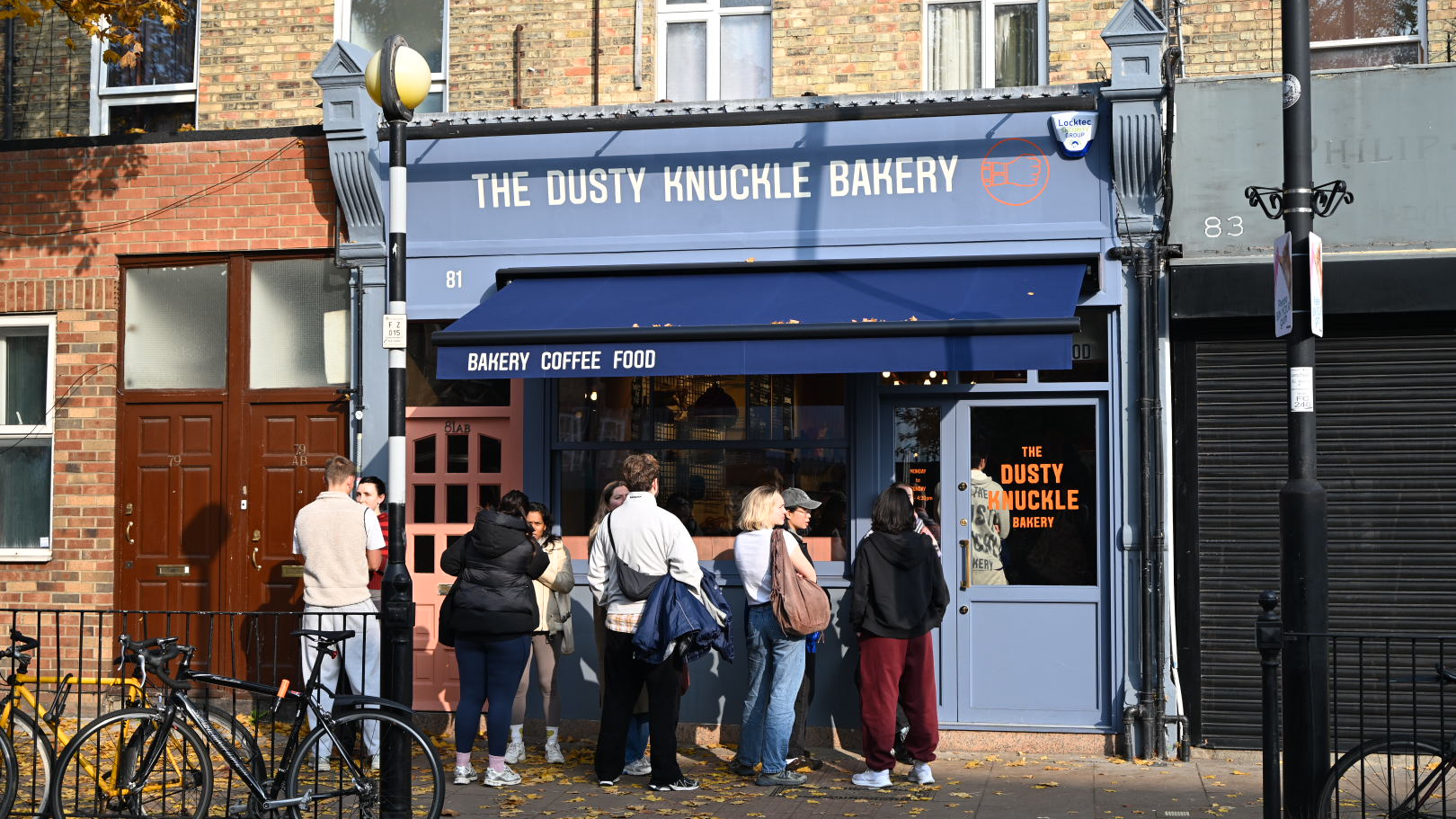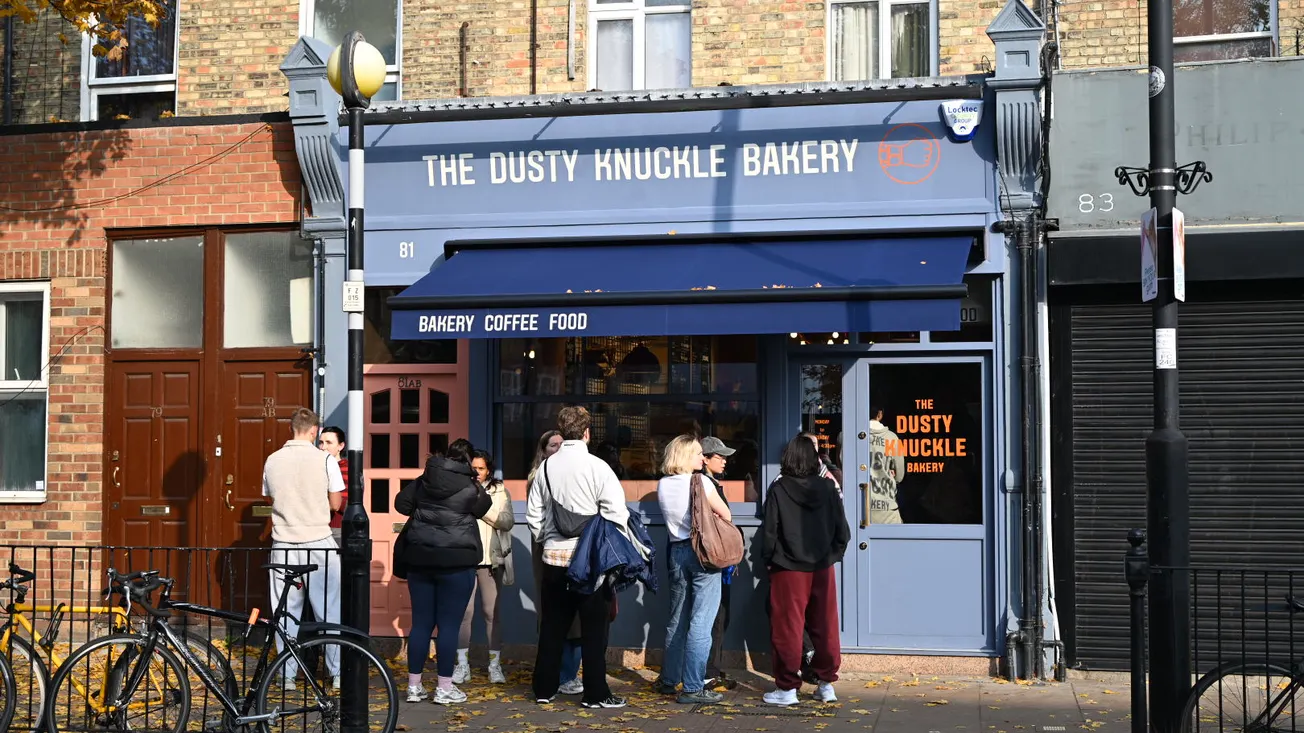
When The Dusty Knuckle, a north London favourite among weekend-bakery-hoppers, announced a third site would open on Finsbury Park’s Blackstock Road this month, there were cries of gentrification.
Last year, the shop front of their Haringey branch was covered in graffiti that read “GENTRIFRYERS-EW-SHIT BREAD”, which prompted the business to muse on their role as a gentrification signifier on Instagram. It’s complicated. Of all the bakeries charging £12.50 for a sarnie, The Dusty Knuckle has perhaps the best case for still being a force for good in communities; the bakery’s social enterprise efforts support young people trying to find work and men rehabilitating after serving time in prison.
🎁Want to give something thoughtful, local and sustainable this Christmas?
Why not gift your loved one a subscription to The Londoner? Nothing to wrap, nothing to throw away, and plenty to feel good about.
Blackstock Road has been changing for a long while, and The Dusty Knuckle’s arrival is a sign of change already in motion, rather than being the cause of it. Last year, Time Out named it one of the “coolest streets in the world”, and when I began interviewing locals, most were bemused by the accolade. I am too, as a north London native. The Finsbury Park I knew as a child over 20 years ago, when comments about its rampant crime were commonplace, is in many ways gone today. The area, including Blackstock Road, has become a desirable destination in which to visit and socialise, as well as to buy, rent and live. It’s no secret that it’s gentrifying, and so although it’s one road, it feels like two – the divide between the Finsbury Park end and the Highbury end being ever more distinct.
But just like the case of Dusty Knuckle, there’s nuance to the situation. Instead of dividing the businesses and people of the area into gentrifiers and non-gentrifiers, I spent a few days actually speaking to the people I met up and down Blackstock Road to understand how they see the changes and what they want from its future.
Priced out
Jez Laurenic, 35, grew up in the area, and although he’s left, he comes back regularly to visit his mum, Evonne Laurenic, 67, who still lives there. “Every time I'm back, there seems to be a new cafe or bar which makes me feel inherently uncomfortable, but I'm not too sure why,” he says, adding that neighbouring Stroud Green Road has also undergone a rapid change in character.
“It’s an area I've always loved and would like to live in, but I feel like I’ve been priced out. When I left home, I moved close by to Manor House, but every few years I've had to move further and further away to stay within my means.”
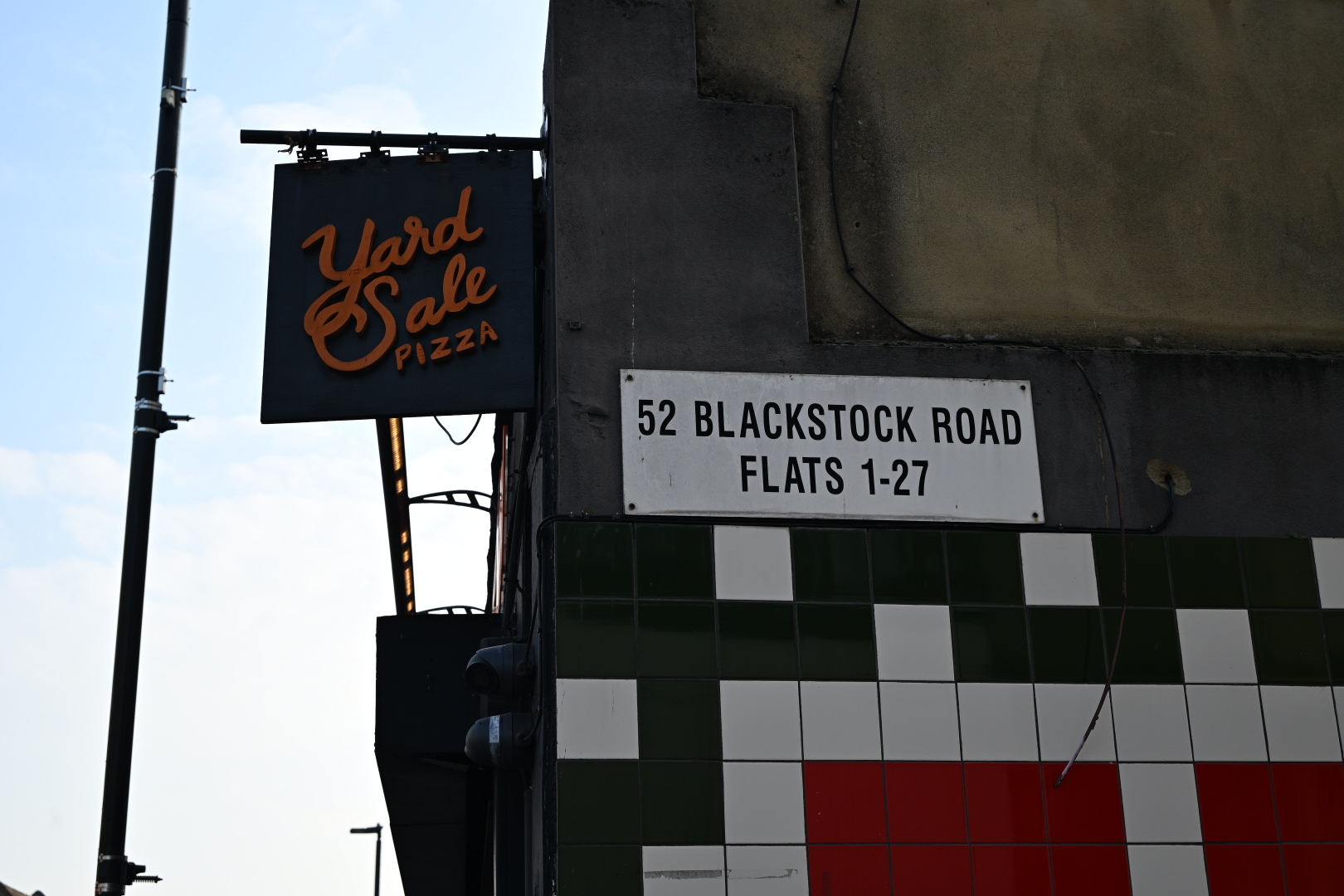
House prices on Blackstock Road have indeed skyrocketed. According to Rightmove data, houses are currently priced at an average of more than £1m. A terraced house on Blackstock Road that sold for £192,500 in 2000 was then sold for £820,000 in 2019 went for £1.21m this summer. This is the most depressing part about gentrification, when former locals like Jez stand no chance of moving back to the area anytime soon.
This story is free to read. You just need to sign up to join The Londoner's mailling list. And why wouldn't you? You'll get our journalism in your inbox the second we publish, keeping up to date on this and all our stories. No card details required.
Already have an account? Sign In