Our Saturday stories are free for all to read — but we can only survive with your help (and we're currently being sued for £250,000 by a wealthy Airbnb grifter). If you're a fan of today's piece, please do consider becoming a paying member. And with our spring discount, it costs less than a fiver a month (for your first three months) to support us.
In the late 1960s, Chris Faiers was down and out in London. Canadian by birth, he’d grown up in North America and emigrated, like so many other young men, to dodge the Vietnam draft, after having received three notices in a week. When he walked into the offices of a local newspaper in Richmond to ask for a job, he was surprised when he was taken seriously – the editor gave him a test assignment, telling him about some hippies who had started a commune in an abandoned hotel in Twickenham. The hotel was on a little island in the middle of the Thames.
He caught the bus to Twickenham and found the footbridge which led to the island. “It was about two hundred feet across the little bridge, with a beautiful view of the Thames,” he writes in his haiku-laden, LSD-infused memoir, Eel Pie Dharma. “When I had reached the island I felt I had entered a special place. A footpath lined with neat little cottages wound through the centre of the island. There was no missing the old hotel at the end of the footpath. It was derelict, and I just walked in where the grand front entrance had once been.”
Faiers is right about the view. There’s something almost Scandinavian about it, from where Eel Pie Island connects to the Thames embankment at Twickenham via a humped iron bridge: thickets of dense greenery dapple the light over little corrugated iron houses, converted from boat stores, which hug the water’s edge. Some dwellings have their own jetties, all have pleasant garden seating areas and are a picture of idyllic outdoor living.
I’ve come to this island, not quite nine acres in total and situated in an affluent, westerly stretch of river, because it is currently the subject of a painting exhibition by an artist called Nick Goss – or, at least, a version of it is – and I want to find out more about the real thing. Goss’s show, currently on at Fitzrovia’s Josh Lilley Gallery, takes the fabled Eel Pie Hotel as its starting point. That is, the site of the commune which, before it fell to the long-hairs, had been both a glamorous Victorian leisure resort and a hip music venue where future stars of Swinging London cut their teeth.
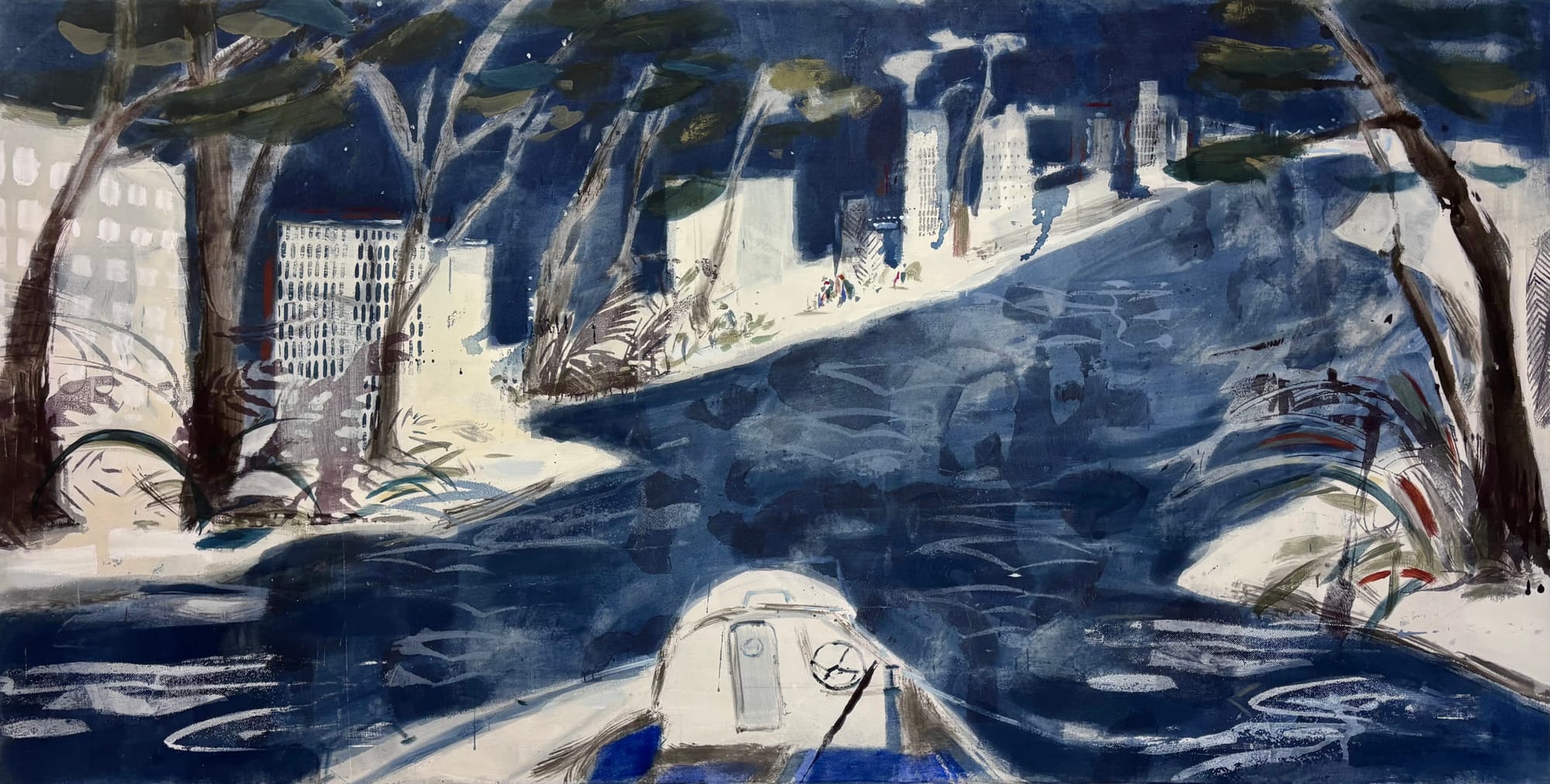
Anglo-Dutch painter Nick Goss habitually distorts a sense of place through his multi-disciplinary practice – oil washes layered with fragmented silk screen patterning lend a gauziness to otherwise recognisable landscapes or interiors. In this new exhibition, Eel Pie is warped by his brush, and rooted less in reality than in an imagined hybrid of all its incarnations throughout time. Across eleven paintings, the hotel is shown partially obscured by foliage from across the opposite towpath, or through its interior corridors where a blurred mass of revellers are whirling and jiving between numbered rooms. You’re never quite certain what version of hotel life you’re gazing at. Rendered in this manner, Nick’s island is enigmatic, inaccessible, unknowable. Considering that the hotel has long since disappeared, and that the island is totally under private ownership today, this is basically true.
Welcome to Eel Pie Island
Now the stuff of legend, the Eel Pie Hotel was many things in its lifetime, but in every iteration there seems to have been dancing. Miss Morleena Kenwigs in Dickens’ Nicholas Nickleby (1839) heads “unto the Eel-pie Island at Twickenham” nine years after the hotel was first built, “to make merry upon a cold collation, bottled beer, shrub, and shrimps, and to dance in the open air to the music of a locomotive band”. Nineteenth-century illustrations and photographs of the hotel’s facade show a symmetrical building with jutting dormer windows and a pretty covered terrace on the second floor.
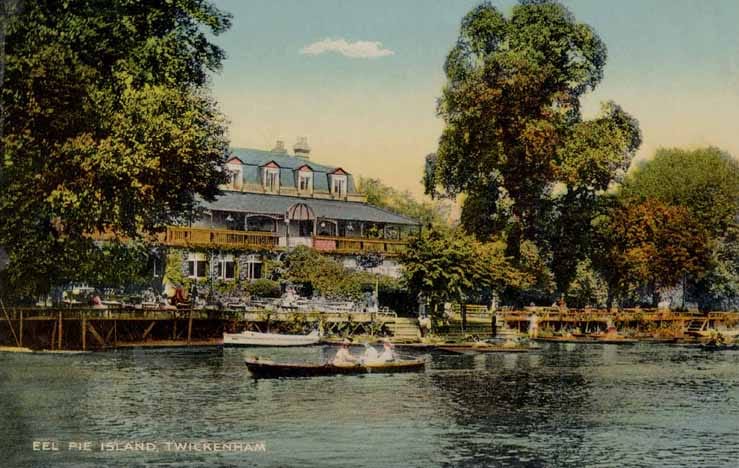
As the soundtrack changed from classical to jazz, the hotel remained a backdrop to dancing. The venue was to double down on its appeal as a dancing destination in 1951, when it was purchased by a Kingston shop owner called Michael Snapper, who, along with his savvy business partner Arthur Chisnall, recognised the potential of a three-floor riverside building with a ready-made sprung dancefloor to become a uniquely positioned music venue. In doing so, he cleverly pre-empted the desires of the emerging teenager class. More common in athletic or dance venues, the sprung floor provided a bounce that made concert-viewing all the more dynamic.
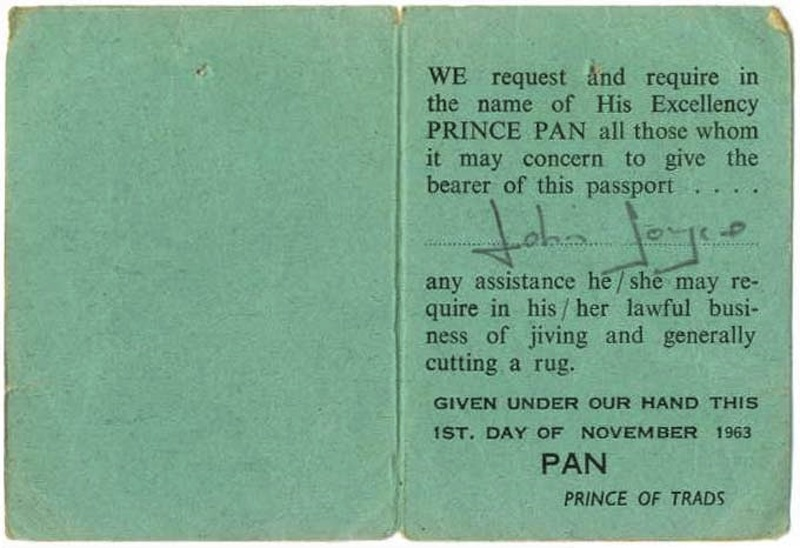
It was Snapper who commissioned the bridge in 1957, increasing footfall to an island that had previously only been accessible by barge. Regular visitors to the venue’s jazz and jive nights were rewarded with an EELPILAND passport for entry, whereas the more casual attendee had their arm stamped after paying their fee. Then came the 60s, the hotel’s musical hey-day. In a piece about the venue, The Guardian quotes Michele Whitby, the curator of the museum dedicated to Eel Pie Island, in describing the island as “all boatyards” and as having “very little residential accommodation”. And this was presumably just one reason why Eel Pie became such an important musical destination: the fans “thought the police would find it more difficult to come over and they were free to make more noise,” Whitby says.
The Rolling Stones were invited to take on a five-month residency at the venue, followed at various points by gigs from the likes of Cream, Pink Floyd, David Bowie, and The Who — but this era of the hotel functioning as a music venue soon came to an end. The building became a shadow of its Victorian self due to lack of investment as more money was spent on bookings than upkeep. The sprung dancefloor collapsed and the council revoked its licence in 1967. It seemed like the fun was over.
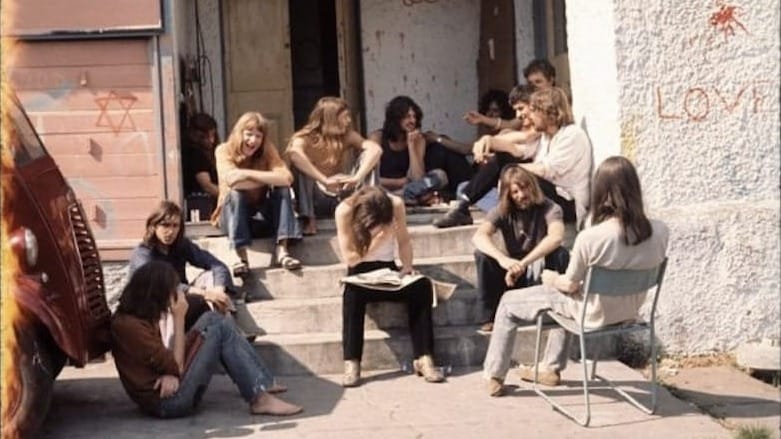
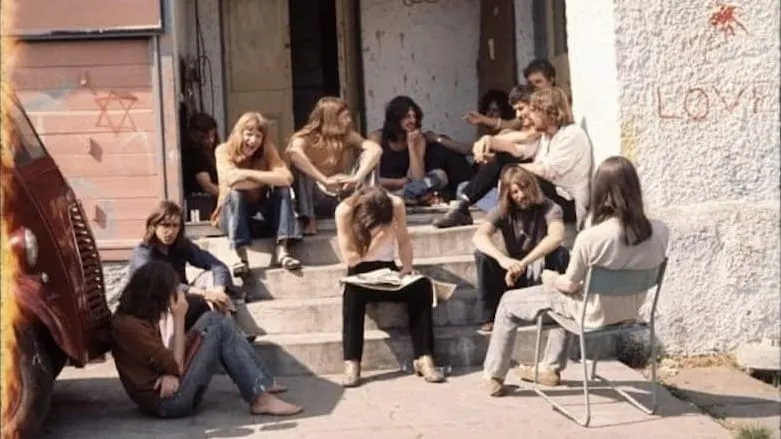
It might have been, if not for a shag-haired artist-cum-anarchist called Clifford, who came to the hotel with an easel and a dream. It was Cliff who Chris (“Canadian Chris”, as he signs his emails off) encountered on his journalistic quest, and who invited him to ditch the assignment and move on in, which he promptly did. According to Eel Pie Dharma the other residents, who arrived in dribs and drabs, were a mix of “dossers, hippies, runaway schoolkids, drug dealers, petty thieves, heroin addicts, artists, poets, bikers, American hippie tourists, au pair girls, and Zen philosophers from all over the world”, with monikers like Fuckbucket Flo, Magic Mike and Gurdjieff Dave. Another resident, Weed, who lived in the hotel between January 1969 and August 1970, recalls the rag-tag community to me: “One of my favourite book titles is Beautiful Losers (Leonard Cohen, 1966) – of course, not all of us were beautiful, and not all of us were losers, but there were moments when some of us were lost in the beauty of it all. There are always those who search for meaning, especially in the transition from adolescence to adulthood, and that was probably as good a place as any to be while looking.”
Orgy rooms, weed and a mysterious inferno
Now approaching his 78th birthday, Chris’s recollections of the machinations of commune life are somewhat hazy (as a comment from Cliff on the former residents’ Facebook group puts it: “If you can remember it – then you weren’t there”), but he describes Cliff’s initial vision as akin to “an arts lab centre styled on existing arts labs in the UK,” referring to a counter-cultural movement of anti-establishment facilities for experimental artists. Shocked at the poverty that still existed in post-war London compared to the cosseted lives of his North-American peers, Chris wasn’t surprised when the bohemian vision fell apart at Eel Pie Hotel and it “quickly became more of a squat, a desperate home for the desperate disenfranchised”.

Hi, Andrew here. I hope you're enjoying India's tour of Twickenham's insane hippy history. There's a lot more crazy nuggets to come, including tales of orgy rooms and mysterious unsolved infernos. I know what you're thinking, but this isn't a paywall! All you have to do to continue reading is sign up to The Londoner for free below, no card details needed. We get to grow the audience for our London media revolution, and you'll get sent all our best articles the moment that they're released. It's a win-win.
This story is free to read. You just need to sign up to join The Londoner's mailling list. And why wouldn't you? You'll get our journalism in your inbox the second we publish, keeping up to date on this and all our stories. No card details required.
Already have an account? Sign In