Today's story is free to read. But if you value the kind of in-depth, on-the-ground reporting seen below, please consider supporting The Londoner for just £7.45 a month.
Without our paying subscribers, we can't afford to continue to publish the kind of empathetic, meticulous journalism about the capital that we're renowned for.
Less than three kilometres separate Antonio Roncolato from the burnt-out shell of Grenfell Tower. The 65 year old lives on the ground floor of a low-rise building on Sheffield Terrace, an affluent residential street framed by rich red-brick facades, bookended by Holland Park and Kensington Gardens. But Grenfell was the 24-storey apartment block he called home for 27 years.
Antonio moved in with his then-wife on 24 October 1990, two days after their only child, Christopher, was born. He watched his son grow up in the rooms they had decorated with custom fittings, their plants basking in the light from the wrap-around windows. It was a joyful, diverse place, where Christopher made friends with children from Colombian, Spanish and Vietnamese families. It was also the place Antonio had to escape from on the morning of 14 June 2017, when the tower turned into an inferno.
The fire began around 1am in the flat of long-time resident Behailu Kebede, when an electrical fault set his fridge alight. The flames quickly spread from the fourth-floor flat to the newly installed exterior cladding and, less than half an hour later, had swept across the facade and roof. By 4.30am, the entire tower was engulfed. It burnt for more than 60 hours after the initial emergency call was made, in what became known as the worst residential fire in the UK since the second world war, and was only fully extinguished on the evening of 16 June. 72 people died in the blaze.
But though the fridge provided the spark, it wasn’t the real reason for the tragedy. The catastrophic spread of the fire was the result of a flawed 2016 refurbishment that attempted to save money by using cladding that turned the building’s facade into a conduit for the rapidly accelerating flames.
Though a seven-year-long inquiry found that principal contractor Rydon, cladding subcontractor Harley Facades, architect Studio E, fire safety consultant Exova and building manager KCTMO had each “failed to identify their own responsibilities for important aspects of the design”, justice remains elusive. Up to 57 individuals and 20 companies could face criminal charges over the disaster, the Met told the BBC in May, but trials are not expected to begin before 2027.
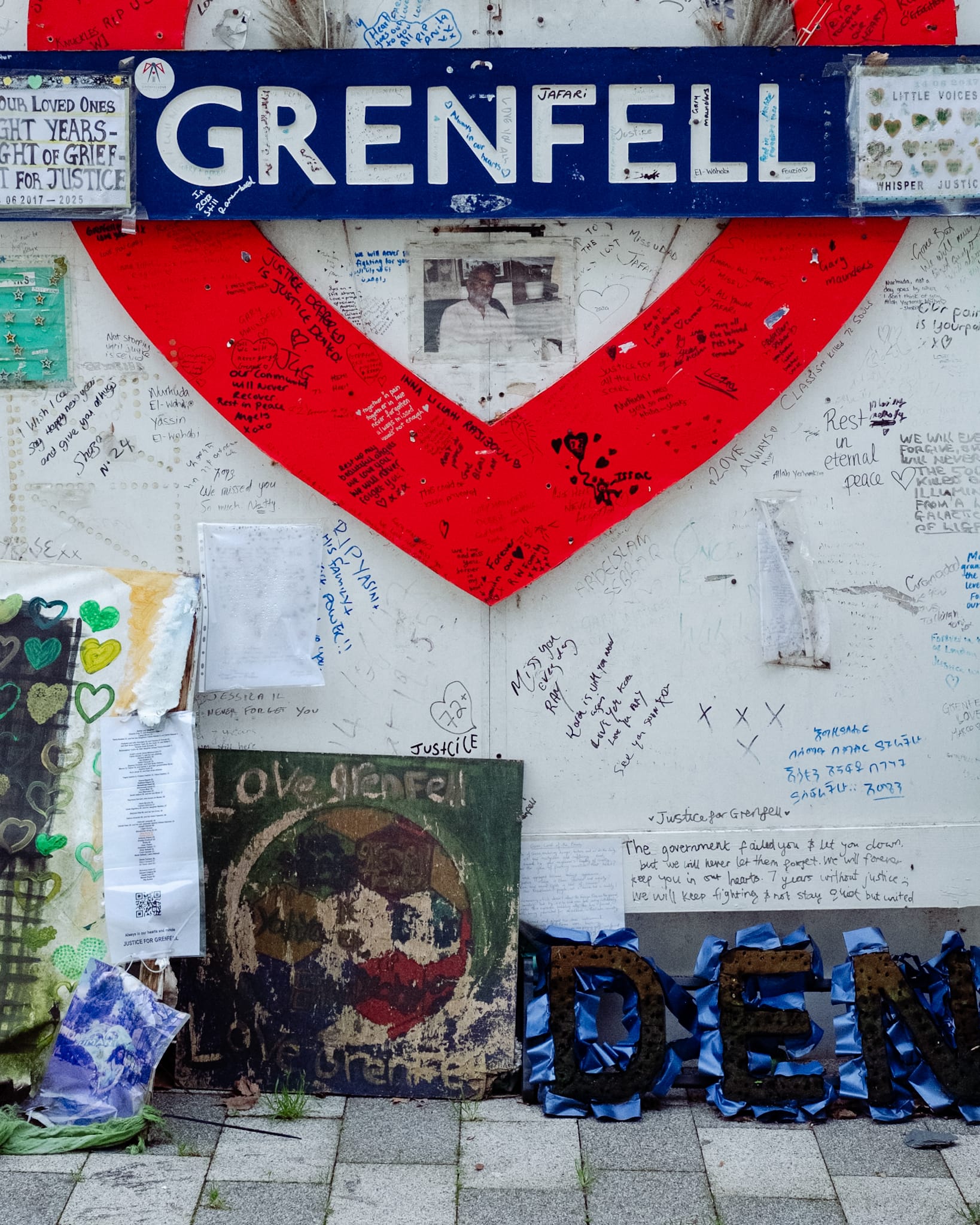
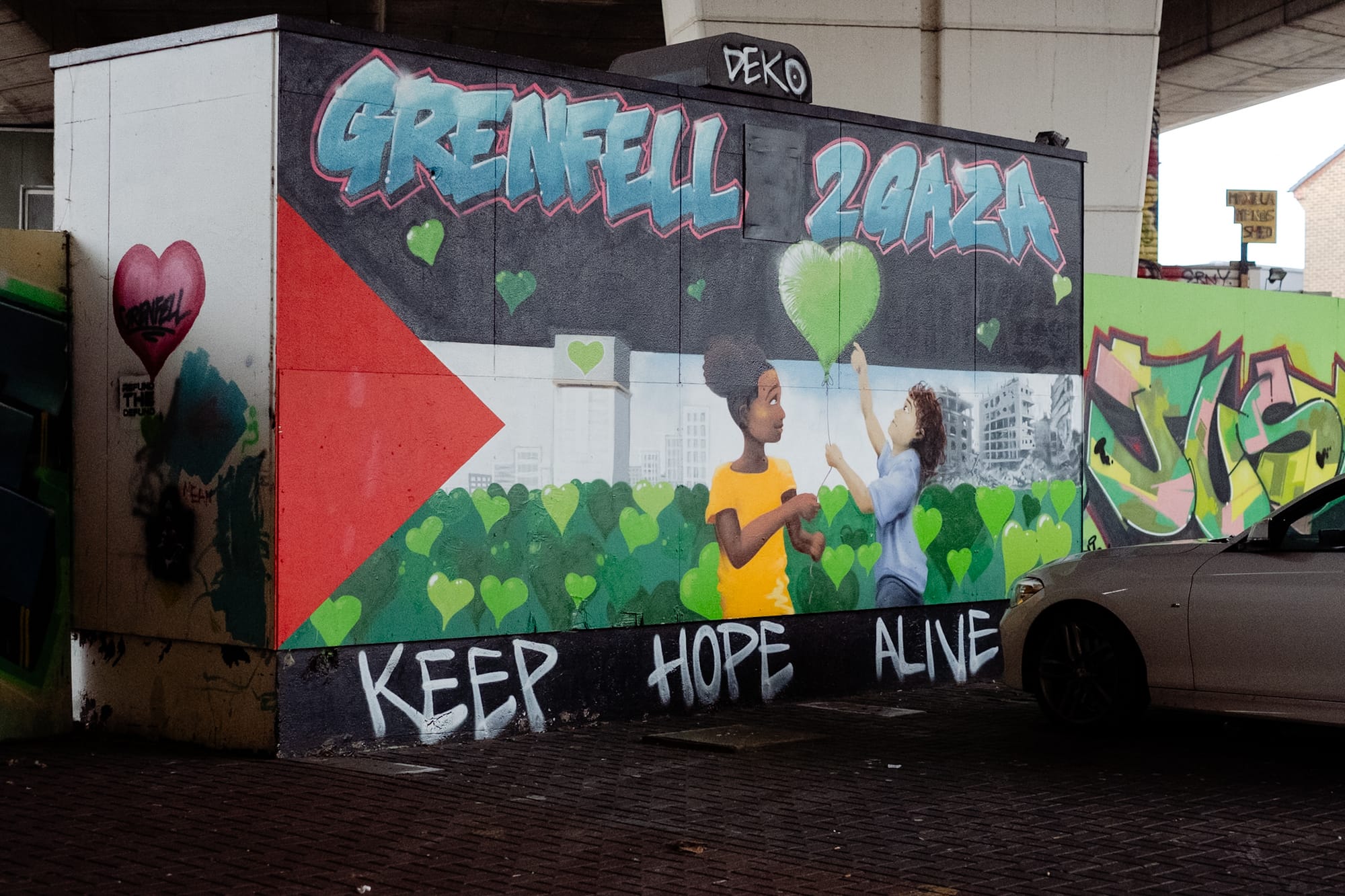
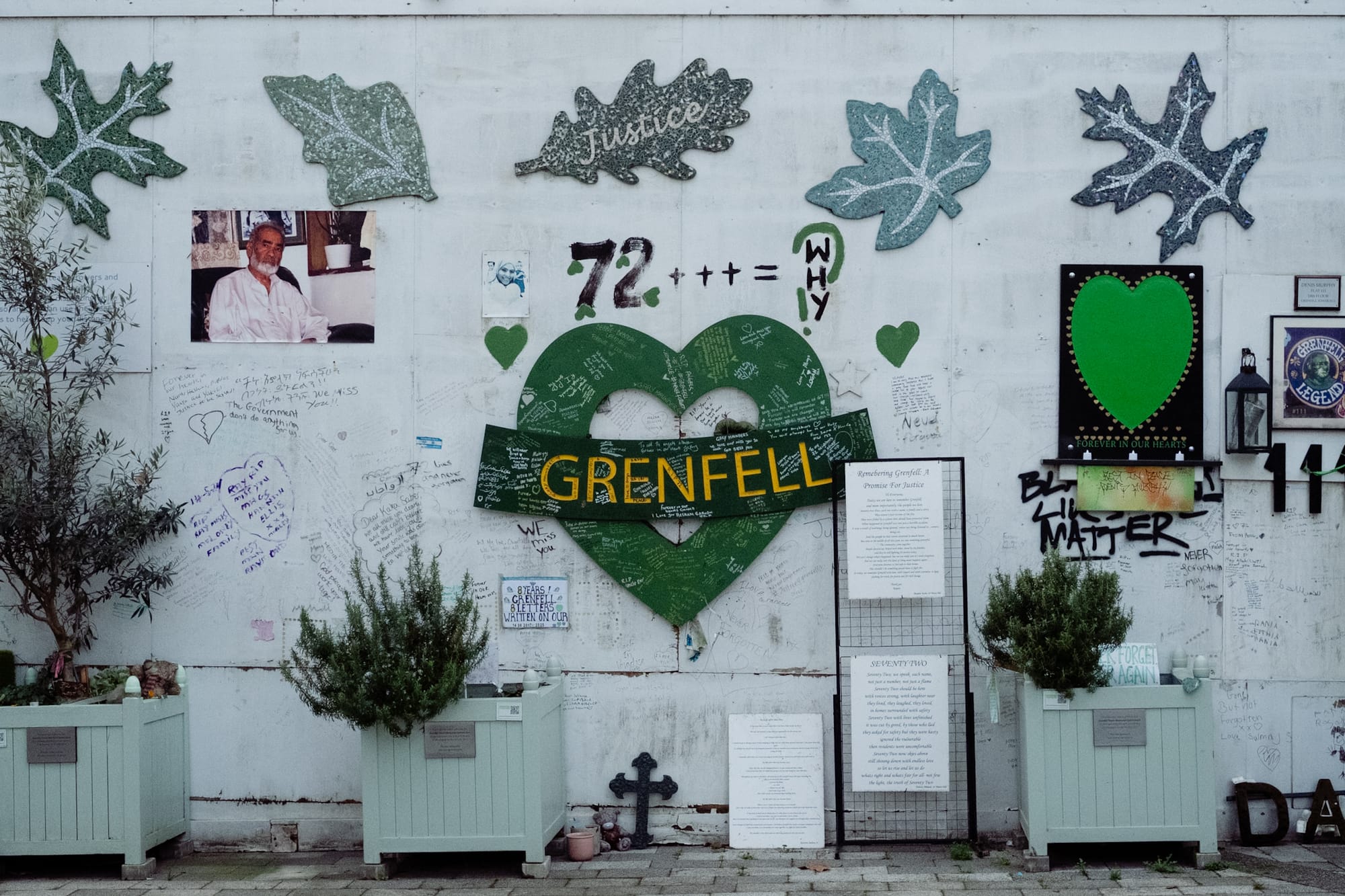
Today, nine years since the event that changed his life forever, Grenfell is still present in Antonio’s mind. Its deconstruction, which began last September, is expected to take two years. Yet the debate surrounding how best to remember those who died continues. For some bereaved family members and survivors like Antonio, dismantling the tower is a key chapter of the healing process. Others fear this will leave room for people to forget what its blackened spectre embodied — the destructive essence of human greed, dishonesty and incompetence. How do we ensure that what was lost is remembered, rather than simply erased? And how can those involved ever move forward?
'There was no margin for error'
I meet Antonio on a gloomy Sunday in February. Though he’s relaxed, settled on the petrel green couch in his living room, there’s emotion in his voice: “My name is Antonio because my father is devoted to Saint Anthony.” Hours before the fire he was in his hometown of Padua celebrating his namesake — the patron saint of the poor, who is most associated with finding what has been lost — as part of an annual festival to commemorate the martyr’s death.
On June 13, the Italian city’s medieval streets fill with pilgrims, friars in brown habits and clergy bearing candles, who follow a fixed route from the basilica through the heart of the town. A slow, solemn procession carrying golden reliquaries encasing the saint’s most venerated remains: his tongue, jawbone and vocal cords, preserved as testament to the eloquence of a preacher whose sermons were said to have drawn thousands. Antonio walked through the streets of Padua with the rest of the crowd, hands clasped, before returning to London on the night that would see Grenfell burn.
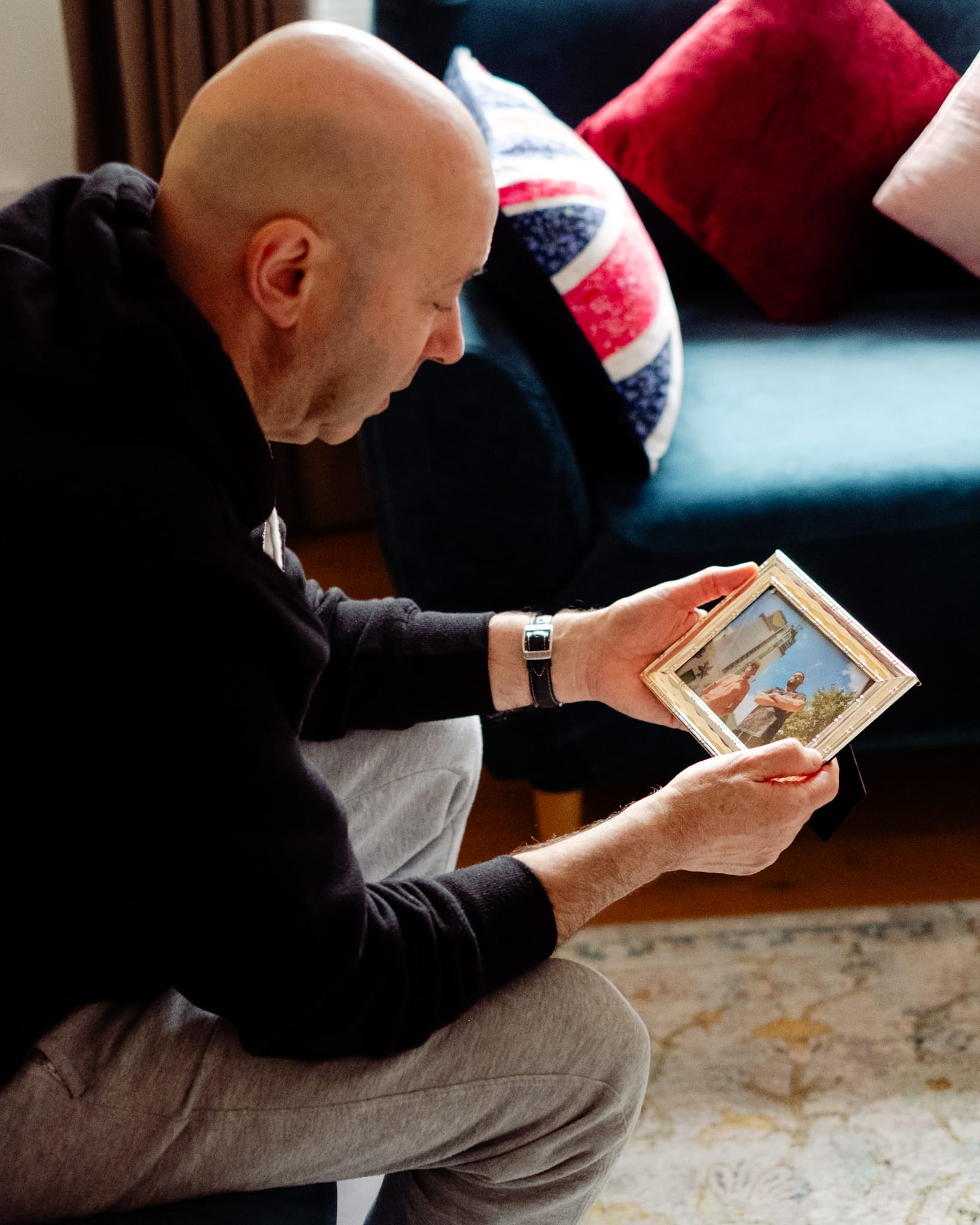
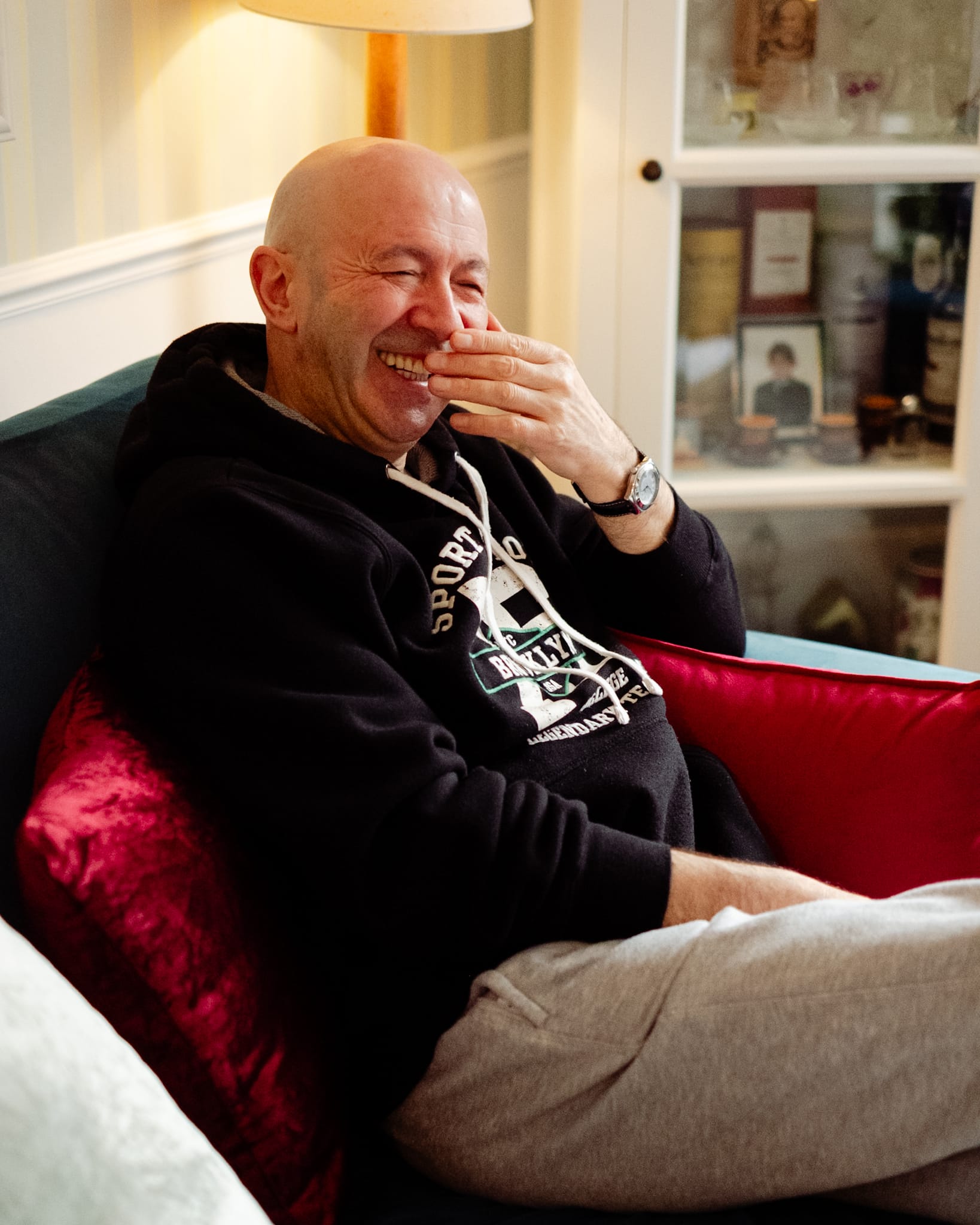
Antonio Roncolato (Image: Gilda Bruno)
A quick dinner, a brief goodnight call to Christopher, who was at work that evening, and then Antonio had gone straight to bed without even unpacking his bags. It was his son who, seeing the block ablaze on his way home, called his father to raise the alarm. Antonio opened the door — and immediately shut it again, as scorching black smoke billowed into the room.
From that moment on, each decision became vital — wet towels stuffed into the gaps and used as face masks, windows opened. Thanks to a career in hospitality, Antonio had 30 years of hotel fire training under his belt, though keeping his nerve proved harder than in any past simulations. He acted quickly and precisely, aware that “there was no margin for error”.
Though he tried to get out a second time, flames and fumes made it impossible, and the authorities had told him to stay in place. This was the standard procedure for fires in a tower block, which are designed to contain blazes to individual flats — advice that would have been correct, had it not been for the new cladding. While he waited, Antonio continually poked his head out of his bedroom window to breathe “less polluted air”, and picked at the porridge he had prepared the night before going to bed to keep his energy levels up.
At around 6am, the flames had nearly reached Antonio’s window. He had been on the phone with his son throughout, and now urged Christopher to break the police cordon at the bottom of the tower, identify the fire chief — “the one with the white helmet” — and get him on the line. “My name is Antonio. I am on the 10th floor, Flat 72. I am in danger, I need help now,” he told the crew leader in a desperate call. Minutes later, Antonio was rescued from his apartment, wearing swimming goggles to keep the smoke at bay and holding a towel over his mouth.
Gripping a firefighter’s jacket with one hand, he proceeded down the stairs in total darkness, the second-to-last person to escape, as water, smoke and debris clogged the staircases. “At some point, I am stuck. I keep tripping over something and can’t move any further, but the fireman behind me lifts my leg, and we continue walking down the stairs,” he tells me. Months later, he would find out that he had tripped over a body.
As Antonio describes the night, his shoulders draw tight. His voice deepens and steadies as calls himself “blessed”. But it is he who deserves the credit: that the patron saint of lost people watched over him on the eve of the fire is a matter of faith; that Antonio’s cool-headed instincts got him out of the burning building is a matter of record.
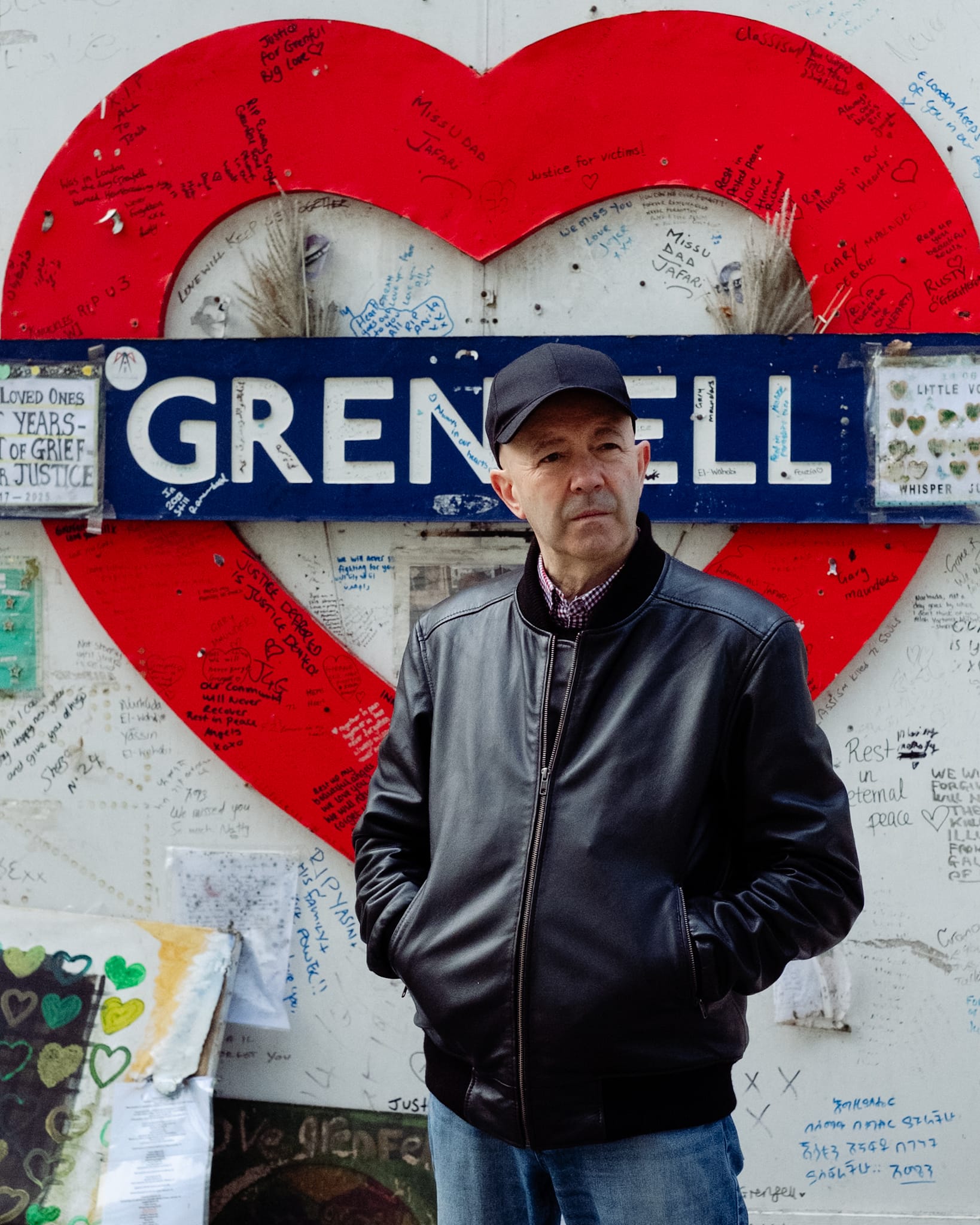
“There is always time to be emotional afterwards, but at that moment I was 100% sure I would make it,” he says. Later that morning, after Antonio was dismissed from the hospital following a series of health checks, the sight of Grenfell turned into a charcoaled, smoking chimney, airing on all TV channels, broke him. “I can’t believe I was in there,” he recalls telling his son Christopher and his ex-wife when he joined them afterwards. His face grows tense: “I managed to escape, but what about the others [trapped in there]?”
The weight of survival
Those who made it out of Grenfell alive carry with them the weight of those who did not. Among the 72 who perished was Logan Gomes, stillborn at King’s College Hospital after his seven-month-pregnant mother, Andreia, escaped the 21st floor with her husband and their two young daughters, breathing toxic fumes all the way down. Hesham Rahman, who lived on the top floor, had diabetes-related mobility problems and could not flee. He died alone in his flat, later memorialised in a heartfelt poem written by his nephew, now part of a colourful mural on the Grenfell Tower Memorial Wall.
Entire futures were cut short. Promising young architects Marco Gottardi, 27, and Gloria Trevisan, 26 — who Marco’s father Giannino describes as “complementary souls” over an emotional video call — had arrived in London just three months before the fire to seek out work in the capital.
Within a few weeks of their move, the couple had found jobs at Anglo-Italian studio Ciao and prestigious architectural practice Peregrine Bryant. They had moved to the 23rd floor of Grenfell almost by chance when a friend couldn’t take the flat, and hadn’t planned to stay there long-term. When the fire broke out, they too were told by the authorities to stay in their flat.
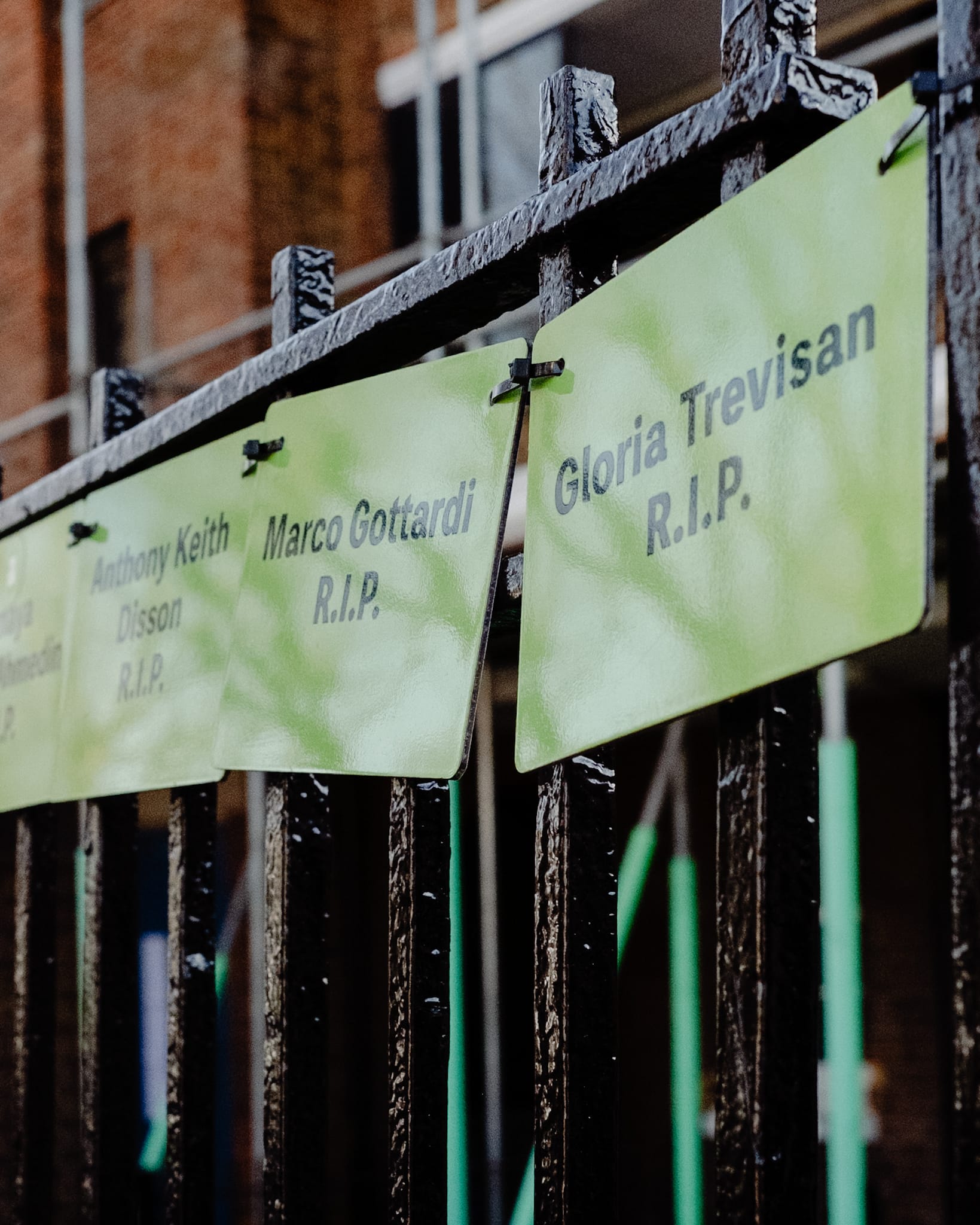
Antonio had never seen Marco and Gloria at the tower — he learnt about them from a news segment the morning after the tragedy — but he met the Gottardis a few months later. They were “very tired, very shaken,” he recalls, but people of remarkable dignity and simplicity. “I told myself I was very lucky, and that I could never imagine the constant pain they were feeling. I felt grateful to be alive and to still have my son by my side.”
Out of that pain, Marco’s mother, Daniela Burigotto, built something enduring. First, she wrote a children’s book based on the couple and then, together with her husband, created Grenfellove, a foundation that has since awarded nearly 40 scholarships to young architects at Iuav university, where Marco and Gloria met during their studies. “When we go into classrooms,” she says, “a small seed is left in each person.”
She believes Marco and Gloria are still at work somewhere. “They are working as architects from the sky. The work they would have done here would not have achieved the results they are achieving on the other side.” For Antonio, the grace with which Marco’s parents have borne the unbearable has given him the courage to keep fighting: for himself, and for everyone who never made it out.
'I hope I live long enough to see someone behind bars'
Now, in the mornings, Antonio tends to his plants, the timid sun shining through the windows. In the summer, he spends “entire days on the veranda”. These slow gestures are those of someone who, forced to live for so long in temporary accommodation after the fire, has had to relearn to care for his surroundings. “A house is a building,” he says, “but when you live in it, it becomes your nest. You decorate it however you want; it reflects your personality, your way of life. And those who allowed Grenfell to burn down destroyed mine.”
Before arriving here, Antonio spent eight months in a hotel, then in a temporary flat; spaces that, to him, felt anonymous, and where he couldn’t imagine a real future. Despite then-prime minister Theresa May’s promise to guarantee all of those who survived the fire new accommodation within three weeks, negotiations with Kensington and Chelsea council dragged on. Among the rejected offers were flats above the fourth floor — the maximum height Antonio could face — and cold, impersonal places that wouldn’t allow him the sense of familiarity he had been cultivating in his Grenfell home.
The flat where Antonio lives today reflects his personality: lively, ingenuous. There’s stripy wallpaper in mint-green and butter-yellow tones, and wall-wide windows bathe the rooms in all-day sunshine. “I redid it, decorated it and changed it in my own image and likeness,” he smiles.
Antonio had to request these changes from the local authority before his move-in date, which he defended with his typical unwavering calm. “It’s not by choice that I’m here,” Antonio states, “but by the negligence of those who should have protected me.” With this flat, he reclaimed his right to everything that the blaze — and those responsible for it — denied him.
He shows the same confidence and perseverance in seeking clarity about what happened and dedicating himself to ensuring that justice is done. For almost 10 years now, Antonio has attended meetings, met ministers, written, insisted. He was the first of the survivors to give his testimony. But this is no time to slow down: “we must keep the pressure on”.
After over seven years of hearings, the inquiry concluded in September 2024. The Met will submit the criminal investigation file to the Crown Prosecution Service this autumn. Those under investigation include local and management authorities, contractors and subcontractors, and suppliers of the materials used in the tower’s refurbishment.
“I hope I live long enough to see someone behind bars, someone pay for what they caused,” says Antonio, a flash of anger disrupting his composure for the first time since we started talking.
On the future of Grenfell Tower, he respects all positions. He knows that for many, it is a mausoleum, a sacred place, the only physical site where the dead are still present. And he knows that for others, those living nearby, its skeleton had become unbearable. But “Grenfell does not heal,” he tells me. “The maintenance costs are prohibitive, and it will only get worse. It’s time for it to make room for something new, something we can maybe even find a way to look forward to.”
London-based multidisciplinary practice Freehaus has been appointed to lead on a memorial, to which Antonio and Giannino Gottardi have both already contributed directly through their involvement in the Grenfell Tower Memorial Commission. Though Antonio wants a “beautiful” memorial, he also tells me he wants to see “a section of one of Grenfell’s walls as it is — black, burnt — so that people can grasp the level of neglect, the deceit. And perhaps even be able to smell it, the tower.”
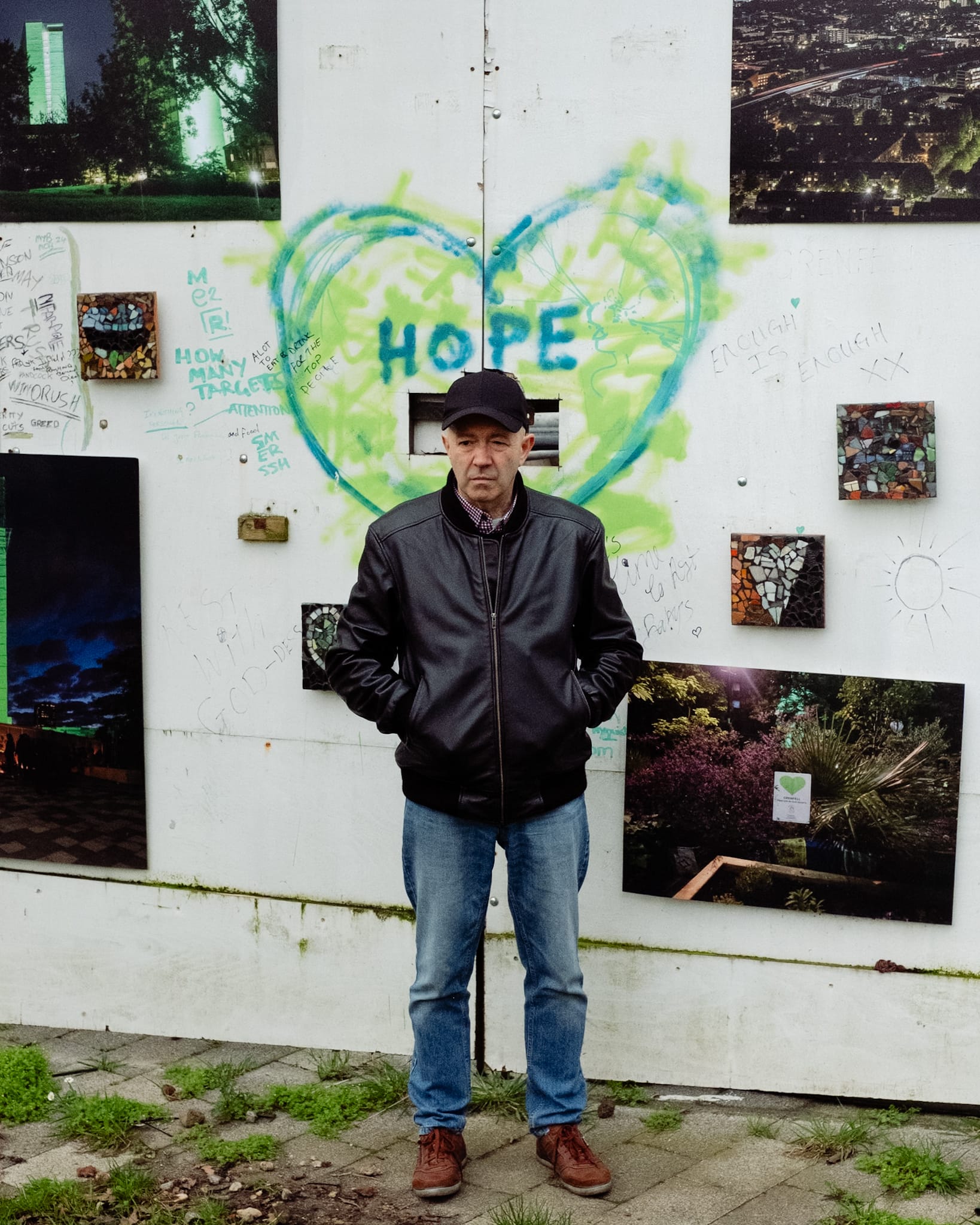
Antonio’s relentless activism conceals an awareness that not even the harshest sentence could ever fully make amends. “I think about the victims, I think about Giannino and Daniela, who had a son. I have a son, and they no longer do. I have grandchildren, and they have none,” he sighs. “How can I stand still? Justice also comes through change: we must make sure that these deceptions never happen again.”