We think that honest, in-depth reporting on our city is essential. Agree? Then sign up for two free editions a week from The Londoner, including a comprehensive Monday briefing and a weekend long-read like the one below.
The first hint is the headless dolls. There are dozens of them, dangling by their limbs (in many cases, a singular leg), tiny arms groping the air as if in search of their missing parts. Though they no longer have eyes, there’s still the feeling that, from the moment I unlatched the gate and stepped into the front garden of this East Dulwich townhouse, I was being watched. Perhaps it was the mannequin heads dotted around, or the masks, or merely the glittering fragments of mirror reflecting my own face from the floor. Or perhaps it was the mosaic sculpture of a grinning giant embedded in the wall, its nose a teapot’s spout, or the tiles painted with faces, some grinning, some baring their teeth.
By now, you’ve probably realised this isn’t your average south London terrace. Known as the House of Dreams, it's the home of artist Stephen Wright, as well as his studio, gallery and life’s work. On the last Saturday of each month, he opens the doors and invites the public inside.
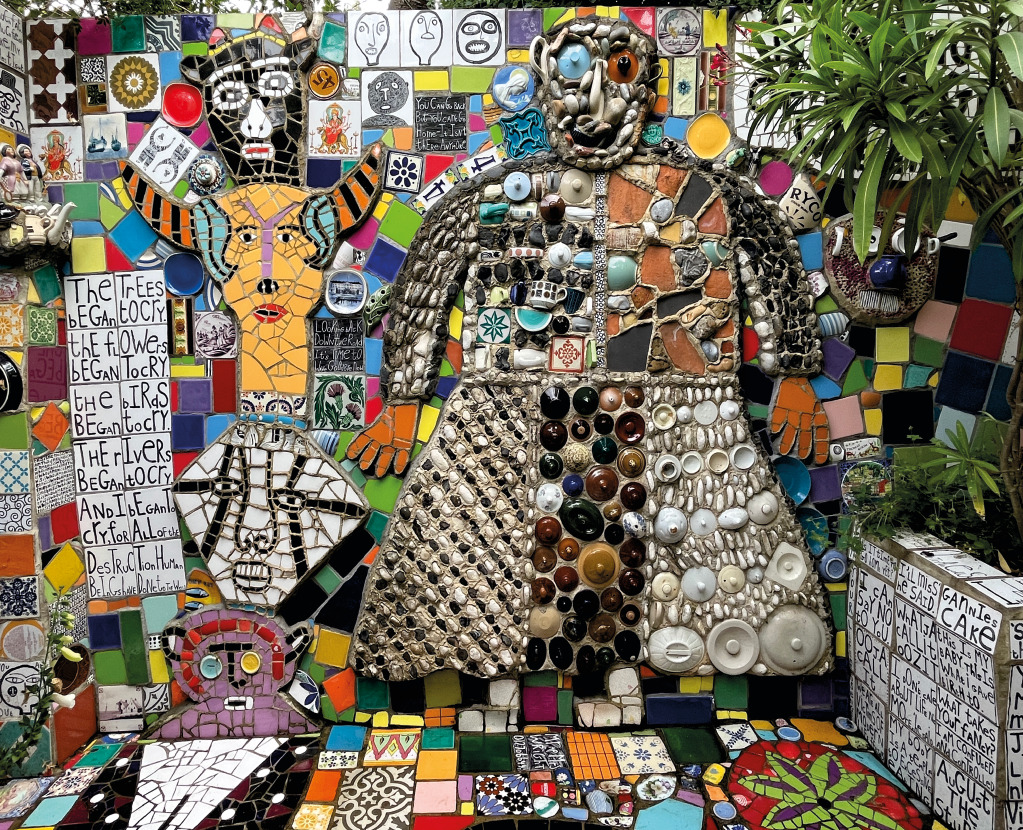
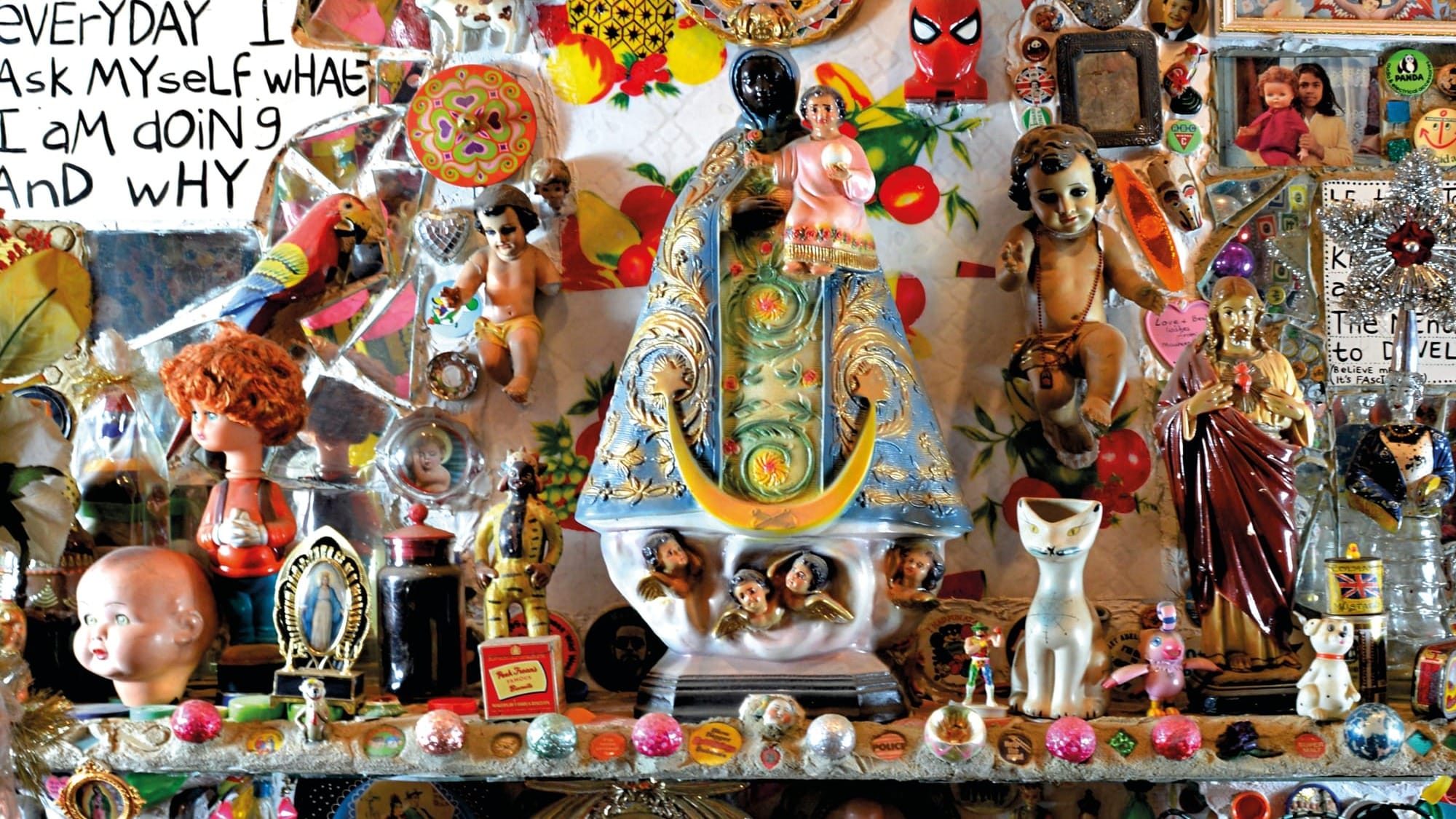
It’s difficult to neatly summarise the House of Dreams, other than to say that every square inch is both Wright's canvas and diary. Across the ground floor, almost every surface is covered with glass eyeballs and fragments of crockery, bottle caps and pennies and shells, pieces of foil and old house keys. There are sculptures of strange, humanoid creatures made from papier-mâché, sporting knitted twinsets and yellowed false teeth. Even the walls themselves bulge and ripple like the supine body of a vast, sleeping giant. And, of course, there are more dolls. It’s a mesmerising and overwhelming experience.
It might be surprising to find something like this in the backstreets of a quiet, leafy London suburb. But open up the front doors of a classic Victorian brick terrace or a 1920s Metroland semi, and you'll find something deeply, thrillingly weird is taking place. The House of Dreams is one of a smattering of properties across the city whose owners are blurring the distinction between the private and the public. They’ve turned their homes into tiny museums — and in the process, turned them into works of art.
Far from the stately columns and shining marble of the British Museum or the V&A, these museums are irreverent and playful. There’s the Viktor Wynd Museum of Curiosities, full of taxidermy and “animal monsters”; the Ealing Doll House Museum, with its cabinets stacked full of figures from around the world; and the Nunhead Museum, a pastiche of Victorian curators’ penchant for colonial plunder. In all of these cases, their diminished scale becomes part of the fun, rather than a limitation.
‘It’ll never be finished, until I’m finished’
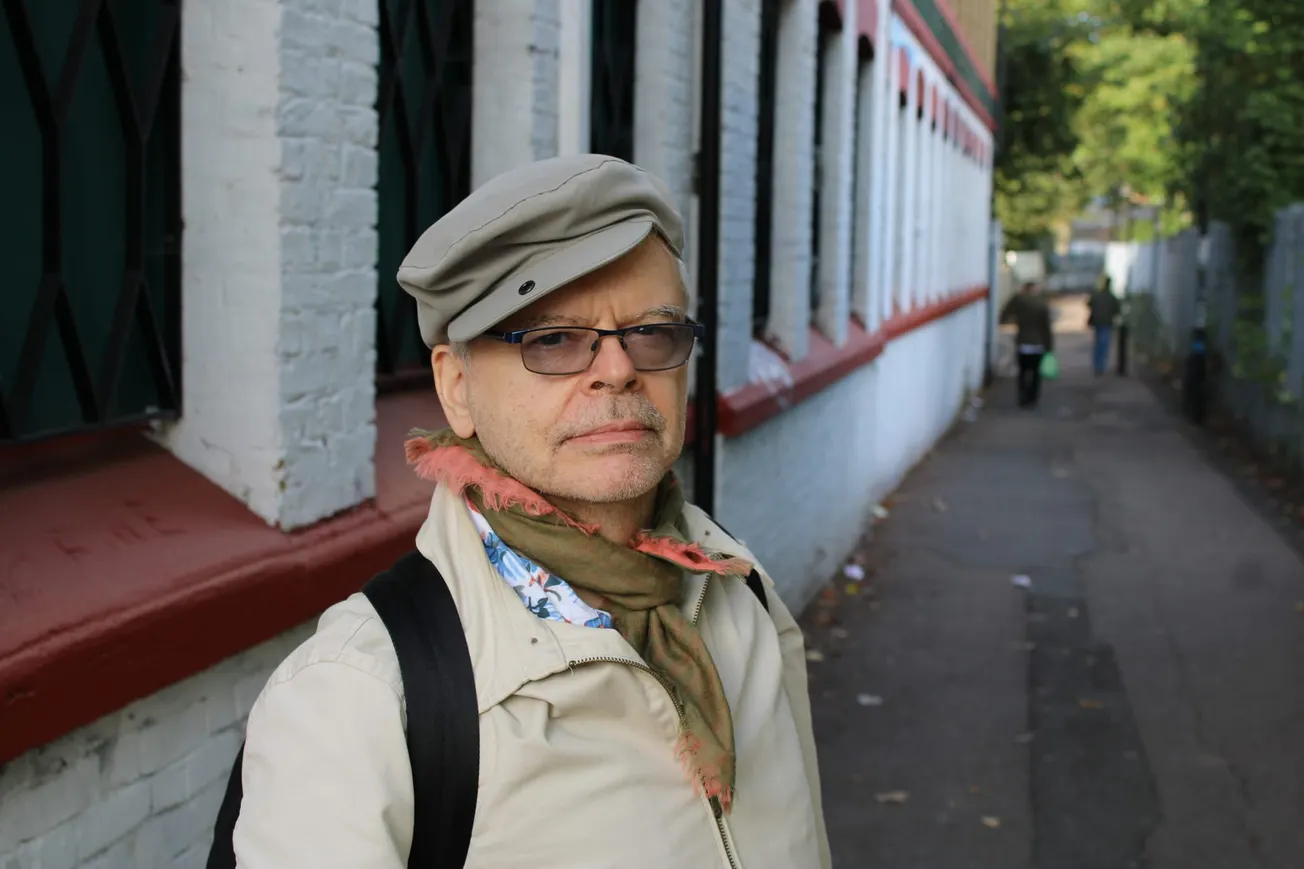
At the centre of the House of Dreams are Stephen and his husband Michael Vaughn, who I meet on a blustery Monday at the end of March. I’m handed a large cup of tea before Stephen leads me to the back garden, where a giant clay figure, part Clockwork Orange, part field scarecrow, stands sentinel. Today, the artist is dressed in shades of blue — indigo, lapis, midnight — though it’s his eyes, with their Yves Klein intensity, that immediately stand out. He’s warm, wryly funny, and has a clear gift for storytelling.
He tells me that the idea for the House of Dreams came to him in 1998, when he watched Journeys Into the Outside with Jarvis Cocker, a programme on outsider art around the world: “I just thought, ‘Oh my God, these environments are amazing.’” Soon, he and his late partner, West End costume designer Donald Jones, were travelling to France to explore the country’s rich tradition of Art Brut.
After years spent designing textiles and stationery for a living, the house was Stephen’s way of creating something that would last, something “more substantial,” as he puts it. “I designed a lot for throwaway items, like a sheet of paper or a card, which is very nice, but then it goes in the bin when it's been used.” He and Donald conceived of the house as a way to create their legacy, working together to create some of the first sculptures.
The idea took on a tragic resonance when Donald died in 2004, after a period of ill-health that had seen work on the house take a backseat. And then, within a space of 18 months, both of Stephen’s beloved parents also passed away. He felt utterly abandoned. “I had a year off from the House of Dreams… I ran away to Mexico,” Stephen tells me in his precise, steady voice. ”I wasn't sure whether I wanted to come back again, or work on this ever again. And then I met Michael, who encouraged me and was very supportive, and I was ready to start again”.
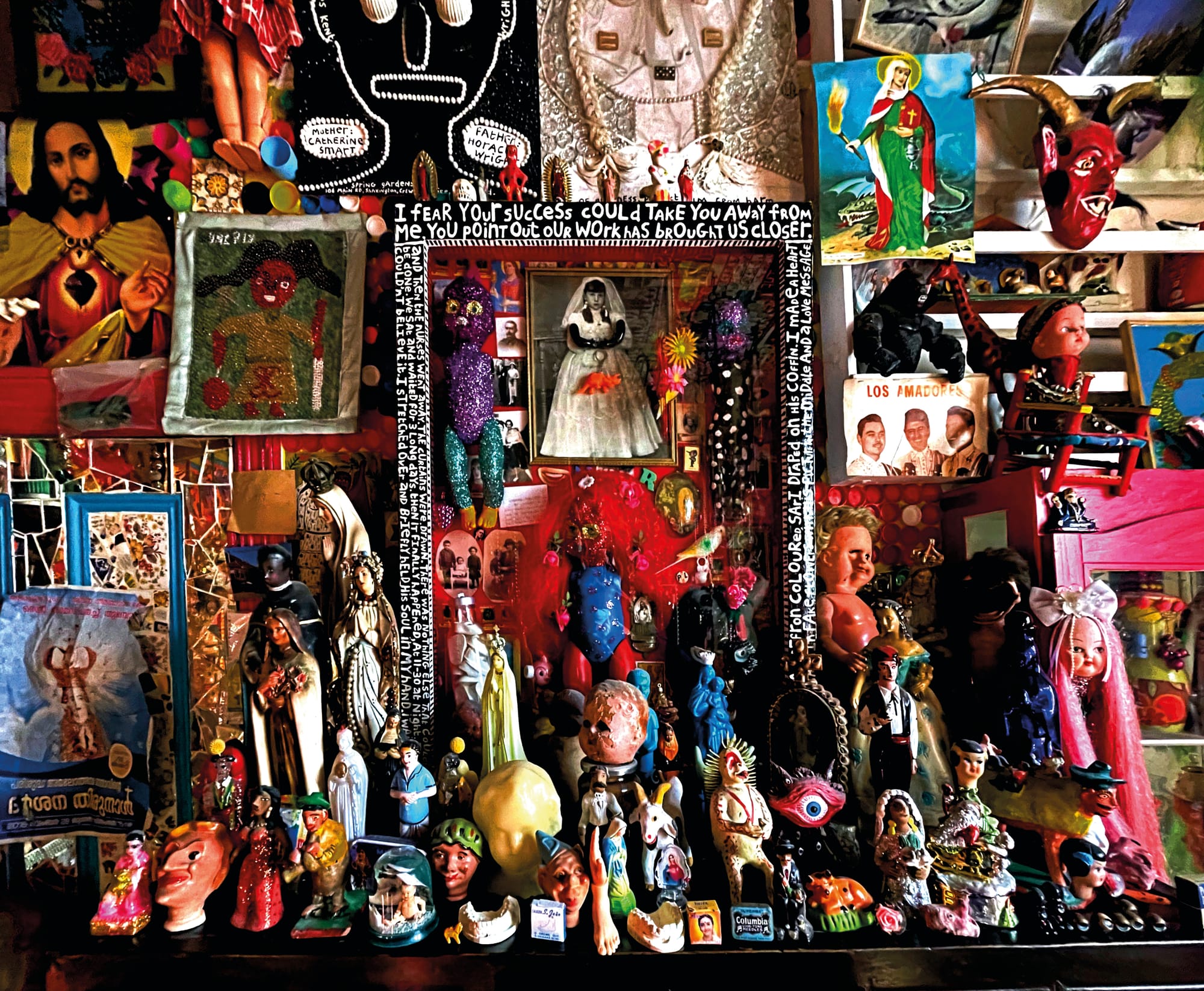
But the trauma of this period changed the house — and the art within it — irrevocably. Before, it had been more of a decorative project; after, as Stephen says, “it became a vehicle for expressing my loss and just getting rid of all of the stuff I was feeling”. He incorporated those he’d lost into his sculptures: using his parents’ clothes, or daubing white paint to mimic the calamine lotion he would rub onto Donald’s face when he became ill. He began to create what he calls “memory boards”, stream-of-consciousness testimonials of events and his feelings, which line much of the hallway and ceiling.
The memory boards describing Donald’s death were written almost immediately after Stephen returned home from the hospital where his partner had passed. Painted in spare white script on a black background, they are the emotional core of the house, an almost unbearably raw documentary of love and loss. “The house turned into a sort of therapy environment,” Stephen says simply, twisting the toes of his Doc Marten boots inward. “The house is a sort of womb, a safe womb in a world that is difficult to live in… It’ll never be finished, until I’m finished.”
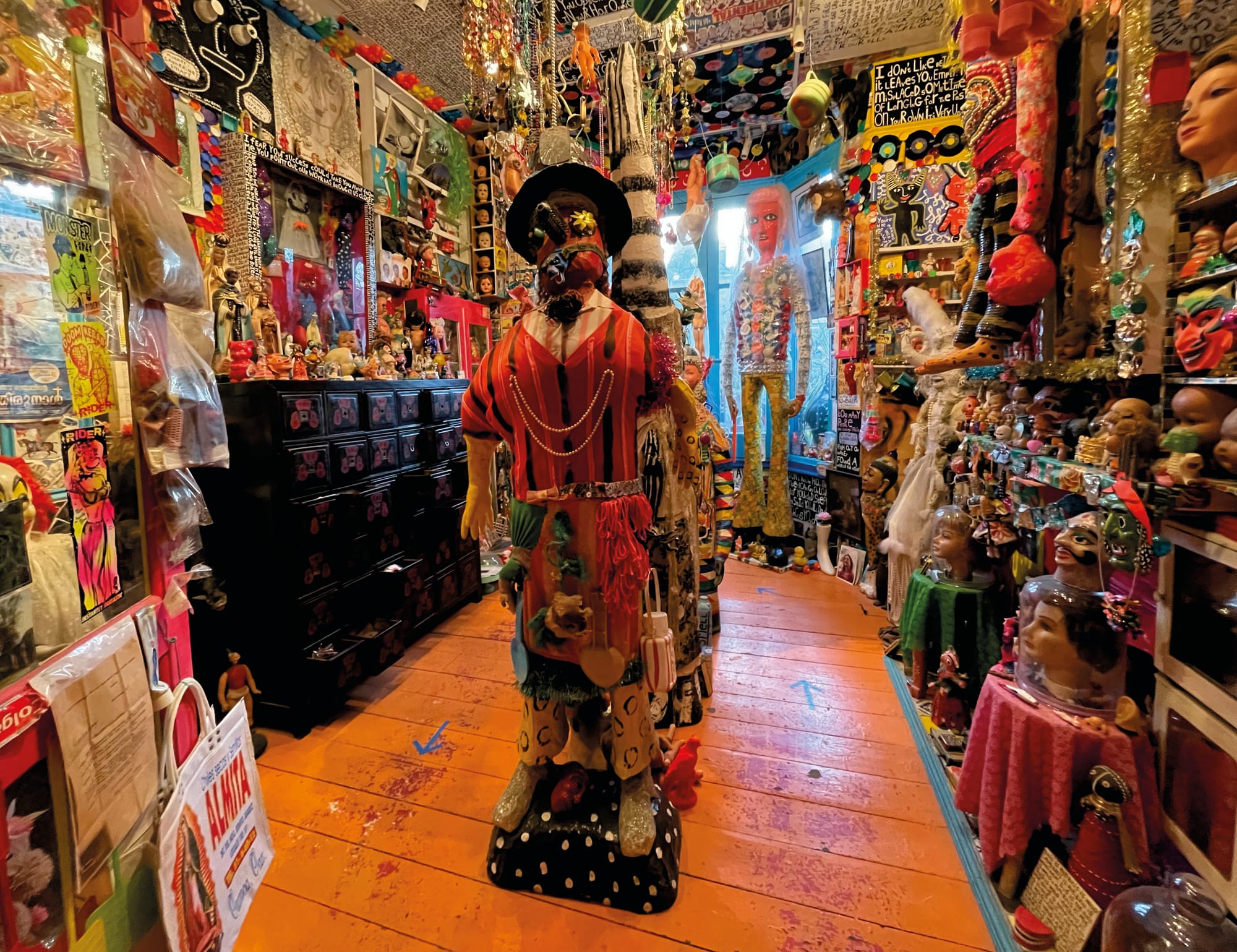
For the visitors who come from far and wide to experience the House of Dreams, its allure lies precisely in this fusion of public and private: open to strangers, but cocooned away from the world. Stephen tells me that people bring offerings, “usually from loved ones that have gone, like love letters, hair, teeth.” He has a drawer full of reading glasses. In this way, they become part of the house: immortal, safe. Though dealing with this kind of emotional intensity takes a lot out of him, he understands: “People come here because they have a problem quite often in their lives, and they open up to me. I feel like a therapist sometimes. It's very interesting, and it's very exhausting. I like it.”
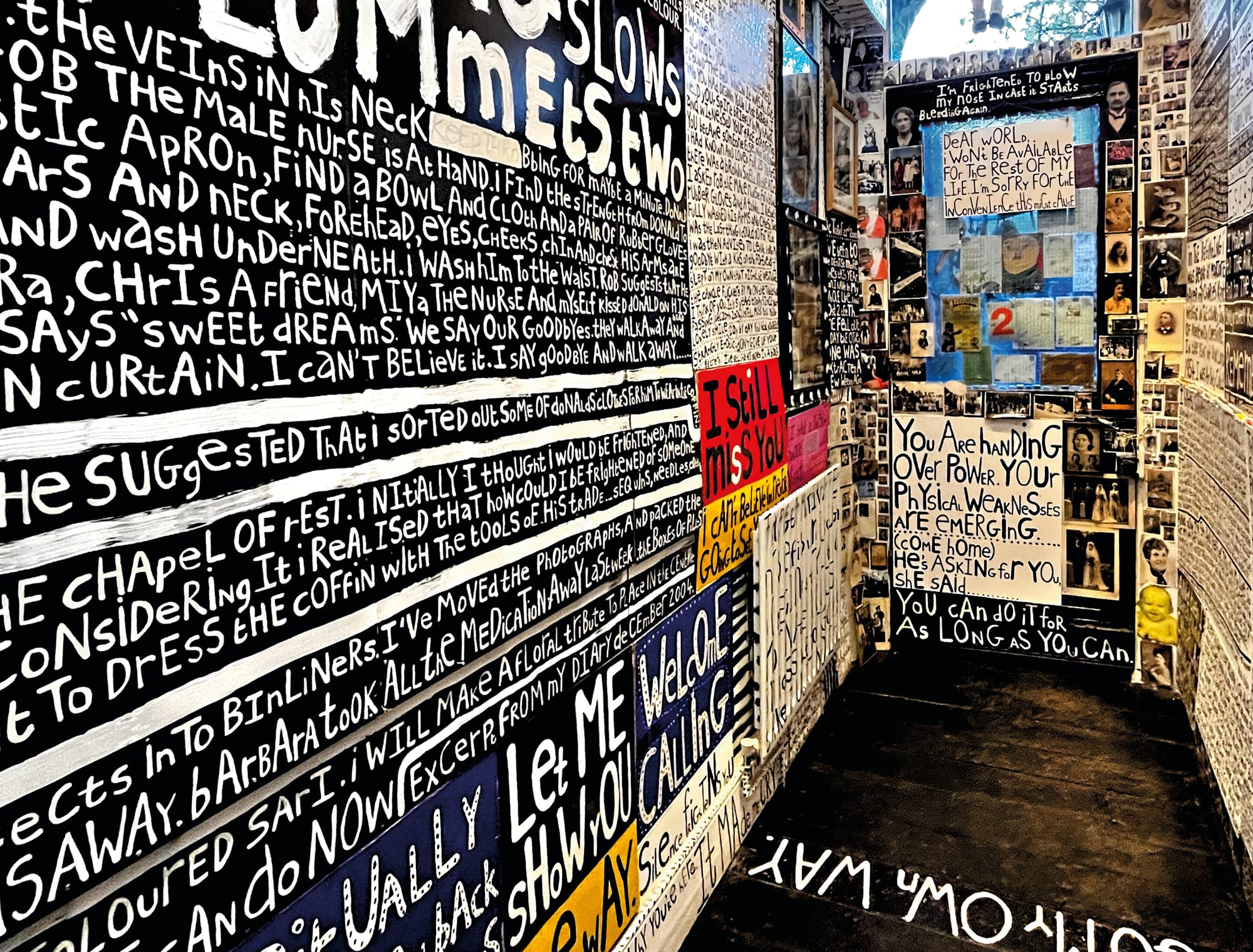
But how do you actually live in an art project? Aside from a small office and kitchenette, there isn’t any furniture on the ground floor of the House of Dreams. “It's quite demanding to live here,” Stephen admits, as behind him the wind rifles the leaves of the fig trees. “It’s very hard to relax.” He considers this a worthwhile trade-off. “This house is about making work. There is a bed and a kitchen upstairs, and a living room, but I don't really use it that much, really.” When he wants to unwind, he says, he goes to Michael’s house.
‘I go to lots of carboot fairs, that's where all this junk comes from’
The next day, I find myself in Nunhead, only a couple of miles away from the House of Dreams. It’s surprisingly humid, and the air has a static-y, rubbed-balloon feeling that suggests a storm is on its way. The houses here are handsome and bay fronted, with a solid, child’s-drawing dependability to them. But there’s an indicator that something else is afoot: a cork board with the sign “Nunhead and District Museum and Art Gallery”. I’ve found what I’m looking for.
First staged 19 years ago, the Nunhead Museum is an annual event, brought to life only for a single long weekend to coincide with the local Telegraph Hill Festival. The brainchild of David White and his late wife, Jill, it came about through chance. “[The festival] knew I used to sort of potter about with stuff, making stuff, building stuff, doing film nights in my shed and they wanted me to do, you know, an open studio,” David tells me in his Yorkshire accent, still pronounced despite the decades he’s spent in London. “I had the greed of wanting my own art gallery, and then I thought, ‘Why just have an art gallery? Why not have a museum as well?’ And that's how the museum was born.”
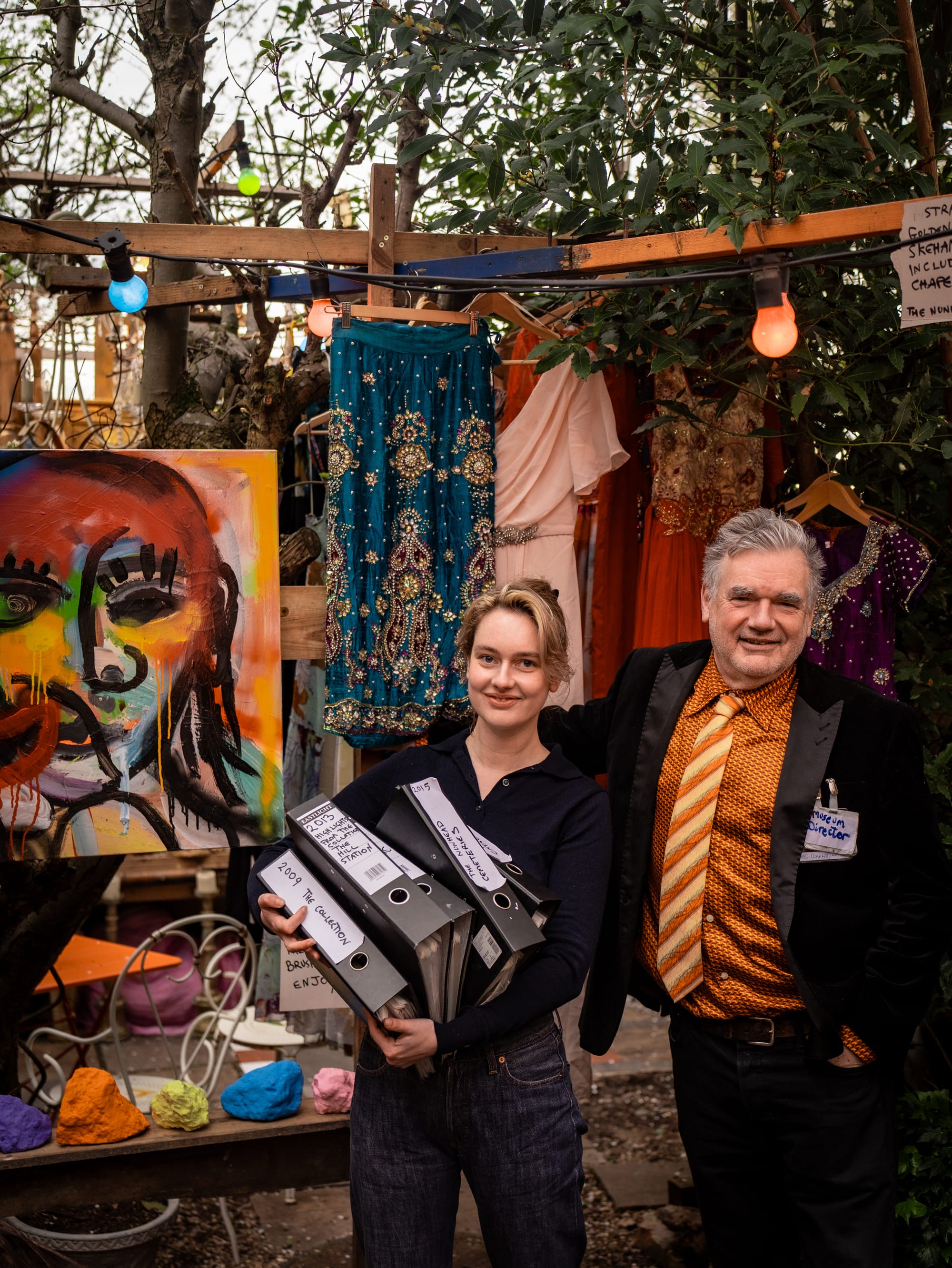
Endlessly affable, with a wide, sunbeamed smile, David is dressed for the role of eccentric museum curator: a glossy, burnt orange shirt and black velvet jacket. I’m sitting with him and his daughter, Florence — an artist who assists with the curation of the museum — at a table in the back garden. Right now, though, this area has become a kind of makeshift gallery wing, crafted out of plywood and hung with abstract portraits.
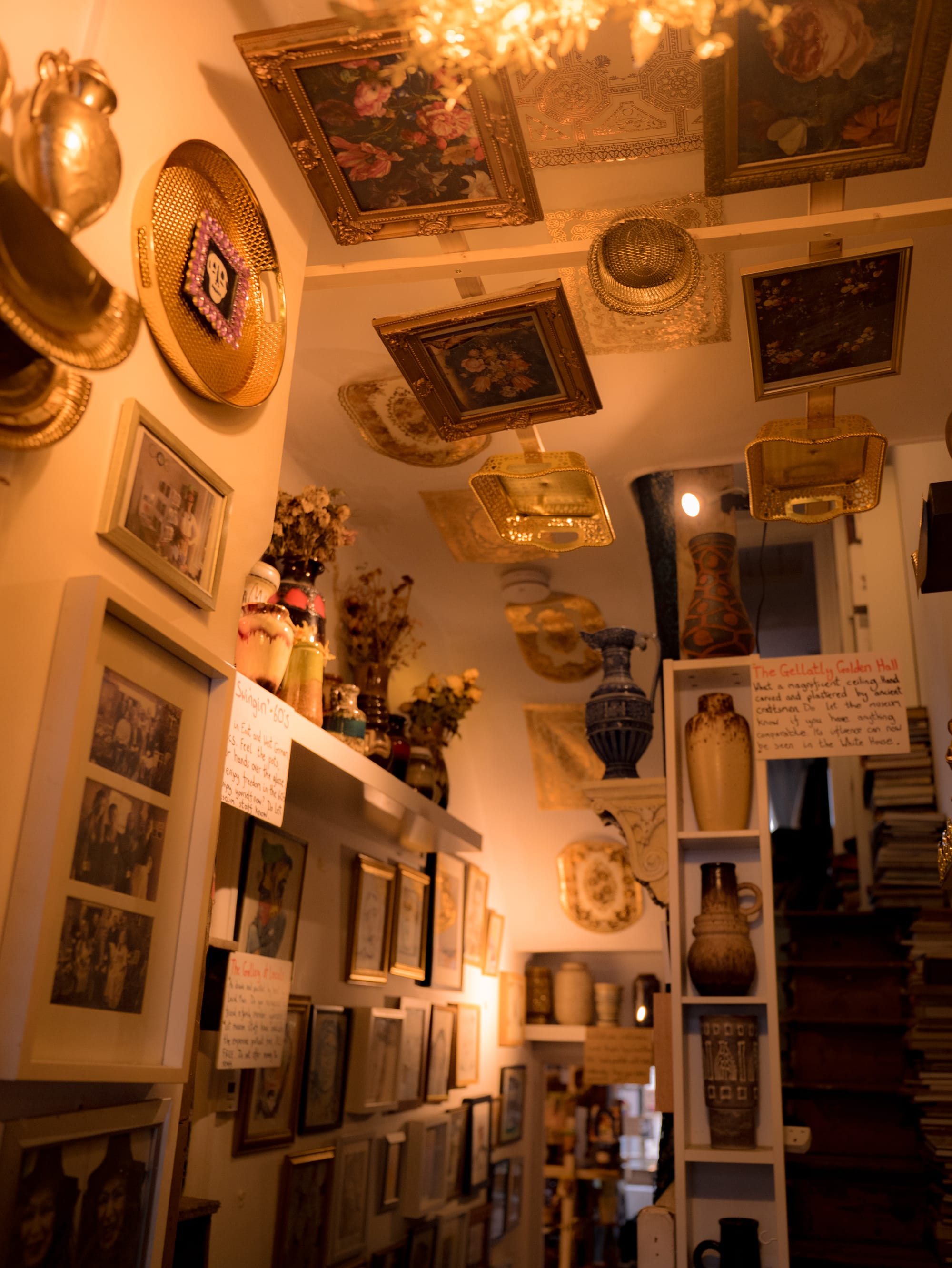
“So the house is a Victorian terrace house, but the pretence was that it was the mansion of Sir George Gellatly, Victorian philanthropist,” David tells me, moving his hands through the air as if conjuring up the palatial villa of his imagination. “And of course there's no such person.” David has a background working in the culture sector and Jill was a curator at some of the capital’s most esteemed art institutions; their invented museum acts as both a loving pastiche and a genuine critique of institutions established by Frederick Horniman and Henry Tate. “Our argument is that, while people saw him as a philanthropist, we were way ahead of the time — he was a pillager!” David says of Sir Gellatly. “Obviously, he was involved in slavery, which is how he came up with this mansion as well.”
More than anything else, the thing that underpins the Nunhead Museum is a commitment to narrative. Each year David selects a new theme — in the past, conceits have included “catacombs” and “private altars made public” — to craft a story that sees the area, and wider society, reflected back at us in a funhouse mirror. Fresh elements of Nunhead’s fictional history are constantly being unearthed and displayed, from glassworks to palaces to simply “the pit”. And previous iterations have convinced visitors that the house was going to be demolished and replaced by a Tesco Express, as well as that elephants used to tramp through Nunhead Cemetery.
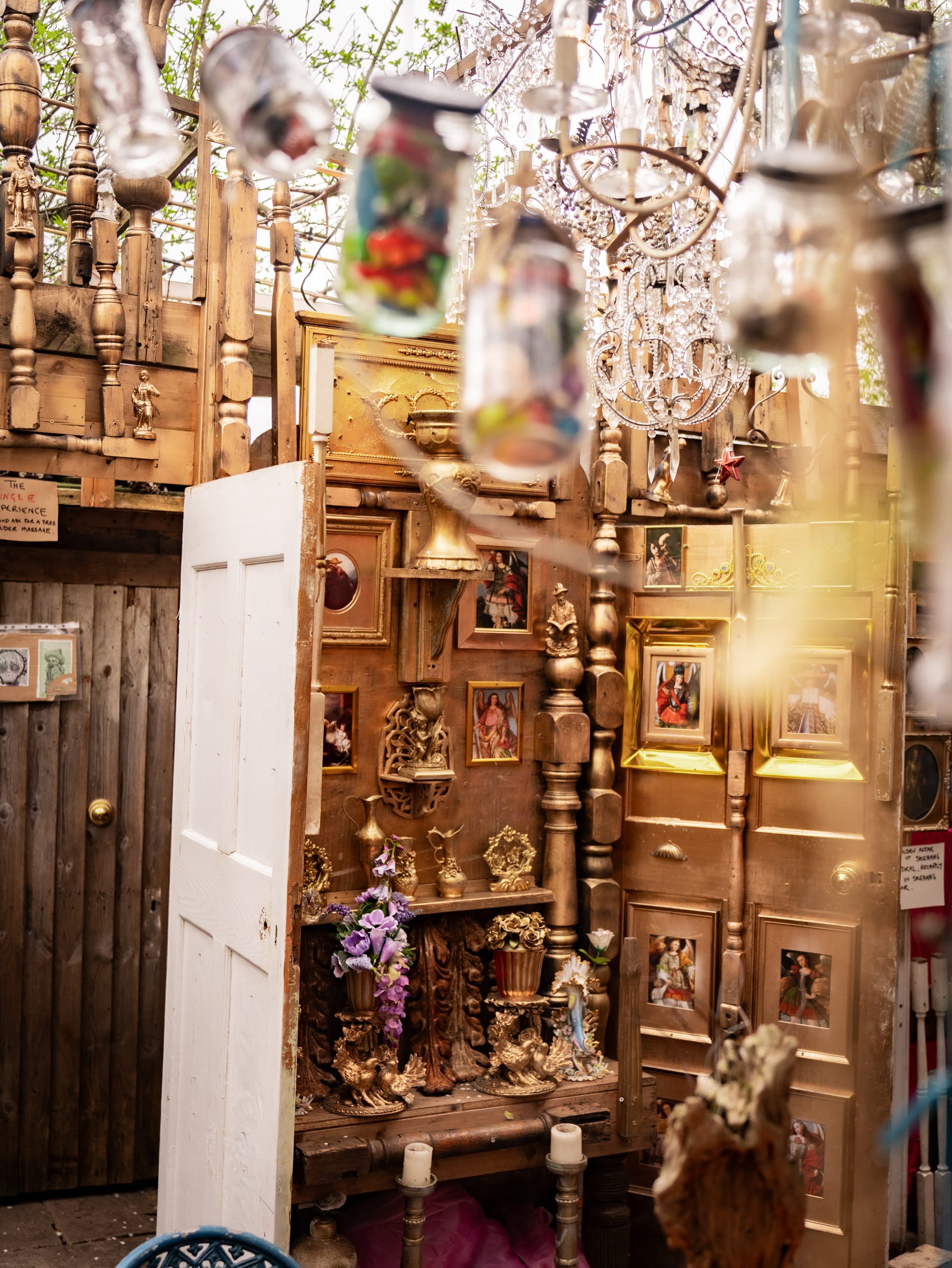
This year, the outhouse boasts an installation themed around waterfalls and mirrors, a functioning bar, a kitschy living-room where Czech filmmaker Jan Švankmajer’s absurdist black comedy Conspirators of Pleasure plays on a loop, a “Nunhead Alhambra” full of masks, and an ornate, gilded altarpiece from “St Skehan’s Cathedral” (named after the immensely popular Irish pub up the road). In the “Forest of Frocks”, an entire wardrobe’s worth of second-hand evening gowns which dangle, silky and susurrous, from a tree.
If you're after more high-quality local journalism, and want to get access to exclusive subscriber-only pieces, why not join up as a Londoner member today?
You'll be able to read our deep dive into who really controls the West End, as well as our investigation into a mysterious new frostbite injury plaguing London hospitals.
You'll also get access to our entire back catalogue of amazing stories and, better yet, you'll be supporting our mission to give this city proper local journalism.
Inside the house, there’s a “golden hall” (created with metallic plastic trays and gold doilies) and a long “gallery of locals” drawn by David. Tongue-in-cheek interpretative texts take the stiff, mannered cadence of the Victorian English museum to absurdist extremes. The entire thing is imbued with a sense of mischief and irreverence, along with a genuine passion.
Unlike the House of Dreams, cohabiting with the Nunhead Museum is relatively easy, partly because of the transitory nature of the project, and partly because the conceit allows the space to warp and change at will (for instance, David’s other daughter is currently staying with her boyfriend, so those rooms have supposedly been barricaded by a Nunhead squatting collective). But much of the museum has always been stored under his family’s beds when not in use. “I go to lots of carboot fairs, that's where all this junk comes from,” David tells me, gesturing around. “This year I've tried to give a lot of stuff away. I need to, it ends up in boxes. A lot of the wood comes down, and it'll get burnt over the winter.”
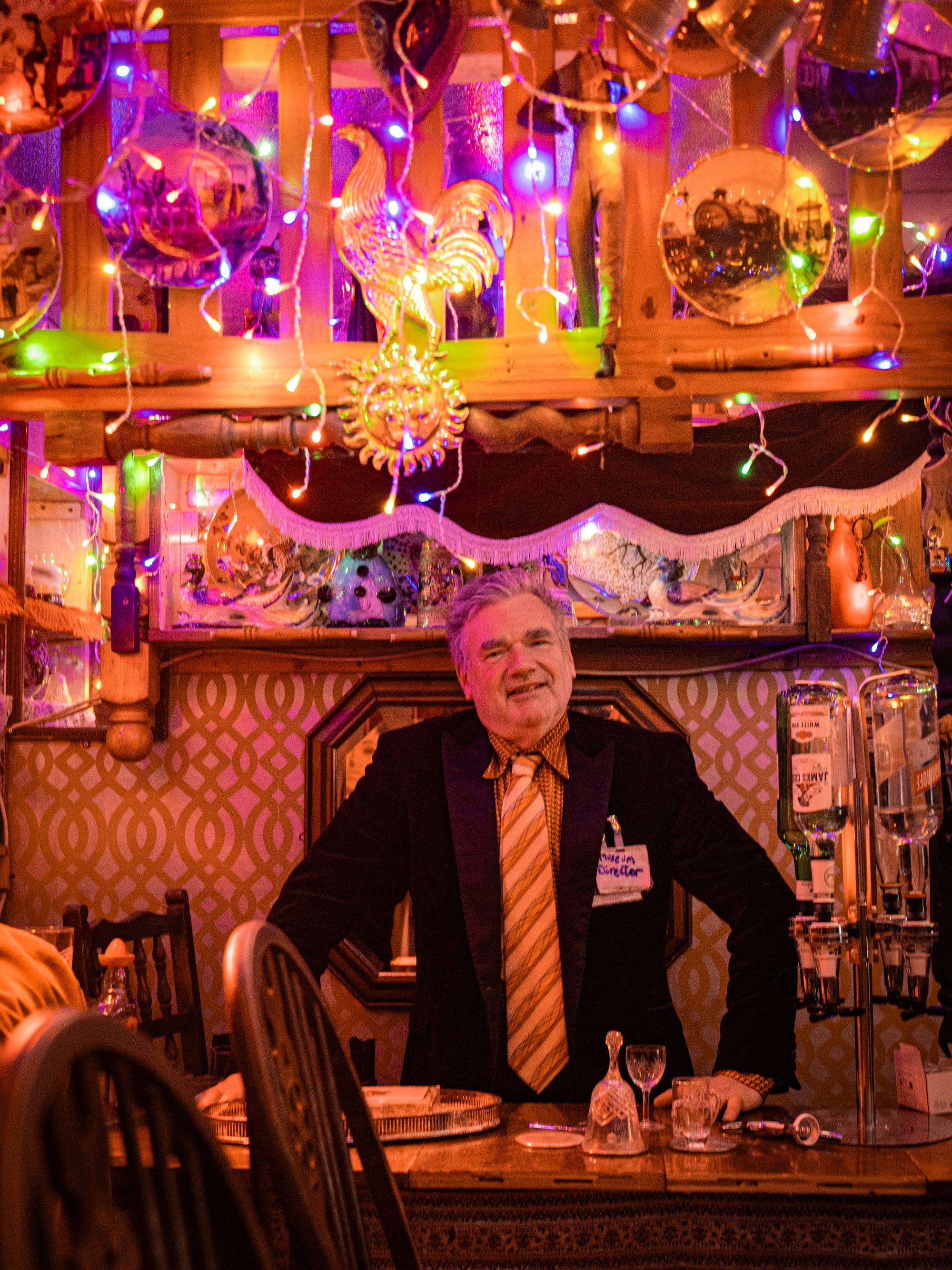
Florence reckons around 300 people have come to experience the believe-it-or-not wonders on show in this March’s iteration. “I think people like the absurdity of it,” she says, her eyes flitting over the garden-museum as she thinks, adding that the community-focused, party atmosphere of the museum is also a draw. “One of my friends this year brought some people I didn't really know very well, and they were saying ‘Oh, it's like Glastonbury.’” She laughs. “It's not obviously not to that degree, but it's an immersive world — and it's also a fun night out, and it’s free, and you get given stuff.”
Of course, these two mini-museums are only a sample of what the city has to offer. But while the house museums I visited were different in almost every respect — tone, aesthetic, purpose — I was struck by the passion and enthusiasm their proprietors had for welcoming strangers into their live-in artworks.
While the capital’s housing crisis means few people are now able to turn the place they live into an art installation, it’s clear that doing so provokes a dialogue impossible to replicate in a traditional institution. The result is an atmosphere of subversion, intimacy and good old-fashioned fun. Perhaps they’re the weirdness this city needs.