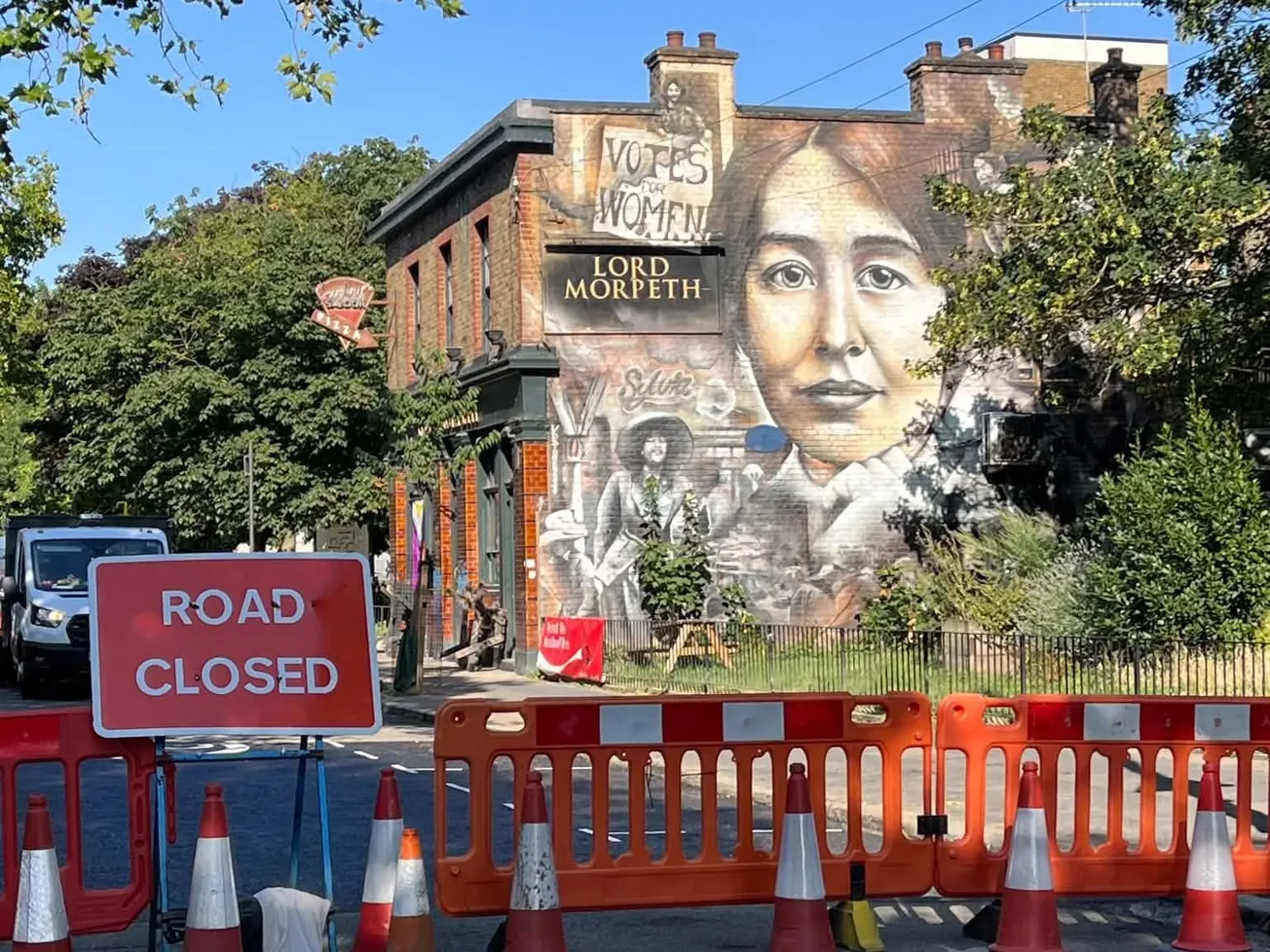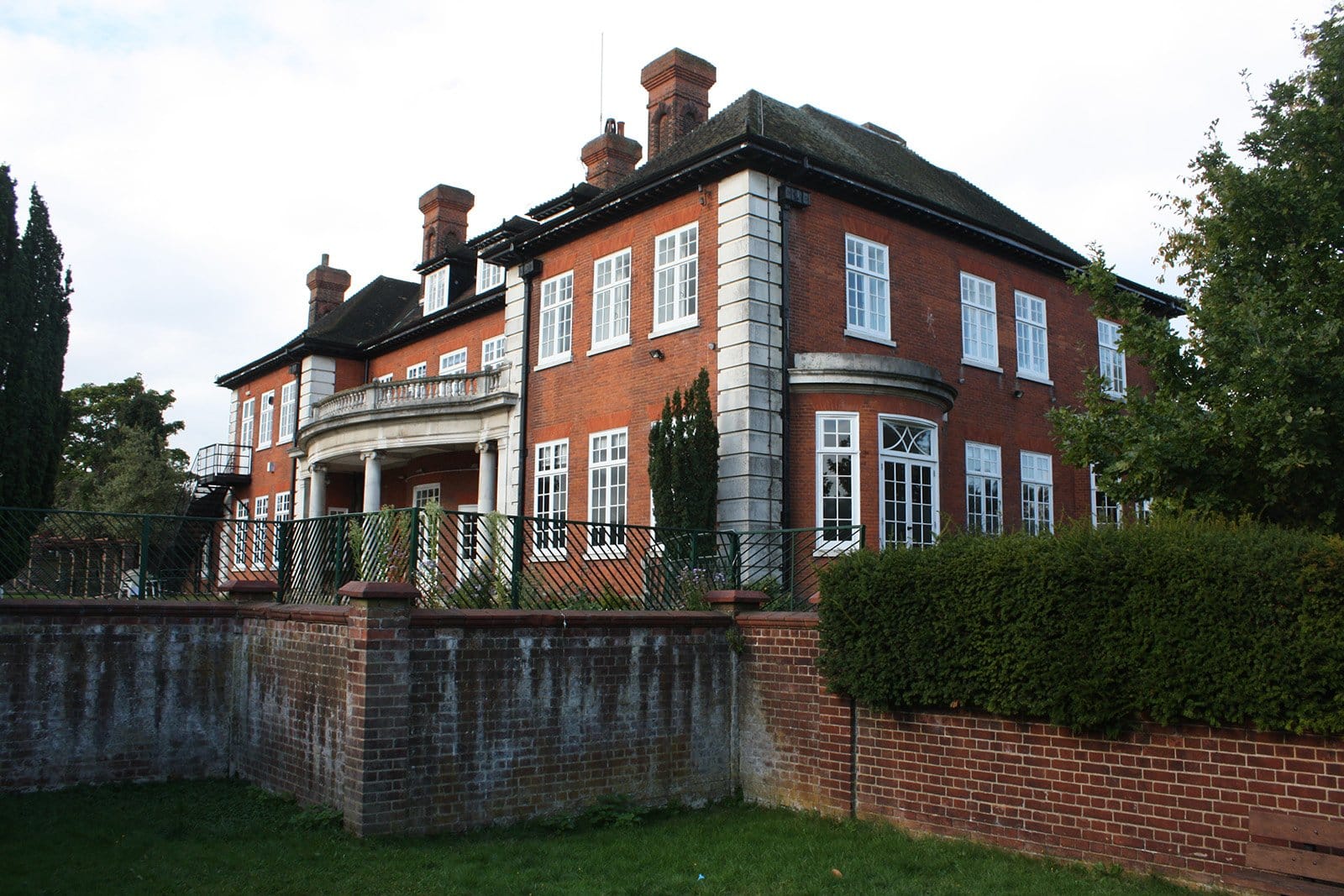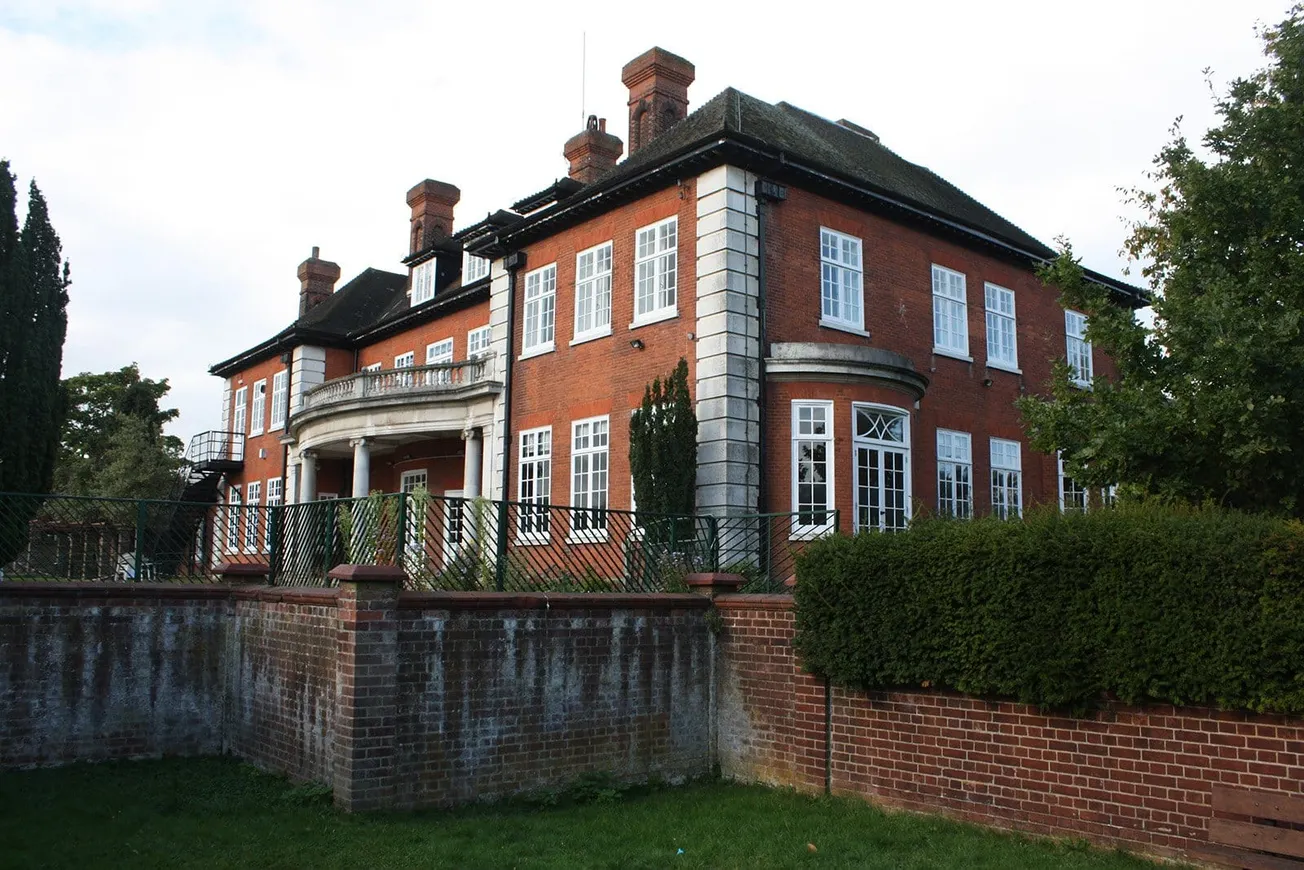
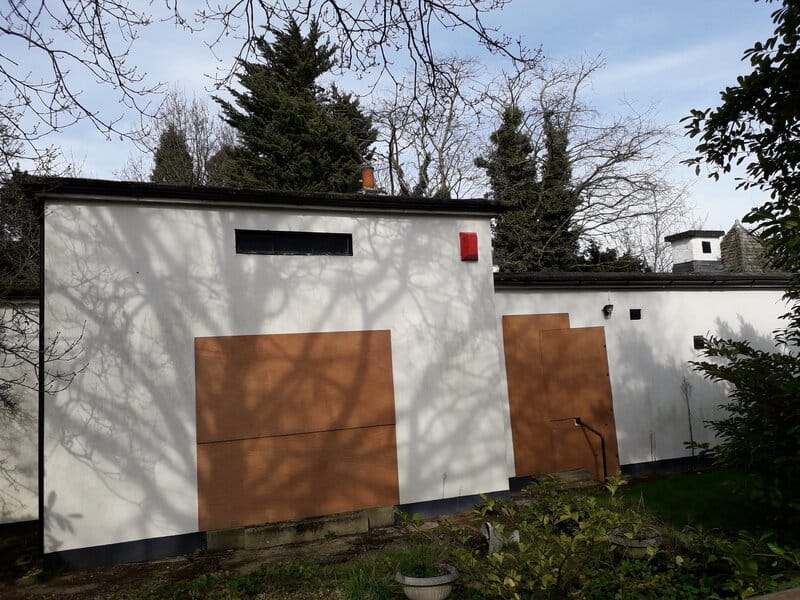
Boris Witzenfeld, the affably deadpan manager of Shrewsbury House at the crown of Shooter’s Hill, raps his knuckles against the concrete wall of its Brazilian Jiu-Jitsu studio, demonstrating its evident strength. "Built to withstand a nuclear blast," he tells me on our tour, and he isn't kidding. This converted Cold War bunker, pleasantly cool on a 34-degree day, is one of two erected beside the quaint manse. The other structure capable of surviving societal annihilation is just over the fence: Green Garth, derelict for over a decade, a former air wardens’ base passed from the wartime state to the council to a solitary resident, now vacant and, by all accounts, unsellable. Not unless you want to fight the locals for it – as Greenwich Council have discovered. People up here are used to defending their territory.
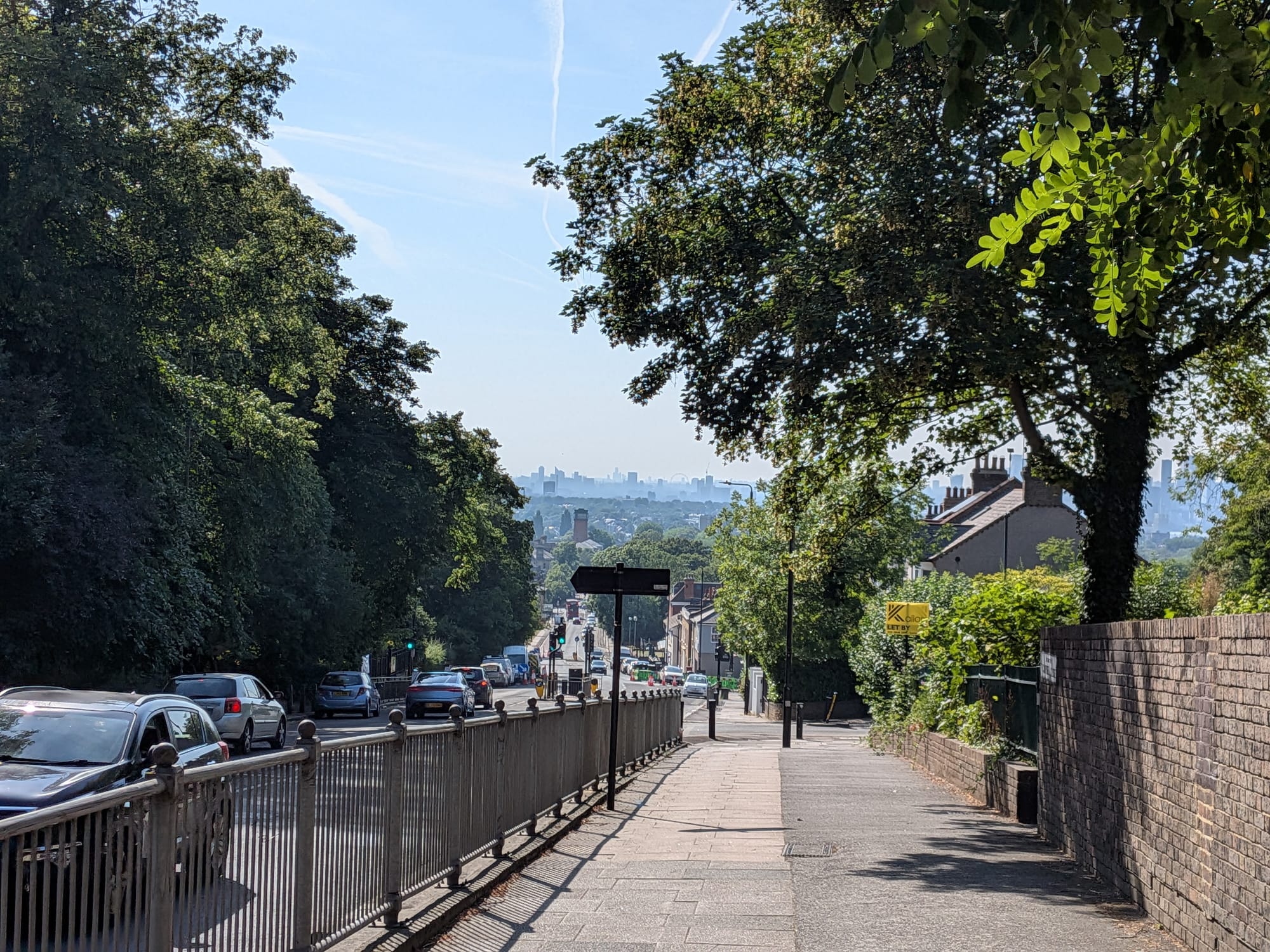
The view from the top of Shooter’s Hill is so steep as to transform London into San Francisco below; heat rising in hillocks across Blackheath, Greenwich, the Thames, the Shard, the City. All of the capital heaves into view on the approach over the hill, crossing a strip of road that has formed part of the country's aorta for over two thousand years: Watling Street, Old Dover Road, the Pilgrim's Way, the Green Chain Walk. Throughout that time, invaders, traders, monarchs, preachers, soldiers, artists, writers, magicians, politicians and psychogeographers have sought to get the measure of Shooter’s Hill. Generally, they’ve left without getting everything they came for. Few hilltops on the planet have been quite so contested; few slopes and roads more feared or revered in the history of our nation.
I can't pretend to be a local – I arrived from nearby Lewisham, and like so many other tedious men in the creative industries, 'got into' Shooter’s Hill through the writing and walking of Iain Sinclair and literal wizard Alan Moore, who wrote the peerless biography Unearthing about his mentor, occultist and comic book artist Steve Moore, who was born, lived and died almost exclusively on Shooter’s Hill. ‘
Both Moores – unrelated, but master and student – practised magic here, communing with Selene, the Moon Goddess to whom Steve devoted his life. Anoraks like me can often be found attempting the so-called 'Psychic Circuit', plotted by Alan to commune with Steve – especially as it starts and/or ends with a visit to The Bull; the self-proclaimed “Highest Pub In London” which has stood at the top of Shooter’s Hill since 1749, spending nearly three centuries failing to shake its reputation as, legend has it, Dick Turpin’s den of iniquity.
I sat at the bar for an afternooner, watching Argentina play Egypt as regulars derided Farage's Clacton gambit: a limited sample pool, sure, but good evidence for not judging a Bull by its colour. A playfully gruff landlady flicks soda water at a regular for "being a cunt – not just now but every time I'm on shift." Messi misses a penalty, and Egypt look unbeatable as I leave. Had I stayed, I'm sure the moon would've intervened in their second half.
Flanked by ancient woods and greenery, the hill's name purportedly comes from archers refining their skills here in the 13th century. Bronze Age Britons buried their dead here; of the six known pits, only one still survives, the Shrewsbury Tumulus – the rest levelled in the last century to make way for homes and progress. Caesar crossed Shooter’s Hill when he tried to conquer Britain, as did Henry VIII, who turned the hill into a 200-strong staging of Robin Hood for the delight of Catherine of Aragon. Up came the blazing beacon that signalled the arrival of the Spanish Armada in 1588; up came the criminals and highwaymen who found a bottleneck of hapless, rich victims to shake down. Up, too, then down again, went those same criminals, hanged from gibbets and left to wither and rot as warning. To step off at Shooter’s Hill was asking for trouble. Not just in fact, but fiction, as with A Tale of Two Cities, Dickens' great social novel whose story begins with paranoid travellers disembarking in panic as their stagecoach is grounded upon the muddy hill.
Archery would not be the only weaponry to leave a mark on the hill: Shooters Hill was London's last line of defence against a feared German land invasion – the Home Guard were duly equipped with fougasses (flame-mines) dug in alongside flamethrowers to greet an invasion that never came, like the road to the Demilitarised Zone on Korea’s 38th parallel.
Fascism of a different form took root on either side of the hill after the war. Welling played host to the BNP's first permanent headquarters; Eltham became synonymous with 'white flight' and racist street attacks that came to a head with the murder of Stephen Lawrence on Well Hall Road. But today, the hill’s councillors are as Green as the woods surrounding them – directly down to the latest battle for Shooter’s Hill, played out last year, and rumbling on yet.
This story is free to read. You just need to sign up to join The Londoner's mailing list. And why wouldn't you? You'll get our journalism in your inbox the second we publish, keeping up to date on this and all our stories. No card details required.
This story is free to read. You just need to sign up to join The Londoner's mailling list. And why wouldn't you? You'll get our journalism in your inbox the second we publish, keeping up to date on this and all our stories. No card details required.
Already have an account? Sign In