Dear readers — This is the kind of story only The Londoner could tell: a beautiful, utterly human portrait of a man on the margins of our city. Ionel’s story may feel distant to those of us living within the 32 boroughs, but it’s only thanks to him — and other low-paid, insecurely employed workers who, like him, live at caravan sites on the fringes of the capital — that the city continues to function. I hope you enjoy it, and please let me know in the comments if you do.
On another note, all of us at The Londoner were so pleased to see the response to our piece uncovering the billionaires who own London. It was a huge labour of love to investigate it all, so it’s heartening that it’s quickly become our most-read piece ever, with thousands of likes and shared on Twitter. It’s also sparked a debate about the power and influence the rich have over our city. As commenter Nick Stewart put it: "In a sane society, all of this property speculation would be illegal." If you haven’t already read if yet then you can do so do so here — it’s a real barnstormer.
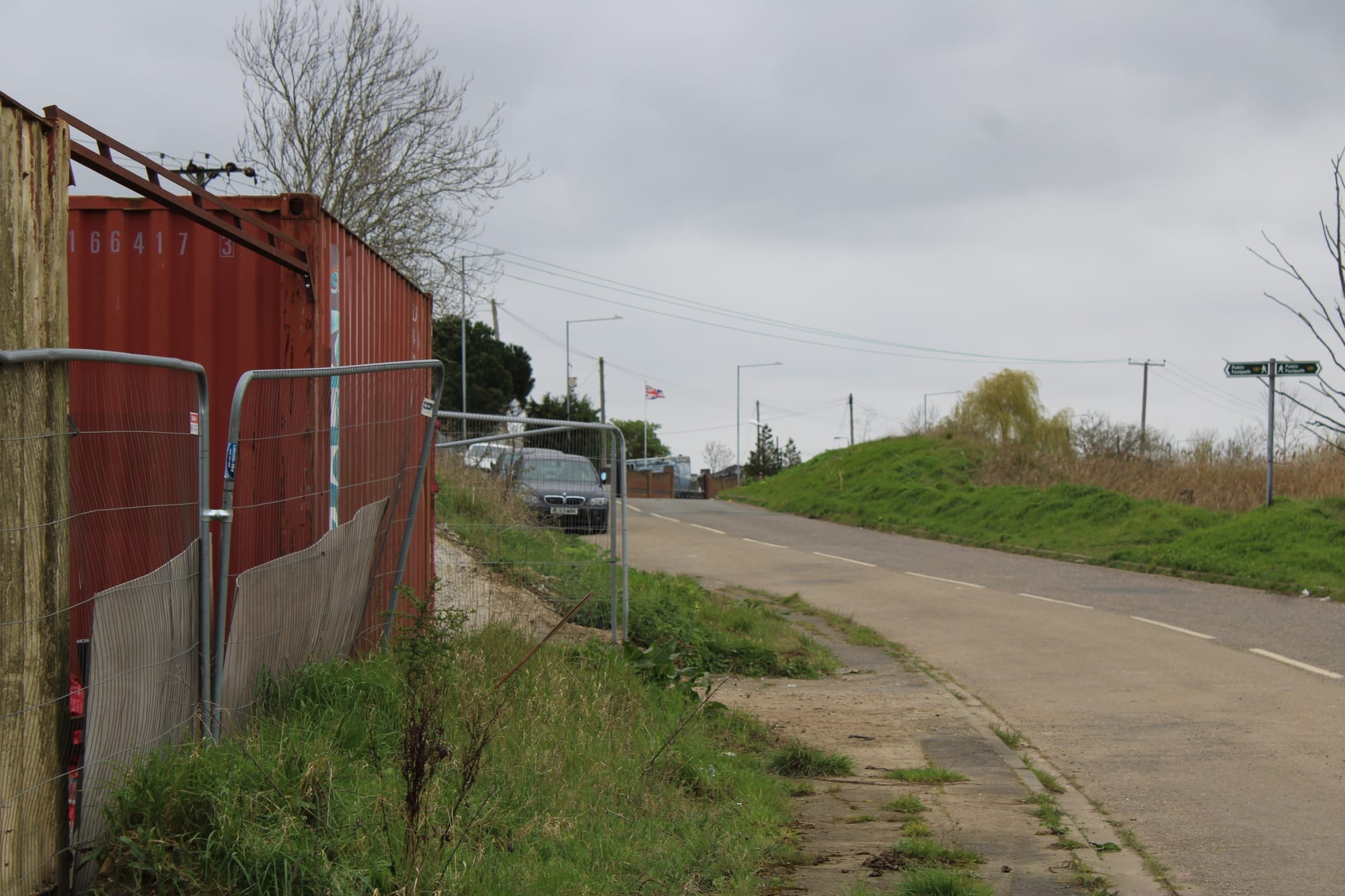
For the first time in the year he’s lived at Buckles Lane, Essex, Ionel opened the green metal gates of his caravan park and turned right.
Pulling on a thin imported cigarette as he walked, grey hoodie domed over shaved head, he listlessly kicked at the concrete as he walked. He ventured only a few hundred metres down the road, but it was all brand new to him: the fields rising up on both sides with thin winter trees starting to flower, the bored looking horses pawing the caked mud.
Normally, Ionel and the other few hundred Romanian men he calls his neighbours turn left, out past the caravan parks and stashed fairground rides, setting out on the long journey to their jobs in London. They work in construction and whatever else needs cheap hands, no questions asked. You might not be aware of them, tucked away in what was once Europe’s largest caravan park, but they’re there: the people the city needs to keep its money flowing, its towers crawling into the sky.
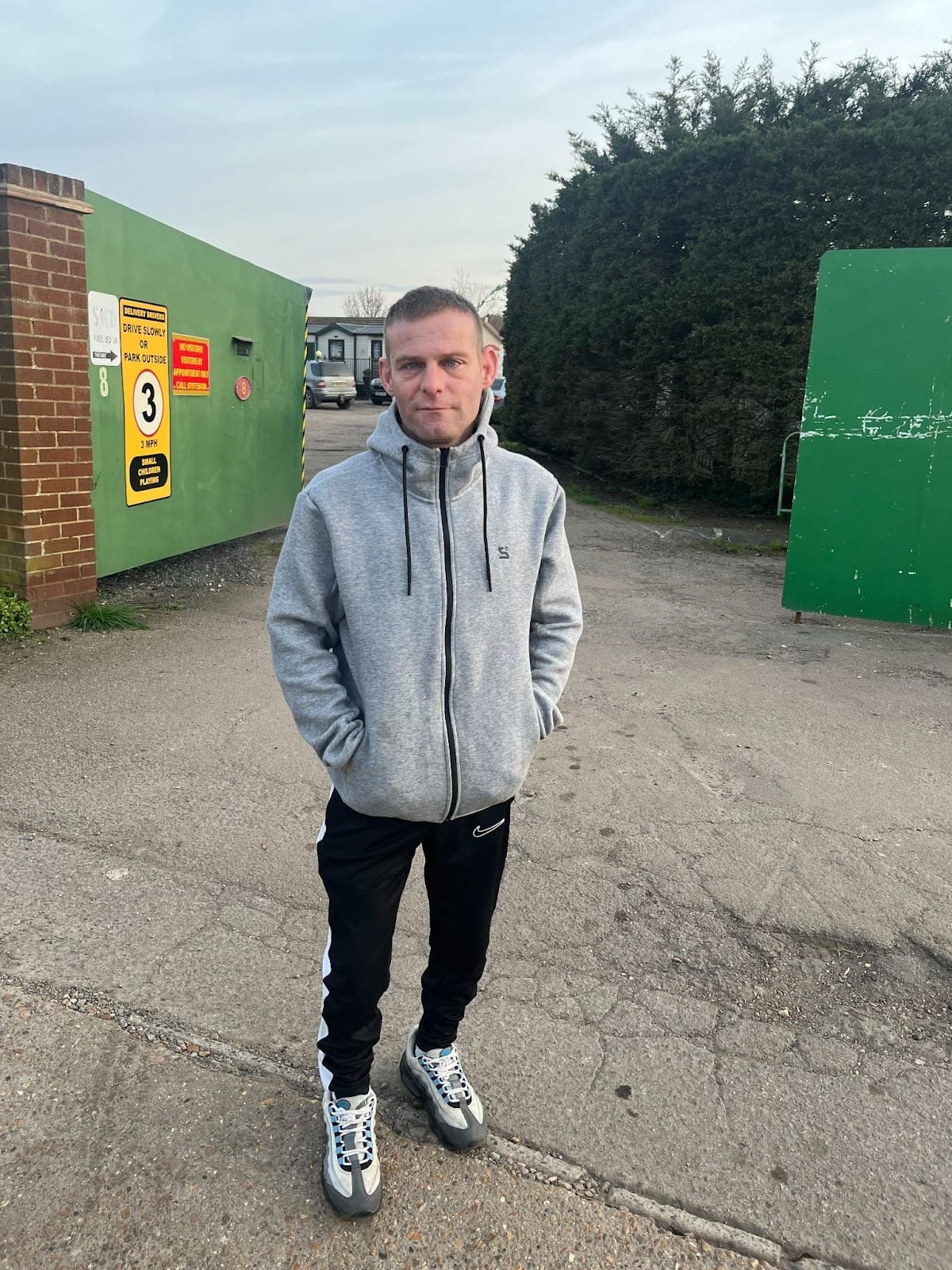
Ionel’s a demolition man. “Take out… rubbish,” he explains in his thick eastern European accent when I meet him at the far end of Buckles Lane. When developers transform the capital’s old buildings into offices, they employ a legion of labourers to strip it down to the concrete. “Metal, plasterboard, timber, everything,” Ionel says. In strained English, he tells me he has lived in the UK for eight years, but he is most articulate when talking about building materials. “What is shit — out.”
He can’t really say why he turned right today; he just felt like a change. Barely five feet tall, Ionel looks around 40, his face weathered by the outdoor graft. His eyes are a dazzling crystal blue and slightly crossed, which lends him a quizzical air. The teeth he has left are rotted and brown to the gums.
Ionel’s 17 year-old son lives back home in Vâlcea, a lowland region dotted with monasteries and vineyards nestled beneath the Carpathian Mountains. It’s where Ionel grew up and moved from when he got divorced, and where he eventually expects to return to. He goes back about once a year now, each time returning to see his boy rise up another few centimetres. “Speak English perfect, my son,” Ionel says apologetically, straining to explain that he sends his son and his parents money to live. He tells me that his son would very much like to be a mechanic.
It’s men like Ionel you see flowing in and out of plasterboarded building sites in central London like ants. Of course, it would be easier to live in the city where he works, and for a while he did. Ionel rented with two other Romanians in a cramped flat somewhere east that he doesn’t know the name of. But the men could be violent, and the rent was too high — £700 for a bed and a roof and not much besides.
Our Saturday stories are free for all to read — but we can only survive with your help (and we're currently being sued for £250,000 by a wealthy Airbnb grifter). If you're a fan of today's piece, please do consider becoming a paying member. And with our spring discount, it costs less than a fiver a month (for your first three months) to support us.
With rents on the rise and work drying up, those like Ionel who can’t afford to live in London have found a compromise. £320 a month in Buckles Lane gets you a room in a shared caravan, paid in fortnightly instalments.
The commute from this side of the M25 is long. To make it to the building site in Moorgate for 7am, Ionel’s face leaves the pillow at 5. From there it’s the 370 bus to Upminster, then the 6.02am coast-to-coast train to West Ham, then a few minutes more on the Hammersmith Line. Once the skyscrapers begin to slide past the windows, he’s there.
A few years ago, he shared his commute with dozens of other men making this journey. But construction is a tough business these days. The price of steel and timber is up and building is down, and many of the men Ionel lives with are out of a job. Sometimes they cook together: simple Romanian dishes like Saramură, a stew of grilled fish and red peppers that gives at least a flavour of home.
The owners of Buckles Lane are the families of showmen that have lived here for almost a century. I meet one in orange overalls, drinking a Stella and laying gravel on one of the many driveways splaying out from Buckles Lane. “My family’s been showmen since the 12th century,” he says proudly, pulling a freckled kid of about 12 under his arm. For years these families holed out at Buckles Lane over the winter, stashing their fairground rides in the cold before heading back out on the road in the spring. But rides only make you so much.
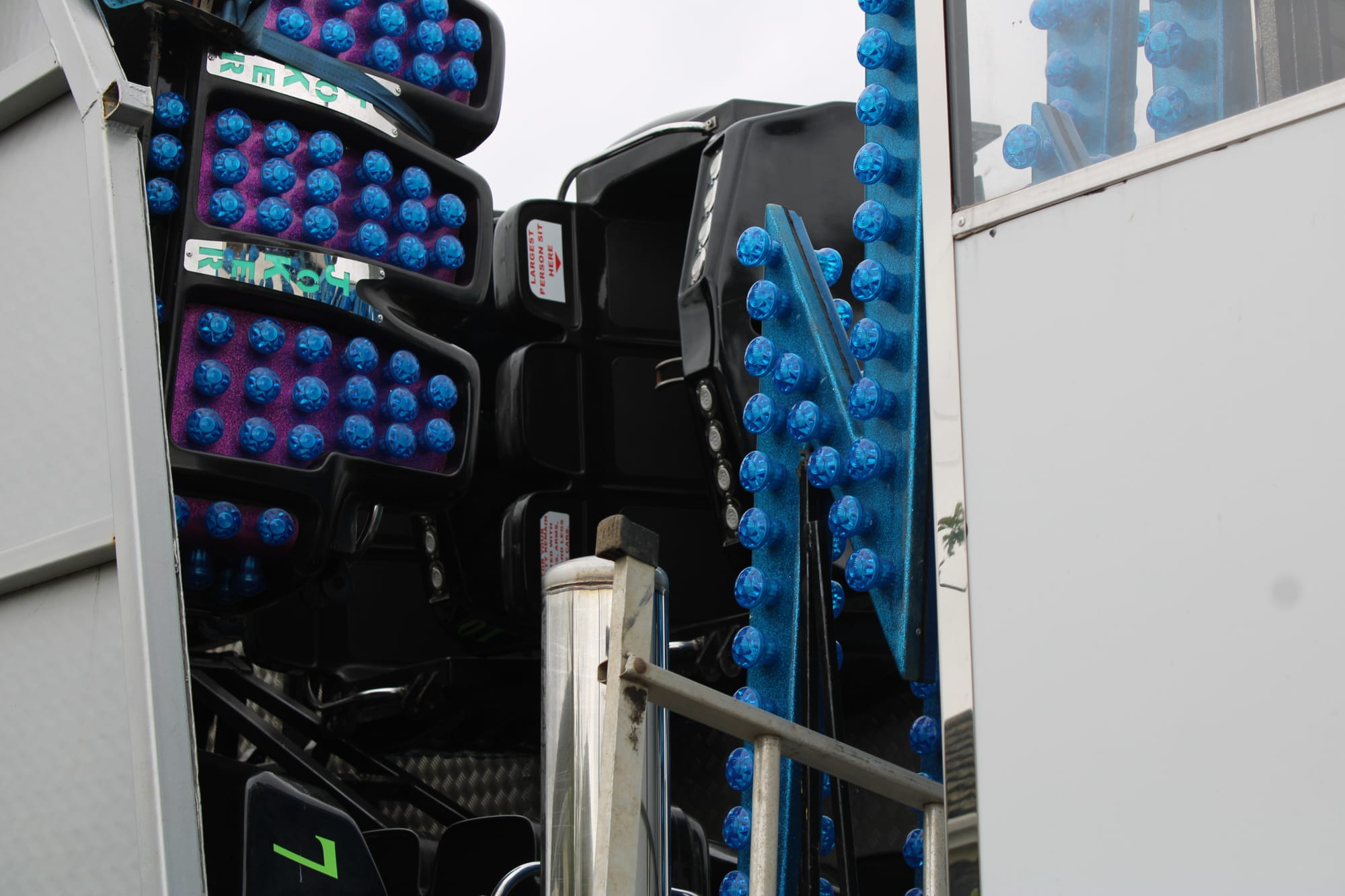
Instead, the showmen families began concreting over the land and renting out static caravans, a source of income that remained steady all year round. Buckles Lane became a kind of refuge for the down-at-hand. It’s to this thin country lane, lampposts lined with tattered union jacks, that you come if you need cheap rent, or you have nowhere else to go, or you just don’t want to be found.
Four-by-four trucks and dusty white vans race down the kilometre-long road and disappear down different driveways. Security cameras line the street; “KEEP OUT” and “Rottweiler loose” signs make clear visitors aren’t always welcome. Sitting on the pavement with his French Bulldog, I meet John, a refuse worker for Hackney Council who moved out here a decade ago. “I couldn’t afford Hackney any more,” he says, and so took up a 1 bed caravan out here for himself. He’s never had much trouble, he tells me, and although I haven’t yet either John says that people are talking about me in the Facebook groups. “They’ll know you’re here,” he says.
Hi, Peter here. This is not a paywall! This brilliant story about the people on London's margins is completely free to read (and we hope you're loving it). All you have to do to continue reading is sign up for free below, no card details needed.
This story is free to read. You just need to sign up to join The Londoner's mailling list. And why wouldn't you? You'll get our journalism in your inbox the second we publish, keeping up to date on this and all our stories. No card details required.
Already have an account? Sign In