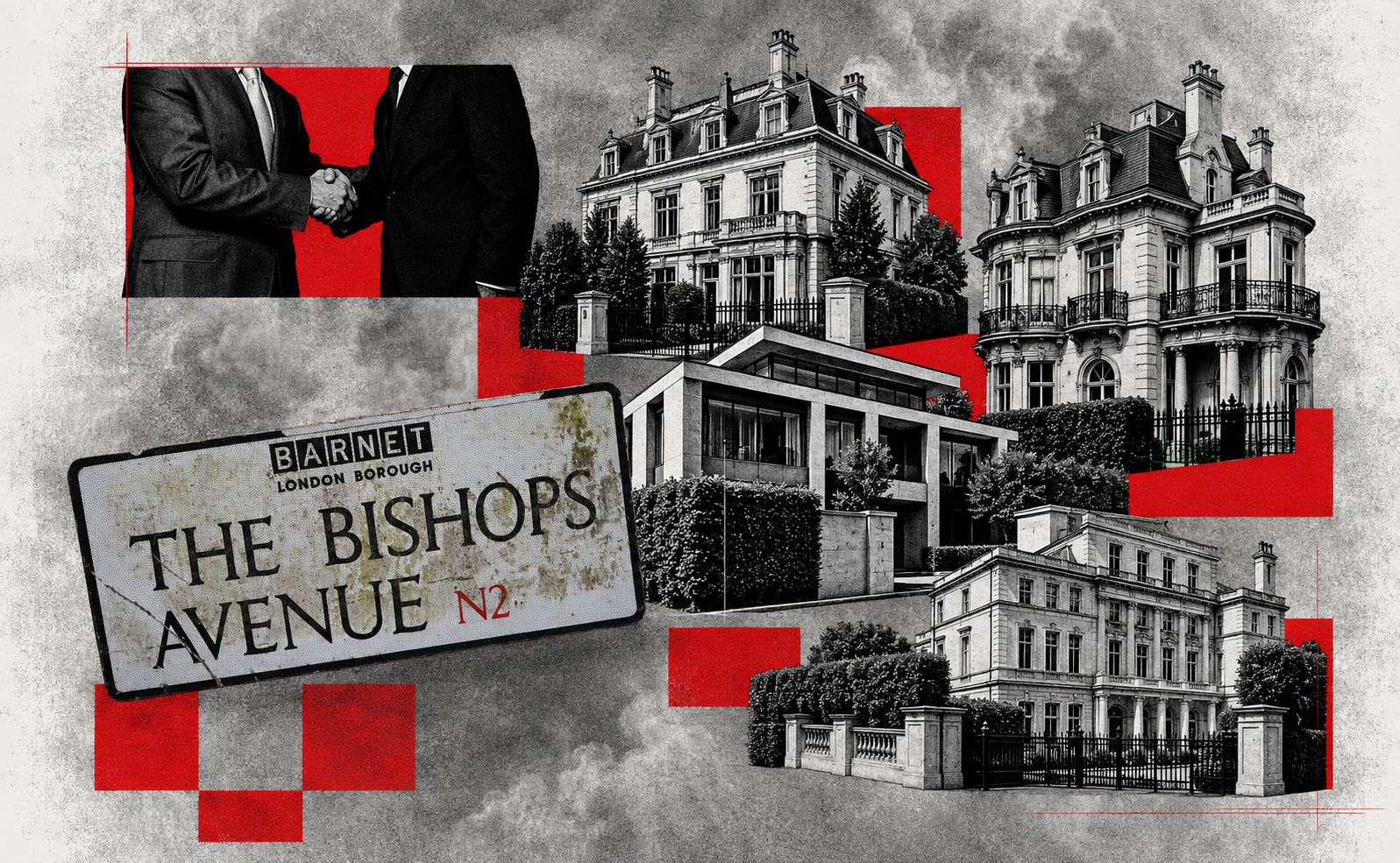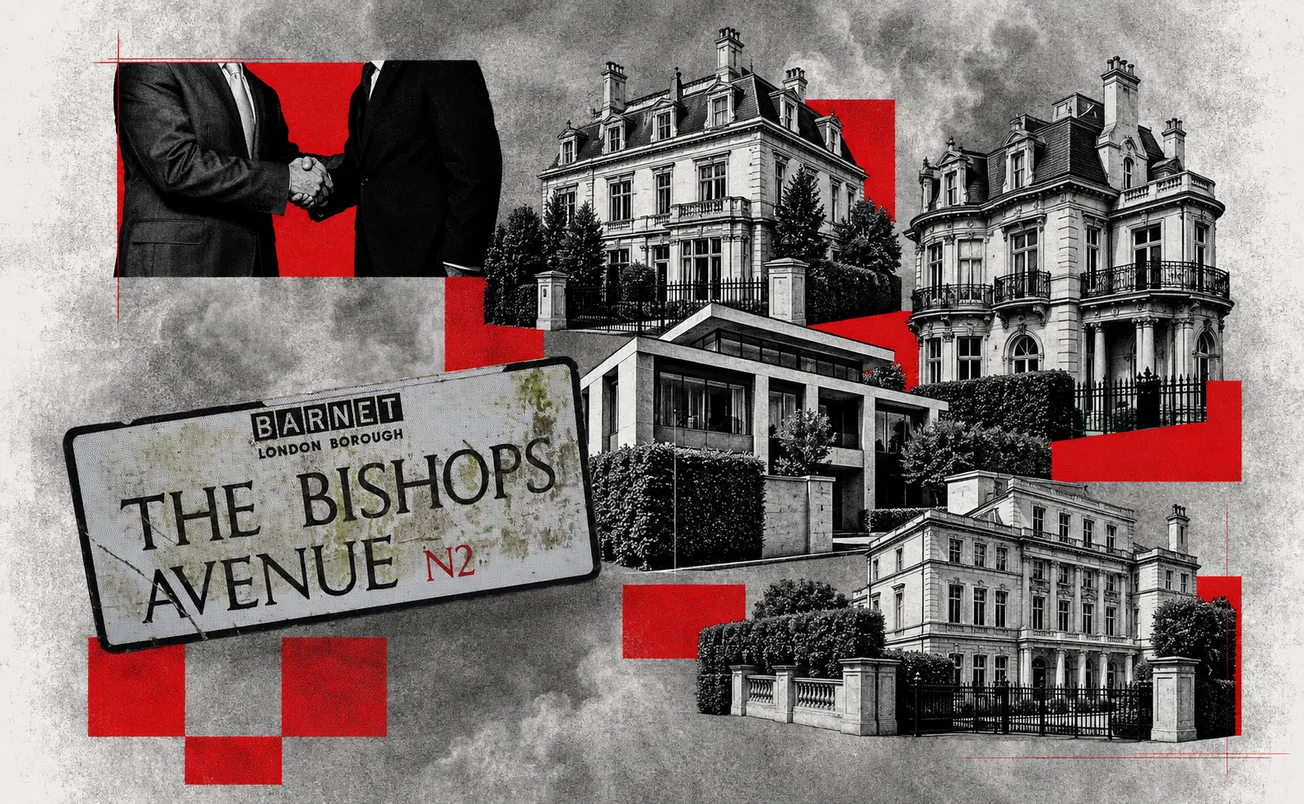
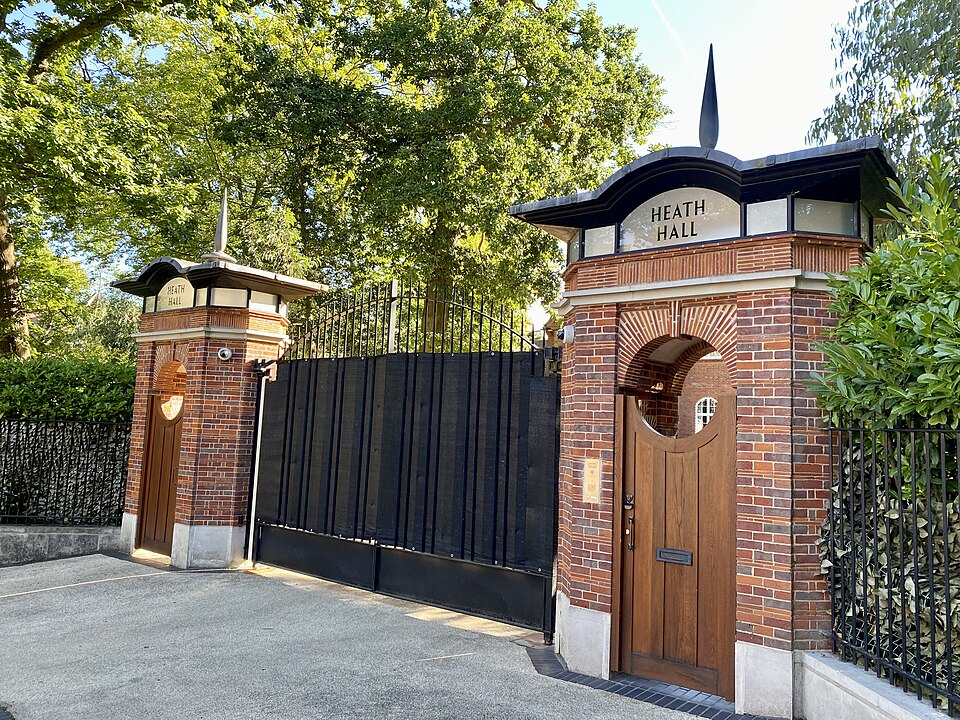
As far as streets go, The Bishops Avenue must seem one of the duller ones to any pedestrian casually strolling through north London. Rather than the royal-icing stucco of Belsize Park or the straight-backed townhouses of Highgate, much of it is hidden from view. Flanked by high, slightly cheap looking brick walls and wrought iron spokes, the pavement is mostly a succession of huge gates and their attendant intercom systems; less London than Alderley Edge. The homes, when you do get a glimpse, mostly follow suit, a mixture of slightly gaudy, Barratt Home-tinged mega-mansions and bland, ultra-luxury apartment blocks.
Behind those long drives lie London’s most expensive properties — and their attendant secrets. Long known as “Billionaire’s Row”, The Bishops Avenue has been the subject of media speculation for decades. Rumours swirl as to who, exactly, owns property there: Russian oligarchs? Saudi royals? Nigerian oil tycoons?
While the street has long been a home for London’s moneyed classes — in the early 20th century, wealthy industrialists snapped up plots on The Bishop’s Avenue to create mini-country estates near the heart of the city — its status as one of the most expensive strips of land in the world is a relatively modern phenomenon.
To understand why, I turn to estate agent Trevor Abrahmsohn, also known as Mr Bishop’s Avenue, who tells me it’s all down to one person: him. A loquacious South African with a plume of white hair, a minnow-quick E-type Jaguar and a strong belief that a “politics of envy” informs the world’s attitude to its elites, Trevor and his estate agency Glentree International are what made the street famous. “Without seeming immodest, heaven forbid, Bishop's Avenue was not the road that it is today in terms of infamy… We put The Bishops Avenue on the map.”
In Abrahmsohn’s telling, the influx of international wealth came as a result of Thatcher’s deregulation of the banking sector, when London “reincarnated and morphed ourselves from that sleepy historic city once was into the colossus it is today”. (Later, in the midst of an anecdote about a Don Pérignon- and Beluga-fuelled party he threw at which Gorbachev was the guest of honour and Simon Cowell was allegedly “turned away” at the door, Abrahmsohn recalls a small, private dinner he had with Thatcher in the mid-noughties, “even though she lost probably 30% of her cognitive powers by then”. She was a “simple eater”, if you’re wondering.)
The story begins with deposed rulers. First came the Greeks, Abrahmsohn says, beginning with the recently ousted Constantine II, followed by his wealthy shipping magnate friends. Then came the allies of the Iranian monarchy, following the Shah’s fall in 1979. After that, “every time there was an explosion of wealth, or any political upset, unrest, explosion. The rich politicians [and] business people all flocked to London.” The Saudi Arabian ruling elite came, then the Nigerians, then Indians and Bangladeshis. The dollar achieved parity with the pound, and the Americans flooded in, followed by the Scandinavians.
The allure for these people, according to Abrahmsohn, was in buying a piece of “English heritage”. As well as a sound investment, far away from the potential strife of home, London property became a status symbol “to most potentates, diplomats, monarchs, sultans, chiefs, prime ministers, presidents, their second or third home had to be in London. It was a badge of honour. If you didn't have a house in London, you hadn't arrived. It was like an Italian handbag, or a Chanel dress.”
If there was one moment that created the Bishop’s Avenue we see today, it’s the collapse of the USSR. Eastern Europeans, “particularly the Russians”, bought up much of the street in the 1990s and again after the introduction of the “golden visa” scheme in 2008 — and radically changed how it looked.
“This new wave of buyers didn't want the big 7,000 sq foot Arts and Crafts houses that were there. They knocked them down and they built much bigger houses of 12,000 and 15,000 sq foot — not with outdoor pools, which they thought was laughable given the English weather, [but] indoor pools — so what they created was less of a large house and more of a medium-sized hotel.” As Abrahmsohn puts it, these mega-mansions were now too big and expensive for the tastes of the English elite (aside from British media magnate Richard Desmond), which led to the more recent luxury apartment developments on the road.
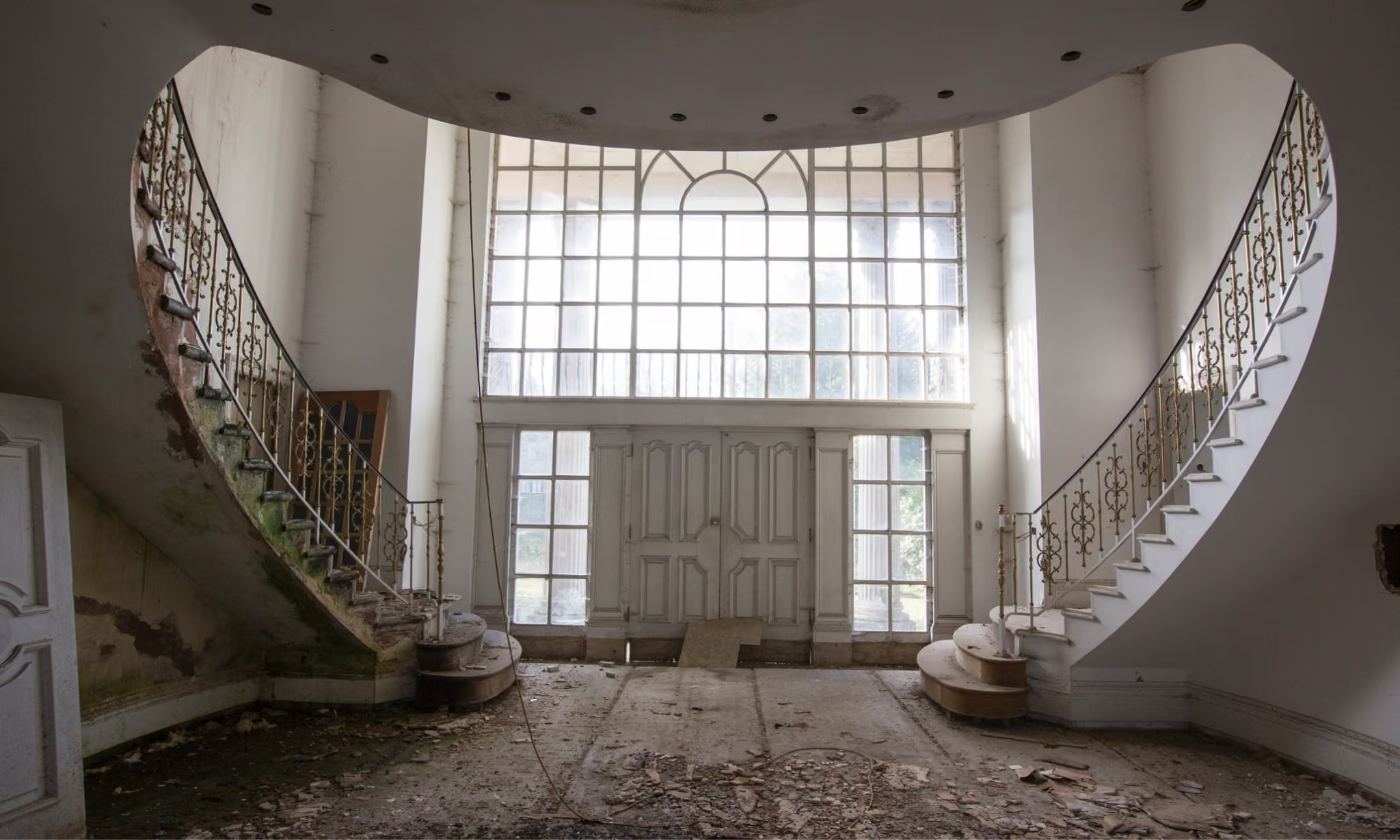
Perhaps the roast beefs were right: after all, mega-mansions come with their downsides. Upkeep, for one, is extortionate. In 2014, the Guardian revealed that a third of the street’s properties, worth an estimated £350m, were derelict, used as little more than land assets. One neighbour, developer Anil Varma, complained that the address has become "one of the most expensive wastelands in the world". (Abrahmsohn, for his part, thinks this was “exaggerated”; many of these houses, he argues, were waiting for planning consent, but most have now been redeveloped.)
But since then, not much has been revealed about the city’s most infamous street. Sure, there’s been a few legal scrabblings and an Unexplained Wealth Order revealed by the BBC. But the world’s mega-rich conduct their affairs on The Bishops Avenue in silence. As Abrahmsohn claims, “I've sold a property that the market doesn't know about — 13 years ago — which was the most expensive property in the world, and the reason why I could sell this is because my clientele is some of the richest in the world.”
Over half of the street’s mansions are owned by overseas companies, usually registered in opaque tax havens like Jersey, the Isle of Man or the Virgin Islands. This registration has meant that their real owners were never exposed, hidden behind intricate webs of anonymous shell companies and 20ft gilded gates.
But for the first time, using a database of the real owners of overseas properties that we’ve used before to expose the true billionaire overseas owners of Oxford Street, we’ve been able to identify a slew of the street’s elite residents. They include sanctioned Iranian oligarchs, Middle Eastern royalty and Indonesian factory farming magnates. And with those owners are stories of unsolved murders and failed coups that all pull back the curtain, if only for a split second, on the lives of some of this city’s wealthiest and most powerful residents.
London deserves great journalism. You can help make it happen.
You're halfway there, the rest of the story is behind this paywall. Join the Londoner for full access to local news that matters, just £8.95/month.
SubscribeAlready have an account? Sign In