To read today's piece, you’ll need to be a full-fledged paying member. If you’ve yet to make the leap, and the enticing premise of the piece isn’t enough to tempt you into doing so, how about the chance to be our 1,000th backer? Earlier this month, we set the lofty target of hitting 1,000 paid members by the end of the month. After well over 100 of you signed up in just two weeks, we’re now less than ten paid members away from hitting that goal, and whoever number 1,000 is will get a shout-out in our next newsletter.
We've made it easy too: with our new member discount, a Londoner membership is just £1.25 a week. If you like what we're doing, please consider supporting us.
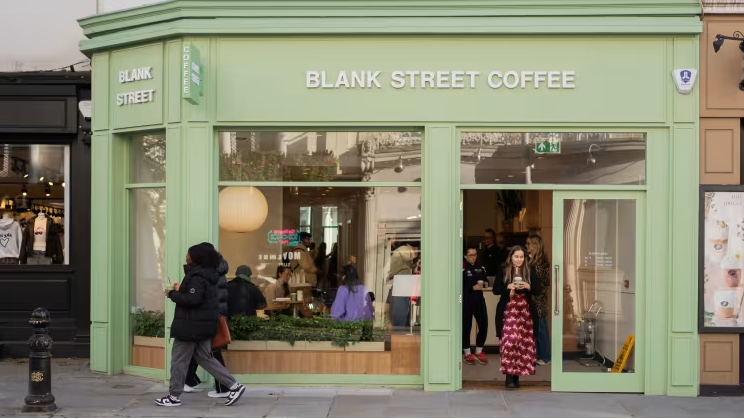
There’s a moment when it really hits you. For me, it was when The Londoner moved to its first office in central. Walking down a street in Holborn, I suddenly felt lost. Looking around at the storefronts in search of lunch, where once there might have been a Costa, WHSmith or a Wagamama — brands that have slowly become staples over decades in the UK — suddenly the names were completely different: Farmer J, Buns at Home, Black Sheep. And that’s not even mentioning the American brands like Blank Street and Popeyes that seemed to have suddenly colonised every high street. It was as if, overnight, London had decided to rebrand, to suddenly shed the high street names that are still dominant outside the city and carve a new path.
But where did they all come from? Who’s behind London’s new super-brands? How were they able to spread so fast? And why is the capital their first stop on the road to UK domination? The answer not only cuts to the core of the economic inequity at the heart of our economy, but pulls back the curtain on an unseen multi-million pound push and pull happening behind every shop, restaurant and cafe in our city.
How private capital changed the high street
“London is unique,” Oscar Selby tells me. A researcher at the Centre for Cities think tank, he’s spent the last few months working on a research project tracking the health of high streets across the country. It’s a pertinent topic; in his Labour party conference speech this year, prime minister Keir Starmer told the massed activists and journalists that he saw the “boards going up in our high streets” and the businesses “finding a way through the chaos”.
Despite record high rents, Selby’s research found that just 7.4% of high streets in London are vacant — the lowest amount in the UK — versus 18% in Bradford, or even 10.5% in the wealthy “second city” of Manchester. In short, the reason for that is that London has more wealth, a bigger population to spend that money and a lot of diversity in its user base (i.e. alongside locals, office workers from Surrey and tourists from Japan will be spending in London too).
That goes some way to explain why central London’s high streets may be busier than those in Stoke or Crawley, and more able to survive the impact of online shopping on retail brands. But why are we seeing the specific brands we’ve seen in the last few years? Well, according to those in the capital’s property market, that’s three-fold.
London deserves great journalism. You can help make it happen.
You're halfway there, the rest of the story is behind this paywall. Join the Londoner for full access to local news that matters, just £8.95/month.
SubscribeAlready have an account? Sign In