Get yourself down to Fleet Street
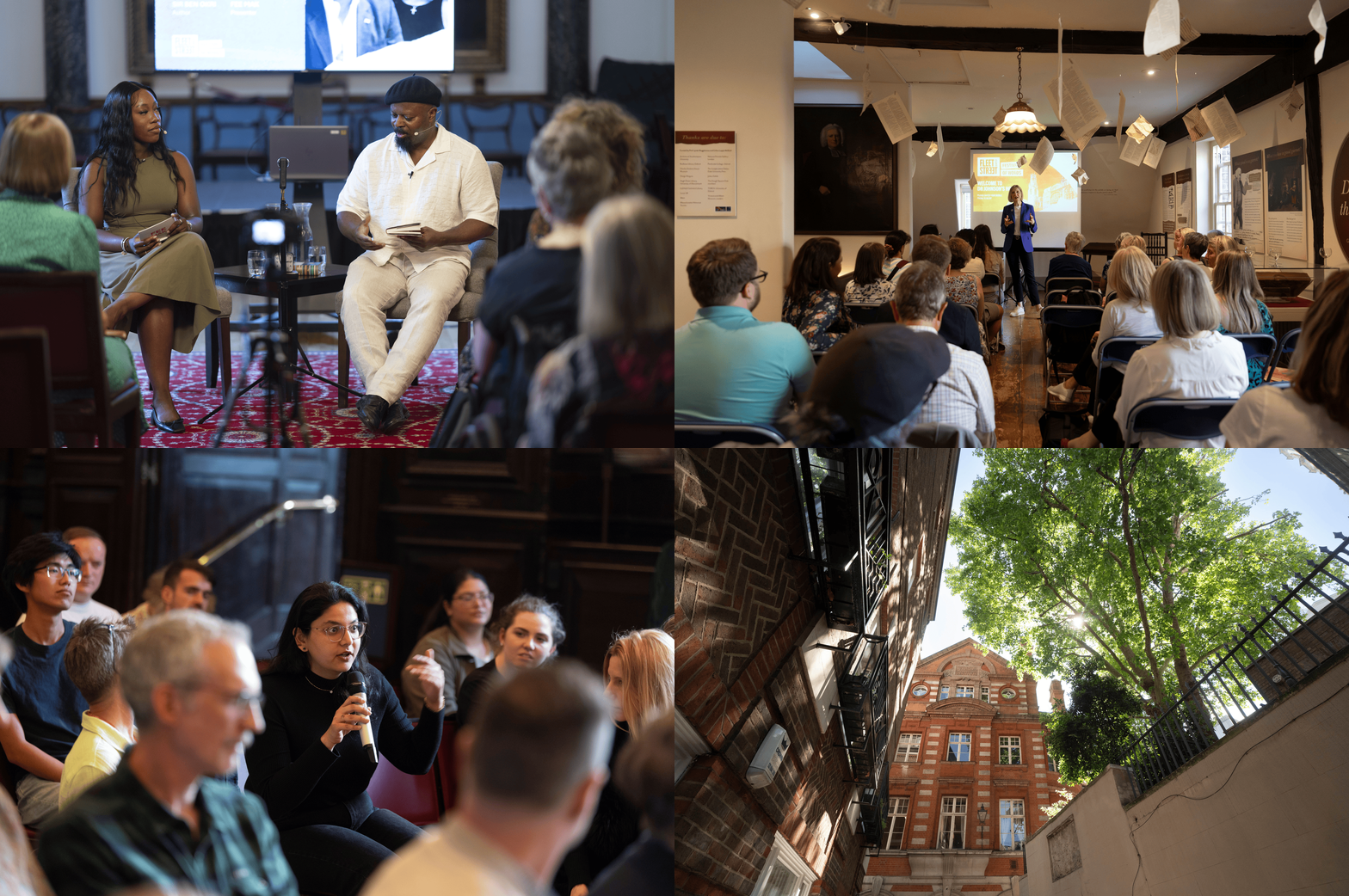
Untangling Victorian murders, digging into Shakespeare’s life in London and retracing Agatha Christie’s footsteps across the capital: the Fleet Street Festival of Words is back from 7th to 16th May and we’re excited to be going along. You can hear Sir Ben Okri discuss A Tale of Two Cities, the author Lottie Moggach talk about the crime that inspired her new book and watch a live recording of The State Of It podcast from The Times, where leading political hacks Patrick Maguire, Gabriel Pogrund and Steven Swinford will offer the inside scoop on what’s happening in Westminster.
Click below to book your tickets and we’ll see you there.
From the age of four, Jack Duignan would sit juice-in-hand in the Sutton Arms, chatting to the regulars. “I was harder to send off than the drunks at the end of the evening,” he somewhat sheepishly explains, not just because it’s hard to take juice off a four year old, but also because his dad ran the bar. Duignan, now 35, with bright blue eyes, manicured beard and an array of tattoos poking out beneath his colourful clothes, has since progressed to pints — I meet him perched by the bar of the King’s Arms in Bethnal Green, sipping on a smooth cask pale ale. He was raised by his dad in their flat above the Sutton Arms in Farringdon. By the age of 16, he’d worked out how to game the fruit machine there so he’d win every time. These days he runs both that pub, and the one we’re in now.
Duignan and I have met up to solve a mystery: Why have a swathe of people in their 20s and 30s suddenly become pub landlords in London? Duignan is one such character, but he’s not alone. Together we’ve managed to document dozens of publicans like him across the city, from Crouch Hill and Stoke Newington to Morden and Camberwell, each of them taking on not just the unenviable task of running a boozer at a time when hospitality is, for want of a better phrase, on its arse, but also the responsibility of restoring some of the most beloved historic pubs in the city. In doing so they’ve formed a close-knit, underground network of young millennial publicans that’s helping lead a rebellion against the oligopoly of Greene King, Fuller's, Young’s and the other big city pub chains.
But how did it all happen? And why? And what does it all have to do with a small town in the East Midlands, the Cayman Islands and “publican therapy sessions”?
This story is free for all to read — but we can only survive with your help (and we're currently being sued for £250,000 by a wealthy Airbnb grifter). If you're a fan of today's piece, please do consider becoming a paying member. And with our spring discount, it costs less than a fiver a month (for your first three months) to support us.
Jack Duignan 35, The Sutton Arms and The Kings Arms, Farringdon and Bethnal Green
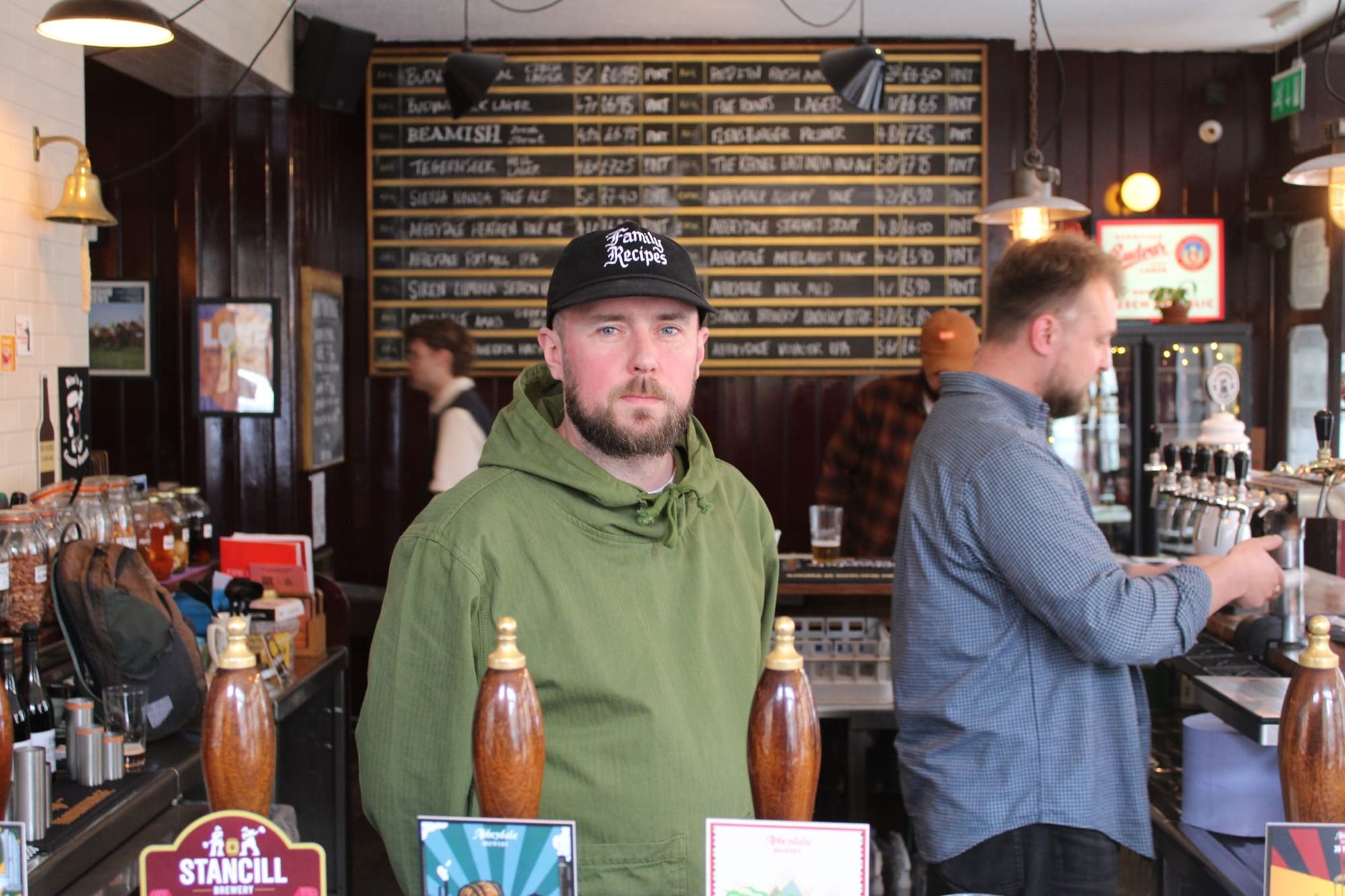
At first, Duignan resisted the idea of following in his dad’s footsteps — he was more interested in trainers than beer. Then a single pint changed everything. He was in his early 20s, travelling around Europe and America trying to find a reason to love the work he’d fallen into by a quirk of genetics. He ended up finding it via the far-flung Midlands: Oakham Citra Pale Ale, a pale ale (naturally) from Oakham (also naturally), a small town not far from Nottingham. It was crisp yet hoppy, with small notes of citrus — perfection in a glass. He still sometimes gets it on tap at the Sutton Arms “as a treat” (he says treat because he inevitably ends up drinking his own supply dry).
Over the years he slowly took on more and more responsibility at the Sutton Arms — a carpeted, old-style community stalwart in the otherwise ephemeral, barren spread of newbuilds and offices around Farringdon. Eventually, his father wanted to retire, and Duignan was left in charge. This was 2022 or ‘23. “I’m not good at keeping track,” he mutters.
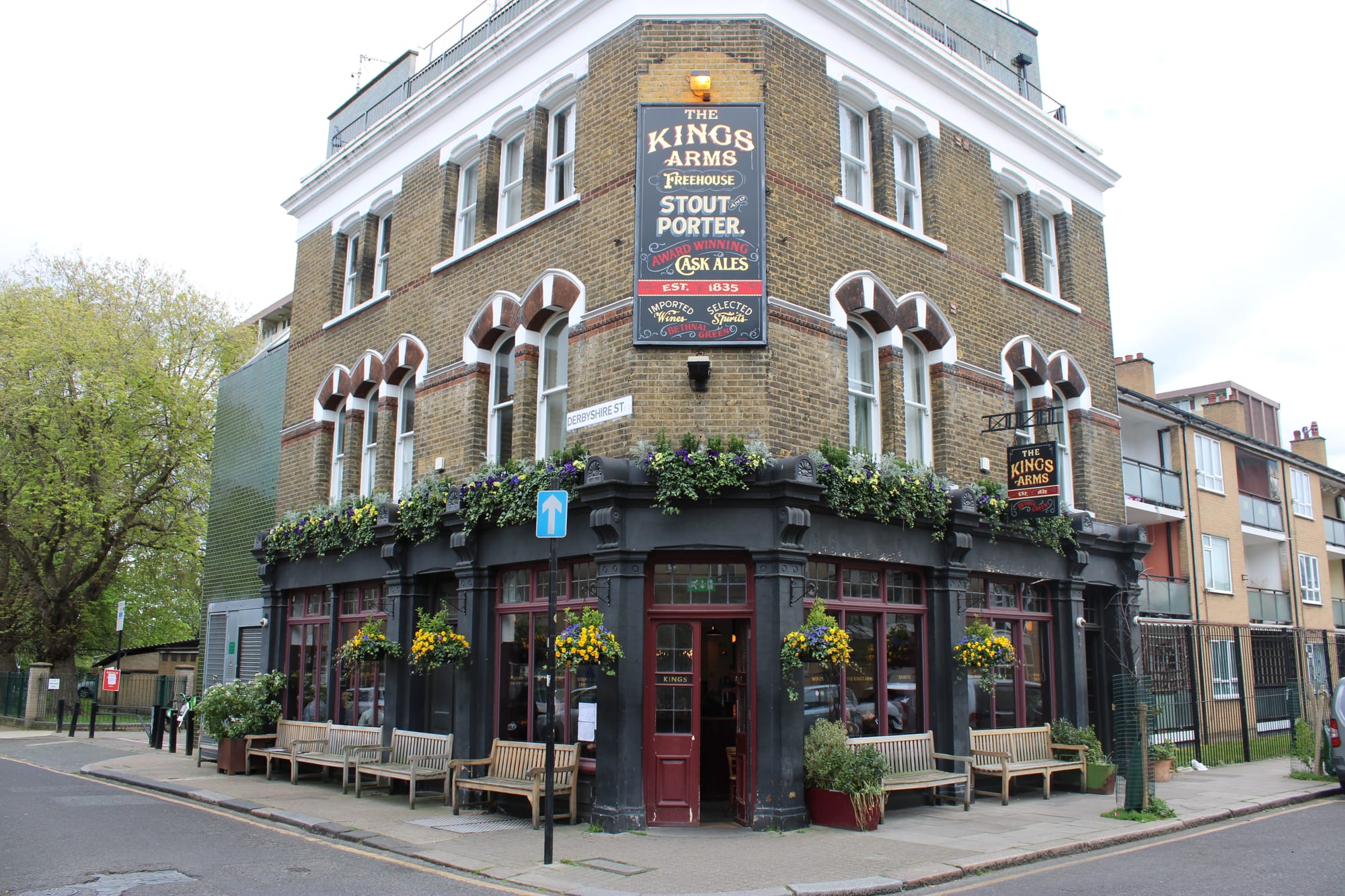
In late 2024, he took on a second pub, The Kings Arms. While the focus on craft beer remains the same, the old-man quirks that define its sister site have been replaced with Buckfast Negronis, slushie machines and occasional DJs to cater to the younger Bethnal Green crowd. Still, Duigan explains, the mission is the same: To rebel against the copy-pasted, homogenised pubs across the city.
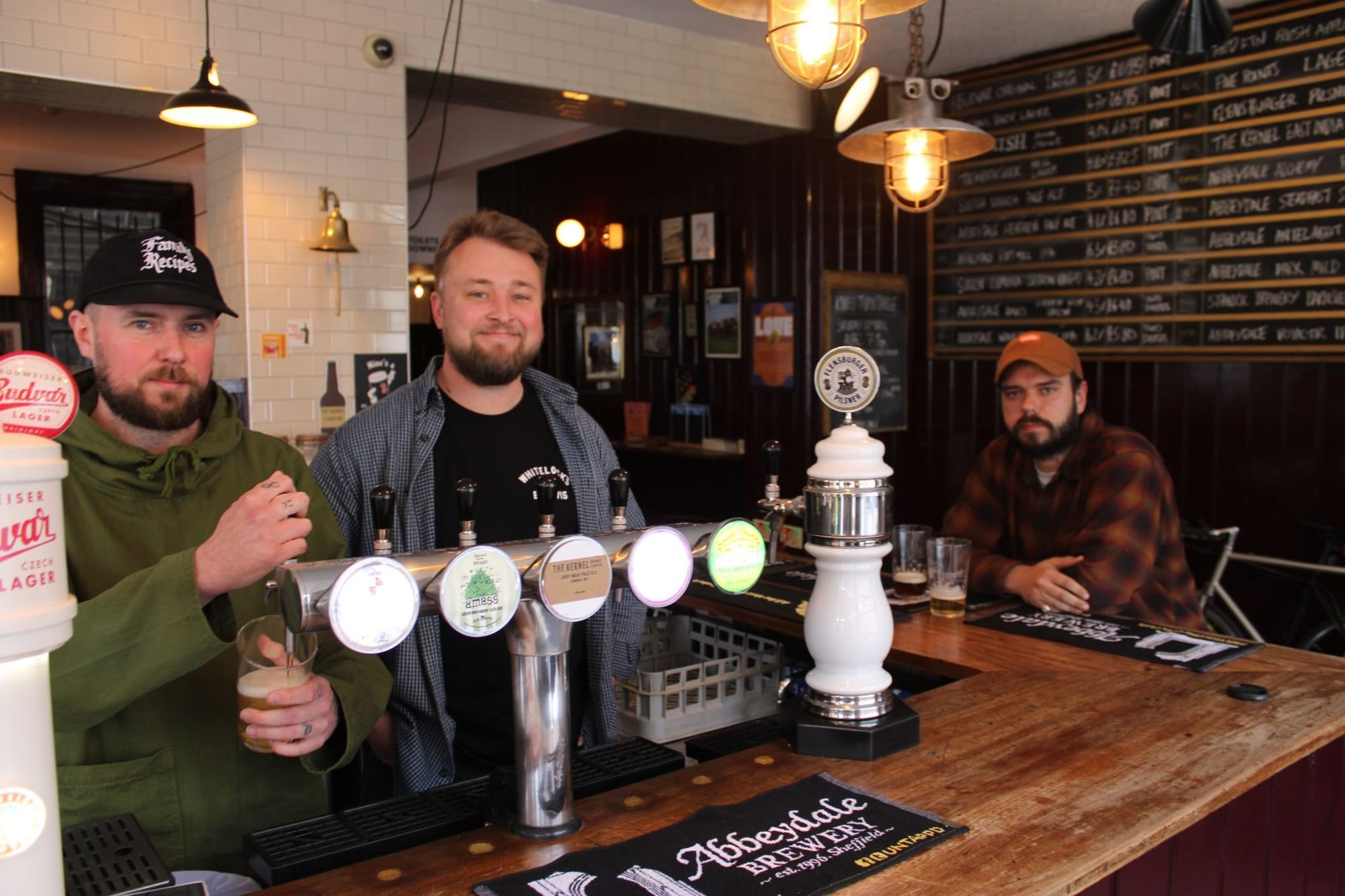
But it’s not just Duignan driving this trend. The new generation of pub landlords form an aggressively close-knit network, he tells me, always drinking in each other’s pubs. As if the universe decided to hammer that point home, midway through our interview one of the other landlords on our list, Oli Carter-Esdale of the Trafalgar in Wimbledon, walks in. He’s in the middle of the most belated work Christmas pub crawl in history. I’ll be trekking down to Wimbledon to speak to a much more hungover Carter-Esdale the next day.
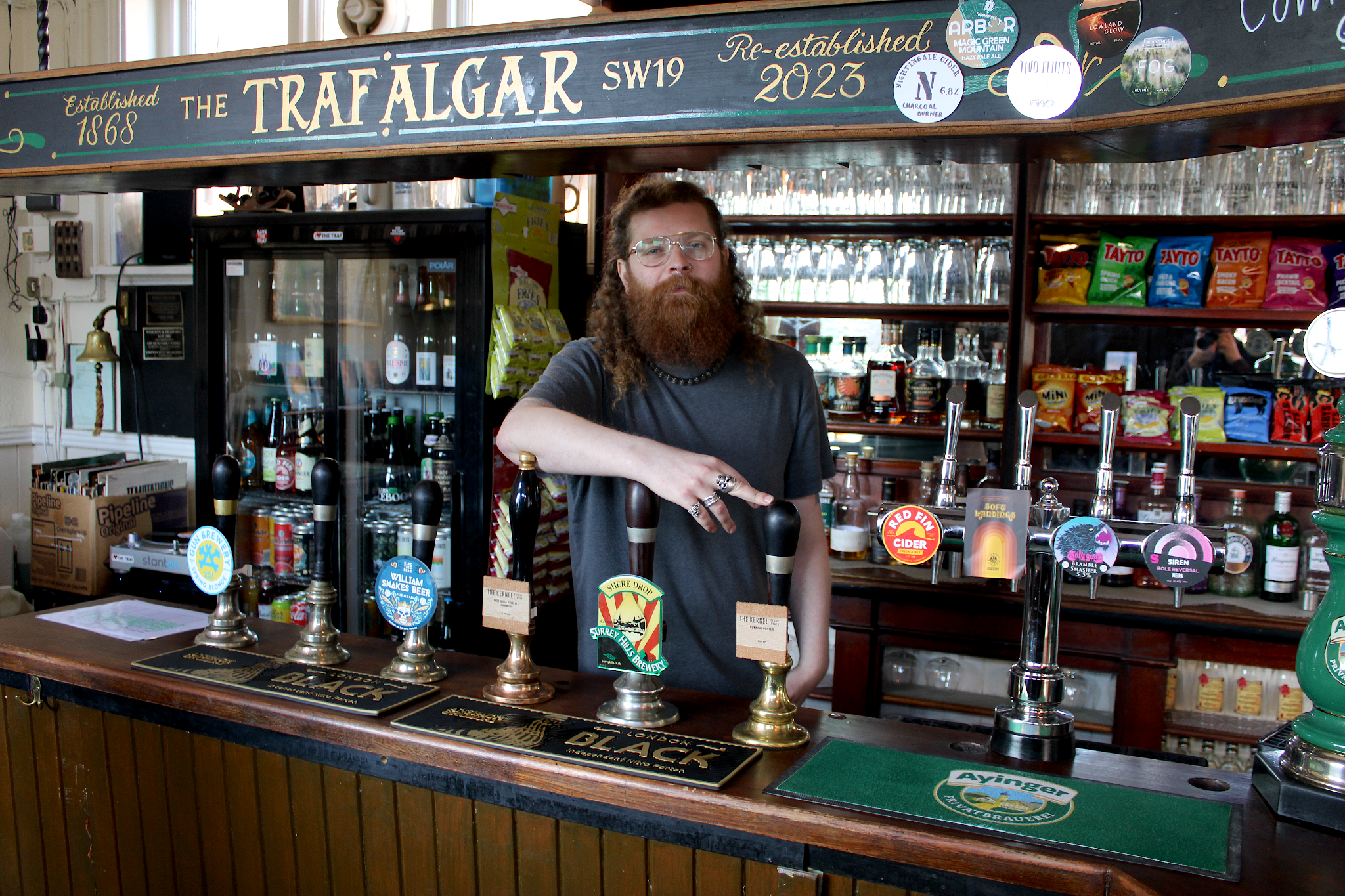
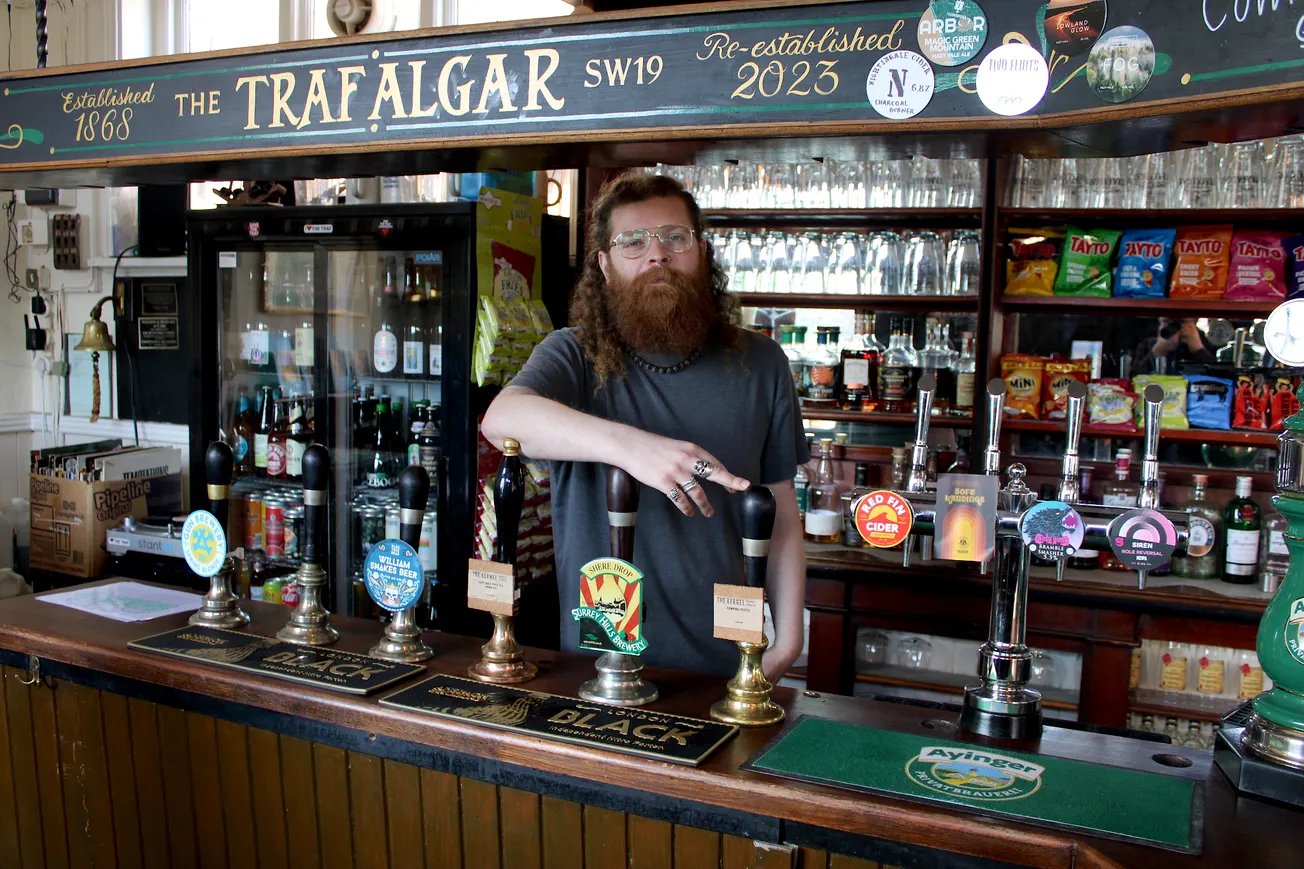
Oli Carter-Esdale, 33, The Trafalgar Freehouse, South Wimbledon
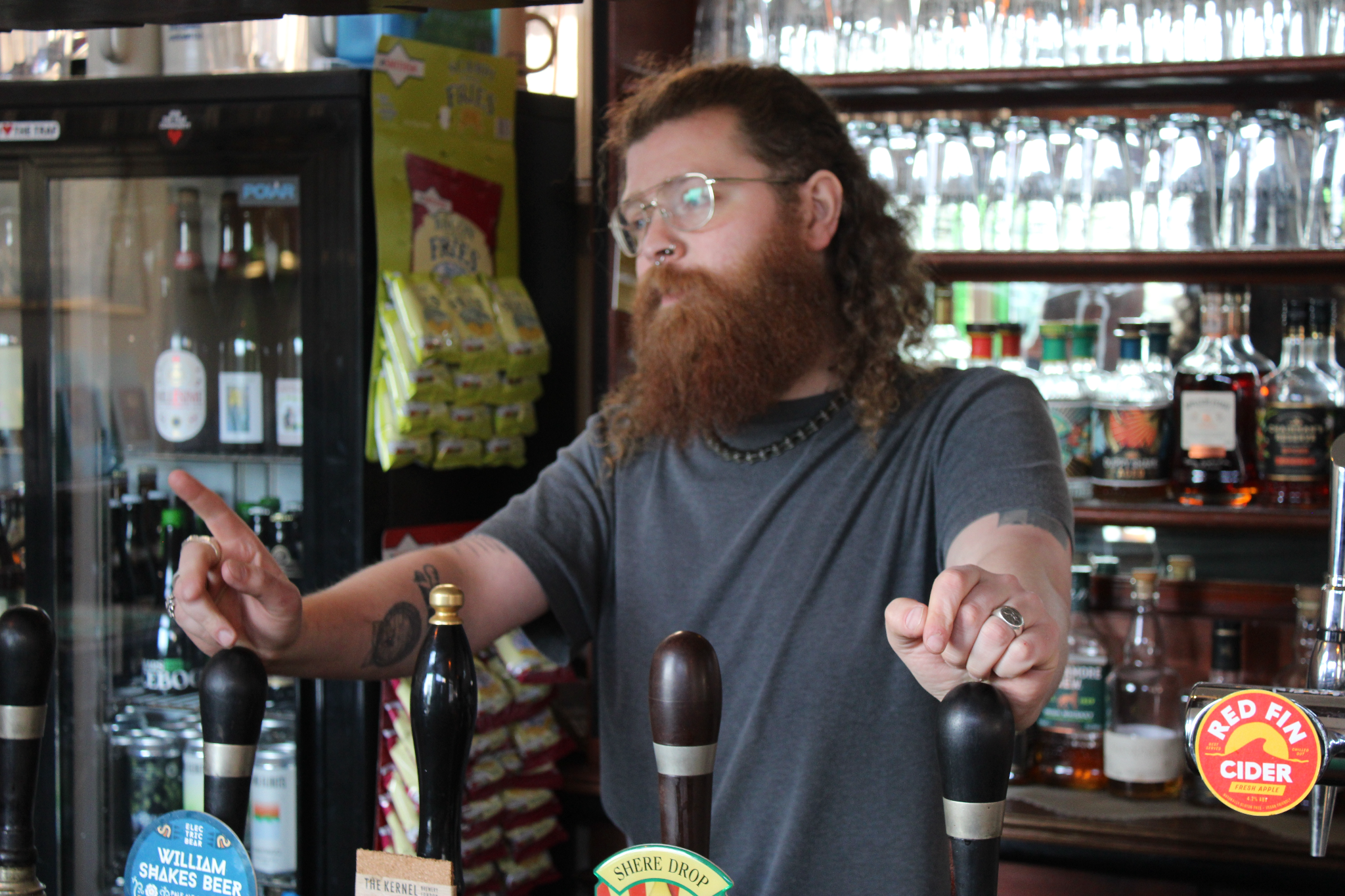
Walking up to the century-old pebbledash, red brick detached house, besieged on all sides by newbuild apartment blocks and schools, you can’t help but feel like The Trafalgar Freehouse shouldn’t be here anymore. “Which is exactly why it should,” says the 33-year-old and somewhat worse for wear Carter-Esdale, sporting aviators and a repurposed bike chain necklace just below the bottom of his long orange beard.
Carter-Esdale, who’s non-binary and uses they/them pronouns, was born nearby, and drank as a teenager in The Trafalgar, before heading to university in Bristol and starting a career pulling pints at the Nettle and Rye. To hear them tell it, before shutting in 2021 it was something of a finishing school for a generation of indie craft beer obsessives, many of whom went on to work for major breweries or start their own pubs (that kind of splintering effect driving this rise of new young pub landlords was something we heard time and again while looking into this story, be it from single pubs, craft breweries or just social networks). When they returned to London in 2021 – and saw that their childhood local was accepting bids for a new landlord – they went for it.
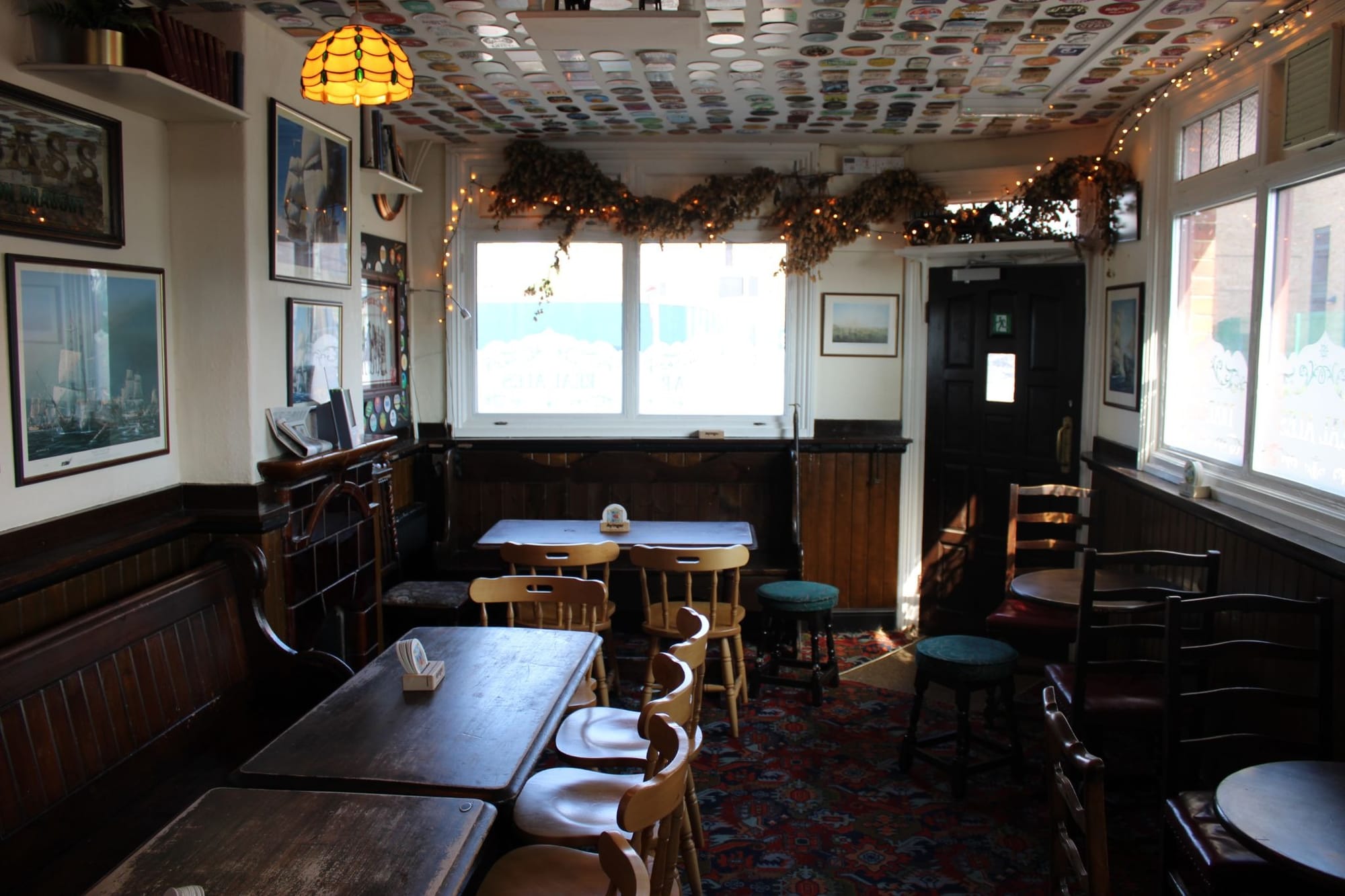
On the one hand, there’s the appeal to younger publicans of having a space they can shape themselves, away from the homogenising hand of Young’s or Greene King. “You’re allowed to be a bit of an individual here. I don’t like pubs with uniforms, I don’t like any jobs with uniforms really,” they explain. “I don’t think anyone has woken up and said it’s my dream to be the district manager of a Wetherspoons in Woking.” Plus, the more independent the pub, the more rooted it is. “You can see that money for a pint is going to help the area, the community, the people in the pub in front of you,” they add. “It’s not disappearing off to the Cayman Islands.”
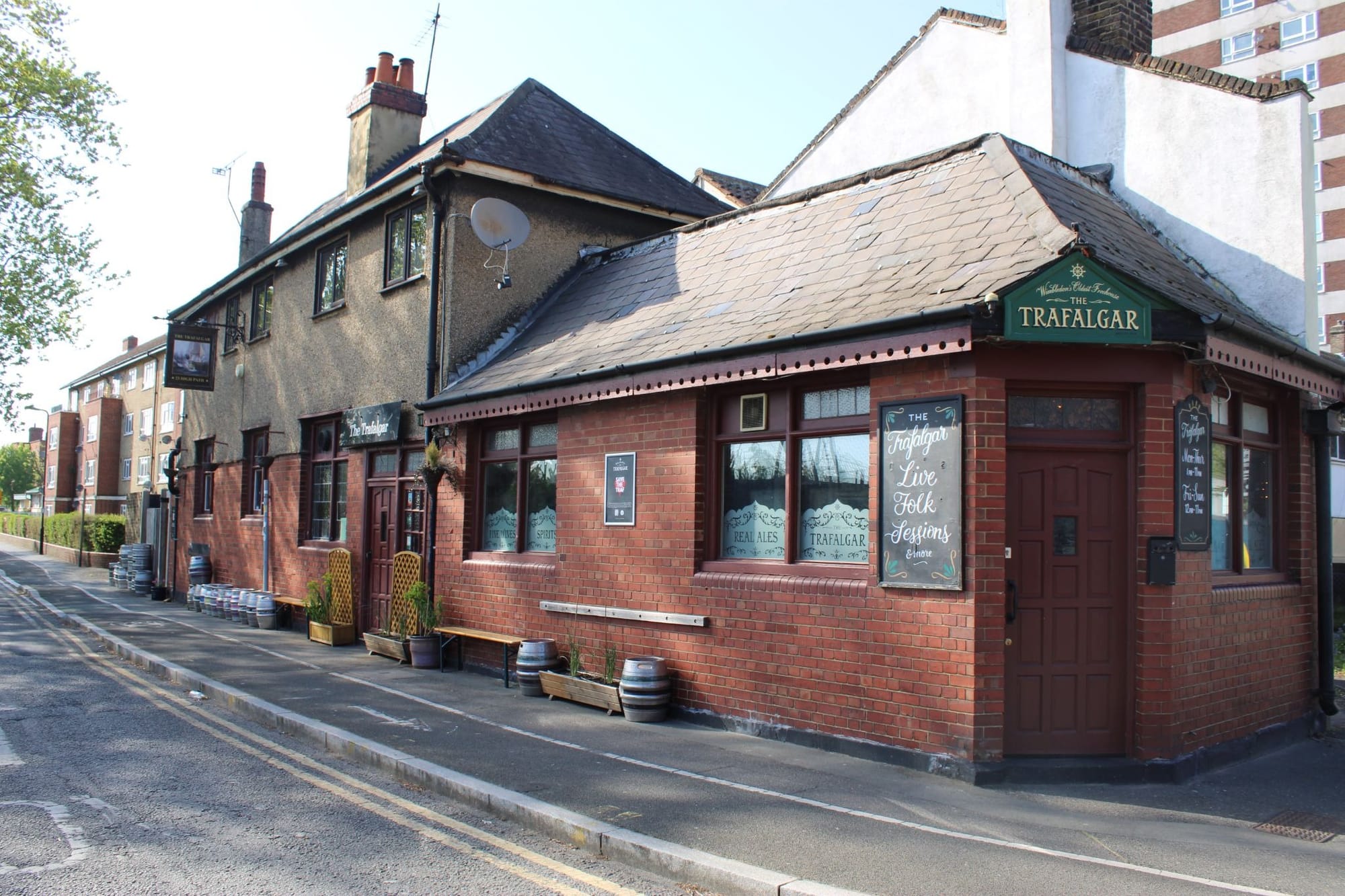
You might remember Carter-Esdale as the protagonist of another of our stories — about a firm called Linea that’s quietly shuttering dozens of the capital's pubs while claiming to save them. The Trafalgar was almost their latest victim — but after our investigation Linea opened negotiations to sell the freehold of the pub to the local community. And to hear them tell it, the appeal of running a pub like The Trafalgar is about both the joy of creating your own space and the responsibility of keeping a local institution alive, shepherding it on behalf of the community. “Long after I’m gone I want someone else to come in and run this place for the community, and they might have a totally different idea about how it should be,” they explain.
 Andrew Kersley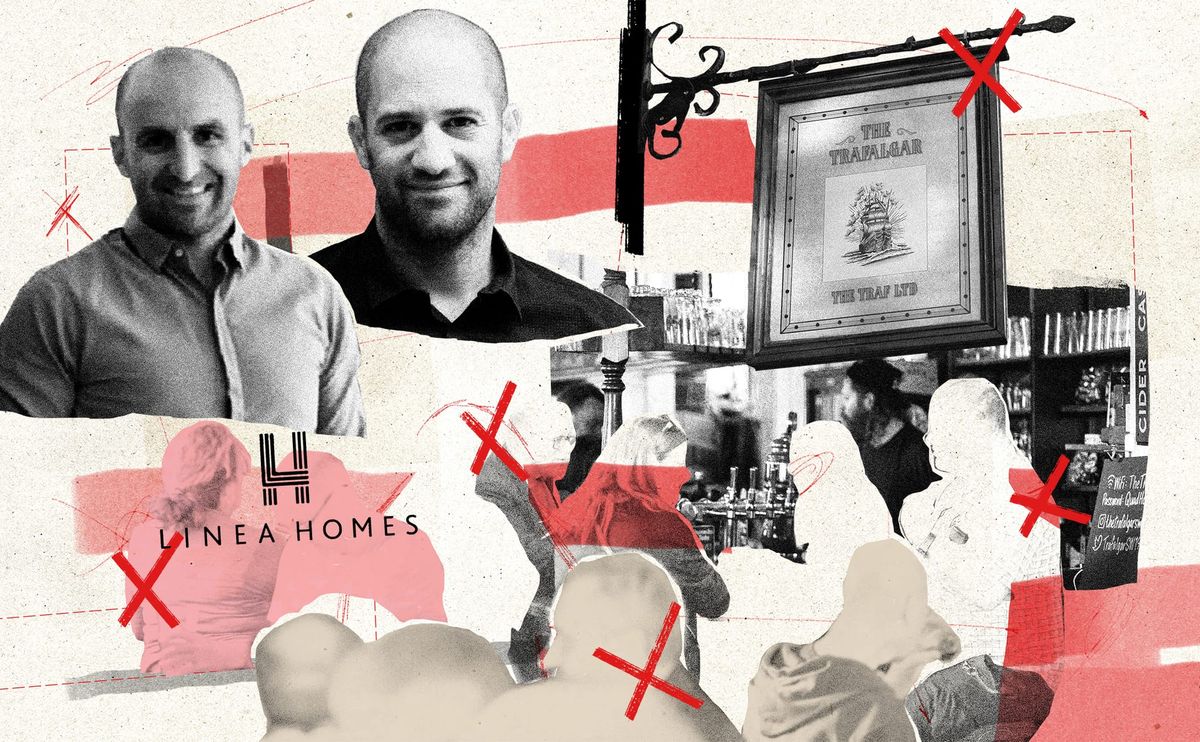
Will Nikhwai, 32, and Paul McAleer, 37, The Old Justice, Bermondsey
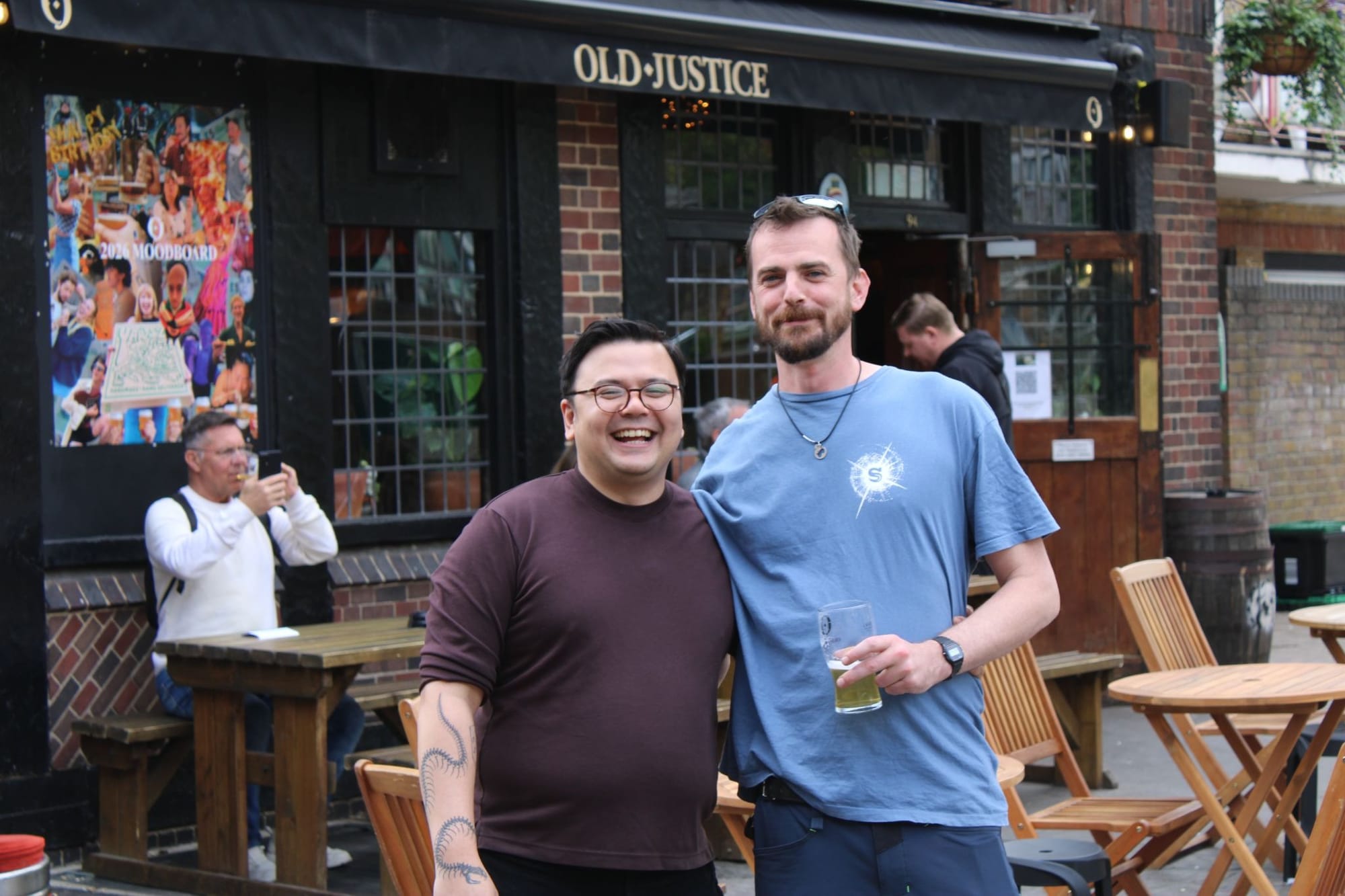
It was love at first sight. Yes, it had been stripped bare, the floors were broken and it’d clearly been squatted in for months. But who couldn’t get emotional looking at that glossy pale brown wood panelling.

Hi, Andrew here. Don't worry, this is not a paywall! My photo-feature on the young pub landlords of London is completely free to read (and we hope you're enjoying it). All you have to do to continue reading is sign up to The Londoner for free below, no card details or anything like that. Plus you'll get sent all our best articles the moment that they're released.
This story is free to read. You just need to sign up to join The Londoner's mailling list. And why wouldn't you? You'll get our journalism in your inbox the second we publish, keeping up to date on this and all our stories. No card details required.
Already have an account? Sign In