We think that honest, in-depth reporting on our city is essential. Agree? Then sign up for two free editions a week from The Londoner, including a comprehensive Monday briefing and a weekend long-read like the one below.
On the morning of 7 November 2023, 77-year-old Joan Turnell dressed her daughter Tracey in her bright red raincoat, sat her in her wheelchair and set out from their block of flats in Whitehouse Mews, Leyton. It could have been like any other day if, instead of heading left towards Walthamstow’s town centre, they had made the usual turn right to the nearby park. And if it wasn’t for the look of panic on Joan’s face, the pair of housing officers following the pair discreetly and the smell seeping from the wheelchair, a mix of faeces and decay.
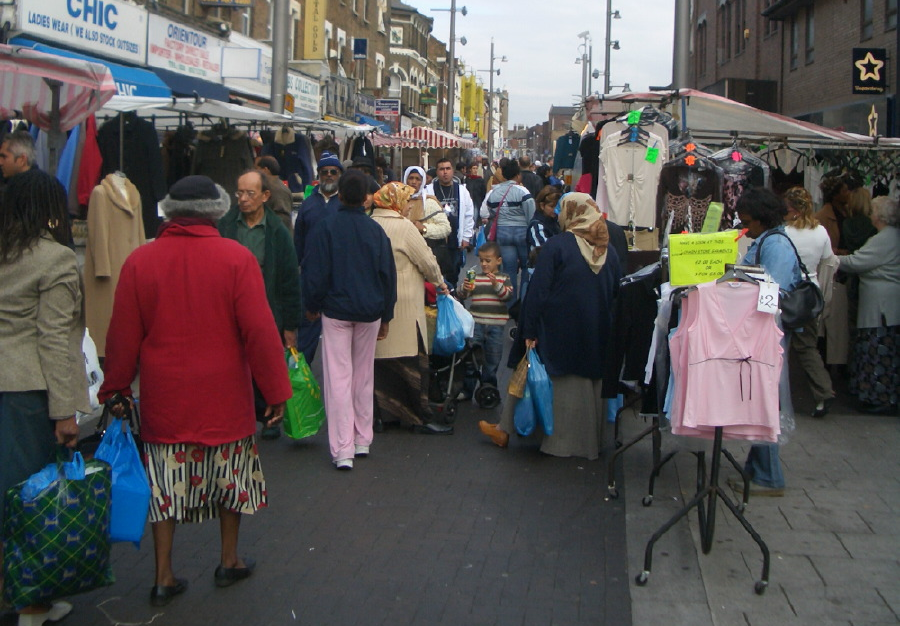
Grey clouds had blocked out the sun by the time she pushed the chair the mile and a half to Walthamstow’s bustling street market. There, in between the Peacocks and the police station, they were joined by a police squad, who asked Joan to stop and escorted her to a secluded car park. When the officers pulled back Tracey’s hood, they discovered a near-skeletal corpse. She had been dead for over a year.
Tracey had no phone, no job, no GP registration, no passport, no friends or romantic partners. There wasn’t a single photo of what she looked like. It was as if, in her far too public death, she had entered the public record for the first time. Police were only able to identify her using her mother’s DNA.
I first encountered their case in February last year, when I read a local news report of the coroner’s inquest. A few months later, I set out to learn who Tracey and Joan were, and what had led to the tragic events of that mild November day. But I also wanted to know why the sequence of profound failures by the authorities that had resulted in this tragedy have gone unaddressed in the years since Tracey’s death, so much so that a senior coroner investigating the case called for those responsible to be brought to account. “Unless and until somebody actually feels the flames at their feet about the consequences of their actions or inactions,” he explained, “not a great deal changes.”
Via months of interviews with dozens of friends, family members and social care experts — and by obtaining exclusive access to council and coroner’s records — I endeavoured to uncover the reality of Tracey and Joan’s lives, hoping to return a shred of humanity to two people who had long been denied it. It was an effort that would eventually lead me to a rubbish-strewn graveyard on the outskirts of east London.
‘It’s like she’s been totally erased’
Fakhra Jaffrey remembers the moment she first saw the Turnells in early 2014. I’m sat with Fakhra, middle-aged and reserved, and her son Fater in their living room, three doors down from where the Turnells lived.
Days after moving into their flat in early 2014, Fakhra started to notice the frail, elderly lady with the bright red hair, matching lipstick and lit cigarette. Often, Joan would be pushing the wheelchair holding her daughter, and Fakhra would hear them speaking long before spotting the pair. “They would just gossip, gossip, gossip,” she recalls. “All the time, you’d hear them talk and talk. I totally thought Joan just loved her.”
The mother of a disabled child herself, Fakhra felt that Joan was someone who might understand her life as a carer. On the Jaffreys’ doorstep, at the beginning and end of the Turnells’ thrice daily walks, the older woman would reveal small slivers about the pair’s backstory. Throughout these, Tracey was often quiet, her big eyes looking up from her wheelchair as her bowed back forced her into a permanent rightward lean.
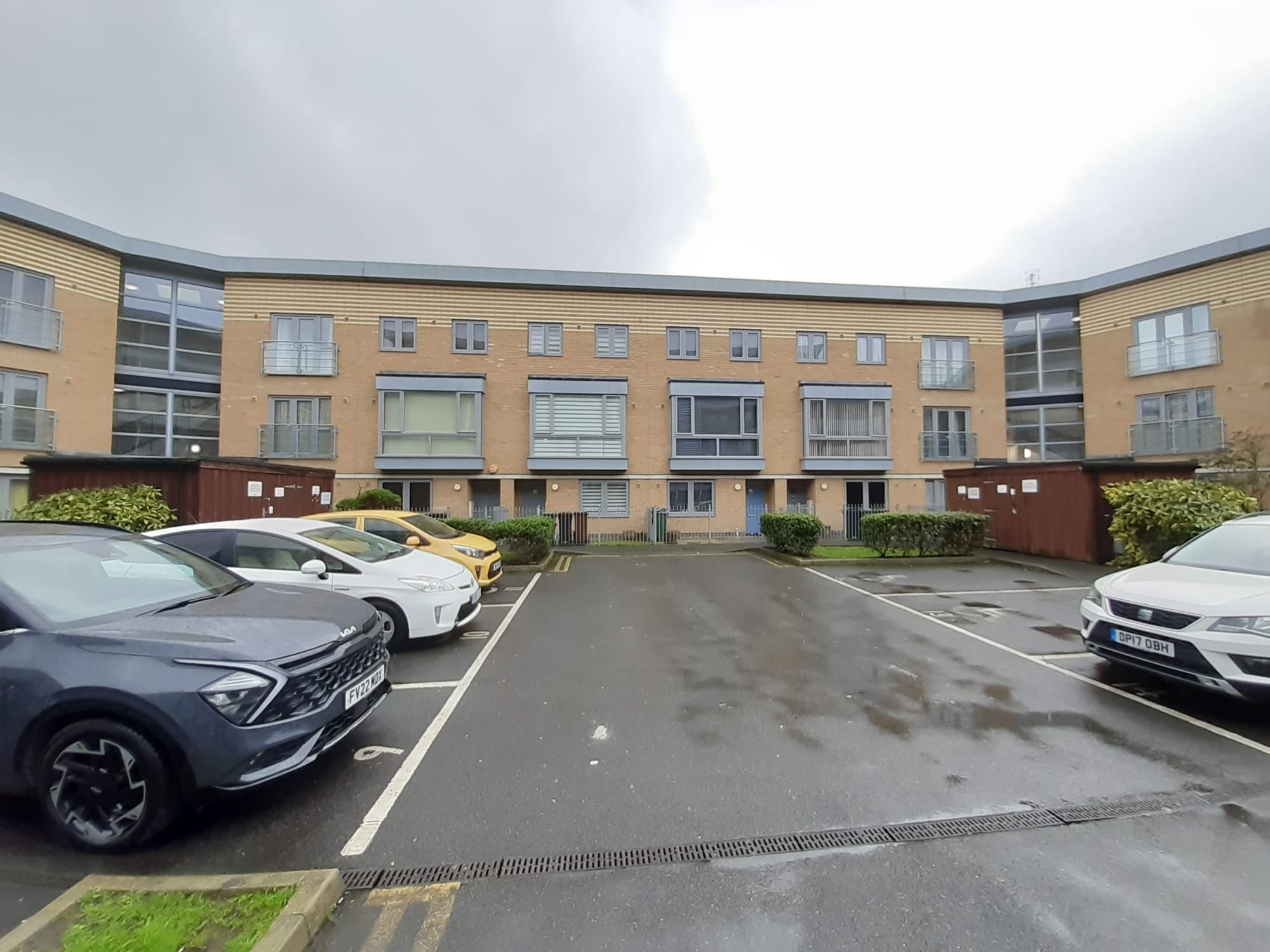
Over the next nine years, that hurried small talk evolved into real conversations: about the angry neighbour harassing them late at night, how Joan’s husband had been an alcoholic who had frittered away their money, and how no income other than her tiny widow’s pension had left her reliant on charity shops and cut-price groceries to survive. Fakhra recalls leaving her flat one day and seeing Joan and Tracey in the building’s courtyard looking at the sky. It was a plane; neither of them had ever flown before, they told her.
The two families became closer: “We called her Auntie Joan,” Fakhra tells me. Her husband started doing odd jobs for Joan, going round to their flat with the ash-stained carpets to fix washing machines or replace lightbulbs, and during one Ramadan, the Jaffreys raised money to buy Tracey a new wheelchair.
Support came from other neighbours, too. I spoke to almost two dozen inhabitants of the apartment block who had got to know the Turnells over the years, helping out with small jobs such as fixing the family’s smoke alarms — which Joan was too short to reach — and acting as a sympathetic ear when Joan spoke about her struggle to afford food and new clothes. In my conversations with them, many would come back to the same image to describe the pair: “a scrawny lady pushing a wheelchair that seemed too heavy for her,” as one neighbour put it.

Hi, I'm Andrew, the author of today's story about the horrifying death of Tracey Turnell. This piece almost completely occupied the last six months of my life, and involved speaking to 75 different people, multiple Freedom of Information requests and trawling through hundreds of pages of reports, records and coroner's transcripts.
We're only able to do real stories like this, and avoid the clickbait rubbish that fills the rest of the press, because of our paid supporters. While today's story free to read, we still need your support to stay afloat. Please consider making the leap to becoming a paid subscriber to The Londoner for as little as £7.45 a month.
But in late summer 2022, things changed. Neighbours started to notice new behaviours: all of the Turnells’ groceries were now ordered online, and Joan was noticeably losing weight. When they spoke to her, her usual chatty demeanour was gone; instead she was distant, sometimes irritable. Eventually, they realised that the pair had stopped their daily walks. In fact, they’d sometimes go days without seeing Joan, and they hadn’t seen Tracey in months. “I was so shocked,” Fakhra tells me. “I’d never ever seen Joan alone.”
Joan’s explanations would shift constantly: Tracey was with her sister, at home sleeping, just “busy”. Strange smells would emanate from their ground floor flat, and Joan's clothes looked dirty. Fakhra remembers how, when she went to check on the Turnells one day, she was greeted by blaring music and no answer.
In mid November 2023, the Jaffreys say, they received a leaflet in their letterbox from the block’s landlord, the housing association L&Q. It offered generic advice on how to psychologically cope with the stress of “tragic events”. Fakhra didn’t understand what it meant. It was only when they spoke to neighbours that the Jaffreys found out about Tracey’s death and Joan’s sudden departure from Whitehouse Mews.
As we’re speaking, Fater, an eloquent university student with curly black hair, suddenly leaves the room. He returns a few minutes later with a vase filled with bright pink and orange artificial lilies. A few months before Tracey’s body was discovered, Fakhra had come to the front door to find Joan in distress. She had lost her purse in Tesco and couldn’t pay for her shopping, so Fakhra gave her £20. The flowers were a thank you gift from Joan. Fakhra didn’t like them at first, but now the idea of parting with them makes her feel sick. They still sit, years later, outside Fater’s bedroom.
“It’s like she’s been totally erased; there’s no evidence that she lived,” Fater explains, with a simmering anger. “These are the only things that are left.”

Piecing together their lives
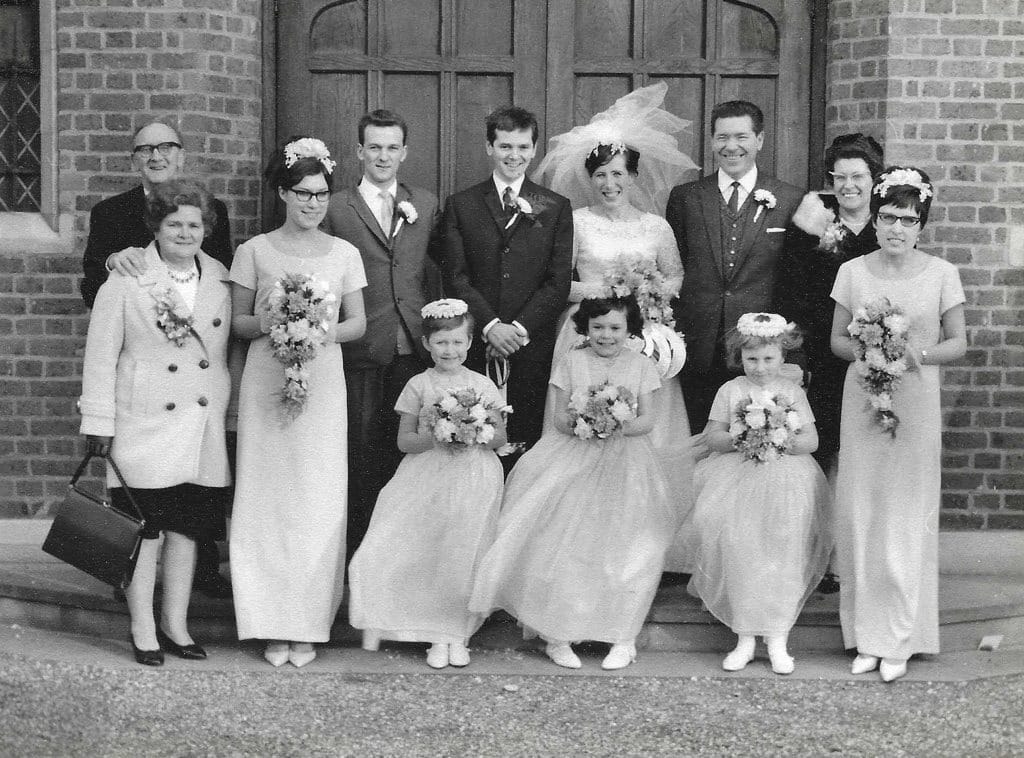
Joan was a born and bred East Ender. Her dad William was a TV cabinet maker, and her home in Walthamstow was ruled by her domineering mother Rita. As a teenager in the 1960s, Alan Salsbury walked past the house on his way to work in the city, and stopped to admire the soft music drifting from their downstairs living room, as well the two girls — Joan and her sister — usually sitting by the window. “We would wave to them as we went past,” he tells me. “It got to the point where we stood outside their house and they came out.”
Soon he and Joan began dating. It was a complicated and overwhelming relationship — the kind that leaves you with no money, no friends, no sense of the world beyond. Joan used to escort him to work every day and collect him afterwards. Friendships were rare and short-lived — to hear Salsbury tell it, after a few intense months they were usually snuffed out by Joan due to some perceived slight against her.
In early 1967, Joan’s father was diagnosed with a tumour at the base of his skull. William was taken to hospital, and the family was a mess. Joan’s mother asked Alan to move in temporarily to help fill the void. Despite feeling “trapped” in the relationship, and under pressure from Rita, Alan and Joan eventually got married. They spent what was supposed to be their honeymoon on the Norfolk Broads burying Joan’s father. “It was a very painful death,” Salsbury recalls.
They spent their nights hanging out in the now-closed Crooked Billet pub in the northern tip of Walthamstow. Salsbury remembers vividly when one night a “very surly guy walked in and plopped himself down at the bar”. Joan went over to talk to the stranger — named Bill Turnell — and soon he became an inescapable feature of their social life. “Everywhere we went, Bill went,” Salsbury says.
Now 82, Salsbury can recite countless specific moments from his marriage to Joan — none more vividly than the moment on a group canal boat holiday when he walked to the front of the vessel to find Joan and Bill being “very intimate”. The marriage ended, and with it, a new relationship started. Joan was a different person with Bill, according to Salsbury; there was none of the possessiveness or aloofness that defined their marriage. He says Rita despised Bill — in part because of the sordidness of the affair, and because of snobbery about him being nearly a decade older and working as a manual labourer.
By the time Tracey was born on 4 October 1971, a traumatic birth that left her with lifelong physical disabilities and Joan unable to have any more children, the divide within the family had become a canyon. Joan was cut out of Rita’s will and ostracised by the family. The family of three lived in solitude in a series of rented flats across Walthamstow, leaving little trace of their lives in each.
Tracey’s former classmates at Highams Park School recall a “very quiet girl”; one who “never really took part in anything”. “When you saw her out of school she was always with her mum,” one tells me. Eventually, she dropped out before finishing her exams.
Medical reports reveal that Tracey had severe osteoporosis and skeletal defects in her hands, joints and spine. Each of these were “painful and life-limiting” conditions. She used a wheelchair for much of her adult life, seemingly at the insistence of her mother, though there is no evidence of her ever being told to do so by a doctor, according to council records. After her death, officials wondered if “the wheelchair made her more dependent on her mother and possibly led to further loss of her mobility”, but without medical assessments could come to no conclusion.
At one point in 1999, when Tracey would have been 28, her medical records say she was issued a “sick note” for work, suggesting she at some point had a job, though she was out of work for at least the last two decades of her life. Joan insisted to those she spoke to that her daughter never had any romantic partners or even friends. The two had lived together since Tracey’s birth, and she was entirely dependent on her mother to help with cooking, getting out of bed, bathing and even leaving the house.
Bill Turnell died in early 2010, and Joan couldn’t bear to part with the body. It would be “concealed”, as the official report put it, for two days before she finally called the authorities to register his death. Indeed, when Tracey’s corpse was found, Joan told police: "Same thing happened to my husband. He just stopped breathing, and I called an ambulance. You all came and then just left". Bill had paid for the rent on their home in Leytonstone using his benefits. Joan tried to cover the cost herself, but over time, what little income she received wasn’t enough.
Three years later, their landlord, who was in the process of filing an eviction notice, was convinced Joan and Tracey were “burying their heads in the sand”, according to council records, and so referred them to the social services team before evicting them. The Turnells would spend the next few months living in a string of private hostels as the council tried to find them a new home. Joan was 67; Tracey was 42.
Records I reviewed from this period indicate that social workers were growing concerned about the relationship between mother and daughter. One social worker described it as “co-dependent”, bordering on “coercive”. Officers observed that Tracey was “underweight and unwell” and looked pale and dishevelled. But when they tried to ask her about it, her mother intervened to explain that she was fine. Indeed, Joan insisted on answering all questions on her behalf, and the authorities made no effort to speak to Tracey on her own.
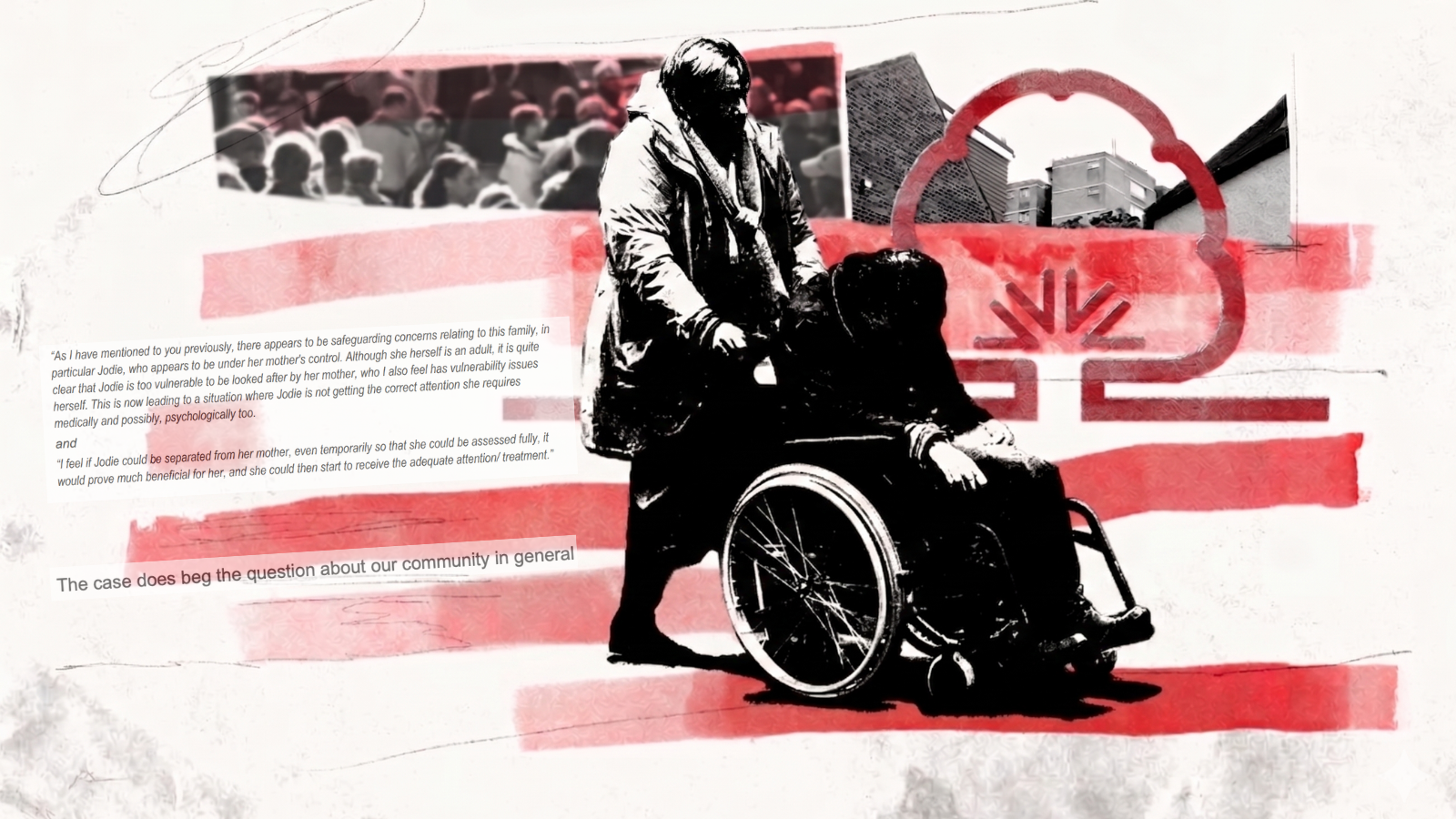
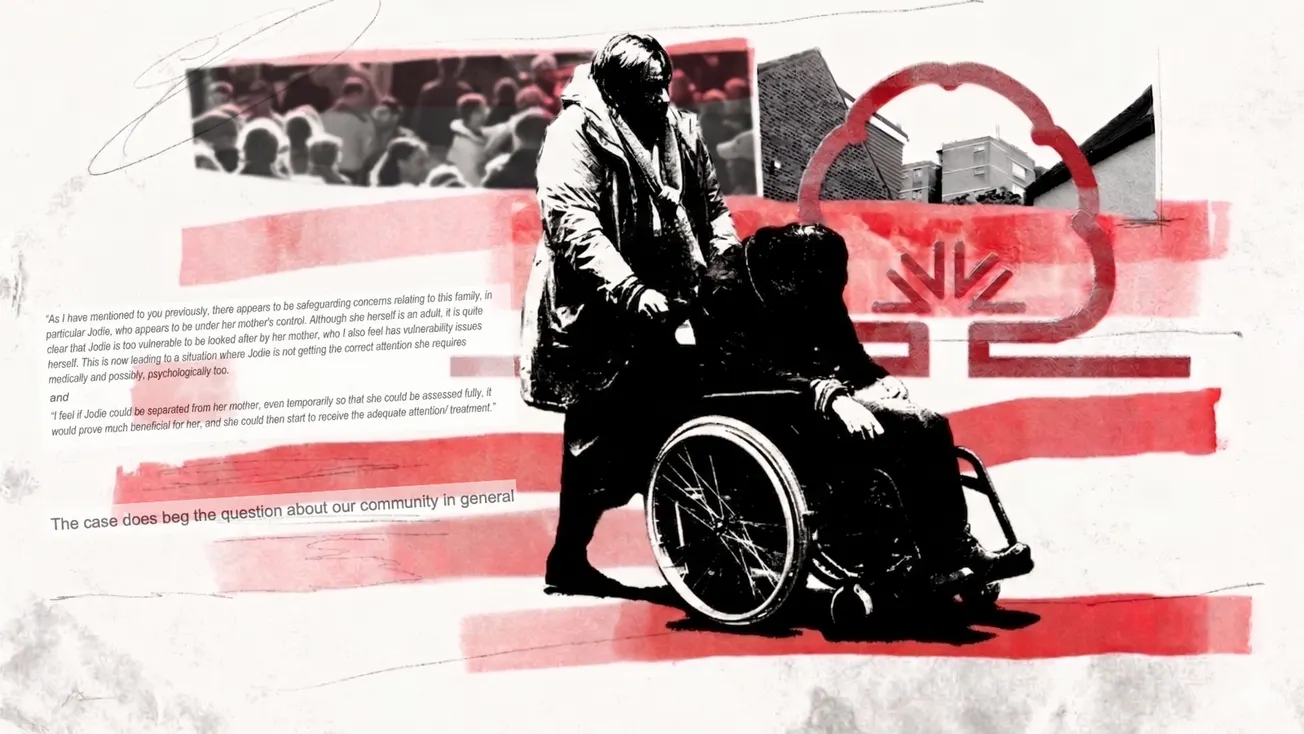
A housing officer wrote in January 2014: “As I have mentioned to you previously, there appears to be safeguarding concerns relating to this family, in particular Tracey, who appears to be under her mother's control… Although she herself is an adult, it is quite clear that Tracey is too vulnerable to be looked after by her mother, who I also feel has vulnerability issues herself.” The authorities concluded that for the wellbeing of both Turnells, they needed to be separated, at least temporarily.
Despite this, their case was closed five months later. This was a crucial decision in the story, and on the face of it, it’s difficult to understand. The council appear to have decided their urgent need was their lack of housing, and with the duo moving to their new flat in Whitehouse Mews and Joan’s repeated insistence that the pair were not in need of help, the social care department deemed all issues resolved. In the decade leading up to Tracey’s death, this period of heightened concern from Waltham Forest’s social care team appears to have been the closest authorities would come to intervening in the Turnells’ slide into poverty, isolation and despair.
Months after their arrival in Whitehouse Mews, Tracey was removed from the registration of her local GP, the Lime Tree GP surgery in Leytonstone, as part of a list cleansing exercise designed to clear out “ghost patients” who’ve died or moved away. Normally, vulnerable patients are supposed to be exempt from these purges, but Sarah See, a senior director with NHS North East London, later admitted to a Coroner’s Court that GPs had failed to flag Tracey’s vulnerable status in her records, a critical mistake. After their final appointment before being purged, the GP noted in Tracey’s medical records that the pair were “very odd!”.
Not long afterwards, Tracey lost access to the jobseeker’s allowance she had once received. The DWP did not make clear to the coroner — or to The Londoner when we asked — why her income suddenly stopped, but it would be the last time she received state support. The family made multiple applications for Tracey to be moved onto disability benefits, but without a registered GP to contact to corroborate her condition, they were rejected.
At this point, Joan and Tracey were living in a tiny world of their own. For close to a decade until Tracey’s death, they had no contact with the council or doctors, despite the younger woman’s worsening disability. They received no benefits or job income, other than Joan’s widow's pension. By almost all official records and measures, she stopped existing.
The next “missed opportunity”, as the authorities later came to label it, arrived on 17 August 2022. A gas engineer making a routine check on the property became worried that Joan wasn’t able to look after herself, let alone Tracey. The flat was filthy, the stench was overwhelming and Joan’s clothes were soiled. The housing association L&Q made several unsuccessful attempts to check on the pair but, after failing to get through, decided to shut down the complaint. No reason was given at the time.
After Tracey’s death, an L&Q official explained to the coroner’s court that the case had been prematurely closed because the housing association was in the middle of a major restructure, aimed at, among other things, “strengthening their approach” to safeguarding complaints. The complaint was the last opportunity for the Waltham Forest social care team to assist the Turnells while Tracey was still alive.
The engineer wasn’t the only one to sense danger. Wayne Brown, the building’s caretaker, had started to notice that year that Joan was walking aimlessly around the estate in filthy clothes. He was worried she wasn’t in a fit state to care for Tracey. Brown made consistent complaints to his bosses at L&Q, for months, about Joan’s wellbeing. The housing association referred the case to the council’s social care team in February 2023. The team called Joan, who told them she had no interest in them intervening. They made no visit to the home, nor did they make any effort to speak to Brown, any neighbours or Tracey herself.
In October, Brown repeatedly observed Joan taking out black bin bags, filled with what looked like faeces and maggots, late at night. He again reported his concerns to L&Q. He noted that Tracey, who once went out for daily walks, hadn’t been seen for six months. An official from L&Q, Victoria White, knocked on the Turnells’ door on 19 February, but when they spoke she couldn’t make out any other smell than the overpowering stench of stale cigarettes. Joan insisted everything was fine, before slamming the door.
The council’s social care team has a legal obligation to intervene in cases where vulnerable people are harming themselves or others, even if they have refused help in the past. A report from L&Q detailing their welfare concerns, submitted after the visit on 19 February, arrived in the social care inbox, where it was assessed and given a severity category that required a response from the department within 72 hours. Yet no response ever came, and no further action was taken by any of the department’s social workers. Two weeks later, L&Q formally complained about the lack of action by the council. The complaint was “noted in the ASC [adult social care] records”, according to a later council investigation, but was not responded to.
The day everything unravelled
After being ignored again by Waltham Forest council, two L&Q housing officers — Ola Lawal and Victoria White — decided to visit Joan in-person and check on Tracey. Joan insisted first that her daughter was living with her aunt, and then that the pair needed to go for a medical appointment. The housing officers said they would wait outside until Tracey was ready to talk.
A few minutes later, they watched as Joan emerged from the property, pushing the wheelchair. In the seat was a diminutive figure wrapped completely in a red coat and a collection of blankets and pillows. At first, White thought it might be a doll — it looked too thin to be a person — but a “vile smell” was coming from the wheelchair. She called the police, and she and Lawal followed Joan from a distance. As they did so, the first police squad arrived and gained access to the Turnells’ flat. There were black, brown tar like marks across the floor, “as if somebody had been walking or dragging something”, but no signs of Tracey, according to their report.
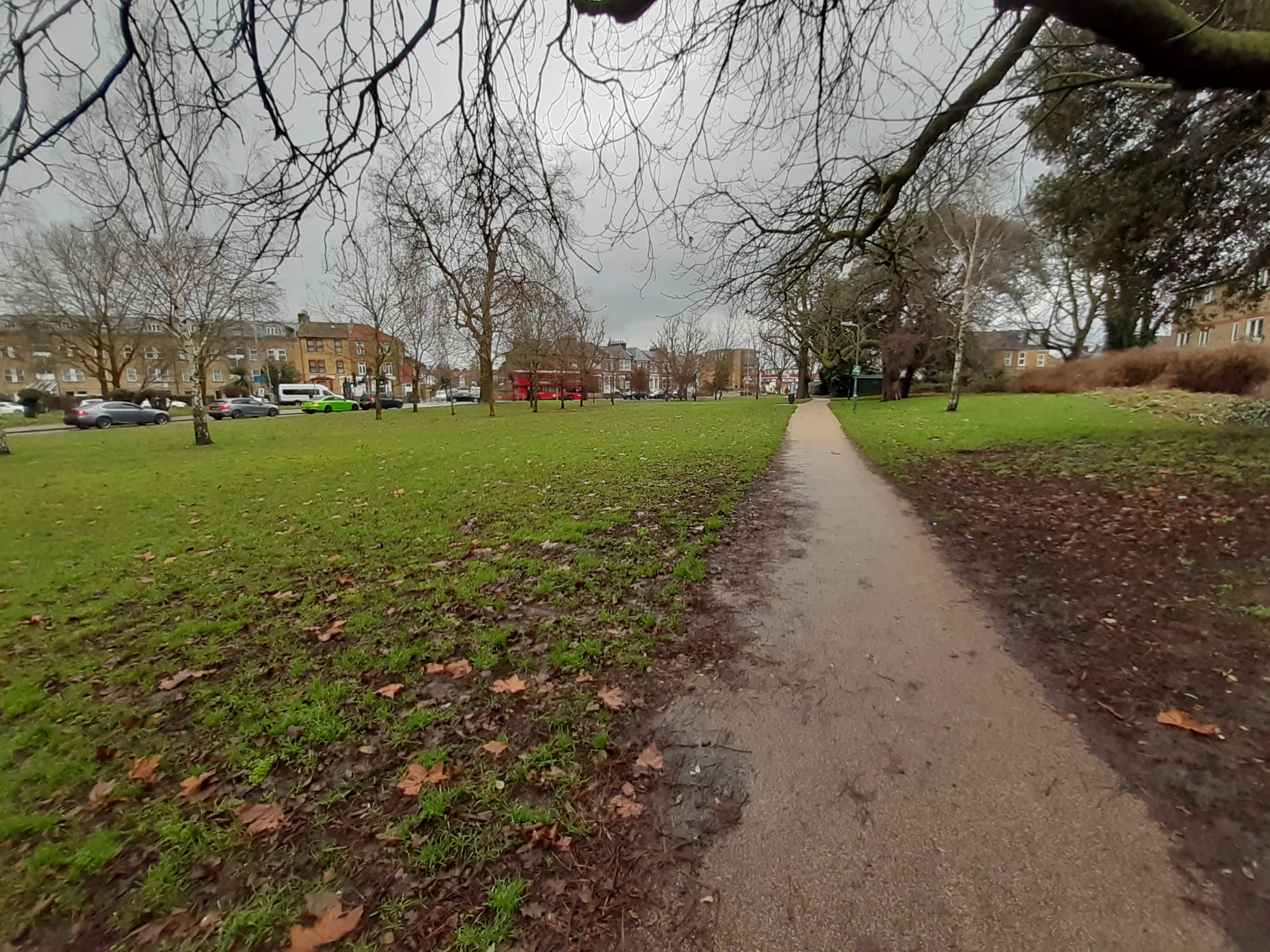
The housing officers followed Joan for 45 minutes, as she marched past the ageing shopping parades, the ornate theatre-turned-superchurch and the abandoned telephone exchange that is now a homeless encampment. She pushed and pushed, until the terraced houses and dirty pavements of Leyton gave way to the highrises and shining flagstones of central Walthamstow.
Upon entering the bustling Walthamstow street market, Joan was surrounded by police officers, who asked her to accompany them to a nearby car park, full of fly-tipped garbage and daubed with graffiti. There, nestled underneath the raincoat, a wig and blankets, they found the decomposed, almost skeletal remains of Tracey. Joan was incoherent. From the nearby police station, she asked the officers: “Why can't they just leave us alone? We have been fine, and I've been looking after her.” In her first formal interview, she answered “no comment” to almost every question asked.
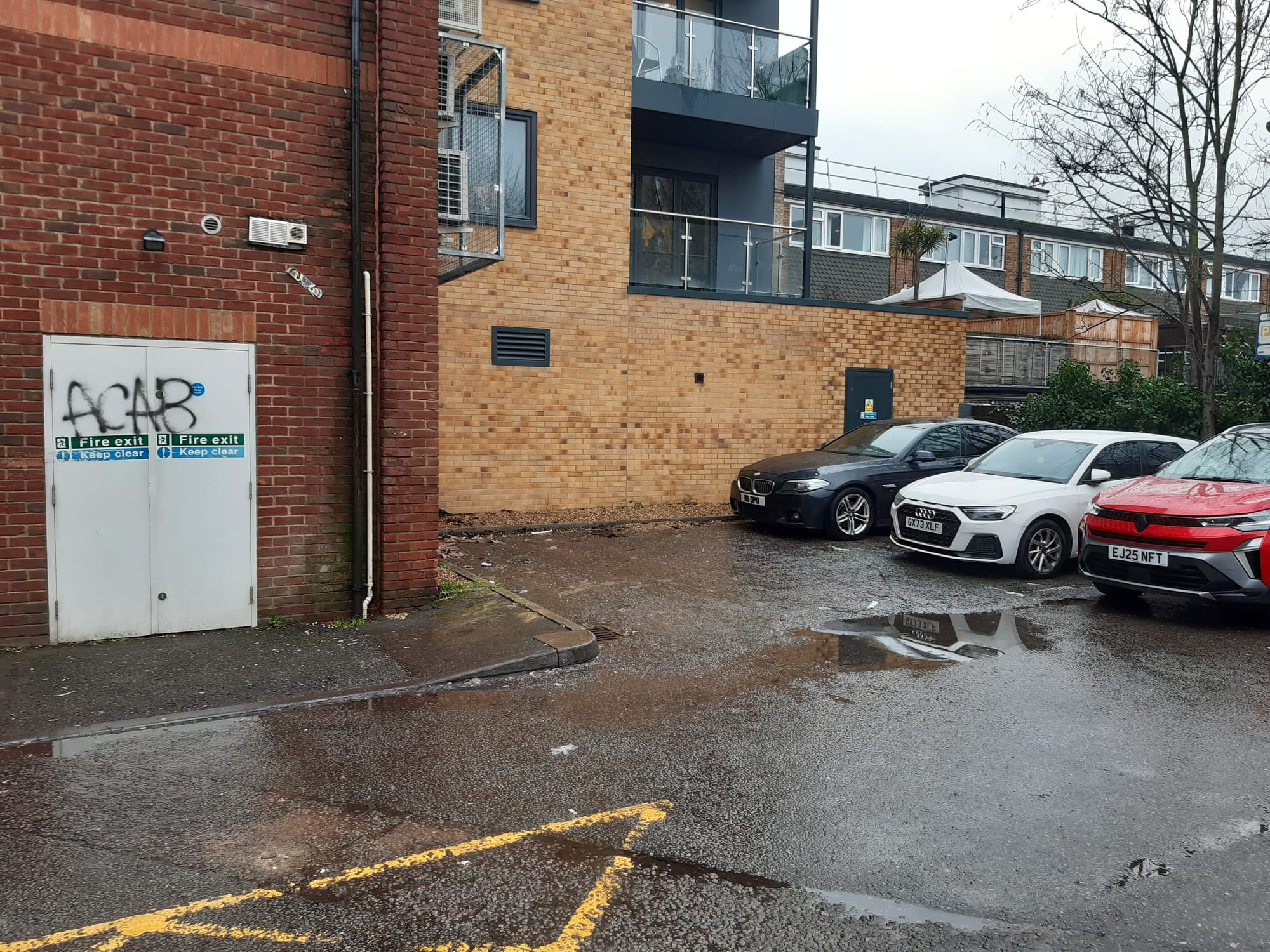
The officers examining Tracey’s body had little to work with. “The deceased had no eyes, very little hair, and what skin and tissue was left was reddish in colour,” they later said in police statements. More officers donned hazmat suits and returned to their flat. The rooms were sparse. There were soiled clothes and rat faeces dotted across the stained floors and in one of the beds. The cupboards were filled with air fresheners and reed diffusers. The patio doors were covered in dust.
One reason for their visit was to try and find some photos of Tracey, to help identify the body. But there were no images of her anywhere in the property, nor any letters or documents addressed to her. She had no passport, no driver’s license — there was no social media presence or evidence of a phone belonging to her. The only correspondence they found was a pile of bailiff notices addressed to Joan.
The formal post mortem yielded little more. Tracey’s internal organs had completely decayed, leaving behind a brown powder. She had no dental records to use for identification, so they relied on Joan’s DNA. “Any comment regarding the cause of this female's demise is simply not possible,” the pathologist concluded.
Joan was taken to the nearest A&E, where she was diagnosed with a list of conditions, including liver failure, a non-malignant but sizeable brain tumour, a lung clot, a learning disability, low thyroid levels (a common cause of psychosis) and prolonged grief disorder. It’s a mental condition that, in its most extreme cases, can lead the affected to be unable to accept that a loved one has died. It would be months before she would be able to put together a statement that went some way to explaining how Tracey had died.
The pair, she said, had lived a secluded life. The only people they “really talked to” were the Jaffrey family. In September 2022, they were watching a movie when Joan noticed that her daughter had become unresponsive. She was unmoving and her pupils were fixed and dilated. “I did not cause my daughter's death. I do not know what caused my daughter's death,” she wrote. “I did not call for an ambulance because I knew that they could not help. I kept Tracey with me because I could not bear to part with her, I loved her too much.”
Joan did not contribute to the council’s internal investigation into her daughter’s death — she was deemed too vulnerable to contribute, as speaking to her about Tracey’s death could expose her to “further harm”. It added that she was now living in a care home in a neighbouring borough. It was also noted that her psychiatrists were exploring whether she had “a personality disorder or some sort of psychopathic disorder, as she seemed to have a lack of remorse or guilt and was so detached about the tragedy”. Though I reached out to her on a number Fakhra Jaffrey had given me, it was disconnected.
‘Everybody is guilty’
In the aftermath of any death of a vulnerable adult involving potential social care failures, councils are obliged to hold internal inquiries, called Safeguarding Adult Reviews (SARs). The findings in Tracey’s SAR were written by an independent social care consultant, a former nurse and council worker, named Betty Lynch. Lynch concluded that the council had, over the course of nine years, repeatedly failed to show proper “depth”, “curiosity” or “rigour” in handling their case.
There was, at best, superficial care for Tracey’s physical and mental wellbeing, and no understanding that Joan’s domineering insistence that they were fine was not “a trigger for case closure” but “a trigger for mounting risk”. “It is difficult to comprehend the level of suffering each of these women experienced,” Lynch said, adding. “Human dialogue should have taken the place of bureaucratic procedures.”
In response, the council produced a pastel flow chart of new bureaucratic procedures, which it claimed would stop it from ever happening again. With the publication of Tracey’s anonymised SAR in October 2024, there was no public outcry or local reporting; no council or cabinet meetings even acknowledged its existence.
Safeguarding reviews are the only legal obligation a council has after these kinds of deaths. They are conducted by experts like Lynch, who are paid by the council. Their purpose is not to provide accountability, but to highlight lessons that can be learned. But will they learn? “These cases aren't new,” a senior councillor who previously served on the social care scrutiny panel told me. “I can't see what lessons could be learned again.”
Regulators like the CQC or the social care ombudsman generally refuse to get involved, unless a family member or the victim themselves complains. When I asked about the possibility of enforcement, press officers for both organisations apologetically explained to me that if a person dies and has no family to be their voice, there was nothing they could do.
Four months later, the case reached Graeme Irvine, the senior coroner for the East London Coroner’s Court, the typical procedure for any unnatural death. While a coroner does have the power to issue advice to authorities after a death, they have no means to compel them to actually follow or listen to that advice. Irvine said Tracey’s was the most decomposed corpse he had ever encountered. As a result, he hadn’t “the first clue” whether Tracey’s death was unnatural, or the result of some trauma or poisoning by a third party.
But while he couldn’t be sure about the “shocking and heart rending” circumstances of Tracey’s death, unlike anything he had dealt with in 25 years of inquests, Irvine was clear-eyed in his assessment of the factors that lead to it. It reminded him, he said, of the play An Inspector Calls, in which a family of wealthy aristocrats discover their venal, selfish actions have each driven a local working-class girl to her death.
It should have been “blindingly obvious” to GPs, social services and every other official who came across the pair, Irvine told the inquest, how vulnerable they were and how dangerous their relationship was, but they had “fallen off the grid”. He suspected that the relationship between Joan and Tracey was “perhaps coercive in nature” and potentially even “parasitic”. “Everybody is guilty,” he argued. “If something different had been done earlier, this tragic set of circumstances may have been avoided.”
He reserved particular fury for the Waltham Forest social services team. John Binding, who has acted as the council’s adult safeguarding lead since November 2024, had suggested to the court that the “missed opportunities" before Tracey’s death were solely the result of the fact that “resources are tight”. Irvine was unconvinced.
The department was dominated by a “phenomenon of out of sight, out of mind”, the coroner claimed, and social workers either ignored any concerns that would require proactive work, or put in the minimal amount of effort to support the vulnerable. It was inexplicable to the coroner that there was no actual accountability in the face of a tragedy like this.
Irvine didn’t decide to issue any statutory orders over the failures that led to Tracey’s death. As he was in a “good mood” that day, he decided to give the NHS and Waltham Forest council the chance to explain their actions to him in letters after the fact. I couldn’t ascertain if that had ever taken place — nobody involved would respond to my emails.
The council later informed me that it never referred any of its officers to the social work regulator, and hadn’t taken any additional actions since the coroner’s inquest was held. All of the officers who had worked on Tracey’s case, from the case workers to the director of the entire adult social care department, had since left the council. They were, a spokesperson insisted, “doing everything we can to prevent it happening again”.
In the final few weeks of reporting on the Turnells’ story, I became fixated on finding Tracey’s grave. I wanted to see a marker or memorial, some ripple left in her wake.
The forgotten graveyard
“She’s somewhere around there,” the voice softly crackled down the phone. “I can’t be any more specific than that, I’m afraid.”
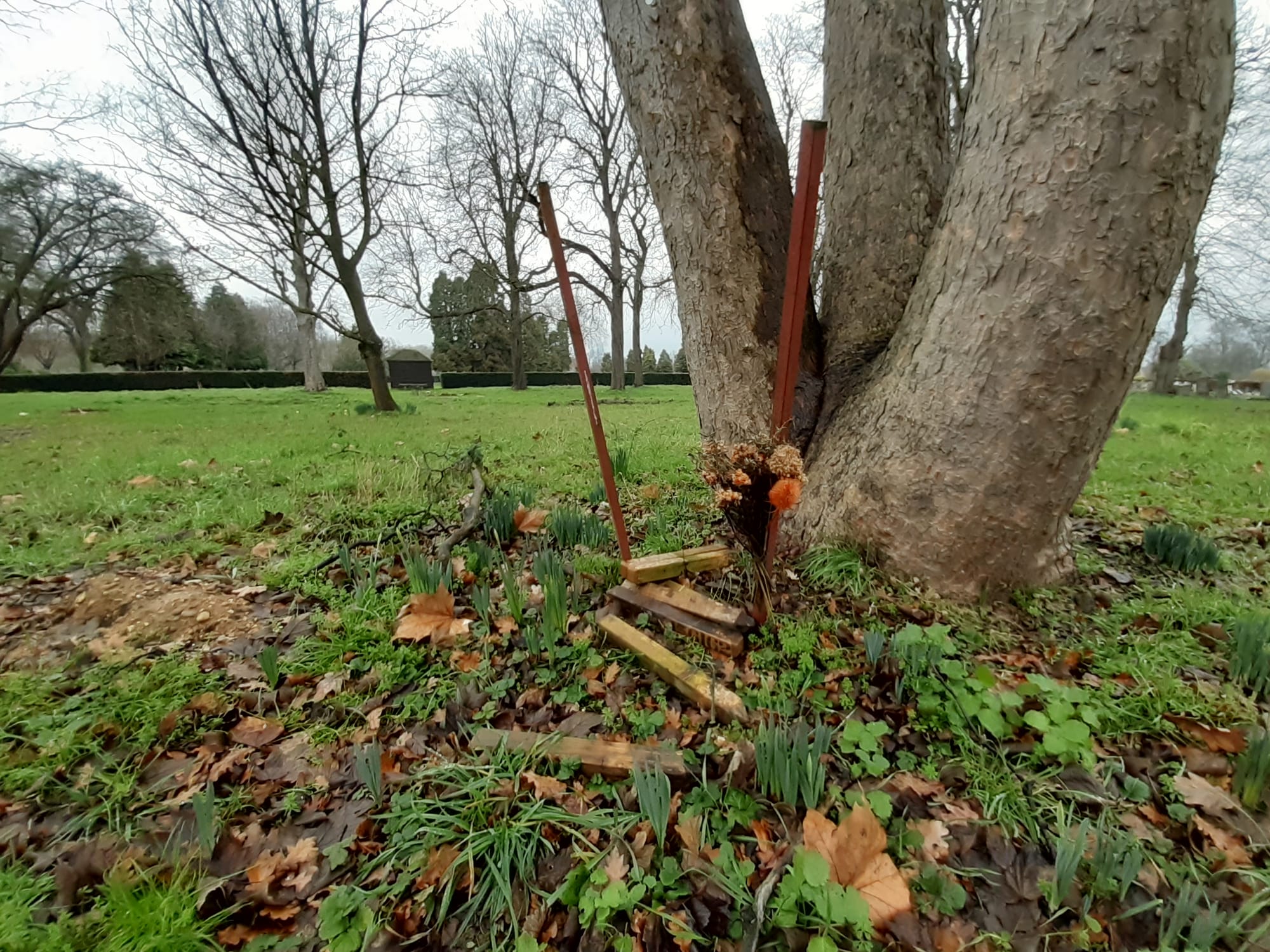
I was staring at a muddy glade with overgrown paths in the far corner of the labyrinthine City of London cemetery in Wanstead. It would be completely still, were it not for the occasional rattling of the speeding trains on the other side of the barbed wire fence. This, by the abandoned planks of wood and rotting bits of cardboard, is where London’s lonely poor are laid to rest by the bony arms of the state.
Pauper funerals have existed, in one form or another, for the last 400 years, paid for by local parishes or town officials. In the 18th century they became a viral tragedy used to scare people out of workhouses; a byword for a sundered life. Two hundred years later, we’ve professionalised and streamlined the system, bringing it under the remit of local councils and whichever private sector funeral home contractor makes the most efficient bid. And they have a new name: public health funerals. The process is simple, and cost-effective: in most cases bodies are swiftly cremated and the ashes spread at a local cemetery.
Joan chose not to attend Tracey’s public health funeral, on 5 August 2024. But even for those with no family, there are some basic standards that these ceremonies are supposed to adhere to. There should be officiants and pallbearers, like any funeral, and celebrants — someone who will take a moment to mark the life and humanity of the person being laid to rest.
A few days before my visit to the vast cemetery complex in Wanstead and my phone call with an official to try and locate Tracey’s resting place, I was told by a staff member in the office of the council’s funeral home contractor that they had no record of any officiant or celebrant overseeing Tracey’s funeral. The council would later insist that an unnamed celebrant had been present but was “not contactable at this time”, though they later clarified to me that that wasn’t the case as the celebrant was cancelled when it came out “that no family or friends” were attending.
When I return to the forgotten corner of the funeral complex the following Saturday, I notice a weathered photograph of an elderly woman fluttering in the grass nearby. Tracey is far from alone: in the last eight years, there were 364 people who, like her, were given public health funerals here by Waltham Forest council. In the absence of a grave marker, I tie a dark orange bouquet to a steel rod nearby. They’re the same kind of artificial flowers as those that still sit outside Fater’s bedroom. The kind that last.
If you're after more high-quality local journalism, and want to get access to exclusive subscriber-only pieces, why not join up as a Londoner member today?
You'll be able to read our exclusive expose of an AI generated Pride event, as well as our investigation into a mysterious new frostbite injury plaguing London hospitals.
You'll also get access to our entire back catalogue of amazing stories and, better yet, you'll be supporting our mission to give this city proper local journalism.